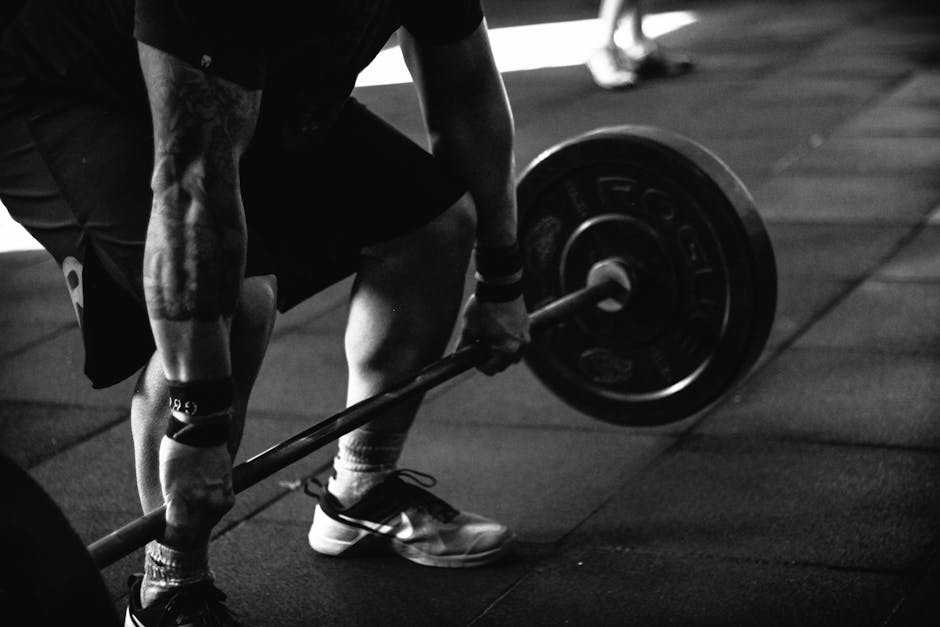
Progressive overload for muscle growth is the single most important principle separating people who see real results from those who spend months in the gym without visible change. If you’ve been following the same workout routine for weeks or months and wondering why your muscles aren’t growing, chances are you’re missing this crucial element. The truth is, your body adapts remarkably quickly to exercise – and without progressive overload, you’re essentially asking it to stay exactly as it is.
📖 Reading time: 22 minutes
You may also enjoy reading: Lower Body Dumbbell Workout: Your Complete Guide to Stronger Legs at Home
Picture this: You’re three months into your fitness journey, showing up to the gym religiously, completing the same exercises with the same weights week after week. You feel stronger, but when you look in the mirror, there’s barely any difference. Sound familiar? This scenario plays out in gyms across the UK every single day, and it’s not because these dedicated individuals lack commitment or work ethic. They’re simply repeating the same stimulus over and over, and their bodies have stopped adapting. Progressive overload changes everything.
Common Myths About Progressive Overload for Muscle Growth
Myth: Progressive Overload Means Always Adding More Weight to the Bar
Reality: While adding weight is one form of progressive overload, it’s far from the only method. You can increase training volume by adding more repetitions or sets, reduce rest periods between sets, improve exercise form and tempo, or increase training frequency. Many people hit plateaus because they fixate solely on heavier weights, ignoring these other powerful methods for applying progressive overload for muscle growth. Someone squatting 60kg for 3 sets of 8 reps who progresses to 3 sets of 12 reps has successfully applied progressive overload without touching a heavier plate.
Myth: You Need to Progress Every Single Workout
Reality: The human body doesn’t adapt in a perfectly linear fashion. Expecting to add weight or reps every session sets you up for frustration and potential injury. Research from Loughborough University shows that sustainable muscle growth occurs when progressive overload is applied over weeks and months, not necessarily every workout. Some sessions are about maintaining your current level, recovering properly, and preparing your body for the next progression step. A more realistic approach involves progressing every 1-3 weeks, depending on your training experience.
Myth: Progressive Overload Is Only for Advanced Lifters
Reality: Beginners actually benefit most dramatically from progressive overload for muscle growth. When you’re new to resistance training, your body is primed for rapid adaptation – often called “newbie gains.” Applying progressive overload from day one establishes proper training habits and maximizes this crucial window. The principle remains identical whether you’re doing bodyweight exercises in your living room or lifting in a commercial gym. A beginner progressing from 5 press-ups to 10 over three weeks is applying progressive overload just as effectively as an experienced lifter adding 5kg to their bench press.
Understanding How Progressive Overload Drives Muscle Growth
Your muscles grow through a process called hypertrophy, which occurs when muscle fibres experience mechanical tension, metabolic stress, and microscopic damage. Here’s what actually happens: when you challenge your muscles beyond their current capacity, you create tiny tears in the muscle fibres. Your body responds by repairing these fibres and making them slightly larger and stronger to handle similar stress in future. This is where progressive overload for muscle growth becomes essential – without continually increasing the demand, your muscles have no reason to keep adapting.
According to research published by the British Association of Sport and Exercise Sciences, muscles adapt to a given stimulus within approximately 4-6 weeks. This is why that initial month of training feels challenging and produces visible results, but then progress seems to stall. Your body has become efficient at handling that specific workload. Progressive overload ensures you’re always providing a slightly greater stimulus, keeping your muscles in that productive adaptation phase.
The key word here is “progressive” – gradual, systematic increases rather than dramatic jumps. Many enthusiastic gym-goers sabotage themselves by adding too much weight too quickly, compromising form and risking injury. The NHS guidance on strength training emphasizes that proper form and controlled progression prevent injuries whilst maximizing results. Small, consistent increases compound over time into remarkable transformations.
Practical Methods to Apply Progressive Overload for Muscle Growth
Understanding progressive overload conceptually is one thing; implementing it systematically in your training is another. Let’s break down the most effective methods you can start using immediately.
Increasing Weight (Load)
This is the most straightforward method of progressive overload. Once you can comfortably complete your target repetitions with proper form, add a small amount of weight. For upper body exercises, increases of 1-2.5kg are appropriate. For lower body movements like squats and deadlifts, you can typically progress in 2.5-5kg increments. If you’re training at home with adjustable dumbbells, even 1kg increases can provide sufficient stimulus for muscle growth. The crucial factor isn’t the absolute amount you add, but rather that you’re consistently challenging your muscles beyond their previous capacity.
Increasing Volume (Sets and Reps)
Training volume – the total amount of work performed – is a powerful driver of hypertrophy. Research from Birmingham University indicates that muscle growth responds positively to increased volume up to a point (beyond which recovery becomes compromised). You might start with 3 sets of 8 repetitions at a given weight, then progress to 3 sets of 10, then 3 sets of 12, before increasing the weight and dropping back to 3 sets of 8. Alternatively, you could add an additional set, moving from 3 to 4 sets whilst keeping reps constant. Both approaches effectively apply progressive overload for muscle growth.
Improving Exercise Technique and Tempo
Slowing down your repetitions increases time under tension, a critical factor for muscle development. Try taking 3-4 seconds for the lowering (eccentric) phase of each movement, pausing briefly at the bottom, then taking 1-2 seconds to lift (concentric phase). This tempo control transforms a movement you might have been rushing through into a significantly more challenging stimulus. You’re applying progressive overload without changing the weight at all – simply making each repetition more demanding.
Reducing Rest Periods
If you typically rest 90 seconds between sets, reducing this to 60 seconds whilst maintaining the same weight and repetitions increases metabolic stress and makes your muscles work harder. This method works particularly well when you’ve hit a temporary plateau with weight increases. However, be strategic – for heavy compound movements like squats and deadlifts, adequate rest (2-3 minutes) remains important for performance and safety.
Designing Your Progressive Overload Training Programme
A scattered approach to progressive overload yields scattered results. You need a systematic plan that tracks your progress and guides your training decisions. Here’s how to structure your programme for consistent muscle growth.
Start by establishing your baseline – the weight, sets, and reps you can currently perform with proper form for each exercise. Be honest here; using weights that are too heavy with compromised form doesn’t count as effective training. For compound movements (squats, deadlifts, bench press, rows), aim for 3-4 sets of 6-8 repetitions. For isolation exercises (bicep curls, tricep extensions, lateral raises), 3 sets of 10-12 repetitions works well. These aren’t rigid rules, but they provide a solid framework for applying progressive overload for muscle growth.
Choose one variable to progress each training block (typically 3-4 weeks). Trying to increase weight, reps, and sets simultaneously is overwhelming and often counterproductive. Perhaps spend one month focused on adding repetitions within your target range. Once you reach the top of that range (say, 12 reps), the next block involves adding weight and dropping back to the lower end (8 reps). This wave-like progression pattern – often called periodization – has substantial research supporting its effectiveness for long-term muscle development.
Keep a detailed training log. This doesn’t need to be complicated – a simple notebook or phone app where you record exercises, weights, sets, and reps for each workout suffices. The act of tracking creates accountability and allows you to make informed decisions about when and how to progress. Many people training without a log repeat similar workouts indefinitely because they can’t remember precisely what they did last week, let alone last month.
For home training, bodyweight exercises provide excellent opportunities for progressive overload. If standard press-ups become too easy, progress to decline press-ups, diamond press-ups, or eventually one-arm variations. Squats can progress from bodyweight to goblet squats (holding a weight), then to Bulgarian split squats, then to pistol squats. If you do decide to invest in equipment, adjustable dumbbells between 5-20kg offer tremendous versatility for progressive overload without requiring a full home gym setup. Look for sets with comfortable grips and secure weight adjustment mechanisms.
Your 8-Week Progressive Overload Action Plan
Theory becomes results only through consistent application. This structured plan shows you exactly how to implement progressive overload for muscle growth over the next two months.
- Week 1-2: Establish Your Baseline – Focus on learning proper form for 5-6 fundamental exercises covering all major muscle groups. Choose weights that feel challenging for your target rep range (8-10 reps for most exercises) but allow you to complete all sets with good technique. Record everything in your training log. Train each muscle group twice weekly with at least 48 hours recovery between sessions.
- Week 3-4: Progressive Overload Through Reps – Keep weights identical to weeks 1-2, but aim to add 1-2 repetitions to each set where possible. If you performed 8 reps last week, aim for 9-10 this week. Don’t worry if you can only add reps to some exercises or some sets – any progression counts. Continue training each muscle group twice weekly.
- Week 5: Deload Week – Reduce training volume by approximately 40% to allow recovery. Use the same exercises but perform only 2 sets instead of 3-4, or reduce weight by 20-30% whilst maintaining your rep ranges. This strategic reduction prevents burnout and prepares your body for subsequent progression. Many people skip deload weeks and wonder why they feel perpetually tired and stop making gains.
- Week 6-7: Progressive Overload Through Weight – Time to increase the load. For exercises where you achieved the top of your rep range (10-12 reps), add 2.5-5% more weight and drop back to the lower end of your range (8 reps). For exercises where you didn’t quite reach the top range, maintain the same weight and continue adding reps. This creates a wave pattern where some exercises progress in weight whilst others progress in volume.
- Week 8: Assessment and Planning – Repeat your week 1 workouts using your new weights and capabilities. Calculate your total training volume (sets × reps × weight) for each exercise and compare it to week 1. You should see significant increases, demonstrating clear application of progressive overload for muscle growth. Use this assessment to plan your next 8-week block, perhaps incorporating new exercises or adjusting your rep ranges.
Throughout this plan, prioritize recovery just as much as training. The NHS recommends 7-9 hours of sleep for adults, which is when your muscles actually grow and repair. Inadequate sleep severely compromises your body’s ability to adapt to training stress, undermining even the most well-designed progressive overload programme.
Nutrition Strategies That Support Progressive Overload
You can’t build muscle from training alone – your nutrition provides the raw materials for muscle growth. Progressive overload creates the stimulus, but without adequate nutrition, you’re asking your body to construct a building without providing the bricks.
Protein intake is non-negotiable for muscle development. Research consistently shows that 1.6-2.2g of protein per kilogram of bodyweight optimizes muscle protein synthesis. For someone weighing 75kg, that’s 120-165g of protein daily, spread across 3-4 meals. Good sources include chicken, fish, eggs, Greek yogurt, cottage cheese, lean beef, and plant-based options like lentils, chickpeas, and tofu. If you struggle to meet protein targets through whole foods alone, protein powder can be a convenient supplement, though it’s not essential.
Carbohydrates fuel your workouts and support recovery. Training with depleted glycogen stores (your muscles’ primary energy reserve) makes progressive overload nearly impossible – you simply won’t have the energy to lift heavier weights or complete additional repetitions. Prioritize complex carbohydrates like oats, rice, potatoes, and whole grain bread around your training sessions. The timing matters less than meeting your overall daily requirements, though having carbohydrates before and after training can optimize performance and recovery.
Don’t fear dietary fat – it’s essential for hormone production, including testosterone and growth hormone which play crucial roles in muscle development. Include sources like olive oil, nuts, avocados, and fatty fish. Aim for approximately 0.8-1g per kilogram of bodyweight daily. A balanced approach that includes adequate protein, carbohydrates, and fats sets the foundation for your body to respond positively to progressive overload for muscle growth.
Mistakes to Avoid (And How to Fix Them)
Mistake 1: Progressing Too Aggressively
Why it’s a problem: Adding 10kg to your squat overnight or doubling your training volume in a week overwhelms your body’s adaptive capacity. This leads to compromised form, increased injury risk, and often forces you to reduce your weights again, creating a frustrating cycle of false progress. Your ego might temporarily enjoy the heavier weights, but your muscles don’t grow from weight you can barely control.
What to do instead: Apply the principle of minimum effective dose. Add the smallest increment that creates a challenge – often just 1-2.5kg for upper body exercises. If you can add one more repetition per set each week, that’s sufficient for progressive overload. Over 12 weeks, adding just one rep weekly on an exercise where you started at 8 reps means you’re now performing 20 reps – that’s enormous progress achieved through patience and consistency.
Mistake 2: Changing Exercises Too Frequently
Why it’s a problem: Constantly switching exercises prevents you from tracking progressive overload effectively. How do you know if you’re getting stronger at squats if you’re doing leg press one week, lunges the next, and hack squats the week after? Variety has its place, but not at the expense of measurable progression. Muscle confusion isn’t a real phenomenon – muscles respond to progressive tension, not novelty.
What to do instead: Select 5-8 fundamental exercises that cover all major movement patterns (horizontal push/pull, vertical push/pull, hip hinge, knee flexion) and stick with them for at least 8-12 weeks. Within this timeframe, you’ll see substantial strength gains and muscle growth. After this period, you can swap one or two exercises to maintain motivation, but keep the majority consistent to continue tracking progressive overload for muscle growth effectively.
Mistake 3: Ignoring Recovery and Adaptation Signals
Why it’s a problem: Progressive overload requires that your body successfully adapts to training stress. If you’re constantly sore, performance is declining, or you feel perpetually fatigued, you’re accumulating stress faster than you can recover from it. This state – overreaching or overtraining – makes muscle growth impossible regardless of how perfectly you structure your progressive overload. Many dedicated gym-goers mistake more training for better results, when strategic rest would serve them far better.
What to do instead: Schedule deload weeks every 4-6 weeks where you reduce training volume or intensity by 30-40%. Monitor sleep quality, mood, and workout performance as indicators of recovery status. If you’re dreading workouts, feeling irritable, or noticing performance declining over multiple sessions, take an extra rest day rather than pushing through. Progressive overload happens over months and years, not in a single brutal training week.
Mistake 4: Neglecting Exercise Form as Weights Increase
Why it’s a problem: Adding weight whilst allowing your form to deteriorate isn’t true progressive overload – you’re simply distributing the work differently, often shifting tension away from target muscles onto joints and supporting structures. Half-rep squats with heavy weight don’t build legs as effectively as full-depth squats with moderate weight. Worse, poor form significantly increases injury risk, potentially derailing your training for weeks or months.
What to do instead: Film yourself performing key exercises every few weeks to honestly assess form. If you notice depth decreasing on squats, range of motion shortening on presses, or excessive momentum on curls, reduce the weight slightly and re-establish proper technique. Remember: progressive overload means more productive tension on target muscles, not just heavier weights lifted any way possible. Consider working with a qualified personal trainer for a few sessions to refine technique on complex movements – the investment pays dividends in long-term progress.
Tracking Progress Beyond the Weights Room
The numbers in your training log tell one story, but comprehensive tracking provides a more complete picture of how progressive overload is driving your muscle growth. Many people get discouraged because they focus solely on weight increases, missing other clear indicators of progress.
Take weekly progress photos in consistent lighting, wearing the same clothing, from multiple angles (front, side, back). Visual changes often appear before the scales move significantly, especially if you’re simultaneously losing fat and building muscle. Many people look dramatically different after 12 weeks of consistent progressive overload despite minimal weight change – they’ve recomposed their body, replacing fat tissue with denser muscle tissue.
Measure key body parts monthly – chest, waist, hips, thighs, and arms. Muscle growth in specific areas confirms that your progressive overload programme is working. Record these measurements first thing in the morning for consistency, as measurements fluctuate throughout the day based on food intake, hydration, and activity. Seeing your arms grow by 2cm over three months provides tangible evidence that progressive overload for muscle growth is delivering results, even during weeks when weights don’t increase.
Pay attention to performance improvements in daily life. Can you carry shopping bags that previously felt heavy with ease? Climb stairs without getting winded? Play with your children or grandchildren more energetically? These real-world strength gains matter far more than any number on a dumbbell. According to UK government physical activity guidelines, strength training provides benefits extending far beyond aesthetics – improved bone density, metabolic health, and functional capacity as we age.
Advanced Progressive Overload Strategies
Once you’ve mastered fundamental progressive overload principles, these advanced techniques can help you break through plateaus and continue developing muscle.
Cluster sets involve breaking a traditional set into smaller segments with brief rest periods (10-20 seconds) between them. For example, instead of 8 continuous reps, you might perform 3 reps, rest 15 seconds, 3 more reps, rest 15 seconds, then 2 final reps. This allows you to use slightly heavier weights than normal whilst maintaining excellent form throughout, providing a novel stimulus for progressive overload. Research from Manchester Metropolitan University found cluster sets particularly effective for strength development that subsequently supports hypertrophy.
Drop sets extend a set beyond initial failure by reducing weight and continuing. After completing your normal set to near-failure, immediately reduce the weight by 20-30% and perform additional repetitions. This dramatically increases metabolic stress, one of the key mechanisms driving muscle growth. Use drop sets sparingly – they’re extremely demanding and can quickly compromise recovery if overused. One drop set per exercise, once or twice weekly, provides sufficient stimulus without overwhelming your system.
Exercise variations provide progressive overload without changing weights. As a movement becomes easier through neurological adaptations, switching to a more challenging variation maintains the growth stimulus. Regular press-ups might progress to archer press-ups, then to pseudo planche press-ups. Barbell rows could advance to Pendlay rows, then to deficit rows. Each variation challenges your muscles differently, preventing adaptation whilst building on your existing strength foundation.
Quick Reference Checklist
- Record every workout in a training log – exercises, weights, sets, and reps completed
- Progress one variable at a time: add reps, then increase weight, rather than changing everything simultaneously
- Schedule a deload week every 4-6 weeks to optimize recovery and long-term progress
- Prioritize proper exercise form over heavier weights – technique creates productive tension on target muscles
- Consume 1.6-2.2g protein per kilogram bodyweight daily to support muscle growth
- Take progress photos and measurements monthly to track changes beyond just weight lifted
- Allow 48-72 hours recovery between training the same muscle group
- Sleep 7-9 hours nightly – muscle growth happens during recovery, not during training
Frequently Asked Questions
How long does it take to see muscle growth from progressive overload?
Most people notice strength improvements within 2-3 weeks as neurological adaptations occur – your brain becomes more efficient at recruiting muscle fibres. Visible muscle growth typically appears after 6-8 weeks of consistent progressive overload training, though this varies based on training experience, genetics, nutrition, and recovery. Beginners often see dramatic changes in the first 3-6 months, whilst experienced lifters progress more gradually. The key is consistency – muscle growth is a marathon, not a sprint, and progressive overload provides the roadmap for continuous improvement over months and years.
Can I apply progressive overload whilst training at home without equipment?
Absolutely. Bodyweight exercises offer numerous progression methods that apply progressive overload for muscle growth effectively. Increase repetitions, add sets, reduce rest periods, or slow down your tempo to increase time under tension. Progress to more challenging exercise variations: standard press-ups to decline press-ups to one-arm press-ups; bodyweight squats to pistol squats; regular planks to weighted planks or extended-arm planks. Many people build impressive physiques using primarily bodyweight training by systematically applying these progressive overload principles. That said, resistance bands or adjustable dumbbells do expand your options considerably if your budget allows.
What if I can’t increase weight or reps during a workout?
This is completely normal and doesn’t mean your progressive overload programme has failed. Numerous factors affect performance: sleep quality, stress levels, nutrition timing, and even weather. If you can’t progress during a particular session, simply match your previous performance and try again next time. Progressive overload occurs over weeks and months, not necessarily every single workout. Some sessions are about maintaining your current level whilst recovering. If you’re stuck at the same weights and reps for three consecutive weeks despite adequate recovery, that signals a plateau requiring strategy adjustments – perhaps changing your rep range, trying different exercises, or examining your nutrition and sleep.
How do I balance progressive overload with proper recovery?
Recovery is where adaptation and muscle growth actually occur, making it equally important as the training stimulus itself. Train each muscle group 2-3 times weekly with at least 48 hours between sessions targeting the same muscles. This frequency allows sufficient recovery whilst maintaining regular progressive overload opportunities. Implement scheduled deload weeks every 4-6 weeks where you reduce volume or intensity by 30-40%. Prioritize sleep, aiming for 7-9 hours nightly. If you’re experiencing persistent soreness, declining performance over multiple sessions, or feeling constantly fatigued, add an extra rest day rather than pushing through. Remember: you don’t grow in the gym, you grow during recovery from the gym.
Do I need supplements to make progressive overload work for muscle growth?
No. Supplements are exactly that – supplementary to a solid foundation of progressive training, adequate nutrition, and proper recovery. You can build substantial muscle through progressive overload with whole foods alone. That said, certain supplements offer convenient support: protein powder helps meet daily protein targets if whole food sources are insufficient; creatine monohydrate has robust research supporting its effects on strength and muscle growth; vitamin D supplementation may benefit UK residents, especially during winter months when sunlight exposure is limited. The NHS provides guidance on vitamins and supplements worth consulting. Never rely on supplements to compensate for poor training or nutrition – they might contribute 5-10% of your results at most.
Making Progressive Overload a Sustainable Lifestyle
The most sophisticated progressive overload programme means nothing if you can’t maintain it long-term. Building muscle through progressive overload is a months-and-years commitment, not a quick fix. The people who achieve impressive transformations aren’t necessarily the ones who train with the most intensity or follow the most complex programmes – they’re the ones who show up consistently, week after week, month after month, systematically applying progressive overload principles.
Design your training schedule around your life, not the other way around. If you can realistically train three days weekly, create an excellent three-day programme rather than an optimal five-day programme you’ll constantly miss. A good programme you follow consistently beats a perfect programme you can’t maintain. Progressive overload works at any training frequency when applied intelligently.
Find exercises you genuinely enjoy or at least tolerate well. Dreading every workout creates adherence problems that derail long-term progress. If you hate barbell back squats, goblet squats, leg press, or Bulgarian split squats might serve you better. The specific exercise matters less than your ability to progressively overload it over time. Your body doesn’t care which squat variation you perform – it responds to the stimulus of progressive tension.
Celebrate small victories frequently. Adding one repetition might seem insignificant compared to the dramatic transformations you see on social media, but consistency compounds dramatically. One additional rep weekly means 52 more reps yearly on that exercise. Over three months, going from 60kg to 70kg on your squat – just 10kg – represents enormous progress that many people never achieve because they either progress too aggressively and get injured, or never progress at all because they don’t understand progressive overload principles.
You now understand exactly how to apply progressive overload for muscle growth: establish a baseline, choose one variable to progress systematically, track meticulously, recover adequately, and support your training with proper nutrition. This isn’t complicated, but it does require consistency and patience. The hardest part isn’t the training itself – it’s maintaining the discipline to show up regularly and trust the process during weeks when progress feels slow. Start with your next workout. Choose your exercises, record your baseline performance, and commit to the progressive overload journey. Three months from now, you’ll wish you’d started today.
You might also enjoy: Hamstring Stretches That Actually Work: Your Complete Guide


