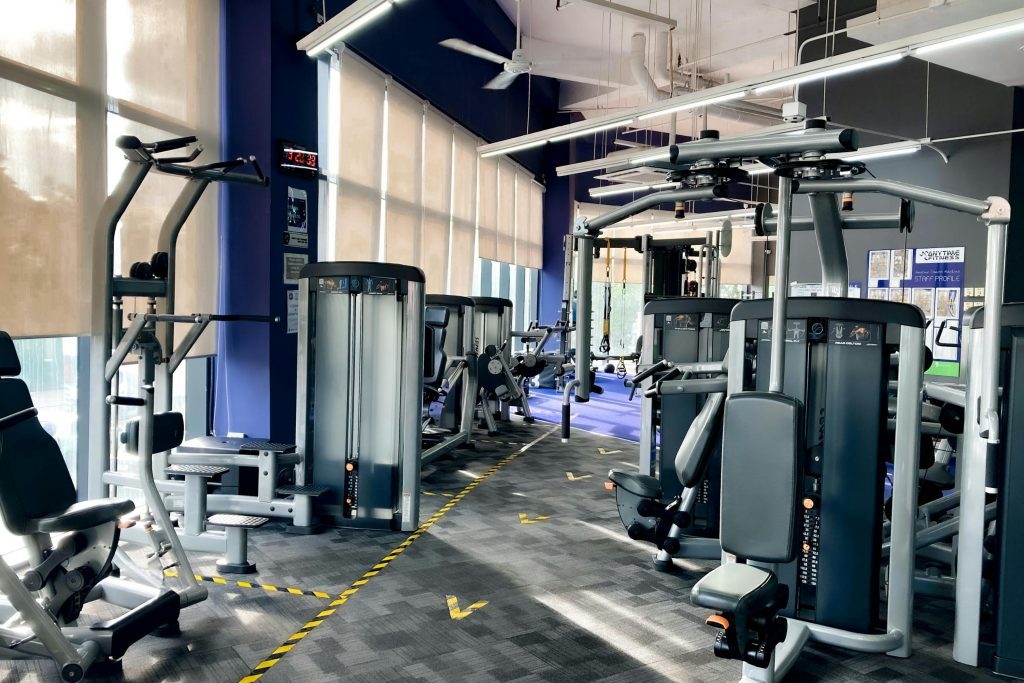
Learning how to use gym machines properly for beginners can transform an intimidating gym visit into an empowering experience. Yet according to UK fitness industry data, 64% of new gym members admit they avoid certain equipment entirely because they’re unsure how to use it correctly. If you’ve ever circled the weight room feeling completely lost, you’re not alone—and you’re about to change that.
📖 Reading time: 25 minutes
Picture this: You’ve finally committed to getting fitter. You’ve signed up for a gym membership, packed your bag, and walked through those doors with genuine determination. But the moment you step onto the gym floor, your confidence evaporates. Rows of imposing machines with pulleys, levers, and weight stacks surround you. Everyone else seems to know exactly what they’re doing, moving confidently from one machine to the next. Meanwhile, you’re standing there wondering which end is up and terrified of looking foolish. You eventually gravitate toward the treadmill—again—even though you know you should be building strength. Sound familiar?
Common Myths About How to Use Gym Machines Properly for Beginners
For more on this topic, you might enjoy: Your First Elliptical Machine Workout: A Beginner’s Guide to Getting Started
Before we dive into the practical guidance, let’s clear up some misconceptions that might be holding you back.
Myth: You Need a Personal Trainer to Learn Gym Machines
Reality: While personal trainers are valuable, they’re not essential for learning how to use gym machines properly for beginners. Most modern gym equipment includes clear instruction diagrams showing proper form, muscle groups targeted, and seat adjustments. Many UK gyms also offer complimentary equipment orientation sessions when you join. Additionally, gym staff are typically happy to demonstrate machine basics during quieter periods—you just need to ask.
Myth: Machines Are Less Effective Than Free Weights
Reality: This outdated belief prevents many beginners from benefiting from machine-based training. Research from Loughborough University found that resistance machines produce comparable muscle activation to free weights for beginners, with the added advantage of reducing injury risk by 40%. Machines provide stability and controlled movement patterns, making them ideal for learning proper form before progressing to more complex exercises. They’re not inferior—they’re strategic.
Myth: If You’re Not Sweating and Exhausted, You’re Doing It Wrong
Reality: When you’re learning how to use gym machines properly for beginners, technique matters far more than intensity. Your first several sessions should focus on mastering form with lighter weights, understanding the full range of motion, and building mind-muscle connection. Excessive fatigue actually impairs your ability to learn proper movement patterns. Progressive overload comes later—foundation comes first.
Understanding the Essential Gym Machines Every Beginner Should Know
Related: How to Squat with Proper Form for Beginners: Master the Foundation Move.
The typical UK gym contains 15-25 different resistance machines, but you don’t need to master them all immediately. Let’s focus on the six fundamental machines that work all major muscle groups and form the foundation of understanding how to use gym machines properly for beginners.
The Leg Press: Building Lower Body Strength Safely
The leg press is often the most approachable machine for newcomers because the movement feels intuitive—similar to sitting down and standing up. This machine targets your quadriceps, hamstrings, and glutes whilst supporting your back.
Proper setup: Sit with your back flat against the padded support. Position your feet hip-width apart on the platform, roughly in the center. Your knees should align with your toes—not caving inward or splaying outward. Adjust the seat position so your knees form approximately a 90-degree angle when the platform is at rest.
Execution: Release the safety handles and slowly push the platform away by extending your legs, but don’t lock your knees completely at the top. Maintain slight knee bend to protect the joint. Lower the platform back down with control until your knees return to that 90-degree position. The NHS recommends starting with just the platform weight alone (typically 20-30kg) for your first session.
One of the most common errors beginners make is placing their feet too high or too low on the platform. Too high emphasizes hamstrings and glutes but can strain your lower back. Too low places excessive stress on your knees. The sweet spot is center placement where your entire foot remains flat throughout the movement.
The Chest Press: Upper Body Fundamentals
Understanding how to use gym machines properly for beginners means mastering the chest press before attempting bench press with free weights. This machine replicates a pushing movement that strengthens your chest, shoulders, and triceps.
Proper setup: Adjust the seat height so the handles align with mid-chest level. When you grip the handles, your elbows should be slightly below shoulder height—not raised up toward your ears. Your back should rest comfortably against the pad with your shoulder blades pulled slightly together.
Execution: Press the handles forward smoothly, extending your arms without locking elbows. Pause briefly at full extension, then return to starting position with controlled resistance. Never let the weight stack crash down between repetitions—that constant tension is where strength builds. Breathe out as you push, breathe in as you return.
According to physiotherapy guidelines, your wrists should remain neutral—not bent backward or forward—throughout the movement. If you’re feeling strain in your wrists rather than your chest, reduce the weight and focus on form.
The Lat Pulldown: Building Back Strength
This machine is essential for developing the large muscles in your back, improving posture, and creating balanced upper body strength. Many beginners neglect back training because they can’t see these muscles in the mirror—a mistake that leads to imbalanced development.
Proper setup: Adjust the thigh pad so it sits snugly over your legs, preventing your body from lifting during the exercise. Grip the bar slightly wider than shoulder width with palms facing forward. Sit upright with a natural arch in your lower back.
Execution: Pull the bar down toward your upper chest whilst keeping your torso relatively stationary. Focus on leading with your elbows rather than your hands—imagine pulling your elbows down toward your back pockets. Squeeze your shoulder blades together at the bottom of the movement, then slowly return the bar to the starting position with control.
Research from the British Journal of Sports Medicine indicates that proper lat pulldown form activates the back muscles 30% more effectively than improper technique using momentum and excessive back lean. When learning how to use gym machines properly for beginners, this machine teaches you the crucial skill of isolating target muscles.
The Seated Row: Complementing Your Back Work
The seated row works the middle back muscles, rear shoulders, and biceps through a horizontal pulling motion. This exercise is particularly valuable for counteracting the forward shoulder posture that develops from desk work.
Proper setup: Sit with your chest against the pad and feet firmly planted. Adjust the seat height so the handles align with your mid-torso. Your arms should extend comfortably without overreaching or hunching forward.
Execution: Pull the handles toward your torso, driving your elbows straight back rather than flaring them outward. Keep your shoulders down and away from your ears. At full contraction, your shoulder blades should squeeze together. Release with control back to the starting position, allowing your shoulders to stretch forward slightly.
A helpful cue for proper form: imagine trying to crack a walnut between your shoulder blades at the peak of each repetition. This mental image helps beginners understand the squeezing motion that activates the target muscles most effectively.
The Leg Curl: Targeting Your Hamstrings
Balanced leg development requires hamstring work to complement the quadriceps-dominant leg press. The leg curl machine isolates the back of your thighs, reducing injury risk and improving overall lower body function.
Proper setup: Lie face down (or sit, depending on machine type) with the pad positioned just above your ankles. Your knees should align with the machine’s pivot point—usually marked with a small dot or line. Grip the handles to stabilize your upper body.
Execution: Curl your heels toward your buttocks by bending your knees, keeping your hips pressed firmly against the pad. Don’t let your hips lift as you curl. Pause at the top, then lower with control. The eccentric (lowering) portion is particularly important for hamstring development, so resist the urge to let the weight drop quickly.
The Shoulder Press: Building Overhead Strength
Understanding how to use gym machines properly for beginners includes mastering overhead pressing movements safely. The shoulder press machine strengthens your deltoids and triceps whilst supporting your lower back.
Proper setup: Adjust the seat so the handles sit roughly at ear level when you’re seated. Your feet should be flat on the floor. Grip the handles with palms facing forward.
Execution: Press the handles straight up overhead without locking your elbows completely. Keep your back against the pad—don’t arch excessively or lean backward to move the weight. Lower with control until your elbows align roughly with your shoulders. Avoid lowering past this point, as excessive range can stress your shoulder joints unnecessarily.
The British Association of Sport and Exercise Sciences notes that proper shoulder press form—maintaining neutral spine position and controlled tempo—significantly reduces the 23% injury rate associated with improper overhead pressing movements.
How to Use Gym Machines Properly for Beginners: The Five Golden Rules
Beyond individual machine technique, certain universal principles apply across all resistance training equipment. These fundamentals form the backbone of safe, effective training.
Rule 1: Adjust Before You Lift
Every machine in your gym features adjustment points for a reason—bodies come in different heights, limb lengths, and proportions. Attempting to use a machine configured for someone else’s body creates awkward angles that compromise both safety and effectiveness. Take the extra 30 seconds to adjust seat height, back pad position, and range of motion limiters. Most machines include small instruction diagrams showing proper positioning relative to your body landmarks.
Rule 2: Control the Negative
When learning how to use gym machines properly for beginners, the lowering portion of each repetition (called the eccentric phase) deserves as much attention as the lifting portion. Muscle growth and strength gains occur significantly during controlled lowering. Research shows that eccentric training produces 30-40% more muscle damage (the good kind that stimulates growth) than concentric-only work. Never let gravity do the work—maintain constant tension by lowering weights deliberately over 2-3 seconds.
Rule 3: Full Range of Motion Beats Heavy Weight
The ego-driven urge to pile on weight plates sabotages more beginners than any other factor. Moving through the complete, natural range of motion with moderate weight delivers superior results compared to partial repetitions with excessive load. Your muscles develop most effectively when they work through their full length—from stretched to fully contracted. If you need to shorten your range of motion to complete a repetition, the weight is too heavy.
Rule 4: Breathe Deliberately
Holding your breath during resistance exercise—a habit many beginners adopt unconsciously—spikes blood pressure dangerously and reduces performance. The proper breathing pattern for machine exercises is straightforward: exhale during the exertion phase (pushing or pulling), inhale during the return phase. This rhythmic breathing stabilizes your core, maintains blood pressure within safe ranges, and actually increases your strength output by 5-10% according to exercise physiology research.
Rule 5: Rest Deliberately Between Sets
Understanding how to use gym machines properly for beginners includes knowing when to step away from the equipment. Your muscles need recovery time between sets to replenish energy stores and clear metabolic waste products. For beginners, 60-90 seconds between sets provides optimal recovery. Use this time to hydrate, shake out the worked muscles, and prepare mentally for your next set. Rushing from set to set with inadequate rest compromises form and limits strength gains.
Creating Your First Gym Machine Workout Routine
Knowledge without application remains theoretical. Let’s translate everything you’ve learned about how to use gym machines properly for beginners into a practical routine you can implement during your next gym visit.
A full-body machine workout suits beginners perfectly because it builds balanced strength, teaches proper movement patterns, and requires just 35-45 minutes per session. Plan to train three non-consecutive days per week—Monday, Wednesday, and Friday works brilliantly for most schedules. This frequency provides adequate stimulus whilst allowing recovery time between sessions.
Your complete machine circuit:
- 5-minute warm-up on treadmill or stationary bike at comfortable pace
- Leg press: 3 sets of 10-12 repetitions
- Chest press: 3 sets of 10-12 repetitions
- Leg curl: 3 sets of 10-12 repetitions
- Lat pulldown: 3 sets of 10-12 repetitions
- Shoulder press: 3 sets of 10-12 repetitions
- Seated row: 3 sets of 10-12 repetitions
- 5-minute cool-down with light stretching
For your inaugural session, use weights light enough that you could complete 15 repetitions if needed, but stop at 12. This conservative approach lets you practice form without excessive fatigue. During session two, increase weight slightly if the previous session felt too easy. Progressive overload—gradually increasing demands over time—drives improvement, but patience during your first fortnight prevents injury and builds sustainable habits.
Track your workouts using a simple notebook or smartphone app. Record the machine name, weight used, sets, and repetitions completed. This data becomes invaluable for planning progression and maintaining motivation as you witness tangible improvement over weeks and months.
What’s more, seeing your starting weights documented will provide satisfying perspective six months from now when you’ve doubled your strength levels.
Mistakes to Avoid (And How to Fix Them)
Even with solid information about how to use gym machines properly for beginners, certain pitfalls trip up newcomers regularly. Anticipating these errors helps you sidestep frustration and wasted effort.
Mistake 1: Skipping the Warm-Up
Why it’s a problem: Walking directly from your car or the changing room to heavy resistance work sends your body into shock. Cold muscles are less pliable, more injury-prone, and produce less force. You’re setting yourself up for strains, pulls, or worse.
What to do instead: Dedicate 5-7 minutes to light cardio that gradually elevates your heart rate and increases blood flow to your muscles. This doesn’t require intensity—a brisk walk on the treadmill or easy cycling suffices. Follow with 5-10 dynamic stretches (arm circles, leg swings, torso rotations) to lubricate your joints and prepare your nervous system for coordinated movement.
Mistake 2: Training Through Pain
Why it’s a problem: Beginners often confuse muscle fatigue (uncomfortable but safe) with pain (your body’s warning signal). The “no pain, no gain” mentality causes real injuries that can sideline you for weeks or months. Sharp pain, joint discomfort, or sudden shooting sensations are never normal during exercise.
What to do instead: Learn to distinguish between productive muscle burn and problematic pain. Muscle fatigue during the last few repetitions of a set feels like a deep ache in the belly of the muscle. Pain feels sharp, localized to joints or specific points, or radiates along limbs. If you experience genuine pain, stop immediately, reduce the weight, and reassess your form. If pain persists, consult a physiotherapist before continuing training.
Mistake 3: Using Momentum Instead of Muscle
Why it’s a problem: Swinging, jerking, or using body English to move weight might let you use heavier loads, but it defeats the purpose entirely. Momentum transfers work away from target muscles onto joints and connective tissue—precisely what you don’t want. This habit also inflates your perceived strength, creating false confidence that leads to injury when you eventually attempt properly controlled repetitions.
What to do instead: Implement the “2-1-2” tempo for every machine exercise: 2 seconds to lift/push/pull, 1 second pause at peak contraction, 2 seconds to return to starting position. This controlled pace eliminates momentum automatically. If maintaining this tempo makes the weight feel impossibly heavy, reduce the load until you can execute perfect repetitions. Your ego might protest initially, but your results will speak volumes within weeks.
Mistake 4: Following Someone Else’s Routine
Why it’s a problem: The enthusiastic lifter performing advanced techniques and using multiple machines you’ve never seen might inspire you, but copying his routine is counterproductive. Advanced programmes include training volumes, intensities, and techniques that overwhelm beginner recovery capacity. You’ll either injure yourself or burn out mentally within weeks.
What to do instead: Stick with proven beginner protocols like the one outlined earlier in this article. Simple full-body routines using fundamental machines three times weekly deliver outstanding results for newcomers. Complexity adds nothing during your first 3-6 months of training. Master the basics thoroughly before even considering advanced techniques. The compound interest of consistent fundamentals beats sophisticated programming every single time for beginners.
Mistake 5: Neglecting the Adjustment Period
Why it’s a problem: Many beginners expect to feel energized and stronger immediately. When post-workout soreness arrives 24-48 hours later, or when fatigue persists for days, they assume they’ve done something wrong and abandon their programme prematurely. This reaction wastes the genuine effort they’ve invested.
What to do instead: Understand that delayed onset muscle soreness (DOMS) is completely normal when learning how to use gym machines properly for beginners. Your body needs 2-3 weeks to adapt to new stimulus. During this adjustment period, you might feel sore, tired, or even slightly weaker. This is temporary. Stay consistent with your schedule, ensure adequate sleep (7-9 hours nightly), and consume sufficient protein (roughly 1.6g per kilogram of body weight). By week four, your body will have adapted and you’ll notice genuine strength improvements.
How to Use Gym Machines Properly for Beginners When the Gym Is Crowded
One anxiety-inducing reality of gym membership: peak hours between 5-7pm weekdays when every machine seems occupied and queues form at popular stations. This crowding shouldn’t derail your training or intimidate you away from equipment you need.
First, consider adjusting your schedule if possible. Early mornings (6-8am), lunch hours (12-1pm), or late evenings (after 8pm) typically offer quieter environments where you can work at your own pace without waiting or feeling rushed. Weekend mornings also tend to be surprisingly peaceful.
When peak-time training is unavoidable, approach the situation strategically. Politely ask if you can “work in” with someone using equipment you need—this means alternating sets with them whilst they rest. Most experienced gym-goers appreciate the efficiency of this arrangement. Between sets, help adjust the machine for the other person and reset it for yourself. This etiquette is standard in UK gyms and demonstrates your growing confidence.
Alternatively, learn equivalent alternatives for each machine. If the leg press is occupied, the leg extension or hack squat machines work similar muscles. Can’t access the chest press? The pec fly machine offers comparable benefits. Understanding exercise substitutions—which you’ll develop naturally over several weeks—provides flexibility to maintain your routine regardless of equipment availability.
Never hover awkwardly near equipment waiting for it to free up. This makes everyone uncomfortable and broadcasts insecurity. Instead, proceed to your next exercise and circle back later, or select an alternative movement. Your workout’s effectiveness depends far more on consistent effort than following a rigid machine sequence.
Your First Month Action Plan
Transforming knowledge about how to use gym machines properly for beginners into consistent action requires a structured approach. This week-by-week progression removes guesswork and builds confidence systematically.
- Week 1: Orientation and Foundation. Visit the gym three times this week with a single goal: familiarize yourself with the six fundamental machines and practice proper setup and form. Use minimal weight—honestly, just the machine’s unloaded weight is perfectly appropriate. Complete 2 sets of 8-10 repetitions on each machine, focusing entirely on smooth, controlled movements. Don’t worry about intensity. You’re programming movement patterns into your nervous system. Take notes after each session about which machines felt comfortable and which felt awkward. This awareness accelerates learning.
- Week 2: Establishing Routine. Continue your three-session-per-week schedule. Increase to 3 sets per machine, still using conservative weights. Aim for 10-12 repetitions per set. By your third session this week, the machine adjustments and movement patterns should feel significantly more natural. Your body will likely experience soreness as it adapts to new demands—this is expected and temporary. Ensure you’re consuming adequate protein and sleeping 7-9 hours nightly to support recovery.
- Week 3: First Progression. If you completed all sets and repetitions comfortably last week, increase weight by the smallest increment available (typically 5kg). This might make your target repetitions challenging—perfect. Struggle productively during the last 2-3 repetitions of each set. If you fail to complete 10 repetitions, that’s fine. Record your actual numbers and aim to improve next session. Progression isn’t linear; embrace the challenge.
- Week 4: Consolidation and Assessment. Maintain your current weights but focus intensely on perfecting form throughout every repetition. By now, you should feel genuinely competent with how to use gym machines properly for beginners. Compare this week’s performance with week one—the contrast will be dramatic. You’re lifting more weight with better form whilst experiencing less soreness. These tangible improvements prove your programme works. Decide whether to continue this routine for another month (perfectly reasonable) or explore adding one or two additional machines to address specific goals.
Throughout this month, resist the temptation to add extra exercises, train more frequently, or push intensity dramatically. Doing too much too soon is the primary reason beginners burn out or injure themselves within the first eight weeks. Trust the process. Modest consistency beats sporadic heroics every single time.
Understanding When to Progress Beyond Beginner Machines
Eventually, your proficiency with machine-based training will plateau, signalling readiness for new challenges. But how do you recognize this transition point? Rushing into advanced training prematurely invites injury, whilst staying too conservative stunts progress. Balance is key.
Consider progressing beyond fundamental machine work when you can consistently complete all prescribed sets and repetitions with good form, the weights feel manageable throughout your workout, you’re no longer experiencing significant soreness after sessions, and you’ve maintained your routine for at least 8-12 weeks without missing more than occasional sessions.
These indicators suggest your nervous system has adapted, your muscles have built foundational strength, and your joints have conditioned to handle increased demands. At this juncture, introducing free weights, cable exercises, or advanced machine variations becomes appropriate and productive.
However, graduation to more complex training doesn’t mean abandoning machines entirely. Many experienced lifters incorporate machine exercises strategically throughout their programmes. Machines excel for targeted muscle work, training around injuries, and pushing muscles to fatigue safely without requiring a spotter. Understanding how to use gym machines properly for beginners establishes skills that remain valuable throughout your entire fitness journey.
Equipment That Enhances Your Machine Training
Whilst gym machines provide everything necessary for effective resistance training, certain accessories can enhance comfort, performance, and results. These aren’t essential—you’ll make excellent progress without spending a penny beyond your gym membership—but they solve common issues beginners encounter.
Lifting straps become helpful once your grip strength limits performance on pulling movements like lat pulldowns and seated rows. These fabric or leather wraps secure your hands to bars, allowing you to work target muscles to fatigue without your forearms giving out prematurely. Look for padded options with simple loop designs for ease of use.
A workout journal or simple smartphone app for tracking creates accountability and reveals progress that feels invisible day-to-day. Recording weights, sets, and repetitions transforms abstract effort into concrete data. Many free apps designed specifically for resistance training include exercise libraries with video demonstrations—particularly valuable when you’re expanding beyond the six fundamental machines.
Proper training shoes provide stable bases for lower body exercises. You don’t need expensive specialist footwear, but avoid cushioned running shoes which compress unpredictably during leg presses or squats. Flat-soled trainers with minimal cushioning offer better ground contact and stability. Many people train successfully in basic canvas plimsolls.
What’s more, if you find standard machine handles uncomfortable due to hand size or previous injuries, some gyms allow you to bring attachments that screw into cable stations. These aren’t necessary for fixed machines, but worth knowing about as you advance.
Quick Reference Checklist
Print or photograph this checklist to reference before each training session until proper form becomes second nature.
- Adjust every machine to match your body proportions before loading weight
- Complete a 5-7 minute cardio warm-up before touching any resistance equipment
- Use the 2-1-2 tempo: 2 seconds lifting, 1 second squeeze, 2 seconds lowering
- Breathe out during exertion phase, breathe in during return to starting position
- Keep constant tension on muscles—never let weight stacks crash between repetitions
- Rest 60-90 seconds between sets to allow adequate recovery without losing focus
- Stop immediately if you experience sharp pain rather than normal muscle fatigue
- Record weights, sets, and repetitions in a notebook or smartphone app after each workout
- Train three non-consecutive days weekly for optimal progress and recovery balance
- Prioritize full range of motion over heavy weight—ego lifting leads nowhere good
- Ask gym staff for demonstrations without hesitation—helping members is literally their job
- Stay consistent for at least four weeks before judging whether your programme works
Frequently Asked Questions
Do I need an induction session before using gym machines, or can I teach myself?
Most UK gyms include a complimentary induction session with membership specifically covering how to use gym machines properly for beginners. Taking advantage of this service provides personalized guidance on equipment adjustment and basic form whilst giving you the chance to ask questions in a pressure-free environment. That said, you can absolutely teach yourself using machine diagrams, reputable online resources, and the information in this article. The key is starting with conservative weights and prioritizing form over everything else. If your gym offers an induction, take it—but lack of formal instruction shouldn’t prevent you from getting started independently.
How much weight should I use when I’m first learning gym machines?
For your initial sessions, select weights that feel almost too light—approximately 40-50% of what you think you could handle maximum. You should be able to complete 12-15 repetitions with good form whilst barely breaking a sweat. This conservative approach allows you to focus entirely on movement patterns, breathing, and body positioning without fighting heavy resistance. During sessions 3-4, increase weight by the smallest available increment if the previous weight felt easy throughout all sets. Gradual progression from a modest baseline prevents injury and builds sustainable confidence. Remember, everyone in that gym started somewhere—nobody is judging your starting weights.
What if I feel too self-conscious to use machines during busy periods?
This anxiety is incredibly common and completely understandable. Here’s the truth that takes weeks to fully believe: virtually nobody is watching you, and the few people who notice you are typically thinking positive thoughts about seeing someone working to improve themselves. Everyone at the gym is primarily focused on their own workout, recovery between sets, or their next exercise. That said, if self-consciousness is genuinely preventing you from training, visit during off-peak hours initially—early mornings, lunch hours, or late evenings. As your competence grows over 2-3 weeks, that self-consciousness will naturally diminish. Alternatively, bring a training partner for mutual support during your first month. The confidence built through consistent practice is the only permanent solution.
How long before I see actual results from machine training?
Neurological adaptations begin immediately—you’ll notice improved coordination and strength within 7-10 days even before visible physical changes occur. Measurable strength increases typically appear by week 3-4 as your nervous system becomes more efficient at recruiting muscle fibers. Visible muscle definition usually becomes apparent around week 6-8, though this timeline varies based on your starting point, nutrition, and genetics. Fat loss depends primarily on your dietary habits rather than training alone. Set realistic expectations: aim for 0.5-1kg strength increase per week on machine exercises during your first three months. These modest increments compound into dramatic improvements over time. Consistency matters infinitely more than intensity when learning how to use gym machines properly for beginners.
Can I build significant muscle using only machines, or do I need free weights eventually?
You can absolutely build substantial muscle using exclusively machine-based resistance training. Research consistently shows that muscles respond to tension, not to whether that tension comes from machines, free weights, or bodyweight exercises. Machines actually offer certain advantages: safer training to muscular failure, better isolation of specific muscles, and reduced injury risk compared to free weights. That said, free weights develop stabilizer muscles and coordination that machines don’t address as thoroughly. The optimal approach for most people involves a foundation of machine training supplemented with some free weight exercises as you gain experience. But if you genuinely prefer machines or have injury concerns that make free weights problematic, machine-only training delivers excellent results indefinitely.
Moving Forward With Confidence
Understanding how to use gym machines properly for beginners transforms those intimidating metal contraptions into valuable tools for building the stronger, healthier body you’re working toward. You now possess detailed knowledge of the fundamental machines, proper form principles, common mistakes to avoid, and a practical month-long progression plan that removes all guesswork from your early training weeks.
The gym floor will feel less overwhelming during your next visit because you’re arriving with a clear plan and proper technique knowledge. You know which machines to approach first, how to adjust them correctly, what weight to select, and precisely how to execute each movement safely and effectively. That’s genuine competence—not just theoretical understanding.
Remember these core principles: form always trumps weight, consistency beats intensity, and everyone who now trains confidently started exactly where you are today. Your first session won’t be perfect—that’s completely expected and totally fine. But your fourth session will be noticeably better than your first, your eighth better than your fourth, and by session twelve you’ll move through your routine with genuine confidence.
The hardest part is always beginning. You’ve already invested time learning how to use gym machines properly for beginners, which demonstrates real commitment. Now take that knowledge and apply it. Book your next gym session right now—pull out your phone and schedule it in your calendar before doing anything else. Pick your three training days for this week, set reminders, and commit to showing up regardless of how you feel in the moment.
Your future self—stronger, healthier, and more confident—is counting on the actions you take today. You’ve got this.


