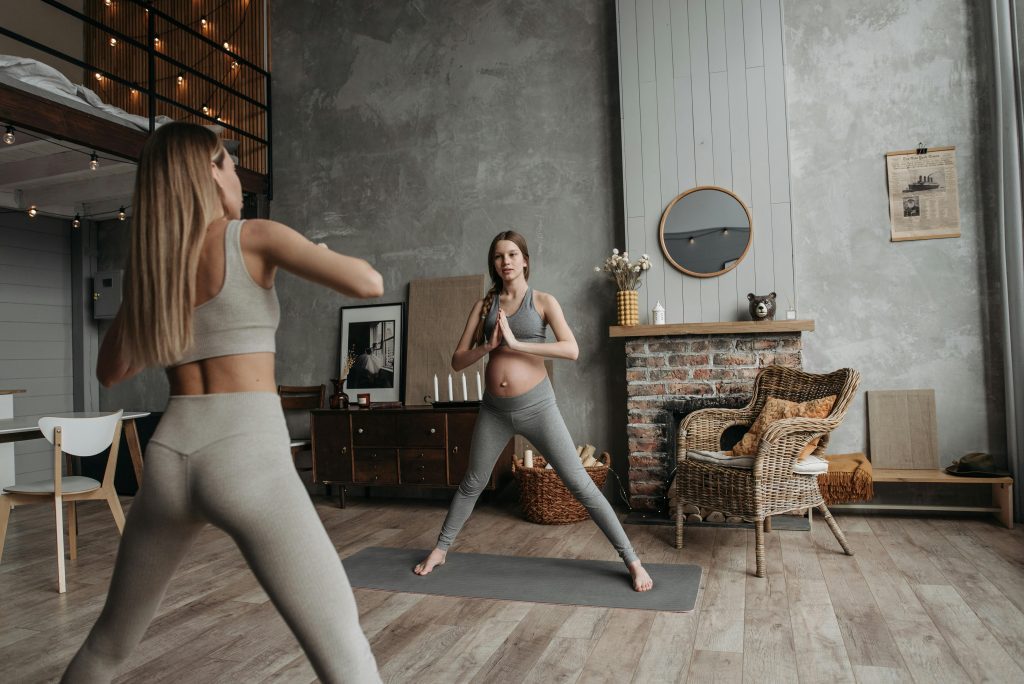
67% of pregnant women reduce or stop exercise completely, believing it’s unsafe. But here’s what research actually shows: safe strength training during pregnancy offers remarkable benefits for both mum and baby when done correctly.
Related reading: Tempo Training: Build Muscle 40% Faster With This Simple Method.
Picture this: You’re staring at your gym trainers, wondering if lifting those 5kg dumbbells could harm your growing baby. Your sister-in-law swears by staying active, but your nan thinks you should be resting on the sofa with your feet up. Meanwhile, your body feels strong and capable, yet every pregnancy forum seems to contradict the last one.
The confusion is real. Pregnancy advice swings between treating expectant mothers like fragile porcelain dolls and suggesting nothing changes. Truth is, strength training during pregnancy sits somewhere refreshingly balanced between these extremes, and understanding the specific guidelines for each trimester changes everything.
Common Myths About Strength Training During Pregnancy
Related reading: Strength Training for Women Over 50: Build Muscle That Lasts.
Myth: Exercise Will Harm Your Baby
Reality: Research from the Royal College of Obstetricians and Gynaecologists confirms that moderate strength training during pregnancy is not only safe but beneficial. Your baby is cushioned by amniotic fluid and protected by your uterus and abdominal muscles. Regular exercise actually reduces risks of gestational diabetes, excessive weight gain, and back pain.
Myth: You Should Keep Your Heart Rate Below 140 BPM
Reality: This outdated guideline from the 1980s has been abandoned. Modern guidance focuses on perceived exertion instead. You should be able to hold a conversation during strength training during pregnancy without gasping for breath. That’s your reliable measure, not an arbitrary heart rate number.
Myth: Pregnancy Means Going Easy on Everything
Reality: If you were strength training before pregnancy, you can continue with modifications. The NHS advises that pregnancy is not the time to dramatically increase intensity, but maintaining your routine with appropriate adjustments is perfectly safe and recommended.
The Science-Backed Benefits You Need to Know
You might also enjoy: How to Adjust Training Around Your Menstrual Cycle
Safe strength training during pregnancy delivers benefits that extend well beyond maintaining muscle tone. Research published in the British Journal of Sports Medicine found that pregnant women who continued resistance training experienced fewer delivery complications and faster postpartum recovery.
Regular strength work helps your body cope with the physical demands of carrying extra weight. Your posture improves, reducing the notorious back pain that affects 50-70% of pregnant women. Strong glutes, core, and back muscles support your changing centre of gravity, making daily activities more comfortable as your bump grows.
What’s more, strength training during pregnancy prepares your body for labour itself. Squats strengthen the muscles used during delivery. Upper body work makes carrying a newborn (and eventually a toddler) manageable. Your pelvic floor benefits from controlled, mindful movement patterns.
Mental health improvements matter too. A study from Cambridge University found that pregnant women who exercised regularly reported lower anxiety levels and better sleep quality compared to sedentary counterparts. That consistent strength training session becomes your stress-relief anchor during the emotional rollercoaster of pregnancy.
Your First Trimester Strength Training Blueprint (Weeks 1-13)
The first trimester feels like a cruel joke. You’re exhausted, possibly nauseous, and nobody can even tell you’re pregnant yet. Strength training during pregnancy in these early weeks requires listening to your body above all else.
If you were already training before conception, you can generally continue your routine with minor adjustments. Focus on maintaining rather than making dramatic gains. Your body is working overtime creating a placenta and doubling blood volume. That’s exhausting enough without pushing for personal records.
What to Include in First Trimester Training
Bodyweight squats remain your friend. They strengthen legs and glutes without requiring equipment or complicated setups. Keep your feet hip-width apart, lower until thighs are parallel to the ground, and push through your heels to stand.
Modified press-ups on an incline work brilliantly during early pregnancy. Find a sturdy bench or kitchen counter. This angle reduces pressure on your abdomen while building upper body strength. Aim for three sets of 8-10 repetitions.
Resistance bands become incredibly useful throughout pregnancy. They provide adjustable tension without the bulk of dumbbells. Banded rows strengthen your back muscles, countering the forward pull of growing breasts. Loop a band around a door handle, step back until there’s tension, and pull your elbows back towards your ribs.
First Trimester Safety Adjustments
Listen to nausea patterns. Many women feel worse on empty stomachs but can’t train immediately after eating. Find your window. Sometimes an early afternoon session works better than morning or evening during these weeks.
Reduce weights by 10-20% if fatigue hits hard. Strength training during pregnancy isn’t about ego. Completing 12 reps with 4kg dumbbells beats struggling through 6 reps with 8kg.
Stay hydrated obsessively. Dehydration during pregnancy affects amniotic fluid levels. Keep a water bottle within arm’s reach during training.
Second Trimester Strength Work: Your Golden Window (Weeks 14-27)
Welcome to the honeymoon period. Energy returns, nausea typically fades, and your bump isn’t yet large enough to severely restrict movement. This trimester offers the best opportunity for consistent strength training during pregnancy.
Your focus shifts towards exercises that maintain strength while accommodating your growing abdomen. Flat-on-your-back exercises need modification after 16 weeks, as lying supine can compress your vena cava, reducing blood flow to your baby.
Modified Second Trimester Exercises
Goblet squats with a single dumbbell held at chest height encourage proper upright posture. Something like a 6-8kg dumbbell works well for most women, though adjust based on your pre-pregnancy strength. Three sets of 10-12 reps build leg strength essential for later carrying your baby everywhere.
Incline chest press replaces flat bench pressing. Prop yourself on a stability wedge or adjustable bench at 30-45 degrees. This angle keeps pressure off your vena cava while working chest and shoulders. Light dumbbells (3-5kg each) prevent excessive strain.
Split squats challenge balance and strengthen legs unilaterally. Place one foot behind you on a low step, lower your back knee towards the floor, then drive through your front heel to stand. This movement pattern mimics getting up from the floor with a baby later.
Single-arm rows with a dumbbell strengthen your back without requiring you to lie prone. Hinge forward at your hips with one hand supported on a bench, row the weight towards your ribcage. Your back muscles work overtime supporting your growing bump, so keep these in your routine.
Core Work That Actually Helps
Traditional crunches stop now. Instead, focus on functional core exercises that support your changing body. Strength training during pregnancy should include exercises that prevent diastasis recti (abdominal separation) rather than worsen it.
Standing pallof presses work deep core muscles. Anchor a resistance band at chest height, hold the handle at your sternum, then press straight out while resisting rotation. Your core fires to keep you stable. Perform 10-12 reps per side.
Bird dogs on hands and knees strengthen your back and deep abdominal muscles. Extend opposite arm and leg, hold for three seconds, return to start. Move deliberately. Quality matters more than quantity.
Side planks on your knees build oblique strength without the pressure of full planks. Prop yourself on one forearm, knees bent, lift your hips until your body forms a straight line from knees to head. Hold for 15-20 seconds, building to 30 seconds as you progress.
Third Trimester Training: Staying Strong Until Delivery (Weeks 28-40)
Your bump is substantial now. Bending over to tie shoelaces feels like an achievement. Yet strength training during pregnancy in the final trimester offers tremendous benefits for labour preparation and postpartum recovery.
Movement becomes more challenging. Balance shifts as your centre of gravity moves forward. Exercises require more modification, but consistency matters more than intensity during these final weeks.
Third Trimester Safe Exercise Selection
Supported squats using a stability ball against the wall provide safety while maintaining leg strength. The ball supports your back, reducing balance demands. Lower only as far as comfortable. Many women manage half-squats rather than full-depth during these weeks.
Wall press-ups become easier than floor variations. Stand arm’s length from a wall, place hands flat against it, perform press-ups at this steep angle. Your bump doesn’t interfere, and you can control intensity by adjusting your distance from the wall.
Lateral raises with very light dumbbells (1-2kg) maintain shoulder strength. Growing breasts and preparing for constant baby-holding make shoulder work valuable. Raise arms to shoulder height, lower with control. Two sets of 12-15 reps suffice.
Seated exercises become increasingly practical. Seated shoulder presses, bicep curls, and tricep extensions can all be performed safely while supported on a sturdy chair or bench. This eliminates balance concerns while allowing upper body work to continue.
Pelvic Floor Integration
Every strength exercise during the third trimester should involve pelvic floor awareness. Before lifting, exhale and gently engage your pelvic floor. Release during the lowering phase. This coordination prepares these muscles for labour and prevents excessive weakening.
Avoid bearing down or holding your breath during lifts. Breathe steadily throughout each repetition. Your pelvic floor is already under significant pressure from your baby’s weight. Adding excessive intra-abdominal pressure through breath-holding or straining increases injury risk.
Universal Safety Guidelines for Pregnancy Strength Training
Regardless of trimester, certain principles guide all safe strength training during pregnancy. These non-negotiables protect both you and your growing baby.
The Talk Test Never Fails
You should maintain a conversation throughout your workout. If you’re gasping between words, intensity is too high. This simple test works better than heart rate monitors for gauging appropriate exertion during pregnancy.
Temperature Management Matters
Overheating during pregnancy poses risks, particularly in the first trimester when organs are forming. Train in well-ventilated spaces, wear breathable clothing, and stop if you feel uncomfortably hot. British weather helps, but stuffy gyms or warm yoga studios require extra caution.
Modify Without Guilt
Your pre-pregnancy personal records are irrelevant now. Reduce weights, decrease reps, add rest periods. Strength training during pregnancy serves a different purpose than training for strength gains. Accept this mentally, and training becomes enjoyable rather than frustrating.
Warning Signs to Stop Immediately
Certain symptoms require immediate cessation of exercise. Vaginal bleeding, dizziness, chest pain, severe headache, calf pain or swelling, or leaking amniotic fluid all demand stopping and contacting your midwife or doctor.
Contractions during exercise are common and usually harmless Braxton Hicks. However, regular, painful contractions warrant medical assessment, particularly before 37 weeks.
Equipment Essentials and Home Setup Options
Strength training during pregnancy doesn’t require extensive equipment. A minimalist approach often works best, eliminating trip hazards and allowing flexible workout locations.
Adjustable dumbbells offer versatility without cluttering your home. Look for options ranging from 2-10kg. You’ll likely use the lighter end more as pregnancy progresses, but having options allows gradual adjustment.
Resistance bands in varying strengths provide endless exercise variations. Light, medium, and heavy bands cost less than a single gym session and fit in a drawer. They’re particularly useful for upper back work, which becomes increasingly important as posture shifts.
A sturdy chair or ottoman enables modified exercises and provides support when balance becomes challenging. You probably already own this, but ensuring it’s stable and height-appropriate makes training safer.
A yoga mat cushions floor work during the first two trimesters. Once lying flat becomes uncomfortable, the mat still provides traction for standing exercises and cushioning for hands-and-knees positions.
Your Progressive 12-Week Second Trimester Programme
This practical plan provides structure while remaining flexible enough to accommodate how you feel day-to-day. Adjust intensity based on energy levels, and never feel obligated to push through exhaustion.
Weeks 14-17: Foundation Building
- Monday/Thursday: Complete 3 sets of 12 goblet squats, 10 incline press-ups, 12 single-arm rows per side, and 10 standing pallof presses per side. Rest 60-90 seconds between sets.
- Tuesday/Friday: Perform 3 sets of 15 bodyweight squats, 12 lateral raises, 10 bicep curls, and 30-second side planks per side. Keep movements controlled and deliberate.
- Wednesday/Weekend: Choose one day for a gentle 20-30 minute walk. Active recovery matters as much as training during pregnancy.
Weeks 18-21: Building Consistency
- Monday/Thursday: Increase to 4 sets while maintaining the same exercises. Add split squats (10 per leg) before lateral raises. Rest periods can extend to 2 minutes if needed.
- Tuesday/Friday: Introduce banded rows (12 reps) and wall press-ups (15 reps). Maintain the established rep ranges for other exercises.
- Active days: Two walking sessions or one swim if you enjoy water-based exercise. Many women find swimming particularly comfortable during the second trimester.
Weeks 22-27: Maintaining Momentum
- All strength sessions: Listen carefully to your body. Some weeks you’ll feel strong, others tired. Adjust weights and reps accordingly rather than rigidly following the plan.
- Introduce variety: Swap exercises if certain movements become uncomfortable. Incline chest press can replace press-ups, supported squats can replace goblet squats.
- Continue moving: Aim for 150 minutes of moderate activity weekly, as recommended by NHS guidelines. Strength sessions count towards this total.
Common Mistakes to Avoid (And How to Fix Them)
Mistake 1: Holding Your Breath During Lifts
Why it’s a problem: Breath-holding increases intra-abdominal pressure and can worsen diastasis recti. It also reduces oxygen delivery to your baby and can cause dizziness.
What to do instead: Breathe out during the exertion phase (lifting the weight), inhale during the lowering phase. Practice this breathing pattern with bodyweight exercises first until it becomes automatic.
Mistake 2: Comparing Yourself to Pre-Pregnancy Performance
Why it’s a problem: Your body is performing the remarkable feat of growing a human. Expecting to match previous strength levels adds unnecessary stress and increases injury risk through overexertion.
What to do instead: Establish new benchmarks for pregnancy training. Celebrate completing workouts consistently rather than lifting specific weights. Your goal is maintaining strength and preparing for labour, not setting personal records.
Mistake 3: Skipping Warm-Up and Cool-Down
Why it’s a problem: Pregnancy hormones, particularly relaxin, loosen ligaments and increase joint mobility. Jumping straight into strength training during pregnancy without warming up increases injury risk to unstable joints.
What to do instead: Spend 5-10 minutes on gentle movement before training. Arm circles, hip circles, bodyweight squats, and walking in place prepare your body. Follow training with 5 minutes of stretching, focusing on hip flexors, chest, and upper back.
Mistake 4: Training Through Pain
Why it’s a problem: Discomfort differs from pain. Sharp pain, particularly in your pelvis, abdomen, or joints, signals something is wrong. Pushing through genuine pain during pregnancy can cause injuries that persist postpartum.
What to do instead: Distinguish between muscle fatigue (acceptable) and joint or sharp pain (stop immediately). If an exercise hurts, skip it. Consult a women’s health physiotherapist if pelvic or abdominal pain develops during or after training.
Your Pregnancy Strength Training Quick Reference
- Maintain conversation ability throughout every workout session
- Avoid lying flat on your back after 16 weeks gestation
- Reduce weights by 10-20% and focus on controlled movements over heavy loads
- Engage your pelvic floor gently before each lift, release during lowering phase
- Stop immediately if you experience bleeding, dizziness, severe pain, or regular contractions
- Train 2-4 times weekly with at least one rest day between sessions
- Prioritize exercises that strengthen posterior chain muscles (back, glutes, hamstrings)
- Adjust your programme every trimester to accommodate your changing body
Frequently Asked Questions
Can I start strength training during pregnancy if I wasn’t active before?
Absolutely, but begin conservatively. Start with bodyweight exercises twice weekly and gradually add light resistance after 2-3 weeks. Many women successfully begin strength training during pregnancy even without previous experience. Focus on proper form over intensity, and consider working with a prenatal fitness specialist initially to learn safe techniques. The second trimester typically offers the best window for establishing new exercise habits.
How heavy can I lift during pregnancy?
There’s no universal weight limit, as it depends on your pre-pregnancy strength level. A helpful guideline is using weights that allow 12-15 controlled repetitions with good form while maintaining conversation ability. Generally, reduce your pre-pregnancy working weights by 10-20% initially, then adjust based on how you feel. If you’re straining, grunting, or holding your breath, the weight is too heavy regardless of the number on the dumbbell.
What exercises should I completely avoid while pregnant?
Skip exercises with high fall risk (box jumps, plyometrics), those requiring lying flat after 16 weeks (flat bench press, certain ab work), heavy overhead lifts that strain your pelvic floor, and any movement causing abdominal coning or doming. Avoid exercises where you bear down or hold your breath. Sports with collision risk or balance challenges also need eliminating. When uncertain about a specific exercise, consult your midwife or a women’s health physiotherapist.
Will strength training make labour easier?
Research suggests that women who maintain fitness during pregnancy often experience shorter active labour and report feeling better equipped to handle the physical demands. Strong legs, glutes, and pelvic floor muscles directly support various labour positions. Upper body strength helps during pushing phases and immediate postpartum when you’re constantly lifting and carrying your newborn. However, every labour is unique, and fitness is just one factor among many that influence the experience.
When should I stop strength training before my due date?
Many women continue modified strength training during pregnancy right until labour begins, and this is perfectly safe. Listen to your body rather than adhering to arbitrary timelines. Some women feel great training at 39 weeks, whilst others prefer stopping around 36-37 weeks. Reduce intensity in the final weeks, focusing on bodyweight or very light resistance. Gentle movement until delivery often helps with positioning and can ease late pregnancy discomfort.
Building Confidence Through Consistent Training
Safe strength training during pregnancy transforms how you experience these nine months. Research shows that active pregnant women report higher body confidence, better sleep quality, and reduced anxiety compared to sedentary counterparts.
Your body deserves movement, not wrapping in cotton wool. The remarkable changes happening internally benefit from external support through appropriate strength work. Each squat prepares your legs for labour positions. Every row counters the forward pull of your growing bump. The modified press-ups build the upper body strength you’ll desperately need when your newborn cluster feeds for hours.
Trust your body’s signals. Pregnancy isn’t the time for pushing limits, but it’s also not a time for unnecessary limitation. Strength training during pregnancy, approached sensibly and modified appropriately, offers benefits that extend well beyond the delivery room into your postpartum recovery and early motherhood.
The programme you’ve built over these weeks becomes your foundation. After delivery, you’ll return to movement faster and more confidently because you never stopped completely. You’ll lift your baby carrier without back strain because you strengthened those muscles throughout pregnancy. You’ll navigate sleep deprivation more resiliently because you maintained physical capability during these nine months.
Start with what feels manageable today. Pregnancy lasts approximately 40 weeks, giving you time to establish sustainable habits. Progress looks different for everyone. Some weeks you’ll complete four training sessions, others just two. Both scenarios represent success when you’re growing a human being.
Consistency beats intensity every single time during pregnancy. Those women who maintain gentle, regular strength training during pregnancy throughout all three trimesters report the most benefit. You’ve got the knowledge, the safety guidelines, and a practical framework. Trust yourself, modify without guilt, and keep moving through this incredible journey.


