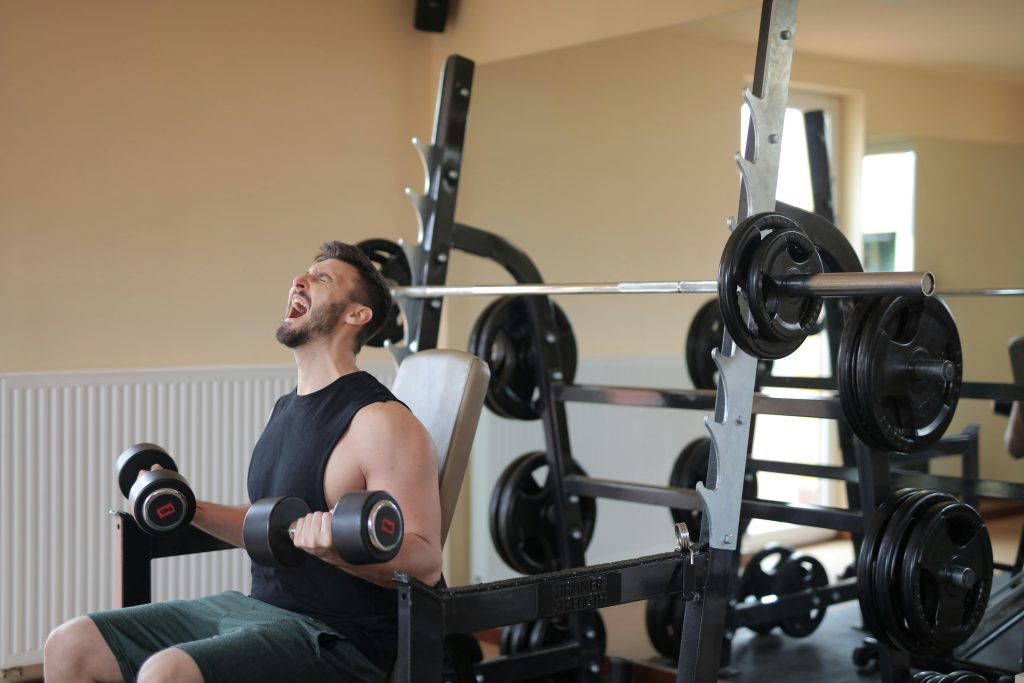
Think about the last time you struggled to carry shopping bags up the stairs, or felt your arms shake trying to move furniture. That frustration of wanting to feel physically capable but not quite having the strength you need? You’re not alone. Building functional strength through lifting isn’t about becoming a bodybuilder. It’s about reclaiming the confidence that comes from feeling genuinely strong in your own body.
Related reading: The One Gym Habit That Changed Everything (And It’s Not What You Think).
Most people assume lifting weights means hours at the gym, complicated equipment, and following programmes designed for athletes. The reality is far simpler. Your body doesn’t care whether you’re lifting dumbbells or heavy shopping bags. What matters is progressive resistance, consistent effort, and movements that translate to everyday life.
Related reading: Hypertrophy: Build Muscle Mass Through Science-Based Training
Common Myths About Getting Stronger Through Lifting
Myth: Lifting heavy weights will make you bulky
Reality: Building significant muscle mass requires years of dedicated training, specific nutrition plans, and often genetic advantages. Regular lifting creates lean, functional muscle that improves your metabolism and bone density. According to NHS guidelines on strength training, resistance exercises are essential for maintaining healthy bones and preventing age-related muscle loss. That toned, capable feeling you’re after? That’s exactly what consistent lifting delivers.
Myth: You need a gym membership to lift properly
Reality: Your home has everything you need to start. Filled water bottles, bags of rice, or a sturdy backpack loaded with books all provide resistance. Bodyweight exercises like press-ups and squats are forms of lifting where you’re moving your own mass. Sure, dedicated equipment like a basic set of adjustable dumbbells gives you more options as you progress, but they’re not mandatory for beginners.
Myth: Lifting is dangerous for your joints
Reality: Poor form is dangerous. Proper lifting technique actually strengthens the connective tissues around your joints, making them more resilient. Research from the University of Birmingham shows that regular resistance training reduces arthritis symptoms and improves joint stability. The key is starting with manageable weights and focusing on controlled movements rather than ego-lifting beyond your current capacity.
Why Lifting Transforms More Than Just Your Muscles
Here’s what’s interesting about strength training. The physical changes are just the beginning. When you start a regular lifting routine, your body begins producing more mitochondria in your cells, essentially upgrading your energy production system. You’ll notice climbing stairs becomes easier within three weeks, even before visible muscle changes appear.
The mental shift happens even faster. There’s something profoundly empowering about deliberately choosing to do something difficult, then watching yourself get better at it. That confidence spills over into other areas of life. People who commit to consistent lifting report feeling more capable at work, more patient with challenges, and generally more resilient when facing setbacks.
Your bones respond brilliantly to lifting too. Every time you create resistance, your skeletal system adapts by increasing bone density. This matters enormously for long-term health, particularly for preventing osteoporosis later in life. Women especially benefit from starting strength training early, though it’s never too late to begin.
The metabolic advantage nobody mentions
Muscle tissue burns calories even while you’re sleeping. Build more muscle through regular lifting, and your resting metabolic rate increases permanently. Not dramatically, but enough that over months and years, it makes maintaining a healthy weight significantly easier. You’re essentially upgrading your body’s idle speed.
Better yet, the “afterburn effect” means your metabolism stays elevated for up to 48 hours after a lifting session. This is why three 30-minute sessions per week often delivers better body composition results than hours of steady cardio. You’re working smarter, not longer.
Your First Month: A Practical Lifting Plan
Starting a lifting routine doesn’t require perfection. What it requires is showing up three times per week and doing movements that challenge multiple muscle groups. This plan works whether you’re using dumbbells, resistance bands, or household items.
Week 1-2: Learning the fundamentals
Focus on mastering five essential movement patterns. These form the foundation of functional strength that translates to real life:
- Squats teach you to lift with your legs, protecting your back when picking things up
- Press movements strengthen your shoulders and chest for pushing tasks
- Rows build back strength for pulling actions and improve posture
- Deadlift variations train the hip hinge pattern crucial for safe lifting
- Core exercises create stability that protects your spine during movement
Perform each movement for 2 sets of 8-10 repetitions, three times this week. Use a weight that feels challenging by the last 2 repetitions but doesn’t compromise your form. Rest 90 seconds between sets. The entire session takes about 25 minutes.
Something worth noting: your muscles will feel sore 24-48 hours after these first sessions. That’s delayed onset muscle soreness (DOMS), and it’s completely normal. It doesn’t mean you’ve injured yourself. It means your body is adapting. The soreness decreases dramatically by week three.
Week 3-4: Building consistency and adding load
Increase to 3 sets of each exercise. Add slightly more weight or resistance, even if it’s just 0.5-1kg. Your body adapts remarkably quickly when challenged consistently. You should notice movements feeling smoother and more controlled. That neural adaptation means your brain is getting better at recruiting muscle fibres efficiently.
Track your workouts in a simple notebook or phone app. Write down what weight you used, how many reps you completed, and how it felt. This isn’t about obsessing over numbers. It’s about having clear evidence that you’re progressing, which becomes powerfully motivating when momentum dips.
Essential Lifting Techniques That Keep You Safe
Proper form isn’t optional. It’s the difference between building strength safely and creating problems that sideline you for weeks. These cues apply whether you’re lifting a barbell, dumbbell, or bag of potatoes.
The braced core principle
Before every lift, imagine someone’s about to poke you in the stomach. That automatic tensing? That’s a braced core. Take a breath, tighten your abs without holding your breath during the movement, and maintain that tension throughout. This creates internal pressure that stabilises your spine.
Your lower back should maintain its natural curve, never rounding forward under load. If you can’t keep this position, the weight is too heavy or you’re too fatigued. Drop the weight or end the set. Pride heals faster than disc injuries.
The shoulder pack technique
Pull your shoulder blades down and slightly back, as if tucking them into your back pockets. This position protects your shoulder joints during pressing and rowing movements. Shrugged shoulders or rounded upper backs put unnecessary strain on delicate structures.
Check your position in a mirror or reflective surface during your first few weeks. What feels “right” initially might not match what’s actually safe. Visual feedback helps reprogram movement patterns correctly.
Controlled negatives matter more than you think
The lowering phase of every lift should take 2-3 seconds. Dropping weights quickly cheats you out of half the strengthening benefit. Eccentric contractions (when muscles lengthen under load) create more muscle damage than concentric ones, which sounds bad but actually drives adaptation and growth.
Count silently: “one thousand, two thousand, three thousand” on the way down. Pause briefly at the bottom. Then lift with controlled power. This tempo builds strength faster than rushed repetitions.
Mistakes That Sabotage Your Lifting Progress
Mistake 1: Skipping warm-ups because you’re short on time
Why it’s a problem: Cold muscles and stiff joints are vulnerable to strains. Jumping straight into loaded movements without preparation increases injury risk and reduces performance. You’re literally leaving strength gains on the table.
What to do instead: Spend 5 minutes on dynamic movement before touching weights. Arm circles, leg swings, bodyweight squats, and light cardio gets blood flowing to muscles and synovial fluid lubricating joints. Consider it part of the workout, not optional.
Mistake 2: Using momentum instead of muscle
Why it’s a problem: Swinging weights or bouncing out of the bottom of movements transfers work from muscles to momentum and connective tissues. You’re training physics, not physiology. Progress stalls and injury risk climbs.
What to do instead: Reduce the weight until you can complete every repetition with deliberate control. Pause at the top and bottom of each movement. If you need to jerk or swing to complete a rep, it’s too heavy for you right now.
Mistake 3: Training the same movements every session
Why it’s a problem: Your body adapts specifically to the stresses you impose. Repeating identical workouts leads to plateaus and overuse injuries in frequently stressed areas. Balanced strength requires varied stimulus.
What to do instead: Alternate between different movement variations. Monday might be goblet squats, Wednesday could be lunges, Friday try split squats. All build leg strength through different angles and patterns. This approach, called varied practice, accelerates learning and builds more complete strength.
Mistake 4: Ignoring rest days
Why it’s a problem: Muscle growth and strength gains happen during recovery, not during workouts. Training breaks down tissue. Rest rebuilds it stronger. Skip recovery and you’re just accumulating damage without reaping benefits.
What to do instead: Schedule at least 48 hours between training the same muscle groups. Three full-body sessions per week with rest days between works brilliantly for most people. Active recovery like walking or gentle yoga on off days supports healing without impeding it.
Nutrition That Supports Your Lifting Goals
You can’t out-train poor nutrition. Your muscles need raw materials to repair and strengthen. The good news? You don’t need complicated meal plans or expensive supplements. Just consistent basics.
Protein intake matters most. Aim for roughly 1.6-2.2 grams per kilogram of body weight daily when lifting regularly. That’s about 112-154 grams for a 70kg person. Spread it across meals rather than loading it all at dinner. Your body can only process about 30-40 grams efficiently in one sitting.
Carbohydrates fuel your training sessions. Low-carb diets make lifting feel brutally hard because glycogen (stored carbs in muscles) powers high-intensity efforts. Potatoes, rice, oats, and fruit provide clean energy without digestive issues. Time your largest carb portions around training sessions for best performance.
Hydration impacts strength more than most realise
Even 2% dehydration reduces force production by up to 10%. Drink 500ml of water 1-2 hours before lifting, sip during sessions lasting over 45 minutes, and rehydrate afterwards. Your urine should be pale yellow. Darker means you’re behind on fluids.
Many people find keeping a refillable water bottle within reach throughout the day makes adequate hydration almost automatic. Those marked ones showing time targets? They actually work by creating simple visual accountability.
Equipment Worth Considering as You Progress
Bodyweight training takes you far. Eventually, though, external resistance offers advantages that pure calisthenics can’t match. You don’t need much, and what you choose should fit your space and budget.
A set of adjustable dumbbells covering roughly 2-20kg gives you room to grow across different exercises. Look for comfortable grip textures and secure locking mechanisms. Compact sets that adjust with a dial or pin work well for home use where storage matters. They’re particularly useful for unilateral work that addresses strength imbalances between sides.
Resistance bands offer variable tension that challenges muscles differently than fixed weights. The tension increases throughout the movement range, which loads muscles at peak contraction in ways dumbbells can’t. They’re brilliant for travel and take up almost no space. Loop bands around 10-50 pounds of resistance cover most strength exercises.
A simple pull-up bar that fits in a doorframe opens up dozens of back and arm exercises. These cost about £20-30 and install without tools in most standard doorways. Even if you can’t do a full pull-up yet (most people can’t initially), they’re useful for hangs, negative repetitions, and assisted variations using a chair.
Your Quick Reference Lifting Checklist
- Brace your core before every single repetition to protect your spine
- Lower weights slowly over 2-3 seconds rather than dropping them quickly
- Rest 48 hours between training the same muscle groups for proper recovery
- Warm up with 5 minutes of dynamic movement before touching weights
- Eat protein within a few hours of training to support muscle repair
- Track your workouts to ensure progressive overload over time
- Focus on form perfection before adding heavier loads
- Schedule three sessions weekly rather than cramming everything into weekends
Frequently Asked Questions
How quickly will I see results from regular lifting?
Strength gains appear remarkably fast. Most people notice functional improvements within 2-3 weeks. You’ll carry shopping bags more easily and climb stairs without breathing hard. Visible muscle changes take 8-12 weeks of consistent training because building actual tissue takes time. Neural adaptations (your brain getting better at recruiting muscle fibres) happen first, which is why you get stronger before looking different. Stick with it through that initial phase.
Can I build strength with just bodyweight exercises?
Absolutely, especially when starting. Press-ups, squats, lunges, and planks provide significant resistance for beginners. Gymnasts develop incredible strength using primarily bodyweight training. Eventually, adding external load becomes more efficient for building maximum strength, but bodyweight training alone takes you impressively far. Progress by increasing repetitions, slowing tempo, or trying more challenging variations like single-leg squats or archer press-ups.
Should I lift if I’ve got joint pain?
Consult your GP first, but in many cases appropriate strength training actually reduces joint pain by strengthening surrounding muscles that support and stabilise joints. The NHS recommends strength exercises for managing arthritis. Start with very light loads, focus on perfect form, and work through pain-free ranges of motion. Avoid exercises that cause sharp pain. Dull achiness that fades quickly after training is usually fine. Building supporting muscle strength often resolves chronic joint issues that stem from instability or weakness.
What time of day is best for lifting workouts?
The best time is whenever you’ll actually do it consistently. That said, most people perform slightly better later in the day when body temperature is higher and joints feel looser. Morning sessions work brilliantly for consistency because fewer things derail early workouts. Avoid training within 3-4 hours of bedtime as the adrenaline and elevated body temperature can interfere with sleep quality. Choose a time that fits your schedule and energy patterns, then stick with it.
How do I know when to increase the weight?
When you can complete all prescribed sets and repetitions with good form and the last few reps don’t feel particularly challenging, it’s time to progress. Generally, once you hit 12 clean repetitions comfortably, increase load by roughly 5-10% and drop back to 8 reps. This creates a progression cycle that steadily builds strength. Track your workouts so you have objective data rather than relying on memory. Progressive overload drives adaptation, so aim to challenge yourself slightly more each week.
Making Lifting Fit Your Actual Life
Theory means nothing if it doesn’t translate to real-world consistency. The perfect programme you abandon after three weeks achieves less than a decent programme you maintain for three months.
Start by identifying your biggest obstacles. If time is tight, accept that three focused 30-minute sessions beat vague plans for hour-long workouts you never do. If motivation fluctuates, schedule sessions like unmovable appointments. Put them in your calendar with reminders.
Prepare the night before. Lay out your workout clothes, fill your water bottle, and eliminate decision fatigue. Morning people should train early before work demands pile up. Evening people often prefer sessions after work as stress relief. There’s no universal best approach, only what works for your patterns and personality.
Build accountability that actually functions for you. Some people thrive with workout partners who’ll text if you skip. Others prefer the quiet independence of solo training. Maybe tracking progress in a simple spreadsheet motivates you. Perhaps progress photos every four weeks provide visual evidence when motivation dips. Experiment until you find what keeps you showing up.
What to do when life interrupts
You’ll miss workouts. Everyone does. The difference between people who maintain long-term lifting habits and those who quit isn’t perfection. It’s returning quickly after disruptions.
Missed one session? Just do the next one scheduled. Don’t try to “make it up” by doing extra. Missed a whole week due to illness or work chaos? Start back at about 80% of your previous weights for one session to gauge readiness, then resume normal progression. Your strength doesn’t vanish overnight, but your nervous system needs a brief reorientation.
Travel often? Many hotel rooms offer enough floor space for bodyweight circuits. Resistance bands pack into carry-on luggage. Two or three 20-minute sessions during a week away maintains most of your conditioning and keeps the habit alive.
Tracking Progress Beyond the Mirror
Physical appearance changes slowly. Relying solely on mirror assessments sets you up for frustration because day-to-day differences are invisible. Smart tracking provides motivation between visual changes.
Record the weights and reps completed for key exercises weekly. Seeing “dumbbell press: 8kg for 8 reps” become “10kg for 10 reps” over six weeks provides concrete evidence of progress. Numbers don’t lie or play tricks like lighting and water retention do.
Test functional benchmarks monthly. How many press-ups can you complete with perfect form? How long can you hold a plank? How many flights of stairs before breathing gets laboured? Improvements in these practical measures demonstrate real-world strength gains that matter more than aesthetic changes.
Notice quality-of-life indicators. Does your lower back ache less after long days? Can you play with your kids or grandchildren without getting winded? Do you feel more confident in physical situations? These subjective measures often improve first and matter most for daily satisfaction.
Common Questions From Real People Starting Their Lifting Journey
Will lifting make me lose flexibility?
Not if you train through full ranges of motion. This old myth comes from bodybuilders who trained poorly and developed shortened muscles. Proper lifting actually improves flexibility by strengthening muscles at their lengthened positions. Combine regular strength training with basic stretching or yoga for optimal mobility. Deep squats, full-range presses, and controlled rows all enhance rather than restrict movement capacity when performed correctly.
The truth is that strength through your complete range of motion creates more resilient, capable bodies than passive stretching alone. Loaded stretching under control builds functional flexibility that translates to real movement better than sitting in static poses.
Your Next Steps After Reading This
Everything you need to start building genuine strength through lifting is right here. No perfect conditions required, no expensive equipment necessary, no elite genetics needed. Just consistent effort applied intelligently.
Pick three days this week. Put them in your calendar right now. Monday, Wednesday, Friday works brilliantly. Choose five basic movements covering major patterns. Start with weights light enough to complete 10 controlled repetitions. That’s your foundation.
Will every session feel amazing? Absolutely not. Some days you’ll feel strong and powerful. Others you’ll wonder why you bothered. Both types of days build strength equally when you show up and do the work.
Forget perfect. Aim for consistent. That’s where real transformation lives.


