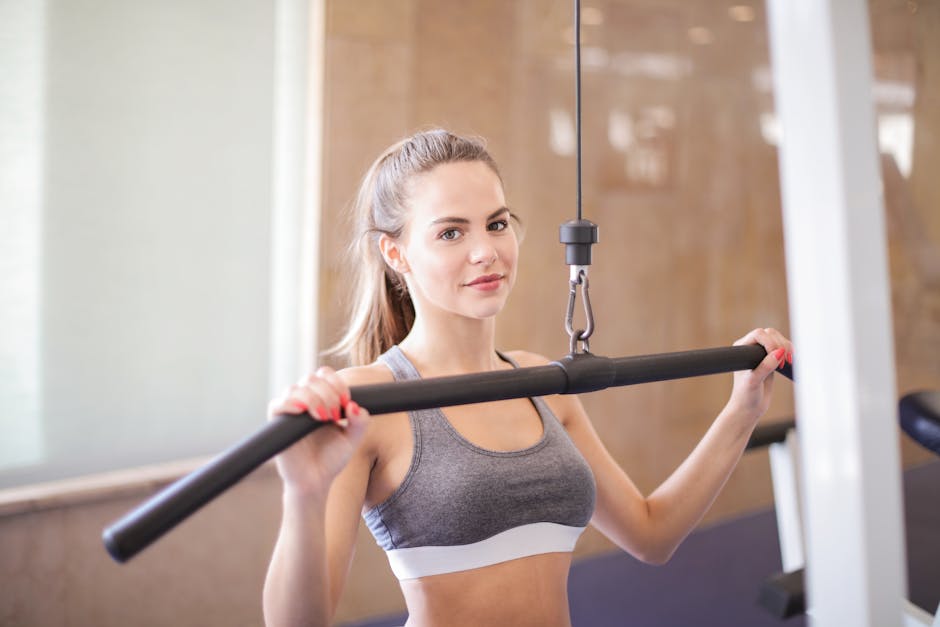
Cable machine exercises for full body workouts are criminally underused in most gyms. Walk past the cable station on any given Tuesday and you’ll likely see someone doing the same bicep curl they’ve done for months. Meanwhile, that versatile piece of equipment can transform your entire physique with movements most people never consider.
Related reading: Resistance Band Workouts That Transform Your Home Training.
Picture this: You’ve been hitting free weights for months, making progress, but something feels missing. Your chest is developing nicely from bench presses, your legs are solid from squats, but the overall coordination and functional strength isn’t quite there. That’s because traditional free weight exercises, while brilliant, only challenge you in one plane of motion. Cable machines? They work in multiple directions, creating constant tension throughout every single repetition.
Common Myths About Cable Machine Training
Related reading: Kettlebell Training for Beginners: Build Full Body Strength Fast.
Before we dive into the best movements, let’s clear up some persistent nonsense about cable training.
Myth: Cables Are Only for Isolation Work
Reality: This couldn’t be further from the truth. While cables excel at targeted isolation exercises, they’re equally powerful for compound movements that engage multiple muscle groups simultaneously. Cable machine exercises for full body workouts can replicate nearly every barbell and dumbbell movement while adding constant tension that free weights simply cannot match. Research published in the Journal of Strength and Conditioning Research shows that cable exercises maintain consistent resistance throughout the entire range of motion, leading to superior muscle activation compared to traditional free weights in certain exercises.
Myth: Free Weights Are Always Superior
Reality: Free weights are excellent, but they’re not inherently better. The key difference? Gravity. Free weights only provide resistance in a vertical plane. Cable machines allow you to adjust the angle of resistance, working muscles through rotational and horizontal movements that mimic real-world activities. According to NHS guidelines on strength training, variety in resistance training methods leads to better overall functional fitness and reduced injury risk.
Myth: Cable Machines Are for Beginners Only
Reality: Professional athletes and advanced lifters incorporate cable machine exercises for full body workouts because they understand biomechanics. The adjustable resistance angles allow for progressive overload in ways that challenge even the most experienced gym-goers. Olympic athletes use cables for sport-specific movements that directly translate to performance.
Why Cable Machine Exercises Build Better Bodies
You might also enjoy: Rowing Machine Workouts: Your Fast Track to Fat Loss and Peak Fitness.
The magic of cable training lies in constant tension. When you press a dumbbell, the resistance changes throughout the movement. At certain points, gravity actually gives your muscles a break. Not with cables. Every millimetre of movement maintains consistent resistance, forcing your muscles to work harder for longer.
But there’s more. Cable machine exercises for full body workouts allow for infinitely variable angles. Position the pulley high, low, or at chest height. Stand facing it, sideways, or with your back turned. Each adjustment creates a completely different challenge for your muscles. This versatility means you can target every major muscle group from multiple angles in a single training session.
What’s particularly valuable for UK gym-goers working out in crowded high street gyms? Cables require minimal space and setup time. No need to load and unload plates, adjust benches, or wait for equipment. Set your weight, adjust the pulley, and you’re moving.
Essential Cable Machine Exercises for Full Body Development
These movements form the foundation of comprehensive cable training. Master these and you’ll have everything needed for complete physique development.
Cable Squats (Lower Body Power)
Set the pulley to the lowest position and attach a rope handle. Face away from the machine, holding the rope at chest height. The cable adds forward resistance that hammers your core while your legs drive the movement. This variation forces your body to maintain perfect posture throughout the squat, addressing the forward lean many people struggle with.
Perform 3 sets of 12-15 repetitions. The constant tension through the cable keeps your legs engaged even at the top of the movement, unlike traditional squats where you get a brief rest. Many people find cable squats particularly useful when recovering from back issues, as the resistance pattern reduces spinal compression.
Cable Chest Press (Upper Body Strength)
Position pulleys at chest height on both sides of a cable station. Grab a handle in each hand, step forward to create tension, and press forward from chest level. Unlike a barbell bench press, cable machine exercises for full body workouts maintain constant resistance throughout the pressing motion, including the lockout phase where most people lose tension with free weights.
Stand in a split stance for stability. Press 3 sets of 10-12 repetitions per session. The beauty here? You can adjust your angle infinitely. Press straight ahead for chest focus, angle upward for upper chest emphasis, or downward to target the lower pectorals. Something like a set of resistance bands works well at home, but the adjustable weight stack on cable machines allows precise progressive overload.
Cable Rows (Back Development)
Set the pulley at waist height. Grab the handle (rope, straight bar, or single grip depending on your goal) and step back. Keep your chest up and pull the weight toward your torso, squeezing your shoulder blades together. This movement builds the entire posterior chain while maintaining perfect tension throughout.
Vary your attachment and grip width to target different areas of your back. Wide grip hits the lats, narrow grip emphasizes the middle back, and rope attachments allow your hands to move independently, creating a more natural pulling pattern. Complete 3 sets of 10-15 repetitions. According to biomechanics research, cable rows produce less lower back stress than bent-over barbell rows while delivering equal muscle activation.
Cable Woodchops (Core and Rotation)
Here’s where cables truly shine. Set the pulley high, grab the handle with both hands, and rotate diagonally downward across your body. This movement pattern doesn’t exist in traditional free weight exercises. You’re training rotation, anti-rotation, and diagonal strength patterns that translate directly to sports and daily activities.
Perform 3 sets of 12 repetitions per side. Your core works overtime to control the rotation while your obliques, shoulders, and hips coordinate the movement. Reverse the pattern (low to high) to hit different muscle fibres and movement patterns. These diagonal cable movements are fundamental for functional fitness that carries over to real life.
Cable Lateral Raises (Shoulder Definition)
Position the pulley at the lowest setting. Stand sideways to the machine, grab the handle with your far hand (cable crossing your body), and raise your arm laterally to shoulder height. The unique resistance curve of cable lateral raises keeps constant tension on your deltoids, unlike dumbbell raises where tension drops at the top.
Complete 3 sets of 12-15 repetitions per arm. This exercise isolates the lateral deltoid head brilliantly, creating that shoulder width everyone wants. The smooth cable resistance also reduces the shoulder impingement risk that some people experience with heavy dumbbell raises.
Cable Pull-Throughs (Posterior Chain Power)
Set the pulley low and attach a rope. Face away from the machine, straddle the cable, and grab the rope between your legs. Hinge at your hips, feel the stretch in your hamstrings, then drive your hips forward to standing. This movement teaches proper hip hinge mechanics while building your glutes, hamstrings, and lower back.
Pull-throughs are gentler on your spine than deadlifts while teaching the same movement pattern. Perform 3 sets of 15 repetitions. The constant cable tension prevents you from bouncing or using momentum, forcing strict form. Many strength coaches use this as a deadlift teaching tool before progressing clients to barbell work.
Cable Bicep Curls (Arm Development)
Low pulley, straight bar attachment. Face the machine, grab the bar with an underhand grip, and curl. The difference from dumbbell curls? Your biceps stay under maximum tension at the top of the movement instead of getting a break. This continuous tension leads to superior muscle development.
Execute 3 sets of 10-12 repetitions. Adjust the pulley height to change the resistance curve. High pulley curls emphasize different parts of the bicep’s range of motion compared to low pulley variations. Cable machine exercises for full body workouts include these isolation movements to polish individual muscle groups after completing the bigger compound exercises.
Cable Tricep Pushdowns (Arm Strength)
High pulley position with a rope, bar, or V-bar attachment. Grab the attachment, keep your elbows pinned to your sides, and extend downward. Cables maintain tension throughout the entire extension, particularly at the contracted position where your triceps should be working hardest.
Complete 3 sets of 12-15 repetitions. Experiment with different attachments. Rope allows your hands to separate at the bottom, increasing the contraction. Straight bar provides maximum overload. Single-arm variations address imbalances. The versatility of cable tricep work makes it superior to most free weight alternatives.
Your 45-Minute Full Body Cable Workout
Here’s a practical implementation plan that works for most schedules. This session hits every major muscle group using exclusively cable machine exercises for full body workouts.
- Warm-up (5 minutes): Begin with light cable rotations and some bodyweight movements to elevate heart rate and lubricate joints. Nothing complicated, just get blood flowing.
- Cable squats (5 minutes): Start with lower body work when you’re fresh. Complete 3 sets of 12-15 repetitions with 60 seconds rest between sets. Focus on depth and control.
- Cable chest press (5 minutes): Move to upper body pushing. Perform 3 sets of 10-12 repetitions per set. Maintain constant tension, don’t lock out completely at the top.
- Cable rows (5 minutes): Balance the pushing with pulling. Execute 3 sets of 12-15 repetitions. Pull the weight to your lower ribs, not your chest, for maximum back engagement.
- Cable woodchops (6 minutes): Address your core with rotational work. Complete 3 sets of 12 repetitions per side. Control the rotation in both directions.
- Cable pull-throughs (5 minutes): Hammer your posterior chain. Perform 3 sets of 15 repetitions. Feel the stretch in your hamstrings at the bottom position.
- Cable lateral raises (6 minutes): Build shoulder width. Execute 3 sets of 12-15 repetitions per arm. Keep your core tight to prevent leaning.
- Cable bicep curls (4 minutes): Target arm development. Complete 3 sets of 10-12 repetitions. Squeeze hard at the top of each repetition.
- Cable tricep pushdowns (4 minutes): Finish your arms strong. Perform 3 sets of 12-15 repetitions. Fully extend but don’t hyperextend your elbows.
This structure provides comprehensive development in under an hour. Adjust the weights to reach muscle fatigue within the prescribed repetition ranges. Progressive overload applies here just like any training method. Add weight when you can complete all sets with perfect form.
Mistakes That Sabotage Your Cable Training
Even experienced lifters make these errors. Avoid them and your results will come faster.
Mistake 1: Standing Too Close to the Machine
Why it’s a problem: Positioning yourself too near the weight stack reduces the working range of motion and allows the weights to rest between repetitions, eliminating the constant tension advantage that makes cable machine exercises for full body workouts so effective.
What to do instead: Step back far enough that the weight stack never touches down during your set. You should maintain tension from the first repetition to the last. This might mean using slightly lighter weight, but the muscle-building stimulus will be superior.
Mistake 2: Using Momentum Instead of Control
Why it’s a problem: Jerking the weight or using body English defeats the purpose of cable training. The smooth, controlled resistance pattern is what makes cables valuable. Swinging turns a precision tool into a sloppy mess.
What to do instead: Reduce the weight and focus on a 2-second concentric (lifting) phase and a 3-second eccentric (lowering) phase. This tempo maximises time under tension, the primary driver of muscle growth. If you cannot maintain this tempo, you’re lifting too heavy.
Mistake 3: Neglecting Pulley Height Adjustments
Why it’s a problem: Many people set the pulley once and never adjust it. Different pulley heights create entirely different exercises and muscle recruitment patterns. Ignoring this versatility means missing out on complete development.
What to do instead: Deliberately vary pulley heights across your training week. Monday might emphasize low pulley movements, Wednesday could focus on mid-height work, and Friday might feature high pulley exercises. This variation ensures balanced development from multiple angles.
Mistake 4: Ignoring Your Core
Why it’s a problem: Cable exercises challenge your stability in ways free weights don’t. People often focus solely on the prime mover muscles while letting their core go slack. This reduces force production and increases injury risk.
What to do instead: Brace your core before every single repetition. Think about pulling your belly button toward your spine and maintaining that tension throughout the movement. Your core should be working during every cable exercise, not just dedicated core movements.
Mistake 5: Rushing Through Repetitions
Why it’s a problem: Speed kills the effectiveness of cable machine exercises for full body workouts. Fast repetitions reduce time under tension and allow momentum to do the work your muscles should be doing. You’re essentially wasting time and energy.
What to do instead: Count your tempo deliberately. Two seconds to lift, pause for one second at peak contraction, three seconds to lower. This controlled pace might cut your repetitions in half initially, but the muscle development will be dramatically superior. Quality over quantity always wins.
Advanced Cable Training Strategies
Once you’ve mastered the basics, these techniques will push your development further.
Drop Sets for Maximum Fatigue
Cable machines make drop sets brilliantly convenient. Complete your working set to failure, immediately reduce the weight by 20-30%, and continue until failure again. The quick weight adjustment with cable machines is faster than changing plates or grabbing different dumbbells.
Use drop sets sparingly. One or two exercises per workout is plenty. Your final set of cable chest presses or cable rows works perfectly for this intensity technique. The pump you’ll achieve is extraordinary.
Unilateral Training for Balance
Single-arm and single-leg cable movements identify and correct strength imbalances that bilateral exercises mask. Cable single-arm rows, single-leg squats, and one-arm presses force each side to pull its own weight (literally). Most people discover they’re significantly stronger on one side.
Include at least two unilateral exercises in every cable training session. The core stability demands are massive, and the injury prevention benefits are well-documented. According to research from the University of Birmingham, unilateral training reduces left-right strength discrepancies by up to 40% over eight weeks.
Isometric Holds for Strength
Pause at the peak contraction of any cable exercise for 3-5 seconds. This isometric hold dramatically increases the difficulty without adding weight. Cable face pulls held at full contraction build boulder shoulders. Cable rows held with your shoulder blades squeezed together develop back thickness that regular repetitions miss.
Incorporate isometric holds on your final set of each exercise. Your muscles will burn, your time under tension will skyrocket, and your strength in the contracted position will improve significantly.
Combining Cables with Other Training Methods
Cable machine exercises for full body workouts don’t exist in isolation. Smart programming combines multiple training modalities for superior results.
Cables Plus Free Weights
Start your session with heavy compound barbell or dumbbell lifts when you’re fresh, then transition to cables for additional volume with less joint stress. Squat heavy with a barbell, then finish your legs with cable squats and cable pull-throughs. Bench press with a barbell, then polish your chest with cable flyes and cable presses from multiple angles.
This combination provides the neurological benefits of heavy free weight training alongside the constant tension and varied angles that cables offer. Many professional trainers structure programmes exactly this way.
Cables Plus Bodyweight
Pair cable exercises with bodyweight movements for time-efficient training. Perform a set of cable rows immediately followed by push-ups. Complete cable squats then drop for bodyweight lunges. This approach maintains elevated heart rate while accumulating massive training volume in minimal time.
Circuit training with cables and bodyweight exercises works brilliantly for fat loss while preserving muscle mass. The varied resistance types challenge your muscles differently, promoting better overall development.
Cables Plus Cardio Intervals
Alternate between cable strength movements and brief cardio bursts. Execute 10 cable squats, then 30 seconds of high knees. Complete cable rows, then 30 seconds of jumping jacks. This metabolic conditioning approach builds strength and cardiovascular fitness simultaneously.
According to guidelines from Sport England, combining resistance training with cardiovascular exercise in the same session improves both strength and aerobic capacity more effectively than separating them into different days. Cable machines make this combination practical because they’re positioned near enough to cardio equipment in most gyms.
Your Cable Training Quick Reference
- Step back from the weight stack far enough to maintain constant tension throughout every set
- Adjust pulley height deliberately to target muscles from multiple angles across your training week
- Control your tempo with a 2-second lift, 1-second pause, and 3-second lower on each repetition
- Brace your core before every single repetition, regardless of which muscle group you’re targeting
- Include unilateral exercises to identify and correct strength imbalances between sides
- Vary your attachments regularly because different handles create different muscle recruitment patterns
- Progressive overload applies just like any training method so track your weights and increase gradually
- Combine cables with free weights and bodyweight exercises for comprehensive development
Your Cable Training Questions Answered
How Long Before I See Results from Cable Training?
Visible muscle definition typically appears within 4-6 weeks of consistent training, assuming proper nutrition. Strength improvements come faster, often within 2-3 weeks as your nervous system adapts to the movement patterns. Cable machine exercises for full body workouts provide constant tension that accelerates muscle development compared to traditional training methods. However, results depend entirely on consistency, progressive overload, and adequate protein intake. Train three times weekly minimum, increase weight when exercises become comfortable, and consume 1.6-2.2 grams of protein per kilogram of bodyweight daily.
Can Cable Exercises Replace Free Weights Completely?
Yes, you can build an impressive physique using exclusively cable machine exercises for full body workouts. Professional bodybuilders often incorporate cable-only training blocks specifically because the constant tension promotes superior muscle development. That said, combining cables with free weights provides the benefits of both. Heavy barbell lifts build maximum strength and power, while cables develop muscle definition and address weaknesses from multiple angles. If you only have access to cables, you’ll do brilliantly. If you have both options, use them strategically.
Are Cable Machines Safe for People with Joint Issues?
Generally, yes. Cable exercises typically create less joint stress than free weights because the smooth, consistent resistance eliminates the stick points where injury risk peaks. The adjustable angles allow you to work around limitations and avoid painful positions. However, individual conditions vary significantly. Consult with a physiotherapist or sports medicine specialist before starting any new training programme if you have existing injuries. The NHS offers free physiotherapy assessments that can provide personalised guidance on exercise modifications.
What Weight Should I Start With on Cable Exercises?
Begin conservatively with roughly 60% of what you think you can handle. Complete 12-15 controlled repetitions using proper form. If that feels comfortable with perfect technique, increase by 5-10% next session. Cable machine exercises for full body workouts demand more stability and control than equivalent free weight movements, so the working weights will often be lower. That’s completely normal and doesn’t indicate weakness. Focus on the quality of muscle contraction rather than the number on the weight stack.
How Often Should I Train with Cable Machines?
Three to four sessions weekly provides excellent results for most people. Structure your training as full body workouts on non-consecutive days (Monday, Wednesday, Friday) or split into upper/lower sessions (Monday upper, Tuesday lower, Thursday upper, Friday lower). Rest days matter just as much as training days because muscle growth occurs during recovery. Avoid training the same muscle groups on consecutive days. Adequate sleep, proper nutrition, and stress management all impact your recovery capacity as much as the training itself.
Take Action Today
Cable machine exercises for full body workouts provide unmatched versatility for building strength, muscle, and functional fitness. The constant tension, infinite angle adjustments, and minimal setup time make cables one of the most efficient training tools available. Most people walk past these machines daily without realising the transformation potential sitting unused.
Start with the fundamental movements outlined here. Master the basics before progressing to advanced techniques. Track your weights and push for progressive overload consistently. Results will follow inevitably.
Your next training session is the perfect opportunity. Choose three exercises from this article, complete 3 sets of each, and experience the difference immediately. That’s all it takes to begin.


