You’re lying in bed scrolling through fitness content when you see it again—another ripped athlete performing impossible-looking movements with nothing but a pull-up bar and determination. Meanwhile, your unused gym membership costs £40 monthly, and you haven’t been in three months. Sound familiar?
Here’s the truth that the fitness industry doesn’t want you to know: you don’t need expensive equipment, complicated machines, or even a gym membership to build serious strength and an impressive physique. Calisthenics—the art of using your bodyweight for resistance training—has transformed ordinary people into extraordinarily capable athletes for centuries.
This comprehensive guide will take you from complete beginner to confident practitioner, teaching you everything you need to know about calisthenics training. You’ll discover the science behind bodyweight training, learn progressive techniques that ensure constant improvement, and understand how to build a complete physique using nothing more than your body, gravity, and consistent effort.
Whether you’re looking to build muscle, increase strength, improve mobility, or simply find a sustainable fitness approach that works anywhere, calisthenics offers a proven path forward. Best of all? You can start today, right where you are, with zero equipment required.
Who This Guide Is For:
This guide is designed for UK readers who want practical, evidence-based fitness solutions without the gym hassle. You might be:
- A complete beginner intimidated by traditional weight training
- Someone with limited space or budget for home fitness
- A former gym-goer seeking a more flexible training approach
- An athlete looking to complement your sport with functional strength
- Anyone wanting to build a sustainable, long-term fitness practice
What Is Calisthenics? Understanding the Fundamentals
Calisthenics is a form of resistance training that uses your own bodyweight to build strength, muscle, endurance, and mobility. The term comes from the Greek words “kalos” (beauty) and “sthenos” (strength), literally meaning “beautiful strength.” Rather than relying on external weights or machines, calisthenics leverages gravity and body positioning to create progressive resistance.
Think of it as the original strength training method. Before gyms existed, before barbells were invented, humans built impressive physiques through pushing, pulling, squatting, and climbing. Ancient Greek soldiers, Roman gladiators, and gymnasts throughout history developed remarkable strength using nothing but their bodies and creative training methods.
Modern calisthenics encompasses everything from basic exercises like press-ups and pull-ups to advanced skills like handstand presses, planches, and human flags. The beauty lies in its simplicity and scalability—the same fundamental movements that beginners use to build initial strength can be progressed infinitely as you become more capable.
The History and Evolution of Bodyweight Training
Bodyweight training isn’t a modern fitness trend—it’s the foundation upon which human physical culture was built. Ancient civilizations used calisthenics as the primary method for preparing warriors and athletes. Greek gymnasiums featured bars and rings for bodyweight exercises, whilst Roman military training emphasised press-ups, pull-ups, and running with bodyweight carries.
The 19th century saw calisthenics formalised in European and American physical education systems. German “Turnen” movement founder Friedrich Ludwig Jahn popularised apparatus training, creating many of the exercises we still use today. Swedish gymnastics, developed by Pehr Henrik Ling, emphasised natural movement patterns and postural development through bodyweight exercises.
In the 20th century, bodyweight training took a back seat to weightlifting in mainstream fitness. However, gymnasts, martial artists, military units, and prison populations continued refining calisthenics techniques. The early 2000s saw a resurgence with the rise of street workout culture, particularly in Eastern Europe and the United States. Groups began gathering in outdoor parks, creating community-driven training environments and pushing the boundaries of what’s possible with bodyweight training.
Today, calisthenics represents a perfect marriage of ancient wisdom and modern training science. We understand the biomechanics, physiology, and programming principles that make bodyweight training effective, whilst the digital age has made high-level instruction accessible to anyone with an internet connection.
Why Calisthenics Works: The Science Behind Bodyweight Training
Calisthenics builds strength and muscle through the same fundamental mechanisms as weight training: mechanical tension, metabolic stress, and muscle damage. When you perform a press-up, your muscles must contract against the resistance of your bodyweight (typically 50-70% of total weight for upper body pressing). Research from the University of Wisconsin-La Crosse demonstrates that bodyweight exercises can produce muscle activation levels comparable to traditional resistance training.
The key difference lies in how resistance is applied. Instead of adding external weight to a barbell, you modify leverage, change body positioning, or adjust movement tempo to increase difficulty. A standard press-up might use 50% of your bodyweight, whilst elevating your feet on a 60cm platform increases loading to approximately 70%. Progress further to a handstand press-up, and you’re pressing nearly 100% of your bodyweight overhead.
Bodyweight training offers unique advantages in several areas. First, it develops exceptional relative strength—your strength-to-bodyweight ratio. This translates better to real-world activities than absolute strength alone. Second, it requires and builds significant core stability, as most exercises demand maintaining body alignment against gravity. Third, it enhances proprioception and body awareness through complex, multi-joint movements.
Studies published in the Journal of Strength and Conditioning Research confirm that properly programmed calisthenics produces significant muscle hypertrophy and strength gains. Eight-week studies comparing bodyweight training to traditional resistance training found comparable increases in muscle thickness, strength metrics, and muscular endurance when volume and intensity were matched.
💡 Pro Tip: The relative strength developed through calisthenics creates a strong foundation for any physical activity. Athletes who can control their bodyweight effortlessly often excel when external resistance is added.
Calisthenics vs Weight Training: Understanding the Differences
Both calisthenics and weight training effectively build strength and muscle, but they achieve results through different mechanisms and offer distinct advantages. Understanding these differences helps you make informed decisions about your training approach.
Weight training excels at simple, measurable progression. Adding 2.5kg to a barbell provides precise overload that’s easy to track. It also allows isolated muscle development and can build absolute strength more efficiently, particularly in the lower body. Exercises like squats and deadlifts with external weight remain unmatched for developing maximum lower body strength.
Calisthenics shines in developing functional, transferable strength. The need to stabilise your entire body during complex movements builds strength that carries over better to sports and daily activities. It also requires minimal equipment, offers infinite variety through different progressions, and simultaneously builds strength, mobility, and coordination. The learning curve for advanced skills creates an engaging, game-like quality that many find more sustainable than repetitive weight lifting.
Cost represents another major factor. A comprehensive weight training setup can cost £500-£2,000, whilst a quality pull-up bar and parallettes cost under £100. For UK residents in smaller flats or those who travel frequently, calisthenics offers unmatched convenience.
The ideal approach for most people? A combination of both. Calisthenics forms the foundation, developing movement quality and relative strength. Strategic weight training supplementation—particularly for legs with squats and deadlifts—addresses areas where bodyweight training proves less efficient. Many successful athletes use primarily bodyweight training whilst incorporating weighted movements for specific weak points.
The Core Principles of Effective Calisthenics Training
Success in calisthenics requires understanding and applying several key principles that govern adaptation and progress. Unlike weight training where progression is obvious (add more weight), bodyweight training demands a more nuanced approach to creating progressive overload and developing skills.
Progressive Overload in Bodyweight Training
Progressive overload—the gradual increase in training stress over time—remains the cornerstone of any effective strength programme. Without it, your body has no reason to adapt, grow stronger, or build muscle. In calisthenics, you create progressive overload through five primary methods.
Increasing Repetitions represents the most straightforward approach. Once you can perform 5-8 quality reps of an exercise, work toward 12-15 reps before progressing to a harder variation. This builds work capacity and ensures you’ve truly mastered the movement pattern.
Advancing Exercise Difficulty involves moving to harder variations that alter leverage or change body positioning. Progress from knee press-ups to full press-ups, then to decline press-ups, pseudo planche press-ups, and eventually full planche press-ups. Each variation increases the load on working muscles.
Adding Volume Through Sets provides another progression avenue. Performing 3 sets of 10 press-ups creates less total training stress than 5 sets of 10. Increasing weekly volume systematically drives adaptation, though you must balance volume against recovery capacity.
Manipulating Tempo changes time under tension. Slowing down the eccentric (lowering) phase from 1 second to 3-5 seconds dramatically increases difficulty. A 5-second negative pull-up builds strength effectively even if you can’t yet perform a full pull-up.
Decreasing Rest Periods between sets increases metabolic stress and work capacity. Reducing rest from 3 minutes to 90 seconds between sets makes the same exercise substantially more challenging, building muscular endurance alongside strength.
The key is manipulating one variable at a time whilst holding others constant. This allows you to identify which progression methods work best for your body and ensures systematic, measurable progress.
⚠️ Common Mistake: Attempting to progress too quickly by jumping to harder variations before mastering easier ones. This leads to poor form, increased injury risk, and slower long-term progress. Master each level thoroughly before advancing.
Movement Patterns vs Isolated Exercises
Calisthenics emphasises movement patterns rather than isolated muscle groups. Instead of thinking “I need to train biceps,” consider “I need to develop pulling strength.” This shift in perspective creates more functional, transferable strength whilst ensuring balanced development.
The primary movement patterns in calisthenics are horizontal push (press-ups), vertical push (handstand press-ups, dips), horizontal pull (rows), vertical pull (pull-ups), squat patterns, hinge patterns, and core stabilisation. Training these patterns ensures complete physical development whilst building strength that transfers to real-world activities.
Each movement pattern can be progressed from basic to advanced variations. Horizontal pushing begins with wall press-ups for complete beginners, progresses through standard press-ups and decline variations, and culminates in planche progressions. Vertical pulling starts with assisted pull-ups using resistance bands, advances to full pull-ups with various grips, and eventually reaches one-arm pull-up progressions or weighted variations.
This approach offers several advantages over isolation work. First, compound movements recruit more total muscle mass, creating greater metabolic stress and hormonal response. Second, they build inter-muscular coordination and stability that isolated exercises cannot develop. Third, they’re more time-efficient, allowing complete workouts in 45-60 minutes.
Understanding movement patterns also helps identify weak points. Struggling with vertical pushing but excelling at horizontal pushing? Your anterior deltoids may need specific attention. Strong horizontal pulling but weak vertical pulling? Your lats likely require focused development. This diagnostic approach makes programming more intelligent and effective.
The Importance of Skill Acquisition
Unlike weight training where you simply lift progressively heavier loads, calisthenics involves significant skill acquisition. Advanced movements like muscle-ups, handstands, and levers require not just strength but also technique, timing, and body awareness. This skill component makes calisthenics uniquely engaging but requires a different training approach.
Skill work should be practised frequently but never to failure. Your nervous system learns movement patterns most effectively when you’re fresh and can execute with quality. Training handstands for 5-10 minutes daily produces better results than one exhausting 45-minute session weekly. Think of skill practice like learning a musical instrument—consistent, focused practice with adequate recovery between sessions yields the best results.
Separate skill work from strength work within your training sessions. Begin each workout with 10-20 minutes of skill practice when you’re mentally and physically fresh. Only after completing skill work should you move into high-intensity strength training. This ensures you’re practising movements with proper form rather than reinforcing poor patterns through fatigue.
Patience is essential for skill development. Achieving a solid handstand might take 6-12 months of consistent practice. Front levers often require 1-2 years for most people. These timelines aren’t discouraging—they’re realistic expectations that prevent frustration and keep you committed to the process. The journey of skill acquisition, with its incremental improvements and breakthrough moments, provides intrinsic motivation that often surpasses the simple pursuit of aesthetic goals.
📊 Research Insight: Studies on motor learning demonstrate that distributed practice (multiple short sessions) produces better skill retention and faster progress than massed practice (single long sessions). For calisthenics skills, training 4-5 days weekly for 10-15 minutes beats training 2 days weekly for 30 minutes.
Essential Calisthenics Exercises: Your Foundation Movements
Building a strong calisthenics practice requires mastering fundamental exercises that form the foundation for all advanced progressions. These movements develop the strength, stability, and movement patterns necessary for long-term success.
Push Movements: Building Upper Body Pressing Strength
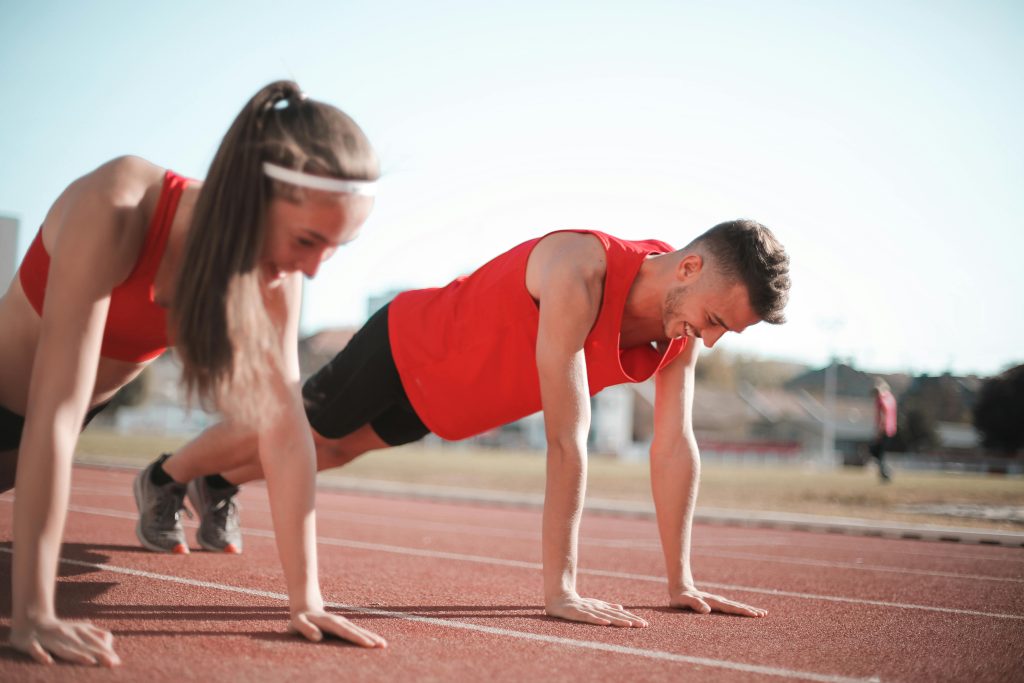
Press-ups represent the cornerstone of horizontal pushing development. They build chest, triceps, and anterior deltoid strength whilst developing core stability. Begin with wall press-ups if standard floor press-ups prove too challenging, gradually decreasing the angle until you can perform full press-ups with a straight body line from head to heels.
Once you’ve achieved 15-20 solid press-ups, progress to decline variations by elevating your feet on a sturdy platform. This shifts more weight onto your upper body and increases anterior deltoid engagement. Pike press-ups transition you toward vertical pressing, placing you in a downward dog position and targeting shoulders more directly.
Dips develop lower chest and triceps strength powerfully. Start with bench dips, progressing to full parallel bar dips once you can perform 12-15 bench dips with control. Proper dip form requires shoulder blades retracted, chest forward, and a controlled descent to roughly 90 degrees of elbow flexion. Leaning forward emphasises chest whilst staying more upright targets triceps.
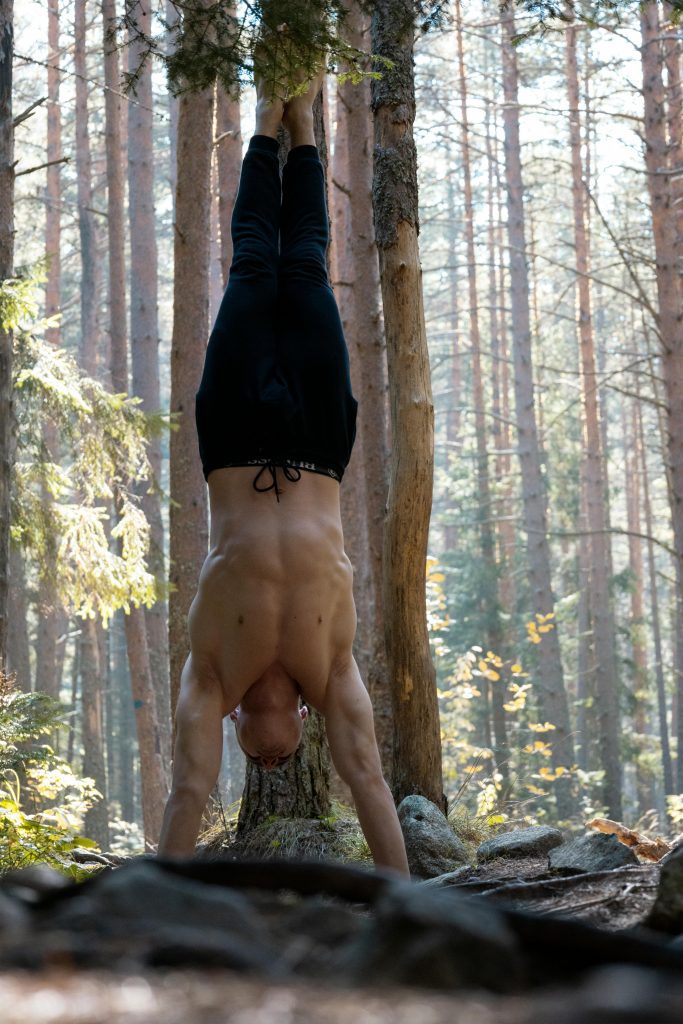
Handstand press-ups represent the ultimate bodyweight pressing exercise, requiring you to press your entire bodyweight overhead against gravity. Begin with wall-assisted handstand holds to build shoulder stability and confidence. Progress to negative handstand press-ups (lowering slowly from handstand position) before attempting full repetitions. This progression typically takes 6-18 months depending on starting strength levels.

✅ Quick Win: Struggling with standard press-ups? Focus on negative-only press-ups for 2-3 weeks. Start at the top position and lower yourself down over 3-5 seconds. This eccentric emphasis builds strength rapidly, often allowing full press-ups within a few weeks.
Pull Movements: Developing Back and Bicep Strength
Pull-ups stand as the fundamental vertical pulling exercise, developing lat, bicep, and upper back strength. If you cannot yet perform a full pull-up, begin with Australian rows (inverted rows) using a low bar or rings. Set the bar at waist height, walk feet forward to increase difficulty, and pull chest to bar whilst maintaining a straight body line.
Progress to assisted pull-ups using resistance bands looped over the bar. Start with heavy assistance (thick bands) and gradually reduce assistance as strength improves. Negative pull-ups, jumping to the top position and lowering slowly over 5-10 seconds, build pulling strength effectively even without full pull-up capability.
Once you can perform 5-8 strict pull-ups, vary your grip to target different muscle groups. Close grip emphasises biceps and inner lats, whilst wide grip increases lat engagement and reduces bicep involvement. Mixed grip and archer pull-ups prepare you for one-arm pull-up progressions.
Horizontal pulling through rows provides essential balance to vertical pulling. Face pulls, using rings or a suspension trainer, develop rear deltoids and upper back muscles often neglected in pressing-focused programmes. Archer rows (rowing to one side whilst keeping the other arm straight) build unilateral strength and prepare you for more advanced pulling movements.
The fundamental skill of hanging cannot be overlooked. Dead hangs from a bar for time build grip strength, decompress the spine, and develop shoulder stability. Work toward 60-second continuous hangs before adding movement complexity. Active hangs, where you engage lats and retract shoulder blades, further develop scapular control essential for advanced pulling movements.
Leg Movements: Lower Body Power Without Weights
Bodyweight squats form the foundation of lower body training, developing quadriceps, glutes, and general leg strength. Focus on achieving full depth (hip crease below knee level) whilst maintaining neutral spine and keeping knees tracking over toes. Once you can perform 20-25 bodyweight squats comfortably, progress to single-leg variations.
Bulgarian split squats challenge each leg individually whilst providing a stretch to the hip flexor of the rear leg. Elevate your rear foot on a bench or chair, maintaining most weight on the front leg, and squat down until the front thigh is parallel to the ground. These build unilateral strength essential for athletic movements.
Lock And Load
Pistol squats represent the pinnacle of bodyweight squatting, a full-depth single-leg squat with the non-working leg extended forward. Most people require months of progressive training to achieve their first clean pistol squat. Begin with box-assisted pistols, sitting back onto progressively lower surfaces. Progress to counterweighted pistols (holding a weight in front for balance) before attempting unsupported repetitions.
Glute bridges and single-leg variations target posterior chain development. Lie on your back, feet flat, and drive hips upward until body forms a straight line from knees to shoulders. Single-leg bridges significantly increase difficulty and help address left-right imbalances common in most people.
Nordic hamstring curls build exceptional hamstring strength, though they’re brutally difficult. Anchor your feet under heavy furniture or have a partner hold them, then lower your body forward from a kneeling position whilst maintaining a straight line from knees to head. Most people can only perform negatives initially, but even negative-only training builds substantial strength.
Explosive movements like jump squats, box jumps, and broad jumps develop power and explosiveness often lacking in pure strength training. These plyometric variations should be added once you’ve built a foundation of strength, as the impact forces require robust tissue capacity.
💡 Pro Tip: Struggling to load legs sufficiently with bodyweight alone? Single-leg variations provide plenty of challenge for most people. If you’ve exhausted these progressions, adding a weighted vest or incorporating weighted squats and deadlifts creates further progression options.
Core Movements: Building a Strong, Stable Midsection
Planks develop anti-extension core strength, training your abs and core muscles to resist unwanted movement. Standard front planks should be held with body in a straight line, hips level, and core braced. Progress from 30-second holds to 60-90 seconds before advancing to harder variations like RKC planks (maximum tension throughout body) or extended planks (arms further from body).
Side planks target obliques and lateral core stability. Maintain a straight line from head to feet whilst resting on one forearm, progressing from bent-knee variations to full side planks held for 45-60 seconds per side. Copenhagen planks, performed with the top leg elevated on a bench, provide an advanced oblique challenge.
Do The Banana
Hollow body holds teach total body tension and anterior core strength essential for gymnastics movements. Lie on your back, press lower back flat to the floor, extend arms overhead and legs straight, and lift shoulders and feet 15-20cm off the ground. The shape resembles a banana, with your body forming a gentle curve. Hold this position whilst maintaining lower back contact with the floor for 30-60 seconds.
L-sits develop enormous core strength and hip flexor endurance. Begin with tucked L-sits on parallel bars or the floor, knees pulled to chest and body supported on straight arms. Progress to single-leg L-sits (one leg tucked, one extended) before attempting full L-sits with both legs extended and parallel to the ground. A solid 20-30 second L-sit hold demonstrates exceptional core strength.
Dragon flags, popularised by Bruce Lee, provide an advanced core challenge. Lie on a bench, grip bench behind your head, and raise your entire body (except shoulders and upper back) until vertical. Lower with control whilst maintaining a straight body line. Most people require significant core strength development before attempting these safely.
Hanging leg raises develop dynamic core strength from a suspended position. Hang from a pull-up bar and raise legs to horizontal, controlling the movement throughout. Progress from bent-knee raises to straight-leg raises, then to full toes-to-bar movements. These build the core strength necessary for advanced skills like front levers.
Calisthenics Training Methods and Workout Structures
Effective calisthenics training requires thoughtful programming that balances skill work, strength development, volume accumulation, and recovery. Understanding different training methods and how to structure workouts ensures consistent progress whilst avoiding overtraining and burnout.
Straight Sets vs Circuit Training
Straight sets involve completing all sets of one exercise before moving to the next. This traditional approach allows maximum performance on each exercise since you’re fully recovered between sets. For pure strength development, straight sets prove superior. Rest periods typically range from 2-5 minutes depending on exercise difficulty and training goals.
Circuit training cycles through multiple exercises with minimal rest between movements. Complete one set of exercise A, immediately perform exercise B, then exercise C, before returning to exercise A. This approach saves time and builds work capacity but doesn’t allow complete recovery, limiting maximum strength expression.
For calisthenics, a hybrid approach often works best. Pair antagonistic exercises (push/pull combinations) with 90-second rest between exercises in the pair and 2-3 minutes before repeating the pair. This maintains some of the time efficiency of circuits whilst allowing adequate recovery for quality performance.
Beginners benefit from straight sets initially, focusing on mastering movement patterns with quality form. As work capacity improves and basic movements become easier, introducing circuit elements adds variety and builds conditioning. Advanced practitioners might use straight sets for skill work and primary strength movements, then finish with higher-volume circuit work for accessory exercises.
Skill Work vs Strength Work
Distinguishing between skill work and strength work is crucial for optimal programming. Skill work involves practising complex movements that require technique, balance, and coordination. Examples include handstand practice, lever progressions, and muscle-up technique work. These should be trained fresh, never to failure, and with focus on movement quality over exhaustion.
Strength work aims to create maximum muscle tension and metabolic stress to drive adaptation. Here you push toward or near failure, accumulating volume and fatigue. Press-ups to failure, max-effort pull-ups, and high-volume dip sets fall into this category. These workouts should leave you exhausted and require adequate recovery.
Structure your training sessions to prioritise skill work first when you’re mentally and physically fresh. Dedicate 10-20 minutes at the workout’s start to practising challenging skills. Only after completing skill practice should you transition to hard strength work. This ensures you’re grooving proper movement patterns rather than reinforcing compensation patterns born from fatigue.
Some movements blur the line between skill and strength. Muscle-ups, for instance, require both technical proficiency and considerable strength. Early in your muscle-up journey, treat them primarily as skill work with lots of practice but limited failure. Once you can perform several clean repetitions, they can be included in strength-focused training with higher volume and intensity.
Weekly Training Split Options
Full-body training three times weekly works exceptionally well for beginners and intermediates. Monday, Wednesday, and Friday sessions allow 48 hours of recovery between workouts whilst providing sufficient training frequency. Each session includes push, pull, legs, and core movements, ensuring balanced development and frequent skill practice.
Upper/lower splits divide training into upper body and lower body sessions, typically running a 4-day schedule. Monday and Thursday focus on pushing and pulling movements, whilst Tuesday and Friday emphasise legs and core. This increases volume on each muscle group whilst maintaining adequate recovery between similar movements.
Push/pull/legs splits, common among intermediate and advanced practitioners, divide training into three distinct sessions repeated twice weekly. Monday and Thursday target horizontal and vertical pushing, Tuesday and Friday develop pulling strength, and Wednesday and Saturday focus on legs and core. This allows maximum volume and intensity on each movement pattern.
Skills-focused splits prioritise advanced movement development. These might involve daily handstand practice, lever training three times weekly, and dynamic movements twice weekly. Strength work supports skill development rather than being the primary focus. This approach suits those pursuing specific advanced skills over pure strength or hypertrophy.
Choose a split based on your goals, recovery capacity, and available training time. Beginners should start with full-body training to maximise skill acquisition through frequent practice. Progress to more specialised splits as you advance and require greater volume on specific movement patterns.
🎯 Action Step: Evaluate your current training schedule. Are you training similar movements on back-to-back days? If so, restructure your split to ensure 48 hours of recovery between sessions targeting the same muscle groups and movement patterns.
Progression Systems: From Beginner to Advanced
Systematic progression forms the foundation of long-term calisthenics success. Understanding how to scale exercises appropriately, when to advance to harder variations, and how to structure your progression prevents plateaus and maintains consistent improvement.
Regression and Progression Ladders
Every calisthenics exercise exists on a progression ladder from easiest to hardest. Understanding these ladders allows you to meet yourself where you are whilst having a clear path forward. For press-ups, the ladder might look like: wall press-ups → incline press-ups → knee press-ups → full press-ups → decline press-ups → diamond press-ups → pike press-ups → pseudo planche press-ups → planche progressions.
Regressions—easier variations—aren’t signs of weakness but intelligent training tools. They allow higher-quality movement practice, build work capacity, and provide options when fatigue limits performance on harder variations. If you can perform 8 quality press-ups but want to accumulate more volume, performing additional sets of incline press-ups proves more beneficial than grinding out sloppy press-ups with terrible form.
Progressions should be earned, not rushed. The temptation to jump ahead to more impressive-looking exercises leads to poor form, increased injury risk, and ultimately slower progress. Master each level of a progression before advancing, where “mastery” typically means performing 3 sets of 12-15 controlled repetitions with excellent form.
Some progressions follow linear paths (each step clearly leads to the next), whilst others branch into different skills. Pull-up progressions might branch into one-arm pull-up work, muscle-up training, or lever progressions. This creates opportunities to specialise in movements that interest you most whilst maintaining comprehensive strength development.
Document your progression ladder for each primary movement pattern. Knowing exactly which variation comes next provides clear goals and prevents aimless training. Review these ladders quarterly, adjusting based on your progress and shifting priorities.
Adding Volume, Intensity, and Complexity
Once you can perform a movement with solid form, you have three primary avenues for progression: increasing volume (more total reps), increasing intensity (harder variations or added resistance), or increasing complexity (more challenging coordination or movement patterns).
Volume progression involves accumulating more total work within and across training sessions. Increase from 3 sets to 4 sets, add an extra session weekly, or perform more reps per set. Volume drives muscle growth and builds work capacity but requires adequate recovery to avoid overtraining. Research suggests that volume increases should be gradual—no more than 10-15% weekly increases in total volume.
Intensity progression involves making exercises harder through leverage changes, added weight, or reduced assistance. Transition from regular press-ups to decline press-ups, add a weighted vest to pull-ups, or reduce resistance band assistance on dips. Intensity progression builds maximum strength but requires more recovery between sessions.
Complexity progression adds coordination challenges, instability, or skill components. Progress from standard pull-ups to L-sit pull-ups, add rotation to press-ups, or incorporate plyometric elements like clapping press-ups. These variations develop athleticism and keep training engaging but should be added only after building a solid strength foundation.
The most effective approach cycles through different progression types. Spend 4-6 weeks accumulating volume on a given exercise, then 4-6 weeks increasing intensity through harder variations, then 4-6 weeks adding complexity whilst reducing volume and intensity. This periodised approach prevents overtraining, addresses different aspects of fitness, and maintains training freshness.
When to Progress to the Next Level
Knowing when to advance to harder progressions prevents both premature progression (which leads to poor form and frustration) and delayed progression (which wastes training time on exercises that no longer drive adaptation).
The primary criterion for progression is form quality. If you can perform 12-15 repetitions of an exercise with excellent form—full range of motion, controlled tempo, no compensations—you’re ready for the next level. Performance on the 15th rep should look nearly identical to the first rep. If form degrades significantly in later reps, you need more time at your current level.
Secondary criteria include consistency and resilience. Can you repeat this performance across multiple sets? Can you achieve it session after session, week after week? One good set doesn’t indicate readiness to progress—consistent performance over several weeks does. Additionally, the movement should feel relatively easy, leaving you confident you could perform a few more reps if pushed.
Beware common progression pitfalls. Don’t advance simply because you’re bored with a movement, boredom doesn’t indicate physiological readiness. Also don’t progress based on duration alone (“I’ve been doing press-ups for 4 weeks, time to move on”), and don’t skip levels because you want to perform flashier exercises sooner.
When advancing to a new progression, expect performance to drop significantly. Progressing from regular press-ups (where you could perform 15+ reps) to decline press-ups might drop you to 6-8 quality reps. This is normal and expected. The new variation challenges your muscles differently, and you’ll regain rep ranges with consistent training.
If you progress to a new variation but can only perform 1-3 quality reps, you’ve jumped too far up the progression ladder. Drop back one level and spend more time building strength before attempting the harder variation again.
Advanced Calisthenics Skills and Techniques
Once you’ve developed a solid foundation in fundamental movements, advanced calisthenics skills offer engaging goals that require years of dedicated practice. These movements demand exceptional strength, body awareness, and technical proficiency.
Lever Progressions: Front Lever and Back Lever
The front lever—holding your body parallel to the ground whilst hanging from a bar with a straight body line—represents one of the most coveted calisthenics skills. Achieving it requires tremendous lat strength, core stability, and shoulder conditioning. The journey typically takes 12-24 months of focused training.
Begin with tucked front lever holds, pulling knees to chest whilst maintaining horizontal body position. Hold for 10-20 seconds with perfect form before progressing to advanced tuck (knees at 90 degrees, still tucked). Next comes single-leg front lever, extending one leg whilst keeping the other tucked. Straddle front lever splits the legs wide, reducing leverage, before progressing to the full front lever with legs together.
Back levers involve rotating your body backward whilst gripping a bar, finishing with your stomach facing up and body parallel to the ground. Though it looks less impressive than front levers, the back lever challenges shoulders and biceps intensely. The progression follows a similar path: tucked → advanced tuck → single leg → straddle → full.
Train levers 2-3 times weekly, focusing on both static holds and dynamic exercises that build pulling strength in lever positions. Weighted pull-ups, front lever rows (pulling to the bar whilst maintaining lever position), and lever progressions under fatigue all contribute to faster skill development.
⚠️ Common Mistake: Attempting full lever holds before building adequate strength in progressions. This typically results in either failing immediately or achieving the position with terrible form (body sagging, arms bent, or using momentum). Master each progression level completely before advancing.
Planche and Handstand Training
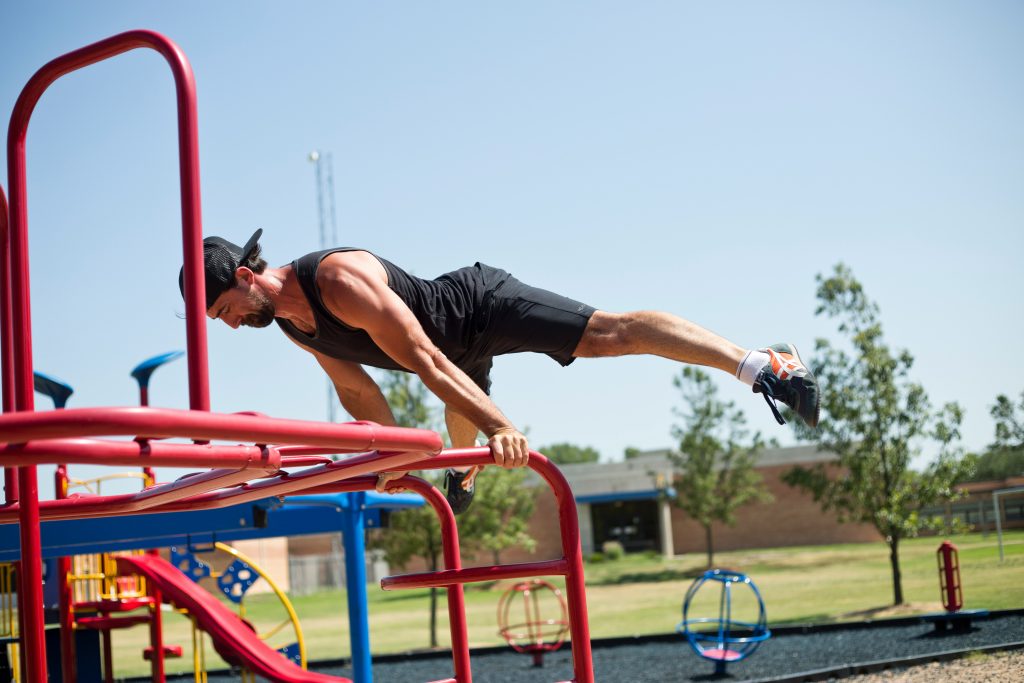
The planche—balancing horizontally facing the ground with only your hands supporting you—requires years of dedicated training. This skill demands extraordinary anterior deltoid and core strength combined with precise weight distribution and balance. Most practitioners require 18-36 months of consistent training to achieve a decent planche.
Planche progression begins with planche leans against a wall, leaning forward whilst in a press-up position until shoulders extend far beyond wrists. Progress to frog stands, tucking knees into elbows whilst supporting bodyweight on hands. Advanced frog stands increase lean whilst maintaining the tuck. Tuck planche lifts feet off the ground entirely, maintaining a tucked position horizontally. Progress through advanced tuck, straddle, and finally full planche.
How Often?
Training frequency should be high but volume low for planche work. Brief, frequent sessions (10-15 minutes, 4-6 days weekly) produce better results than long, exhausting sessions. Each session, spend a few minutes on your current progression level, then work strength-building exercises like planche lean holds, pseudo planche press-ups, and straight-arm strength work.
Handstands develop balance, shoulder stability, and body awareness essential for many advanced skills. Unlike the planche, handstands rely more on balance than pure strength, making them accessible more quickly for most people. Consistent practice over 6-12 months typically yields a solid 30-60 second freestanding handstand.
Begin with chest-to-wall handstands, walking feet up the wall and bringing chest close to the wall. This teaches proper handstand alignment without requiring balance. Progress to back-to-wall holds, then practice kicking up to freestanding handstands with a wall nearby for safety. Work handstand holds away from the wall once you can consistently hold chest-to-wall handstands for 45+ seconds.
Handstand training should be practised daily or near-daily in short sessions. Ten minutes of focused handstand practice daily produces better results than one 60-minute session weekly. Fatigue dramatically impairs balance, so keep practice sessions fresh and energised.
Muscle-Ups and Dynamic Movements
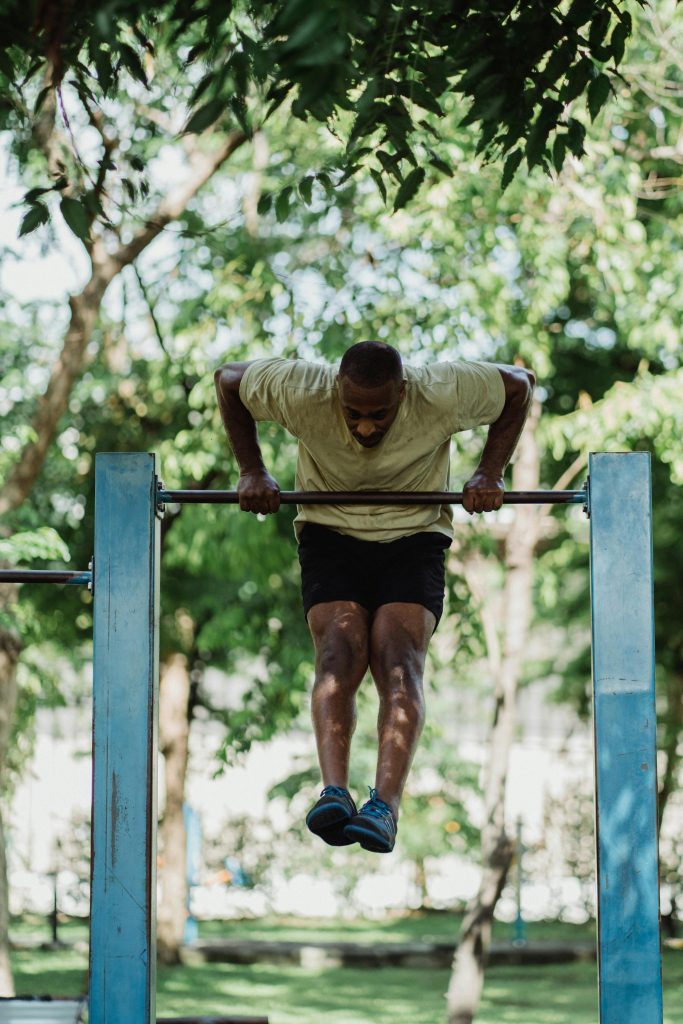
The muscle-up transitions from hanging below a bar to supporting yourself above it in one fluid motion, combining an explosive pull-up with a transition and a dip. It’s the first major dynamic movement most people learn and provides an excellent gateway to more advanced skills.
Muscle-ups require both pulling strength (at least 10-12 clean pull-ups) and dipping strength (8-10 full dips). The transition—the moment you shift from pulling to pushing—demands explosive power and timing. Most people need several weeks of transition-focused practice even after building the requisite strength.
Begin with assisted muscle-ups using a resistance band or by performing them on lower bars where you can use leg drive. Practice false-grip muscle-ups (thumb over bar alongside fingers) to make the transition easier initially. High pull-ups, where you pull explosively to mid-chest level, build the explosive power necessary for proper muscle-up execution.
Clean Repetition Is Key
Once you achieve your first muscle-up, work toward cleaning up the form. Muscle-ups should be performed with minimal kipping (hip swing), straight body lines, and controlled transitions. Sets of 3-5 clean muscle-ups demonstrate greater strength than 10 kipping muscle-ups with wild body movement.
Dynamic movements like clapping pull-ups, explosive press-ups, and 360 pulls add athleticism and excitement to training. These require both strength and explosive power, with the added element of timing and coordination. They should be trained early in sessions when you’re fresh and explosive, not when fatigued from strength work.
Plyometric progressions build the explosive power necessary for dynamic movements. Box jumps, clap press-ups, and explosive pull-ups (pulling as high as possible) all develop rate of force development. Include 2-3 sets of 3-5 explosive reps early in training sessions 1-2 times weekly.
📊 Research Insight: Studies on explosive training demonstrate that power development requires specific training. High-force, low-velocity training (maximal strength work) and low-force, high-velocity training (explosive movements) stimulate different neuromuscular adaptations. Include both in your programme for complete athletic development.
Programming Your Calisthenics Training
Effective programming brings together all the elements discussed—exercises, progressions, training methods—into a coherent plan that drives consistent progress whilst managing fatigue and preventing burnout.
Beginner Training Templates
New practitioners should focus on movement mastery and building a base of strength and work capacity. A full-body routine performed three days weekly provides sufficient stimulus whilst allowing adequate recovery.
Sample Beginner Routine (Monday/Wednesday/Friday):
Skill Work (10 minutes):
- Handstand wall holds: 3 sets of 20-30 seconds
- Hollow body holds: 3 sets of 20-30 seconds
Strength Work:
- Press-ups (or easiest variation you can perform): 3 sets of 8-12 reps
- Australian rows: 3 sets of 8-12 reps
- Assisted squats (or bodyweight squats): 3 sets of 10-15 reps
- Assisted dips (or bench dips): 3 sets of 6-10 reps
- Dead hangs: 3 sets of 20-30 seconds
- Plank holds: 3 sets of 30-45 seconds
Rest 2-3 minutes between sets. Total training time: 45-60 minutes. Focus on movement quality over pushing to failure. Once you can perform the top end of prescribed reps with excellent form, progress to harder variations.
This template builds work capacity, teaches fundamental movement patterns, and develops the strength base necessary for future progress. Beginners should remain on similar programming for 8-12 weeks before introducing more complexity or specialisation.
Intermediate Training Templates
Intermediate practitioners have mastered basic movements and need greater volume and variety to continue progressing. An upper/lower split or push/pull/legs split works well at this stage.
Sample Intermediate Push/Pull/Legs Split:
Monday & Thursday – Push:
- Handstand practice: 10 minutes
- Press-ups (decline or diamond): 4 sets of 8-12 reps
- Pike press-ups: 3 sets of 6-10 reps
- Dips: 3 sets of 8-12 reps
- Pseudo planche press-ups: 3 sets of 6-8 reps
- Tricep extensions (on bar): 3 sets of 10-15 reps
Tuesday & Friday – Pull:
- Front lever progressions: 10 minutes
- Pull-ups (various grips): 4 sets of 6-10 reps
- Australian rows: 3 sets of 10-15 reps
- Archer pull-ups: 3 sets of 4-6 reps each side
- Face pulls: 3 sets of 12-15 reps
- Bicep curls (using rings or suspension trainer): 3 sets of 10-15 reps
Wednesday & Saturday – Legs & Core:
- L-sit progressions: 10 minutes
- Pistol squats (or progression): 3 sets of 5-8 reps each leg
- Bulgarian split squats: 3 sets of 10-12 reps each leg
- Nordic hamstring curls (or negatives): 3 sets of 4-8 reps
- Single-leg glute bridges: 3 sets of 12-15 reps each side
- Hanging leg raises: 3 sets of 10-15 reps
- Dragon flags (or progression): 3 sets of 5-10 reps
This template provides significantly more volume and includes more advanced progressions. Intermediate practitioners should follow similar programming for 12-16 weeks before major restructuring.
Advanced Training Templates
Advanced practitioners typically focus on specific skills they’re developing whilst maintaining general strength. Programming becomes highly individualised based on goals, but the general structure remains consistent.
Sample Advanced Skill-Focused Template:
Daily (Morning):
- Handstand practice: 15-20 minutes
- Planche progressions: 10 minutes
Monday & Thursday – Push Strength:
- Handstand press-up progressions: 5 sets of 3-5 reps
- Ring dips: 4 sets of 8-12 reps
- Planche press-ups: 4 sets of 3-5 reps
- Weighted press-ups: 3 sets of 8-10 reps
Tuesday & Friday – Pull Strength:
- One-arm pull-up progressions: 5 sets of 2-4 reps each side
- Weighted pull-ups: 4 sets of 6-8 reps
- Front lever rows: 4 sets of 4-6 reps
- Muscle-ups: 3 sets of 4-6 reps
Wednesday – Lower Body:
- Pistol squats: 4 sets of 8-10 reps each leg
- Weighted Bulgarian split squats: 3 sets of 8-10 reps each leg
- Nordic hamstring curls: 3 sets of 6-10 reps
- Jump squats: 3 sets of 8-10 reps
Saturday – Skill Practice & Conditioning:
- Front lever training: 15 minutes
- Back lever training: 10 minutes
- Muscle-up variations: 5 sets of 3-5 reps
- Circuit of various exercises: 3-4 rounds
Advanced training requires exceptional recovery management, often including additional sleep, strategic nutrition, and active recovery practices. Most advanced practitioners train 6-7 days weekly but manage intensity carefully to avoid overtraining.
Essential Equipment and Where to Train
One of calisthenics’ greatest advantages is the minimal equipment requirement. However, having the right basic equipment significantly expands exercise options and progression pathways.
Minimal Equipment Setup for Home Training
A pull-up bar represents the single most important piece of equipment for home calisthenics. Doorway pull-up bars cost £15-£30 and install without drilling. Wall-mounted pull-up bars (£25-£50) offer more stability and typically support more weight. Ceiling-mounted bars provide the most exercise variety but require proper installation into ceiling joists.
Parallettes or dip bars allow pressing exercises at home. Parallettes (£30-£60 for a quality pair) support exercises like L-sits, planche progressions, and various push-up variations. Free-standing dip bars (£60-£120) add vertical pressing options and are often more stable than parallettes for heavier individuals.
Gymnastic rings (£25-£40) provide incredible exercise variety in a compact, portable package. They can be hung from a pull-up bar, ceiling beam, or outdoor structure. Rings make exercises harder by introducing instability whilst allowing natural wrist rotation during pressing movements. Ring training develops exceptional stabiliser strength.
A resistance band set (£15-£30 for multiple resistance levels) assists with exercises you cannot yet perform unassisted and adds variety to pulling movements. Bands provide variable resistance useful for certain exercises and make excellent travel equipment.
Optional additions include a weighted vest (£40-£80, choose one that allows progressive weight additions), ab wheel (£10-£20 for core work), and a yoga mat (£15-£30 for floor exercises and stretching). These expand training options but aren’t necessary for excellent results.
For under £100, you can equip a home training space sufficient for years of calisthenics progress. This one-time investment costs less than three months of typical gym membership fees whilst providing unlimited training access.
Finding Outdoor Training Spots in the UK
Outdoor calisthenics training offers fresh air, natural light, and often a community of like-minded practitioners. Many UK cities now feature dedicated calisthenics parks with various bars, dip stations, and other equipment.
London boasts numerous outdoor training spots including Kennington Park, Battersea Park, and Primrose Hill. Manchester features excellent facilities at Heaton Park and Platt Fields Park. Birmingham, Leeds, Glasgow, and most major cities have invested in outdoor fitness equipment, particularly in popular parks.
Standard children’s playgrounds often contain usable equipment including pull-up bars, monkey bars for hanging exercises, and platforms for step-ups and box jumps. Always ensure equipment can safely support adult bodyweight before using, and train during off-peak hours to avoid disrupting children’s play.
Finding local outdoor spots often requires research. Search for “calisthenics parks near me” or check local Facebook groups and communities. Many cities have calisthenics groups that organise regular meetups at prime training locations. These communities provide motivation, coaching, and social connection that enhance training adherence.
Weather presents unique challenges in the UK. Train during dry conditions when possible, but don’t let rain completely stop your practice. Wet bars require extra caution to prevent slipping. Cold weather demands longer warmups and attention to maintaining body temperature between sets. Indoor training or home equipment provides reliable backup during harsh weather.
Optional Equipment to Enhance Your Training
Beyond basic equipment, several optional additions expand training possibilities without significantly increasing cost or space requirements.
Ankle weights (£15-£35) add resistance to leg raises and certain core exercises. They’re particularly useful for progression when bodyweight versions become too easy. Start with 2-3kg per ankle and progress gradually.
A suspension trainer like TRX (£50-£150, though budget alternatives exist for £20-£40) provides hundreds of exercise variations and packs small for travel. They’re particularly useful for rows at various angles and certain leg exercises.
Chalk (£5-£15 for block chalk or liquid chalk) significantly improves grip during high-rep or sweaty sessions. It prevents slipping on bars and allows you to focus on muscle work rather than grip.
A foam roller (£15-£30) aids recovery through self-myofascial release. Rolling out tight muscles after training reduces soreness and maintains mobility. Focus on lats, shoulders, quads, and any chronically tight areas.
Sliders or furniture moving pads (£8-£15) create instability for various exercises and allow smooth gliding movements for exercises like pike presses and hamstring curls on smooth floors.
These optional items enhance training variety and comfort but aren’t necessary for progression. Add them gradually based on your specific needs and training goals rather than feeling you must purchase everything immediately.
Nutrition for Calisthenics Performance
Whilst training provides the stimulus for adaptation, nutrition provides the building blocks for recovery and growth. Calisthenics nutrition requires balancing adequate fuel for performance with maintaining a favourable strength-to-weight ratio.
Calorie and Protein Requirements
Your calorie needs depend on training volume, body size, and goals. Most active individuals training calisthenics 4-6 times weekly require 2,000-3,000 calories daily. Track your weight for 2-3 weeks whilst eating your current diet to establish maintenance calories (weight stays stable). From there, add 200-300 calories for muscle building or subtract 300-500 calories for fat loss.
Protein intake should be prioritised, with research suggesting 1.6-2.2g per kilogram of bodyweight supports muscle growth optimally. For a 75kg individual, this translates to 120-165g protein daily. Spread protein intake across 3-4 meals, aiming for 25-40g per meal to maximise muscle protein synthesis.
Quality protein sources include chicken breast, lean beef, fish, eggs, Greek yoghurt, cottage cheese, and legumes for plant-based options. Protein powder offers convenient supplementation but shouldn’t replace whole food sources entirely. Aim for variety in protein sources to ensure complete amino acid profiles.
Carbohydrates fuel training intensity and support recovery. Active individuals typically benefit from 3-5g per kilogram bodyweight, adjusted based on training volume. Prioritise whole food sources like oats, rice, potatoes, fruits, and whole grain bread. Time carbohydrate intake around training when possible, though total daily intake matters more than precise timing.
Fats support hormone production and provide essential nutrients. Aim for 0.8-1g per kilogram bodyweight from sources like olive oil, nuts, avocados, and fatty fish. Don’t fear dietary fat—it’s essential for health and doesn’t directly cause body fat gain when calories are controlled.
💡 Pro Tip: For calisthenics specifically, maintaining lower body fat percentages (10-15% for men, 18-25% for women) improves relative strength and makes advanced skills easier. This doesn’t require extreme restriction but does require consistent attention to nutrition and reasonable calorie control.
Pre and Post Workout Nutrition
Pre-workout nutrition should provide energy without causing digestive discomfort. Consume a meal containing protein and carbohydrates 2-3 hours before training. Good options include oats with protein powder, chicken and rice, or a sandwich with lean meat. Closer to training (30-60 minutes before), a banana or small energy bar provides quick fuel if needed.
Caffeine enhances performance for many people, improving focus and work capacity. A coffee or caffeinated beverage 30-45 minutes pre-workout can boost training quality. However, avoid dependence by cycling off caffeine periodically.
Post-workout nutrition supports recovery and muscle growth. Consume protein (20-40g) within a few hours after training. The “anabolic window” isn’t as narrow as once believed, but getting protein within 2-3 hours post-training optimises recovery. Carbohydrates help replenish glycogen stores, particularly important after high-volume sessions.
Practical post-workout options include protein shake with fruit, chicken with sweet potato, Greek yoghurt with granola, or eggs with toast. Choose options you enjoy and can prepare consistently rather than forcing yourself to eat foods you dislike.
Hydration significantly affects performance. Aim for at least 2-3 litres of water daily, more during hot weather or intense training days. Monitor urine colour—pale yellow indicates adequate hydration whilst dark yellow suggests you need more fluids. Consider adding electrolytes during very long or intense sessions.
Maintaining Low Body Fat for Skills
Advanced calisthenics skills become significantly easier at lower body fat percentages. Levers, planches, and handstands all benefit from a favorable strength-to-weight ratio. However, extremely low body fat can impair recovery, hormone function, and training performance.
Aim for sustainable body fat levels that support both performance and health. For men, 10-15% body fat allows excellent skill performance whilst maintaining health. For women, 18-25% provides similar benefits. Going lower requires more restriction and often isn’t worth the trade-offs in energy, recovery, and life quality.
To reduce body fat whilst maintaining strength, create a modest calorie deficit of 300-500 calories below maintenance. Maintain high protein intake (2-2.2g per kg) to preserve muscle mass. Continue training hard but consider slightly reducing volume to account for decreased recovery capacity in a deficit.
Track progress through multiple measures: bodyweight, progress photos, measurements, and performance metrics. Body fat loss should be gradual—0.5-1% monthly is sustainable and maintains training performance. Rapid fat loss typically leads to muscle loss and performance decreases.
Avoid extreme dieting approaches. Very low calorie diets (under 1,500 calories for most people), prolonged fasting, or elimination of entire food groups typically backfire. They’re difficult to maintain, impair recovery, and often lead to over eating cycles. Sustainable, moderate approaches produce better long-term results.
⚠️ Common Mistake: Pursuing extremely low body fat percentages at the expense of recovery, hormonal health, and training performance. The last 2-3% of body fat loss is exponentially harder than the previous 5-10% and rarely improves performance enough to justify the effort required.
Common Challenges and How to Overcome Them
Every calisthenics practitioner encounters obstacles on their journey. Understanding common challenges and their solutions helps you navigate difficulties without giving up or getting discouraged.
Challenge 1: Cannot Perform a Single Pull-Up
Most beginners struggle with pull-ups initially. Your bodyweight might be too high relative to your current strength, or you simply haven’t built the specific strength pattern yet. Solution: Begin with Australian rows at an angle you can manage for 8-12 reps. Perform negative pull-ups, jumping to the top position and lowering slowly over 5-10 seconds. Use resistance bands to assist pull-ups, gradually reducing assistance. Practice dead hangs to build grip strength. Expect 4-12 weeks of consistent practice before achieving your first unassisted pull-up.
Challenge 2: Wrist Pain During Press-Ups or Handstands
Wrist discomfort often results from lack of wrist conditioning, poor positioning, or insufficient mobility. Solution: Perform wrist mobility exercises daily, including circles, extensions, and flexion stretches. Use parallettes or push-up handles to keep wrists in neutral position during press-ups. During handstands, ensure fingers are spread wide and you’re actively pushing through the entire hand, not just heel of palm. Build wrist strength gradually through exercises like wrist push-ups and finger extensions. If pain persists, consult a physiotherapist.
Challenge 3: Lacking Motivation for Consistent Training
Motivation fluctuates naturally, and relying on motivation alone leads to inconsistent training. Solution: Build training into your daily routine through habit stacking (training immediately after another established habit). Find a training partner or join online communities for accountability. Set specific, measurable goals with concrete deadlines. Track progress through training logs and regular video recordings. Remember that discipline matters more than motivation—train even when you don’t feel like it, but listen to genuine fatigue signals requiring rest.
Challenge 4: Strength Plateau Despite Consistent Training
Plateaus occur when your body adapts to current training stress and stops responding. Solution: Introduce progressive overload through one of the five methods discussed earlier. Consider a deload week (reducing volume and intensity by 40-50%) to allow super-compensation. Evaluate recovery factors including sleep (7-9 hours nightly), nutrition (adequate protein and calories), and stress levels. Sometimes plateaus indicate you’ve been pushing too hard; more rest may produce better results than more training.
Challenge 5: Shoulder Pain During Pressing or Pulling
Shoulder pain typically stems from poor scapular control, muscle imbalances, or insufficient warm-up. Solution: Strengthen rotator cuff muscles through exercises like band pull-aparts, external rotations, and face pulls. Focus on scapular retraction and depression during all pulling movements. Ensure you’re warming up properly with dynamic stretches and light movement before heavy training. Reduce training volume if pain persists and consider consulting a physiotherapist or sports medicine professional. Prevention is easier than rehabilitation.
Challenge 6: Not Seeing Visible Muscle Growth
Muscle growth requires adequate training volume, progressive overload, sufficient nutrition, and patience. Solution: Ensure you’re consuming adequate calories (slight surplus for muscle gain) and protein (1.8-2.2g per kg bodyweight). Track training volume and ensure you’re progressively increasing it over weeks and months. Remember that visible muscle growth is a slow process—expect noticeable changes over months, not weeks. Body fat percentage affects muscle visibility significantly; reducing fat whilst building muscle creates the most dramatic changes.
Challenge 7: Training Feels Boring or Repetitive
Monotony can kill training adherence even when you’re making progress. Solution: Vary exercise selection within movement patterns. Change rep ranges and training methods (circuits vs straight sets, tempo work vs explosive work). Learn new skills to maintain engagement—handstands, levers, and other advanced movements provide endless challenge. Train outdoors when possible for environmental variety. Join group training sessions or watch inspiring calisthenics content. Remember that some routine is necessary, but you have creative freedom within that structure.
Challenge 8: Dealing With Training Interruptions (Injury, Illness, Life Events)
Everyone experiences periods where consistent training becomes impossible. Solution: When injured, train around injuries rather than stopping entirely. Leg injury? Focus on upper body. Wrist injury? Emphasise lower body and core. During illness, rest completely until fever subsides, then return gradually at reduced intensity. After life interruptions, resist the urge to jump back in at your previous level. Reduce volume and intensity by 30-40% for the first week back, increasing gradually over 2-3 weeks. Consistency over months and years matters more than any single week or month.
Challenge 9: Struggling With Advanced Skill Progressions
Advanced skills require months or years of dedicated practice, leading many to feel they’re not progressing. Solution: Break skills into smaller progressions and celebrate incremental improvements. Video yourself regularly to see subtle progress invisible day-to-day. Understand that plateaus are normal—improvement isn’t linear. Consider hiring an online coach for technique refinement. Join skill-specific challenges or training programs. Remember that the journey itself provides value; enjoying practice matters more than reaching any specific endpoint.
Challenge 10: Balancing Calisthenics With Other Life Priorities
Work, family, and other responsibilities often conflict with training consistency. Solution: Treat training as non-negotiable self-care, not a luxury. Schedule training like any important appointment. Consider shorter, more frequent sessions (30 minutes, 5-6 days weekly) rather than long sessions that are harder to fit in. Train at home when time is limited. Involve family when possible—children enjoy learning handstands and many adults appreciate training partners. Remember that 80% adherence to an imperfect program beats 20% adherence to the perfect program.
Sample Training Plans and Templates
Ready-to-use training plans provide structure and eliminate decision paralysis. Choose the template matching your current level and adjust based on individual needs and responses.
4-Week Beginner Program
Focus: Building foundational strength and learning proper movement patterns.
Weeks 1-2: Adaptation Phase
Monday/Wednesday/Friday:
- Skill Work: Wall handstands (3×20-30s), Hollow holds (3×20-30s)
- Incline press-ups: 3×8-12 reps
- Australian rows: 3×8-12 reps
- Assisted squats: 3×12-15 reps
- Dead hangs: 3×15-20s
- Planks: 3×30-40s
Weeks 3-4: Volume Increase
Monday/Wednesday/Friday:
- Skill Work: Wall handstands (3×30-45s), Hollow holds (3×30-40s)
- Press-ups (or current progression): 4×8-12 reps
- Australian rows: 4×8-12 reps
- Bodyweight squats: 3×15-20 reps
- Dead hangs: 3×20-30s
- Planks: 3×45-60s
- Side planks: 2x30s each side
Notes: Rest 90-120 seconds between sets. Focus on perfect form over rep count. If exercise becomes easy before week 4 ends, progress to next variation.
8-Week Intermediate Program
Focus: Increasing volume and exercise difficulty to drive continued adaptation.
Push Day (Monday/Thursday):
- Handstand practice: 10 minutes
- Press-ups (decline or diamond): 4×10-15 reps
- Pike press-ups: 3×8-12 reps
- Dips: 3×8-12 reps
- Close-grip press-ups: 3×10-15 reps
Pull Day (Tuesday/Friday):
- Front lever progressions: 10 minutes
- Pull-ups: 4×6-10 reps
- Australian rows (feet elevated): 3×12-15 reps
- Chin-ups: 3×6-10 reps
- Face pulls: 3×15-20 reps
Legs & Core (Wednesday/Saturday):
- L-sit progressions: 10 minutes
- Bulgarian split squats: 3×10-12 each leg
- Pistol squat progressions: 3×5-8 each leg
- Nordic curl negatives: 3×5 reps
- Hanging leg raises: 3×10-15 reps
- Hollow holds: 3×40-60s
Progression: Increase reps each week. When you hit the top of the rep range with good form, progress to harder variation the following week.
12-Week Advanced Skill-Focused Program
Focus: Developing specific advanced skills whilst maintaining general strength.
Daily Morning Routine:
- Handstand practice: 15-20 minutes
- Planche progressions: 10 minutes
Monday: Push Strength
- Handstand press-up progressions: 5×3-5 reps
- Ring dips: 4×8-12 reps
- Planche push-ups (current progression): 4×3-6 reps
- Weighted press-ups: 3×8-10 reps
- Ring support holds: 3×30-45s
Tuesday: Pull Strength
- One-arm pull-up progressions: 5×2-4 each side
- Weighted pull-ups: 4×6-8 reps
- Front lever rows: 4×4-6 reps
- Muscle-ups: 3×4-6 reps
- Archer rows: 3×6-8 each side
Wednesday: Lower Body
- Pistol squats: 4×8-10 each leg
- Nordic hamstring curls: 3×6-10 reps
- Weighted Bulgarian splits: 3×8-10 each leg
- Jump squats: 3×8 reps
- Single-leg calf raises: 3×15-20 each leg
Thursday: Active Recovery
- Light skill practice: 30 minutes
- Mobility work: 20 minutes
- Walking or cycling: 30 minutes
Friday: Push Volume
- Handstand press-ups: 4×5-8 reps
- Press-up variations: 4×12-15 reps
- Dips: 4×10-15 reps
- Pike press-ups: 3×10-12 reps
- Tricep extensions: 3×12-15 reps
Saturday: Pull Volume & Skills
- Front lever training: 15 minutes
- Back lever training: 10 minutes
- Pull-up variations: 4×8-10 reps
- Australian rows: 3×12-15 reps
- Muscle-up progressions: 4×3-5 reps
Sunday: Complete Rest
Progression: This template assumes you’re working toward specific skills (handstand press-ups, one-arm pull-ups, front lever, planche). Adjust skill practice based on your specific goals. Every 4 weeks, take a deload week reducing volume by 40-50%.
Tracking Progress and Setting Goals
Systematic tracking and goal-setting transform random training into purposeful progress. Without measuring where you are and where you’re going, you’re simply exercising, not training.
What to Track
Track multiple metrics to capture different aspects of progress. Performance metrics include rep maxes for key exercises (max press-ups, max pull-ups), hold times for static positions (plank, L-sit, handstand), and skill achievements (first muscle-up, 10-second front lever). Record these monthly.
Body composition changes through weekly weigh-ins (same day, same time, same conditions), monthly progress photos (front, side, back in consistent lighting), and body measurements every 4-6 weeks (chest, waist, arms, legs). Don’t obsess over daily weight fluctuations—focus on monthly trends.
Training volume data captures total work performed. Log sets, reps, and exercise variations for each workout. Review weekly and monthly totals to ensure progressive overload. Many find simple notebook entries sufficient, whilst others prefer spreadsheets or apps.
Subjective measures matter too. Rate your energy levels, sleep quality, training motivation, and soreness levels. These early warning signs of overtraining or inadequate recovery allow course correction before problems worsen.
How to Track Effectively
Choose a tracking method you’ll actually use consistently. Elaborate systems fail if they’re too time-consuming. Simple bullet journal entries, a basic spreadsheet, or calisthenics-specific apps all work—pick whatever matches your preferences.
Record data immediately after training whilst fresh. Waiting until later leads to forgotten details and incomplete records. Keep your tracking tools accessible—notebook in your gym bag, app on your phone home screen, or spreadsheet bookmarked.
Review progress regularly but not obsessively. Weekly reviews identify patterns and inform upcoming training adjustments. Monthly reviews assess whether your programme is working or needs modification. Quarterly reviews allow major programme overhauls and goal reassessment.
Share progress with accountability partners or online communities. Posting updates creates external accountability and often yields helpful feedback. Many find that public commitment to goals increases follow-through significantly.
Setting Effective Goals
Structure goals using SMART criteria: Specific, Measurable, Achievable, Relevant, Time-bound. “Get stronger” is vague and unmotivating. “Perform 10 consecutive pull-ups by June 1st” provides clear direction and deadline.
Balance outcome goals (specific achievements) with process goals (consistent behaviours). Outcome: “Achieve 30-second handstand hold.” Process: “Practice handstands 5 days weekly for 15 minutes.” Process goals are entirely within your control and build the foundation for outcome achievement.
Set goals across multiple timeframes. Immediate goals (this week) keep you focused on current training. Short-term goals (next 1-3 months) provide motivation through achievable milestones. Long-term goals (6-12 months or longer) guide overall training direction and programme design.
Celebrate achievements when you hit goals. Acknowledge progress, share victories with training partners, and perhaps reward yourself with new equipment or training gear. This positive reinforcement builds intrinsic motivation and keeps training enjoyable.
Reassess goals regularly as you progress. What seemed impossible six months ago may now be achievable, whilst what seemed achievable may prove more difficult than expected. Adjust timelines and targets based on actual progress rather than stubbornly clinging to outdated plans.
Progress Indicators Beyond Numbers
Remember that progress isn’t always numerical. Improved movement quality, better body awareness, increased confidence, reduced joint pain, better sleep, and enhanced daily function all represent meaningful progress even if rep counts haven’t increased recently.
Notice how training affects your life outside the gym. Do you feel more capable climbing stairs? More confident in your physical abilities? Better able to handle physical demands? These improvements matter more than any specific skill achievement.
Progress isn’t linear—expect plateaus, setbacks, and temporary regressions. These are normal parts of long-term development. What matters is the overall trend over months and years, not week-to-week fluctuations.
✅ Quick Win: Start your progress tracking today. Take photos from front, side, and back angles. Test and record your max reps for press-ups and pull-ups (or easiest variation you can perform). Write down your current body weight. These baseline measurements make future progress visible and motivating.
Frequently Asked Questions
Can I build significant muscle with calisthenics alone, or do I need weights?
Calisthenics can definitely build substantial muscle mass when programmed correctly with progressive overload. Research shows bodyweight training produces comparable hypertrophy to weight training when volume and intensity are matched. Your muscles don’t distinguish between weight on a bar and your bodyweight through altered leverage. However, building very large legs through bodyweight training alone proves more difficult than upper body development. Most people find a hybrid approach (calisthenics for upper body, some weighted work for legs) optimal for complete development. Expect visible muscle growth within 3-6 months of consistent training, with continued improvement over years.
How long does it take to learn a muscle-up, front lever, or handstand?
Timelines vary dramatically based on starting strength, training consistency, body composition, and genetic factors. Most people achieve their first muscle-up within 4-8 months of focused training with adequate pulling and dipping strength. Front levers typically require 12-24 months of dedicated practice for a solid 10-second hold. Handstands can be learned more quickly—6-12 months for a consistent 30-60 second freestanding hold. These timeframes assume 4-6 training days weekly with proper programming. Being lighter and having lower body fat accelerates progress significantly on strength-to-weight skills like levers and planches.
Is calisthenics suitable for women, and should training differ between men and women?
Calisthenics works excellently for women, though some modifications may be necessary initially due to typically lower upper body strength relative to men. Women often need more time developing pulling strength for exercises like pull-ups but frequently excel at leg-based movements and flexibility-demanding skills. The fundamental training principles remain the same regardless of sex—progressive overload, consistent practice, and adequate recovery. Women should not avoid challenging progressions or strength work out of fear of becoming bulky. Building excessive muscle mass requires years of dedicated effort and specific nutritional strategies. Most women who train calisthenics consistently develop lean, athletic physiques with excellent functional strength.
How many days per week should I train calisthenics?
Beginners benefit from 3-4 training days weekly, allowing ample recovery between sessions whilst building consistency. Intermediate practitioners typically train 4-5 days weekly with a structured split routine. Advanced athletes often train 5-7 days weekly but carefully manage intensity and include active recovery days. More training isn’t automatically better—recovery is when adaptation occurs. Listen to your body, prioritise sleep and nutrition, and remember that missing occasional sessions won’t derail progress. Consistency over months matters more than training frequency in any given week. Most people find 4-5 days weekly sustainable long-term whilst allowing adequate recovery.
Will calisthenics training help me lose weight?
Calisthenics burns calories and builds muscle, both of which support fat loss. However, weight loss fundamentally requires consuming fewer calories than you expend. Training creates a calorie deficit and preserves muscle mass during fat loss, but you cannot out-train a poor diet. Combine consistent calisthenics training (4-5 days weekly) with a moderate calorie deficit (300-500 calories below maintenance) for sustainable fat loss of 0.5-1kg weekly. The muscle built through training increases your resting metabolic rate slightly and dramatically improves how your body looks at any given weight. Many find that focusing on performance goals (achieving specific skills) proves more motivating than purely appearance-based goals.
Do I need to take supplements for calisthenics?
Supplements aren’t necessary for excellent results—proper nutrition from whole foods provides everything your body needs. That said, some supplements offer convenience or marginal benefits. Protein powder helps meet daily protein targets when whole food options prove difficult. Creatine monohydrate (3-5g daily) is the most researched supplement, showing consistent benefits for strength and muscle growth. Most other supplements provide minimal benefit unless you have specific deficiencies. Prioritise sleep, nutrition, and training consistency before considering supplements. If you do supplement, choose reputable brands that undergo third-party testing. Remember that supplements supplement a solid foundation—they cannot compensate for poor training or nutrition.
Can older adults practice calisthenics safely?
Age is not a barrier to calisthenics—older adults can build significant strength and improve functional capacity through bodyweight training. Start conservatively with easier progressions, allowing more recovery time between sessions. Joint health becomes increasingly important with age, so prioritise proper warm-ups, control throughout movements, and adequate mobility work. Many older adults find calisthenics superior to weight training due to lower injury risk and greater focus on movement quality. The functional strength developed—getting up from the floor, maintaining balance, carrying bodyweight through space—translates directly to improved daily living. Consult a healthcare provider before starting any new training program, particularly if you have existing health conditions. With sensible programming and patience, people in their 60s and 70s regularly develop impressive calisthenics skills.
How important is flexibility and mobility for calisthenics?
Mobility is crucial for calisthenics performance and injury prevention. Many exercises require specific mobility—pike compressions for L-sits, shoulder flexion for handstands, and thoracic extension for bridges. Limited mobility often manifests as poor form or inability to progress to harder variations. Include 10-15 minutes of mobility work 3-4 days weekly, focusing on areas specific to your goals. Dynamic stretching works well as part of warm-ups, whilst static stretching fits better after training or in separate sessions. Prioritise hip flexor mobility, shoulder mobility, wrist flexibility, and thoracic spine extension. Don’t conflate flexibility with mobility—mobility is active control through a range of motion, which matters more for calisthenics than passive flexibility alone.
What if I can only train at home with no equipment?
You can build substantial strength and skill with zero equipment. Press-up progressions, pike press-ups, and handstand training develop upper body pushing. For pulling, find creative solutions—hang from door frames (test stability first), use a sturdy table for rows, or invest in a £20 pull-up bar. Legs respond well to bodyweight training—squats, lunges, pistol progressions, and Nordic curls (hook feet under furniture) all build excellent strength. Core training requires no equipment whatsoever. Whilst having basic equipment expands options dramatically, lack of equipment shouldn’t prevent you from starting. Many impressive athletes built their foundation with makeshift or minimal equipment. Focus on what you can do rather than what you lack.
How do I know if I’m overtraining?
Overtraining symptoms include persistent fatigue despite adequate sleep, declining performance, increased injury susceptibility, elevated resting heart rate, poor sleep quality, irritability, and loss of training motivation. If you experience multiple symptoms simultaneously over several weeks, you’re likely overreaching or overtrained. Prevention involves managing training volume, ensuring adequate sleep (7-9 hours nightly), consuming sufficient calories and protein, and scheduling regular deload weeks (every 4-6 weeks, reduce volume and intensity by 40-50%). Remember that more training isn’t always better—recovery is when adaptation occurs. If you suspect overtraining, take a full week off or train at reduced volume for 1-2 weeks. Your body will bounce back stronger if you respect recovery needs.
Can I combine calisthenics with other training (running, weight training, sports)?
Calisthenics combines well with most activities when volume is managed appropriately. Many athletes use calisthenics as supplementary strength training for their primary sport. If combining with running or other endurance work, keep total training volume reasonable and ensure adequate recovery. When mixing calisthenics and weight training, avoid excessive overlap—use calisthenics for skills and relative strength whilst using weights for areas like legs where external resistance proves more efficient. Monitor total weekly training stress and be willing to reduce volume if recovery suffers. Cross-training can enhance overall fitness, but trying to excel simultaneously at multiple demanding disciplines often leads to mediocre results in all areas. Choose primary and secondary goals, allocating training time accordingly.
What should I do if I experience pain during exercises?
Distinguish between discomfort (muscle burn, fatigue) and pain (sharp, joint-focused, lingering). Discomfort during challenging sets is normal. Pain, particularly sharp or joint-related pain, signals a problem requiring attention. Stop exercises causing pain and identify the cause—poor form, inadequate warm-up, mobility limitations, or pre-existing injury. Address form issues through video analysis or coaching. Improve mobility through dedicated work. For persistent pain, consult a physiotherapist or sports medicine professional. Don’t train through pain hoping it will resolve—this usually worsens the problem. Train around injuries by focusing on movements that don’t aggravate the issue. Prevention through proper warm-ups, progressive loading, and listening to your body beats rehabilitation every time.
How do I stay motivated for long-term consistency?
Long-term adherence requires shifting from extrinsic motivation (looking good for an event) to intrinsic motivation (enjoyment of the process, identity as someone who trains). Set engaging goals beyond appearance—master specific skills, achieve strength milestones, or join competitions. Track progress visually through photos and videos to see improvements invisible day-to-day. Join communities for social connection and accountability. Vary your training to maintain interest. Remember that motivation fluctuates—build habits and discipline to carry you through low-motivation periods. Reframe training as essential self-care, not optional extra. Find aspects of calisthenics you genuinely enjoy and emphasise those in your programme. Long-term consistency stems from sustainable, enjoyable practices rather than extreme temporary efforts.
Is calisthenics more effective than going to the gym?
Neither is objectively superior—effectiveness depends on your goals, preferences, and circumstances. Calisthenics excels for functional strength, mobility, skill development, and convenience. Weight training proves more efficient for building absolute strength and maximum muscle mass, particularly in lower body. Gym training offers precise progression and variety but requires membership fees and travel time. Calisthenics demands no money but requires patience with skill acquisition and creative progression. Most people benefit from a hybrid approach using calisthenics as the foundation whilst strategically incorporating some weight training. Choose based on your goals, budget, available time, and what you’ll actually do consistently. The best training method is the one you’ll stick with long-term—consistency trumps optimality.
Dive Deeper: Related Guides
(These links will be added as cluster posts are published)
- Progressive Overload for Calisthenics: Complete guide to the five methods of increasing training difficulty
- Pull-Up Progression Guide: Step-by-step path from zero pull-ups to one-arm variations
- Press-Up Variations: 20+ press-up progressions from beginner to advanced
- Handstand Training: Complete programme for learning freestanding handstands
- Front Lever Tutorial: Everything you need to achieve your first front lever
- Calisthenics for Fat Loss: How to structure training and nutrition for maximum fat loss
- Building a Home Calisthenics Setup: Equipment recommendations and buying guide
- Core Training for Calisthenics: Essential exercises for bulletproof core strength
- Muscle-Up Mastery: Technique breakdown and training programme
- Pistol Squat Progression: Master single-leg squats safely and effectively
- Calisthenics Mobility Routine: Essential stretches and mobility work
- Rings Training Guide: How to incorporate gymnastic rings into your programme
Conclusion: Your Path Forward
You now have everything needed to begin or advance your calisthenics journey. You understand the fundamental principles that drive adaptation, know which exercises to perform and how to progress them, and have access to complete training templates you can implement immediately.
The beauty of calisthenics lies not just in the impressive physical capabilities you’ll develop but in the journey itself. Unlike weight training where progress is measured purely by numbers increasing, calisthenics offers the satisfaction of mastering complex skills, the creativity of learning new movements, and the freedom of training anywhere without equipment dependence.
Key Takeaways:
- Calisthenics builds genuine strength, muscle, and athletic ability using only bodyweight through systematic progressive overload
- Master fundamental movements before attempting advanced skills—your foundation determines your ceiling
- Consistency over months and years matters infinitely more than perfection in any single workout or week
- Progressive overload occurs through five primary methods: increasing reps, advancing exercise difficulty, adding volume, manipulating tempo, and decreasing rest periods
- Skill work should be practised frequently when fresh, whilst strength work can be pushed to exhaustion
- Proper nutrition supporting recovery and maintaining favorable body composition accelerates progress significantly
- Tracking progress through multiple metrics keeps you motivated and allows intelligent programme adjustments
Your First Steps Today:
- Assess your current capabilities by testing max reps on fundamental movements (press-ups, rows, squats, planks)
- Choose a training template matching your experience level from this guide
- Take baseline photos and measurements to track future progress
- Schedule your training sessions as non-negotiable appointments for the next week
- Join online calisthenics communities for support, accountability, and continued learning
Remember that every expert practitioner performing seemingly impossible movements once struggled with their first pull-up. Progress isn’t linear, plateaus are normal, and consistency beats intensity every time. Approach your practice with patience, celebrate small victories, and trust the process.
The equipment you need costs less than two months of gym membership. The skills you’ll develop will serve you for life. The strength you’ll build translates to every physical activity you undertake. Most importantly, you’ll discover what your body is truly capable of achieving.
Start today. Your future self will thank you for beginning this journey right now rather than waiting for the “perfect time” that never comes.
Begin where you are. Use what you have. Do what you can. The rest will follow.


