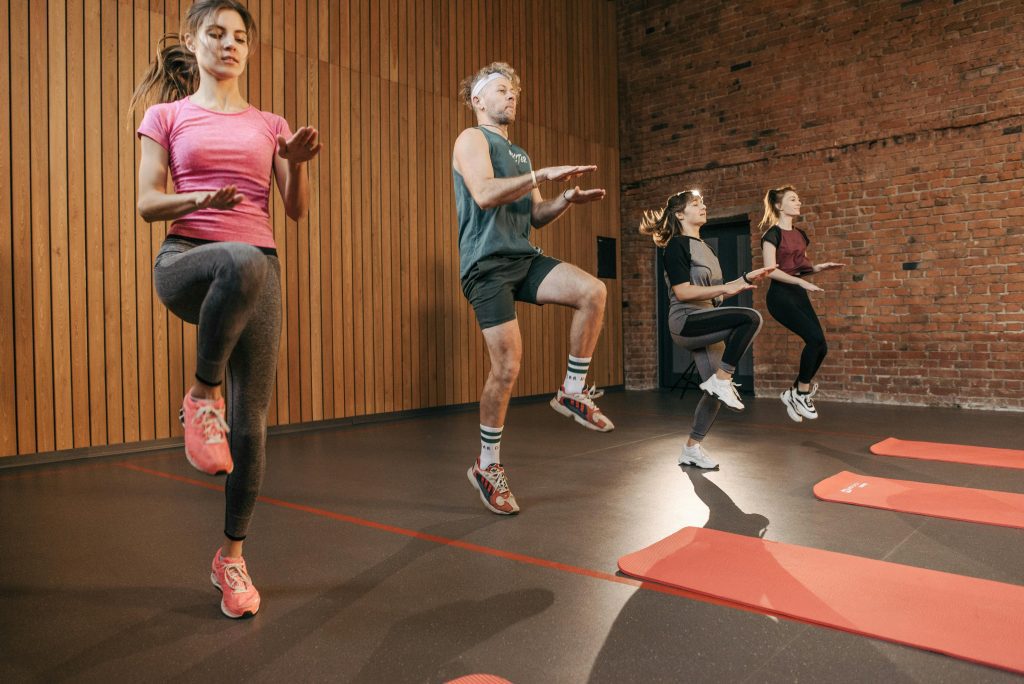
Picture this: you’re helping a friend move house, lugging boxes up three flights of stairs. Halfway through, your lower back starts screaming, your grip gives out, and you’re gasping for air whilst everyone else soldiers on. Or perhaps you’ve bent down to lift your toddler from the floor and felt that familiar twinge in your back. Maybe you’ve struggled to hoist your suitcase into the overhead compartment on a train, despite going to the gym three times weekly. What’s missing? Functional Fitness!
Here’s the uncomfortable truth: being able to bench press 100kg or run a 5K doesn’t guarantee you can handle the physical demands of daily life. Traditional gym training often focuses on isolated movements that don’t translate to real-world activities. You might have impressive biceps but struggle to carry shopping bags up your stairs, or run for miles but lack the hip mobility to pick something up from the floor safely.
Functional fitness changes this equation entirely. Rather than training muscles in isolation, functional fitness develops strength, mobility, and coordination through movement patterns you actually use in daily life. It prepares your body for the unpredictable demands of reality—lifting awkward objects, reaching overhead whilst balancing, twisting whilst carrying weight, and moving smoothly through your day without pain or limitation.
This comprehensive guide will transform how you think about fitness. You’ll discover what functional fitness truly means (it’s not just another fitness trend), learn the fundamental movement patterns that underpin everything you do, and understand how to build a training programme that makes you genuinely capable in the real world. Whether you’re a complete beginner or an experienced gym-goer looking to make your training more practical, this guide provides everything you need.
Who This Guide Is For:
This guide serves UK readers who want fitness that enhances daily life, not just gym performance. You might be:
- Someone who wants to stay active and capable as you age
- A parent who needs strength and energy to keep up with children
- An office worker dealing with chronic pain from poor movement patterns
- A former athlete looking to maintain functionality without sport-specific training
- Anyone tired of gym routines that don’t improve how you actually move and feel
What Is Functional Fitness? Understanding the Fundamentals
Functional fitness represents a paradigm shift from traditional bodybuilding and isolated muscle training toward preparing your body for the physical demands of real life. Rather than focusing on how much weight you can lift in a single plane of motion whilst seated on a machine, functional fitness asks: can you move well, feel strong in daily activities, and maintain physical capability throughout your life?
Defining Functional Fitness
Functional fitness trains your body to handle real-world activities efficiently and safely. It emphasises multi-joint movements that mimic everyday tasks like lifting, carrying, pushing, pulling, twisting, and climbing. Instead of isolating your biceps with curls, functional training might involve carrying heavy shopping bags up stairs—an activity that requires grip strength, core stability, leg power, and cardiovascular endurance simultaneously.

The “functional” in functional fitness refers to movements that serve a purpose beyond the gym. Picking up a toddler from the floor requires hip hinge mechanics, core bracing, and the ability to control weight whilst standing. Placing luggage overhead demands shoulder mobility, core stability, and leg drive. Functional training prepares you for these real scenarios rather than arbitrary gym achievements.
This approach recognises that your body works as an integrated system, not a collection of isolated muscles. The core stabilises whilst limbs create movement. Hips, knees, and ankles coordinate to absorb force. Meanwhile, the nervous system orchestrates complex movement patterns that keep you balanced and efficient. Functional fitness respects and develops these natural movement systems.
The Science Behind Functional Training
Research increasingly supports the superiority of functional training for improving quality of life and reducing injury risk. Studies published in the Journal of Strength and Conditioning Research demonstrate that functional training improves not just strength but also balance, coordination, and movement efficiency—factors that significantly impact daily living and injury prevention.
Your nervous system learns movement patterns, not individual muscle contractions. When you repeatedly practise a movement pattern like squatting with rotation (similar to unloading shopping from a car boot), your brain builds neural pathways that make the movement more automatic and efficient. This transfer of training to real-world tasks exceeds what isolated exercises can achieve.
Functional training also addresses movement dysfunction more effectively than traditional approaches. Many people develop compensation patterns from desk work, previous injuries, or repetitive activities. These dysfunctions manifest as poor movement quality—rounded shoulders, limited hip mobility, or inability to maintain neutral spine under load. Functional exercises, when properly programmed, expose and correct these issues rather than reinforcing them.
The concept of movement variability is central to functional training. Rather than repeating identical movements in fixed patterns, functional fitness incorporates variety in stance, load placement, movement speed, and environmental demands. This variability builds robust movement capabilities that adapt to unpredictable real-world situations.
Functional Fitness vs Traditional Gym Training
Traditional bodybuilding and machine-based training isolates muscles to create hypertrophy and aesthetic development. Bicep curls target biceps exclusively. Leg extensions isolate quadriceps. Whilst these exercises build muscle mass, they don’t teach your body how to coordinate complex movements or stabilise under dynamic loads.
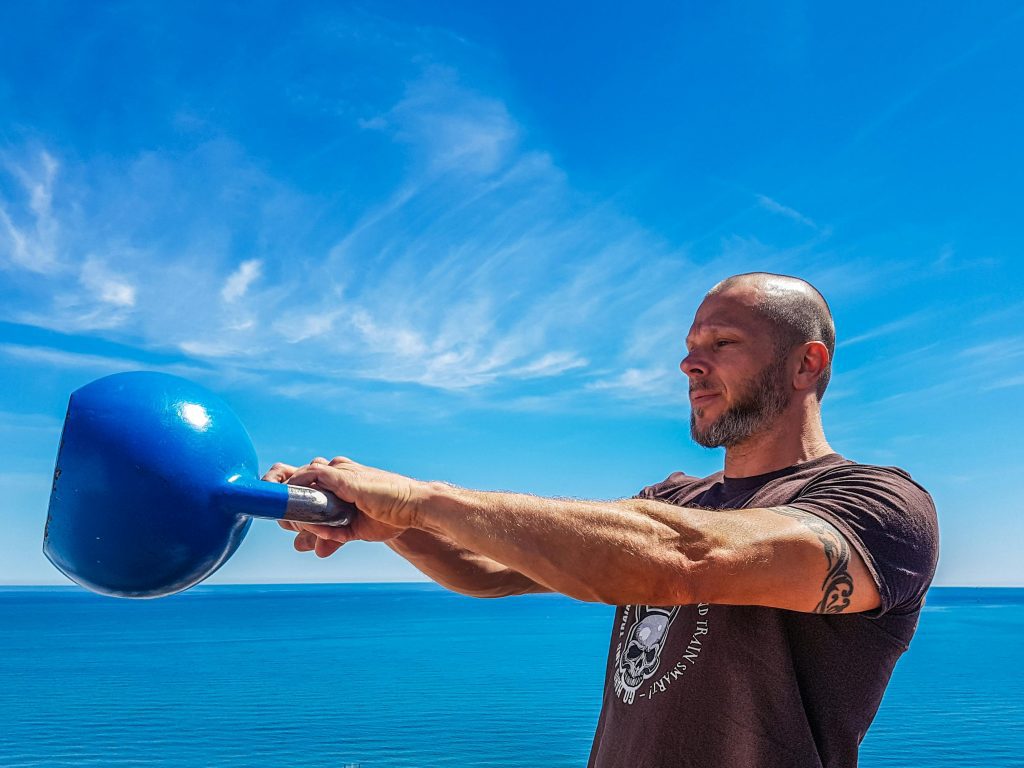
Functional fitness prioritises integration over isolation. A kettlebell swing, for instance, requires hip drive, core bracing, shoulder stability, grip strength, and timing. Your body learns to transfer force from legs through core to arms—a pattern used in countless daily activities. The metabolic demand also typically exceeds isolated exercises, building cardiovascular fitness alongside strength.
Machine-based training provides stability, allowing you to push muscles hard without worrying about balance or coordination. This suits bodybuilders focused purely on muscle growth. However, it fails to develop the stabiliser muscles and proprioception essential for safe, capable movement in unpredictable environments.
Free weight and bodyweight functional training demands constant stabilisation. The core must brace to protect your spine. Stabiliser muscles fire to maintain proper positioning. Meanwhile, the nervous system integrates sensory feedback to adjust movement in real-time. These elements transfer directly to lifting a heavy box, playing with children, or preventing injury during a slip or trip.
[After this section, suggest image: “side-by-side comparison showing person on leg extension machine (isolated movement) versus person performing goblet squat with rotation (functional movement), highlighting muscle activation patterns and real-world relevance”]
💡 Pro Tip: Functional fitness doesn’t mean abandoning traditional strength training entirely. Many successful programmes blend functional movements with strategic isolation work. The key is ensuring your training foundation emphasises functional patterns whilst using isolation exercises to address specific weaknesses.
The Seven Fundamental Movement Patterns
Every human movement, no matter how complex, can be broken down into seven fundamental patterns. Mastering these patterns forms the foundation of functional fitness and ensures you can handle any physical challenge life presents.
Squat Patterns
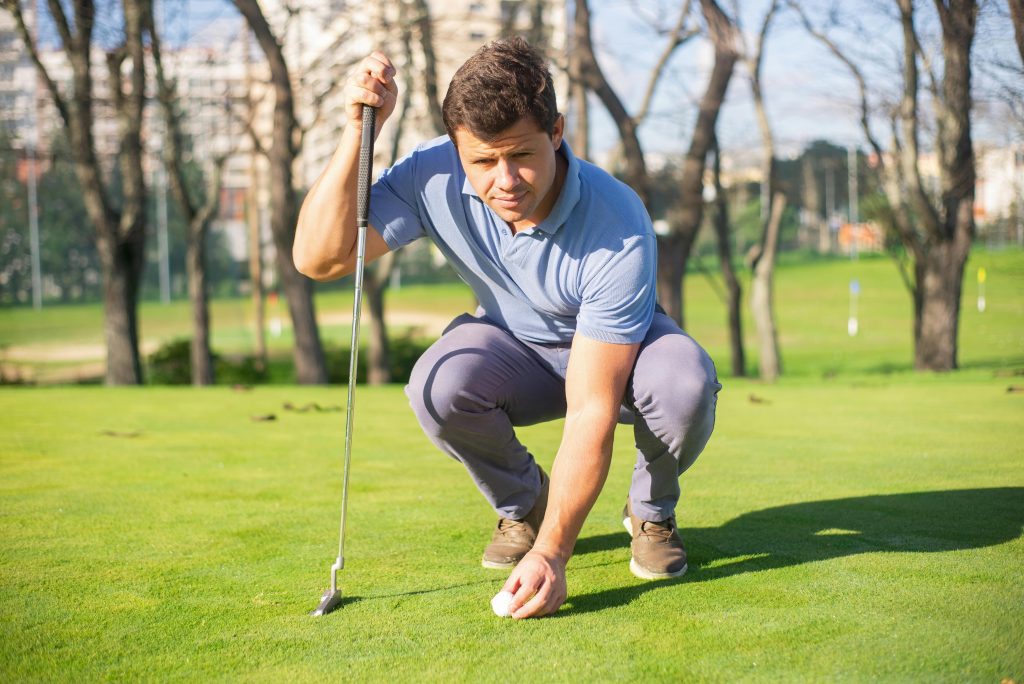
Squatting represents the fundamental pattern for lowering your centre of mass whilst maintaining balance. Every time you sit down, stand up, or pick something up from low height, you’re squatting. Yet most adults have lost the natural squat mechanics they possessed as children, leading to compensation patterns that strain knees and lower back.
A proper squat involves hip flexion, knee flexion, and ankle dorsiflexion occurring simultaneously whilst the spine maintains neutral alignment. Your weight stays centred over mid-foot, knees track over toes, and hips descend between or slightly behind heels. This pattern distributes force evenly through joints, preventing excessive stress on any single structure.
Common squat variations in functional training include goblet squats (holding weight at chest level), front squats (bar across shoulders), and overhead squats (arms extended overhead with weight or resistance band). Each variation challenges stability differently and reveals mobility limitations that need addressing.
Real-world applications of squat patterns extend beyond obvious examples like sitting in chairs. Picking up children, gardening, loading low shelves, and getting in and out of cars all require competent squat mechanics. Improving your squat pattern immediately enhances daily comfort and reduces injury risk during these activities.
Hinge Patterns
Hip hinging involves bending at the hips whilst maintaining a neutral spine—the fundamental pattern for picking objects up from the ground. Proper hinge mechanics protect your lower back by loading the posterior chain (glutes and hamstrings) rather than relying on spinal flexion, which creates dangerous shear forces on intervertebral discs.
The kettlebell deadlift exemplifies the hip hinge pattern. Starting with feet hip-width apart, you push hips backward whilst maintaining slight knee bend and neutral spine. The movement initiates from hips, not from rounding the spine. Glutes and hamstrings provide the force to return to standing, with core bracing maintaining spinal stability throughout.
Many people unknowingly use terrible hinge mechanics during daily activities. They round their spine when lifting shopping bags, bend from the back rather than hips when picking up items, or fail to brace their core when carrying heavy objects. These dysfunctional patterns accumulate micro-trauma over time, eventually manifesting as chronic lower back pain.
Training proper hinge mechanics through exercises like Romanian deadlifts, kettlebell swings, and good mornings builds both strength and movement competency. Your nervous system learns to automatically engage glutes and hamstrings for lifting tasks whilst your core protects your spine. This neuromuscular reprogramming proves invaluable for long-term back health.
Push and Pull Movements
Vertical and horizontal pushing/pulling represent four distinct movement patterns essential for upper body functionality. Press-ups and bench press variations exemplify horizontal pushing, mimicking actions like pushing a heavy door open or getting up from the floor. Vertical pushing (overhead press, handstand press-up progressions) translates to placing objects on high shelves or lifting items overhead.
Horizontal pulling (rows, ring pulls) develops the strength needed for opening doors, pulling yourself up from a seated position, or rowing a boat. Vertical pulling (pull-ups, lat pulldowns) builds the capability for climbing, pulling yourself over obstacles, or lifting your body weight. Together, these patterns ensure balanced upper body development and shoulder health.
Modern lifestyles emphasise pushing far more than pulling—we push keyboards, shopping trolleys, doors, and steering wheels constantly. This imbalance often manifests as rounded shoulders, internally rotated arms, and eventual shoulder pain. Functional training deliberately emphasises pulling exercises at a 2:1 or even 3:1 ratio compared to pushing to counteract these postural issues.
Each push/pull pattern can be trained at various angles and with different implements. Press-ups on rings challenge stability more than floor press-ups. Single-arm rows develop anti-rotation core strength. Landmine presses train the diagonal pressing pattern used when putting luggage overhead. This variation ensures comprehensive upper body capability.
[After this section, suggest infographic: “The 7 Fundamental Movement Patterns” showing stick figures demonstrating squat, hinge, horizontal push, vertical push, horizontal pull, vertical pull, and loaded carry with real-world examples for each pattern (e.g., squat = picking up child, hinge = lifting shopping bag)”]
Carry, Rotation, and Gait
Loaded carries involve walking whilst holding weight in various positions—farmer’s carries (weight at sides), overhead carries (weight held overhead), or front rack carries (weight at shoulders). These exercises build tremendous core strength, grip endurance, and postural stability whilst training your body to maintain proper alignment under sustained load.
The transfer to real life is obvious: carrying shopping bags, moving furniture, holding a child whilst walking, or transporting equipment all require the stability and endurance developed through loaded carries. Many people struggle with these tasks not from lack of raw strength but from inadequate core stability and poor postural control under load.
Rotational movements—medicine ball throws, wood chops, anti-rotation exercises—develop the ability to generate and resist rotational forces. Every sport involves rotation, as do many daily activities like putting items into car boots, turning whilst holding objects, or reaching across your body for tools. Training rotation in controlled environments improves performance and reduces injury risk during spontaneous rotational movements.
Gait patterns encompass walking, running, and variations like shuffling, backpedalling, or moving laterally. Functional fitness recognises that optimal gait requires hip mobility, ankle stability, core control, and proper breathing mechanics. Exercises like walking lunges, lateral shuffles, and gait drills address these elements whilst building leg strength and cardiovascular fitness simultaneously.
Core Principles of Functional Training
Effective functional fitness programming adheres to several key principles that distinguish it from traditional training approaches. Understanding these principles allows you to evaluate exercises and programmes for their true functional value.
Training Movement Not Muscles
Traditional bodybuilding asks “which muscles does this exercise work?” In contrast, functional training asks “which movement pattern does this exercise train?” This shift in perspective fundamentally changes how you programme and perform exercises.
When you train movements, you automatically engage all muscles required for that movement whilst also developing the neural coordination that makes the movement efficient. A kettlebell swing trains the hip hinge pattern, automatically engaging glutes, hamstrings, core, lats, and grip whilst teaching your nervous system how to coordinate these muscles for explosive hip extension.
This principle also means that exercises should look like the movements they’re meant to improve. If you want to improve your ability to lift objects from the floor, deadlift variations prove more functional than leg curls and back extensions performed separately. The integrated movement pattern transfers more effectively than training component muscles in isolation.
Context matters when evaluating functionality. A furniture removal specialist benefits from farmer’s carries with 50kg in each hand—highly functional training for their profession. Office workers, however, might find loaded carries with 15kg grocery bags more appropriate. Functional training matches the demands you actually face rather than pursuing arbitrary strength standards.
Multi-Planar Movement
Human movement occurs across three planes: sagittal (forward/backward), frontal (side-to-side), and transverse (rotational). Most traditional gym exercises occur exclusively in the sagittal plane—squats, bench press, rows, and deadlifts all move forward and backward. Real life demands movement in all three planes simultaneously.
Consider unloading shopping from your car boot: you rotate your torso (transverse plane), reach to the side (frontal plane), and bend forward (sagittal plane) all at once. Your core must stabilise this complex multi-planar movement whilst your arms manage the load. Training that only works single planes leaves you underprepared for such integrated demands.
Functional training deliberately incorporates lateral movements like side lunges, rotational exercises like wood chops, and diagonal patterns like hay balers. These multi-planar movements build stability and strength in ranges often neglected, reducing injury risk and improving overall movement capability.
The concept of anti-movement proves equally important. Anti-rotation exercises (Pallof presses, dead bugs) train your core to resist unwanted rotation, essential for safe lifting and carrying. Anti-lateral flexion exercises (suitcase carries) prevent your spine from bending sideways under asymmetric loads. These “anti” patterns develop stability that protects you during unpredictable movements.
Progressive Complexity
Functional training progresses from simple, stable movements to complex, dynamic challenges. This progression respects how your nervous system learns whilst safely building capability that transfers to increasingly demanding real-world situations.
Beginners might start with goblet squats—a stable, symmetrical exercise that’s easy to coach and execute. Once competent, they progress to split squats, which require more balance and unilateral strength. Further progression might include walking lunges with rotation, combining movement patterns in a dynamic, challenging way that demands significant coordination.
Complexity can be increased through multiple methods: reducing stability (moving from bilateral to unilateral stance), adding rotation or reach, combining movement patterns, introducing reactive elements, or performing exercises in challenging environments. Each increase in complexity demands greater neural involvement and better movement quality.
This progression principle prevents both boredom and plateaus. Unlike traditional strength training where you simply add weight indefinitely, functional training offers near-infinite progression through increased complexity whilst maintaining moderate loads. A 20kg Turkish get-up proves extraordinarily challenging due to complexity, not just weight.
📊 Research Insight: Studies on motor learning demonstrate that progressive complexity enhances skill retention and transfer better than simply increasing resistance. Your nervous system adapts to handle novel movement challenges, creating robust movement capabilities that persist even under fatigue or stress.
Essential Functional Fitness Exercises
Functional training encompasses a vast library of exercises, but certain movements provide exceptional return on investment for most people. These essential exercises address all fundamental movement patterns whilst offering clear progression pathways and real-world transfer.
Lower Body Functional Exercises
Goblet squats teach proper squat mechanics whilst building leg strength and mobility. Holding a kettlebell or dumbbell at chest level keeps your torso upright and provides a counterbalance that improves squat depth. Most people can achieve better squats goblet-style than with a barbell, making it ideal for movement pattern development.
Romanian deadlifts (RDLs) cement hip hinge mechanics using moderate weight with higher reps. Starting from standing, you push hips back whilst maintaining slight knee bend and neutral spine, lowering the weight to mid-shin before driving hips forward to return to standing. This teaches the posterior chain to dominate hip extension rather than relying on back extension.
Bulgarian split squats challenge each leg independently whilst requiring significant balance and stability. Elevating your rear foot on a bench forces your working leg to handle most of your bodyweight plus any external load. This unilateral demand better mimics real-world activities that rarely occur in perfectly balanced, bilateral positions.
Lateral lunges train side-to-side movement often neglected in traditional programmes. Step wide to the side, shift weight onto that leg whilst maintaining the other leg straight, then push back to standing. This frontal plane movement builds hip stability and addresses the adductors and abductors essential for safe, capable movement in all directions.
Step-ups replicate climbing stairs whilst allowing progressive overload through added weight or step height. Quality execution requires driving through the front leg without pushing off the ground with your back leg—a distinction many people miss. Proper step-ups build unilateral leg strength and the hip stability essential for daily stair navigation.
Upper Body Functional Exercises
Press-ups remain the king of horizontal pushing exercises, requiring core stability, scapular control, and shoulder health. Proper form demands maintaining a plank position throughout the movement, lowering until chest nearly touches ground, then pressing back up. Variations like incline, decline, and ring press-ups allow appropriate scaling for all fitness levels.
Inverted rows develop horizontal pulling strength using a low bar or suspension trainer. Set the bar at waist height, lie underneath, and pull chest to bar whilst maintaining straight body line. This exercise counteracts desk posture whilst building the back strength essential for pulling movements and postural health.
Overhead presses build vertical pressing strength critical for placing items on high shelves or lifting objects overhead. Standing dumbbell presses require more core stability than seated variations, making them more functional. The standing position also allows natural hip drive to assist the press, teaching integrated movement patterns.
Pull-ups represent the pinnacle of vertical pulling, requiring you to move your entire bodyweight through space. Most people cannot initially perform pull-ups, necessitating progressions like assisted pull-ups (using resistance bands), negative pull-ups (jumping up, lowering slowly), or Australian rows. The capability to pull your bodyweight translates to climbing, lifting yourself from hanging positions, and general upper body pulling strength.
Single-arm dumbbell rows train horizontal pulling whilst simultaneously challenging core anti-rotation. Placing one hand on a bench for support, row a dumbbell with the other arm whilst preventing torso rotation. This unilateral approach addresses side-to-side imbalances common in most people whilst building functional pulling strength.
Core Stability and Anti-Movement Exercises
Planks teach full-body tension and anti-extension core strength. Rather than thinking of planks as “ab exercises,” view them as total body stability drills. Proper execution requires tension throughout—squeezed glutes, braced core, active shoulders—maintaining this position for time builds the endurance essential for maintaining proper posture during extended activities.
Pallof presses develop anti-rotation core strength by forcing you to resist rotational forces. Attach a resistance band to a fixed point at chest height, stand perpendicular to the anchor, and press hands straight forward whilst preventing torso rotation. This exercise directly transfers to activities requiring you to resist twisting under load.
Dead bugs challenge anti-extension and coordination simultaneously. Lying on your back with arms extended overhead and knees at 90 degrees, lower opposite arm and leg toward the ground whilst maintaining lower back contact with the floor. This seemingly simple exercise often reveals significant coordination deficits and core control issues.
Bird dogs train anti-rotation, anti-extension, and balance from a quadruped position. Extending opposite arm and leg whilst maintaining level hips and stable torso builds the posterior core strength and coordination essential for safe movement. Quality execution trumps speed or duration.
Suitcase carries involve walking whilst holding weight in one hand, challenging your core to resist lateral flexion and rotation. This asymmetric loading pattern mirrors carrying shopping bags, suitcases, or children on one side. Walking 40 metres with challenging weight builds tremendous core endurance and postural control.
Total Body Integration Exercises
Turkish get-ups combine nearly every functional movement pattern into one complex sequence. Starting lying down with a weight held overhead, you progress through a series of positions—bridging, sweeping to kneeling, lunging to standing—all whilst maintaining the weight overhead. This exercise demands strength, mobility, stability, and coordination simultaneously.
Kettlebell swings build explosive hip power through the hip hinge pattern. The swing teaches your posterior chain to generate and absorb force ballistically, an essential capability for jumping, sprinting, and powerful movements. Proper execution requires minimal arm involvement—power comes from aggressive hip extension.
Farmers carries involve walking whilst holding heavy weight in each hand. This apparently simple exercise challenges grip, core stability, postural endurance, and mental toughness. The ability to carry heavy loads for distance translates obviously to moving furniture, carrying luggage, or hauling shopping bags.
Medicine ball slams develop power production through total body extension followed by forceful flexion. Reaching overhead then violently throwing the ball to the ground requires coordination of legs, core, and arms. This explosive movement builds power whilst providing an excellent outlet for stress and aggression in training.
Thrusters combine front squats and overhead presses into one fluid movement. Holding dumbbells or kettlebells at shoulders, squat to depth then explosively drive up, using momentum to press weights overhead. This exercise mimics lifting and placing heavy objects on high shelves whilst building strength, power, and cardiovascular fitness.
⚠️ Common Mistake: Attempting complex exercises like Turkish get-ups or kettlebell swings without mastering component movements first. Build competency in simpler squats, hinges, and overhead pressing before combining patterns. Complexity should be earned through progression, not rushed because an exercise looks impressive.
Building Your Functional Fitness Programme
Effective functional training requires thoughtful programming that addresses your current capabilities, goals, and available time. Unlike cookie-cutter bodybuilding splits, functional programming should be individualised based on assessment of movement quality and real-world needs.
Assessment and Starting Point
Before programming, assess your current movement capability honestly. Are you able to squat to full depth with neutral spine? Touch your toes with straight legs? Perform a proper press-up? These basic assessments reveal mobility limitations and movement dysfunctions requiring attention.
The Functional Movement Screen (FMS), whilst imperfect, provides a structured assessment approach. Seven movement patterns—deep squat, hurdle step, inline lunge, shoulder mobility, active straight leg raise, trunk stability press-up, and rotary stability—reveal asymmetries and limitations that inform programming. Even informal self-assessment of these patterns provides valuable insights.
Video yourself performing basic movements. Often, movement dysfunctions invisible to you become obvious when watching video playback. Filming squats from front and side angles might reveal knee valgus (knees caving inward), insufficient depth, or excessive forward lean—all indicators of specific weaknesses to address.
Don’t rush past assessment into advanced programming. Spending 2-4 weeks addressing basic movement competency through corrective exercises and movement practice creates a stronger foundation for future progression. This investment pays dividends through better exercise execution and reduced injury risk.
Programme Structure and Frequency
Most people benefit from 3-4 functional training sessions weekly, allowing adequate recovery whilst providing sufficient stimulus for adaptation. Sessions typically last 45-75 minutes including warm-up, skill work, strength training, and conditioning.
Each session should include the following components: movement preparation (10-15 minutes of mobility work and movement practice addressing individual limitations), skill practice (5-10 minutes working on complex movements when fresh), strength work (20-30 minutes focusing on 2-4 primary exercises), and metabolic conditioning or accessory work (10-15 minutes of higher-volume work or cardio).
A simple weekly template might allocate Monday to lower body emphasis, Wednesday to upper body emphasis, and Friday to total body integration. Each session includes exercises from all movement patterns but emphasises specific areas. This ensures balanced development whilst preventing excessive fatigue in any single movement pattern.
Alternatively, full-body sessions three times weekly work excellently for beginners and busy individuals. Each session includes one squat pattern, one hinge pattern, horizontal push/pull, vertical push/pull, and core work. This frequency allows practising fundamental patterns thrice weekly, accelerating motor learning.
Progressive Overload for Functional Training
Progressive overload in functional fitness extends beyond simply adding weight. You can progress by increasing load, volume (sets and reps), complexity, reducing rest periods, or improving movement quality. This multi-dimensional approach to progression maintains consistent challenge without requiring endless weight increases.
Load progression follows similar principles to traditional training—increase weight by 2.5-5% when you can complete prescribed reps with excellent form across all sets. However, functional training often caps loads at moderate weights whilst increasing complexity, recognising that extreme loads can compromise movement quality.
Complexity progression proves uniquely valuable for functional training. Moving from bilateral to unilateral exercises, stable to unstable surfaces, supported to unsupported movements, or simple to combined patterns dramatically increases difficulty without adding external weight. A 24kg Turkish get-up challenges even very strong individuals despite using moderate load.
Density training—completing more work in the same timeframe—builds work capacity essential for real-world activities that don’t allow rest between efforts. Starting with 2-minute rest between sets, progressively reducing to 90 seconds, then 60 seconds increases training density whilst building cardiovascular fitness alongside strength.
Quality progression deserves emphasis. Improving movement quality—fuller range of motion, better control, cleaner execution—represents genuine progression even if external variables remain constant. Filming your exercises monthly allows tracking quality improvements that might otherwise go unnoticed.
Functional Fitness for Different Life Stages and Goals
Functional training adapts beautifully to individual circumstances, goals, and life stages. Rather than forcing everyone into identical programming, effective functional training acknowledges different needs and priorities.
Functional Training for Office Workers
Desk work creates predictable movement dysfunctions—rounded shoulders, forward head posture, tight hip flexors, and weakened glutes. Functional programming for office workers prioritises correcting these imbalances whilst building general movement capability.
Emphasis on pulling exercises counteracts the constant pushing and internal rotation of desk work. Rows, face pulls, and band pull-aparts performed at 2:1 or 3:1 ratios compared to pressing gradually restore shoulder positioning. External rotation exercises and wall slides address rounded shoulder posture directly.
Hip mobility work becomes non-negotiable for desk workers. Daily hip flexor stretching, 90/90 hip mobility drills, and exercises emphasising hip extension (bridges, hip thrusts, RDLs) counteract the hip flexion dominant position of sitting. Many office workers discover dramatic back pain relief simply from addressing hip mobility and glute activation.
Standing and movement breaks throughout the workday prove equally important as dedicated training. Setting hourly reminders to stand, walk briefly, and perform simple movements (arm circles, hip circles, bodyweight squats) maintains tissue health and prevents the stiffness that accompanies prolonged static postures.
Sample exercises for office workers include: goblet squats to rebuild squat mechanics, RDLs for hip hinge and posterior chain, inverted rows for postural muscles, Pallof presses for anti-rotation core strength, and thoracic spine mobility drills to counteract rounded upper back.
Functional Fitness for Parents
Parents need durable, fatigue-resistant strength for the constant physical demands of childcare—lifting children repeatedly, carrying them while moving, getting up and down from the floor, and maintaining energy through long, active days.
High-rep, moderate-weight training builds the muscular endurance parents need more than maximal strength. Sets of 12-20 reps with shorter rest periods develop the ability to perform repeated efforts without excessive fatigue. Circuit training that mimics the interrupted nature of parenting (short bursts of effort with minimal rest) translates particularly well.
Carries take priority in parent-focused programming. Farmer’s carries with asymmetric loads (heavier on one side) replicate carrying children. Front rack carries mimic holding toddlers at chest height. Overhead carries build the shoulder stability needed when reaching whilst holding children.
Floor-based exercises prove essential. Parents constantly get down to play with children and need to return to standing efficiently without back strain. Turkish get-ups teach safe floor-to-standing transitions under load. Deep squats, box get-ups, and general floor mobility work maintain the capability to comfortably spend time at child-height.
Sample exercises for parents: Bulgarian split squats for unilateral leg strength, single-arm carries for asymmetric core strength, step-ups with rotation, bent-over rows, and floor-based core work including dead bugs and bird dogs.
Functional Training for Older Adults
Functional fitness becomes increasingly important with age, directly addressing the decline in mobility, balance, and strength that threatens independence. Programming for older adults prioritises movement quality, fall prevention, and maintaining activities of daily living.
Balance training takes prominence through single-leg exercises, narrow stance work, and exercises performed with eyes closed (under appropriate supervision). Simple progressions like tandem stance (heel-to-toe), single-leg stands, and walking heel-to-toe build the balance essential for preventing falls—the leading cause of injury in older adults.
Hip and ankle mobility deserve special attention, as restrictions in these joints dramatically increase fall risk and reduce walking efficiency. Daily hip circles, ankle mobility drills, and gentle stretching maintain range of motion. Deep squat holds (assisted if necessary) preserve hip mobility essential for safe floor-to-standing transitions.
Moderate resistance with higher reps prevents excessive joint stress whilst still building strength. Research demonstrates older adults respond well to resistance training, with 12-20 rep ranges proving effective for building strength and muscle mass whilst remaining joint-friendly. Machines and resistance bands provide safer alternatives to free weights for some exercises.
Sample exercises for older adults: sit-to-stand variations progressing to goblet squats, step-ups for leg strength and balance, wall press-ups progressing to floor variations, seated rows for postural strength, and modified planks for core stability. All exercises should be scaled to individual capability with emphasis on perfect form.
✅ Quick Win: Regardless of age or situation, start each training session with 5-10 minutes of movement practice focused on your specific limitations. Office workers might practice thoracic rotations and hip openers. Parents could rehearse floor-to-standing transitions. Older adults might work balance drills. This targeted practice accelerates improvement in areas that most impact daily life.
Equipment and Training Environment
Functional fitness adapts to nearly any environment with minimal equipment. While fully-equipped facilities offer advantages, excellent results are achievable at home or outdoors with basic tools.
Essential Equipment for Home Training
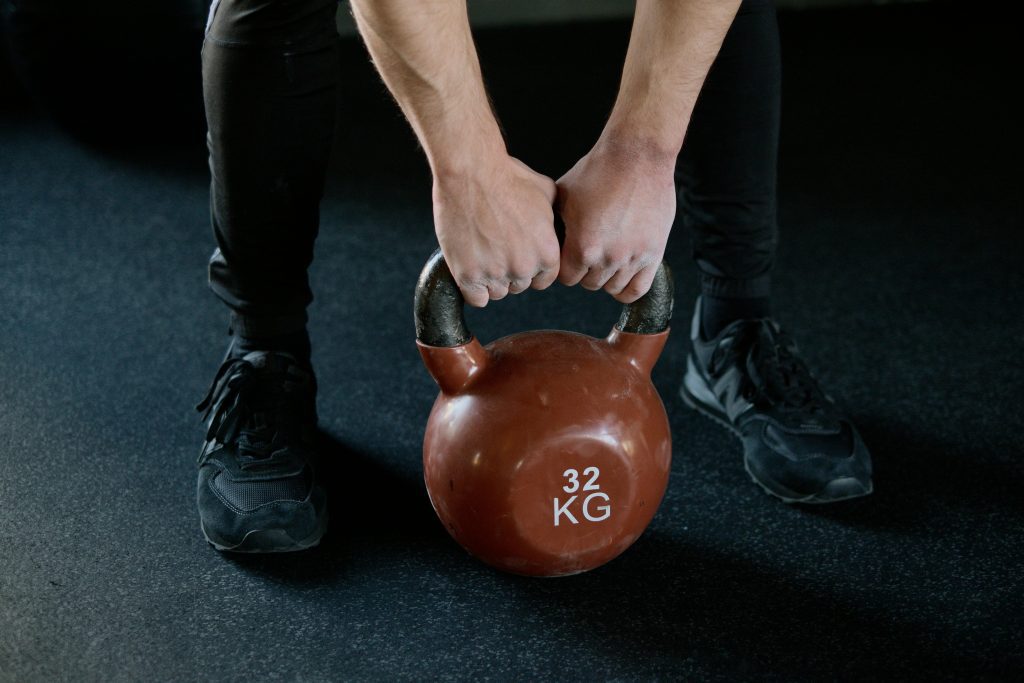
A single kettlebell (16-24kg for men, 8-16kg for women) provides access to hundreds of functional exercises. Kettlebell swings, goblet squats, Turkish get-ups, and various carry variations require only this single tool. As a second purchase, a lighter kettlebell enables greater exercise variety and progression options.
Resistance bands cost £15-30 for a complete set and add significant training variety. Use them for assisted pull-ups, face pulls, Pallof presses, and adding resistance to bodyweight exercises. Loop bands around your thighs during squats and lunges to reinforce proper knee tracking. Their portability makes them excellent for travel.
A pull-up bar (£15-40 for doorway models, £25-80 for wall-mounted versions) enables vertical pulling and core exercises. Beyond pull-ups, bars support hanging for grip strength and shoulder health, leg raises for core work, and provide anchor points for resistance bands.
Suspension trainers like TRX (£50-150) or budget alternatives (£20-40) enable hundreds of bodyweight exercises with adjustable difficulty. Rows, press-ups, hamstring curls, and single-leg exercises all scale easily by adjusting body angle. The instability builds additional core demand compared to floor-based variations.
Optional additions include dumbbells (£1-2 per kg, adjustable sets available), a medicine ball (£20-50) for throws and core work, and parallettes (£30-60) for press-up variations and L-sits. None are essential initially but expand exercise options as you progress.
Gym-Based Functional Training
Commercial gyms increasingly include functional training areas with kettlebells, medicine balls, plyo boxes, battle ropes, and open floor space. These dedicated areas provide freedom to perform complex movements without navigating machines and benches.
Barbells enable heavier loading for fundamental movements like deadlifts and squats. Whilst not essential, progressive barbell training efficiently builds maximum strength in basic patterns. The ability to microload (adding small weight increments) facilitates systematic progression.
Cable machines prove surprisingly functional when used creatively. Rows, Pallof presses, wood chops, and various anti-rotation exercises work excellently on cables. The constant tension cables provide differs from free weights, offering valuable variety.
Dumbbells from 5-40kg allow progressive loading for numerous exercises. Single-arm work with dumbbells addresses asymmetries whilst building anti-rotation core strength. Farmer’s carries, Turkish get-ups, and various press/pull variations all benefit from dumbbell availability.
Avoid over-relying on machines. Leg presses, leg extensions, and chest press machines isolate muscles rather than training integrated movement patterns. Use machines sparingly, if at all, favouring free weights, cables, and bodyweight exercises that demand stabilisation and coordination.
Outdoor and Minimal Equipment Options
Parks with pull-up bars, dip bars, and monkey bars provide excellent training venues. Many UK councils have installed outdoor fitness equipment in public parks, particularly in larger cities. These spaces enable full-body workouts without gym membership.
Bodyweight training requires zero equipment whilst offering significant challenge. Press-up variations, pistol squat progressions, pull-up and dip variations (using park equipment), and core exercises provide comprehensive training. Progressive calisthenics builds impressive strength and capability.
Natural obstacles create unique training opportunities. Find sturdy logs for carries, hills for sprint intervals, stairs for step-ups, and open space for movement practice. This improvisational approach builds adaptability and problem-solving, enhancing the “functional” aspect of your training.
Sandbags (DIY from old duffel bags filled with playground sand, sealed tightly) provide unstable, awkward loads perfect for functional training. Carries, squats, and shouldering movements with sandbags build real-world strength that transfers excellently to moving furniture and handling unwieldy objects.
Training outdoors provides psychological benefits beyond physical adaptation. Fresh air, natural light, and changing scenery enhance enjoyment and adherence. Weather variability adds another element of adaptation, though extreme conditions require common sense adjustments for safety.
Common Mistakes and How to Avoid Them
Even with good intentions, several common pitfalls derail functional fitness progress. Recognising these mistakes allows you to avoid them proactively.
Movement Quality and Progression Errors
Mistake 1: Progressing Too Quickly to Complex Exercises
Many people attempt Turkish get-ups, kettlebell snatches, or pistol squats before developing prerequisite strength and mobility. Complex exercises demand competency in component movements. Master basic squats before pistol squats, basic hinges before kettlebell swings, and basic carries before Turkish get-ups. Rushing complexity leads to poor movement quality and injury risk.
Mistake 2: Neglecting Mobility Work
Functional exercises expose mobility limitations, but exercises alone don’t always resolve them. Dedicated mobility work—hip openers, thoracic rotations, ankle mobility drills—accelerates progress and prevents compensations. Spend 10-15 minutes daily on mobility, focusing on your specific limitations identified through assessment.
Mistake 3: Training Only in the Sagittal Plane
Many people unconsciously default to front-back movements (squats, deadlifts, presses), neglecting lateral and rotational patterns. Real life demands multi-planar capability. Deliberately include lateral lunges, rotational throws, and diagonal movements. If 80% of your training occurs in one plane, you’re missing crucial functional development.
Programming and Training Approach Errors
Mistake 4: Ignoring Unilateral Training
Bilateral exercises (back squats, deadlifts) allow using heavier loads, making them psychologically satisfying. However, single-leg and single-arm exercises reveal and address side-to-side imbalances whilst building stability that bilateral movements cannot develop. Ensure at least 30-40% of training volume comes from unilateral variations.
Mistake 5: Sacrificing Form for Load or Complexity
Ego-driven training—using too much weight or attempting too-complex variations—compromises movement quality. Poor form during functional exercises ingrains dysfunctional patterns rather than correcting them. Prioritise movement quality absolutely, only progressing load or complexity when current variations are mastered.
Mistake 6: Inconsistent Training
Functional fitness improves movement patterns through repetition and progressive challenge. Training sporadically—once or twice weekly with frequent gaps—prevents meaningful adaptation. Aim for 3-4 sessions weekly, maintained consistently over months. Moderate consistency beats perfect programming executed inconsistently.
Planning and Execution Errors
Mistake 7: No Clear Goals or Progress Tracking
Training without specific targets or progress tracking leads to aimless workouts. Set concrete goals (squat to full depth pain-free, carry 40kg for 50 metres, perform 10 quality press-ups) and track sessions to monitor progress. Record exercises, weights, reps, and subjective notes about movement quality and how you felt.
Mistake 8: Copying Social Media Workouts Blindly
Instagram and TikTok overflow with impressive-looking exercises performed by elite athletes. These movements often require years of development and aren’t appropriate for most people. Don’t adopt random workouts because they look cool. Follow progressive programmes designed for your current level, not aspirational content created for engagement rather than education.
Mistake 9: Ignoring Pain Signals
“No pain, no gain” doesn’t apply to functional training. Sharp pain, joint pain, or pain that worsens during exercise indicates problems requiring attention. Distinguish between muscle fatigue (acceptable) and pain (unacceptable). Persistent pain warrants professional assessment from physiotherapists or sports medicine professionals.
Mistake 10: Failing to Address Individual Limitations
Generic programmes work only if you have no significant limitations or asymmetries. Most people possess mobility restrictions, previous injuries, or movement dysfunctions requiring individualised attention. Spend time assessing your specific issues and programming corrective exercises accordingly. Cookie-cutter approaches rarely deliver optimal results.
Sample Functional Fitness Programmes
These templates provide starting points for different experience levels. Adjust based on individual assessment, available equipment, and specific goals.
Beginner Programme (Weeks 1-8)
Beginner Programme (Weeks 1-8)
Focus: Movement pattern mastery and building foundational strength.
Monday – Lower Body Emphasis
- Movement prep: Hip mobility and ankle mobility (10 min)
- Goblet squats: 3 sets x 10 reps
- Romanian deadlifts (light): 3 sets x 12 reps
- Split squats: 3 sets x 8 reps each leg
- Pallof press: 3 sets x 10 reps each side
- Plank: 3 sets x 30-45 seconds
Wednesday – Upper Body Emphasis
- Movement prep: Thoracic mobility and shoulder circles (10 min)
- Press-ups (scaled as needed): 3 sets x 8-12 reps
- Inverted rows: 3 sets x 10 reps
- Standing dumbbell press: 3 sets x 10 reps
- Single-arm dumbbell rows: 3 sets x 10 reps each side
- Dead bugs: 3 sets x 8 reps each side
Friday – Total Body
- Movement prep: Full body mobility flow (10 min)
- Step-ups: 3 sets x 10 reps each leg
- Kettlebell swings (light, focus on form): 3 sets x 15 reps
- Farmers carry: 3 sets x 40 metres
- Face pulls: 3 sets x 15 reps
- Bird dogs: 3 sets x 8 reps each side
Rest 90-120 seconds between exercises. Focus on perfect form over load. Progress by increasing reps, adding weight, or improving movement quality.
Intermediate Programme (Weeks 12-20)
Intermediate Programme (Weeks 12-20)
Focus: Increasing complexity and load with multi-planar movements.
Monday – Lower Body and Core
- Movement prep and mobility (10 min)
- Front squats: 4 sets x 6-8 reps
- Bulgarian split squats: 3 sets x 8 reps each leg
- Lateral lunges: 3 sets x 10 reps each side
- Single-leg RDLs: 3 sets x 8 reps each leg
- Suitcase carries: 3 sets x 50 metres each side
Tuesday – Upper Body Push/Pull
- Movement prep (10 min)
- Ring press-ups: 4 sets x 10-12 reps
- Pull-ups (or assisted): 4 sets x 6-8 reps
- Single-arm overhead press: 3 sets x 8 reps each side
- Single-arm rows: 3 sets x 10 reps each side
- Pallof press: 3 sets x 12 reps each side
Thursday – Power and Conditioning
- Dynamic warm-up (10 min)
- Kettlebell swings: 5 sets x 20 reps
- Medicine ball slams: 4 sets x 10 reps
- Box jumps: 4 sets x 8 reps
- Battle ropes: 4 sets x 30 seconds
- Turkish get-up practice: 5 minutes
Saturday – Total Body Integration
- Movement prep (10 min)
- Walking lunges with rotation: 3 sets x 10 reps each side
- Thrusters: 4 sets x 10 reps
- Farmers carry: 3 sets x 60 metres (heavy)
- Renegade rows: 3 sets x 8 reps each side
- Turkish get-ups: 3 sets x 2 reps each side
Rest 60-90 seconds between exercises. Progress through added weight, reduced rest, or increased complexity. Deload every fourth week by reducing volume 40%.
Advanced Programme (Week 20+)
Advanced Programme (Week 20+)
Focus: High complexity, integrated movements, and sport-specific adaptations.
Monday – Strength Emphasis
- Movement prep (10 min)
- Deadlifts (conventional or sumo): 5 sets x 3-5 reps
- Pistol squats (or progression): 4 sets x 5 reps each leg
- Pull-ups (weighted if possible): 4 sets x 5-8 reps
- Handstand press-up progressions: 4 sets x 3-5 reps
- Heavy farmers carry: 3 sets x 80 metres
Wednesday – Power and Explosive Work
- Dynamic warm-up (15 min)
- Kettlebell snatches: 5 sets x 10 reps each side
- Medicine ball rotational throws: 4 sets x 8 reps each side
- Broad jumps: 4 sets x 5 reps
- Plyometric press-ups: 4 sets x 8 reps
- Sprint intervals: 8 x 50 metres
Friday – Integrated Movement Complexity
- Movement prep (10 min)
- Turkish get-ups: 5 sets x 2 reps each side (moderate-heavy)
- Walking lunges with overhead weight: 3 sets x 12 reps each leg
- Single-arm thrusters: 4 sets x 8 reps each side
- Hanging leg raises: 4 sets x 10 reps
- Loaded carries circuit: 3 rounds (farmer’s, rack, overhead – 40m each)
Sunday – Active Recovery and Skill Work
- Extended mobility work (20 min)
- Handstand practice: 15 minutes
- L-sit progressions: 10 minutes
- Light movement flow and exploration: 20 minutes
Advanced programming requires careful fatigue management. Listen to body signals, deload regularly, and adjust intensity based on recovery. Consider working with a coach for programme optimisation.
Measuring Progress and Success
Functional fitness success extends beyond simple weight increases or aesthetics. True progress manifests in improved daily capability, reduced pain, and enhanced quality of life.
Performance-Based Metrics
Performance-Based Metrics
Track objective performance markers: maximum reps of key exercises (press-ups, pull-ups), hold times for static positions (planks, L-sits), carry distances with specific loads, and movement quality assessments. Testing these quarterly reveals clear progress whilst informing programme adjustments.
Record video monthly performing fundamental movements. Compare videos over time to assess improvement in movement quality—deeper squats, better spinal positioning, smoother execution. These qualitative improvements often prove more significant than quantitative metrics, particularly for those training primarily for function rather than performance.
Functional Capacity Indicators
Functional Capacity Indicators
Notice improvements in daily activities: stairs feel easier, lifting children becomes less taxing, back pain during household chores diminishes, or you feel more energetic throughout the day. These real-world improvements represent the ultimate validation of functional training.
Self-assessment questions provide valuable insight: Can you sit on the floor and stand up without using hands? Can you carry your weekly shopping without strain? Do daily activities leave you fatigued or energised? Can you comfortably play with children or pets without pain? Positive changes in these areas matter more than gym-specific achievements.
Body Composition and Health Markers
Body Composition and Health Markers
Whilst not the primary goal, functional training typically improves body composition through the metabolic demand of compound movements. Track weight, progress photos, and measurements quarterly. More importantly, monitor health markers like resting heart rate, blood pressure, and how you feel day-to-day.
Sleep quality, stress management, and energy levels often improve with consistent functional training. These holistic benefits—though harder to quantify—significantly impact quality of life. Notice patterns between training consistency and overall wellbeing.
Movement Quality Assessment
Movement Quality Assessment
Periodically reassess the movements you evaluated initially. Can you squat deeper with better control? Has your hip hinge pattern improved? Do single-leg exercises feel more stable? These movement quality improvements reduce injury risk and enhance capability across all activities.
Consider filming yourself performing basic movement patterns every 8-12 weeks. Front and side angles of squats, hinges, and single-leg work reveal progress invisible during training. Share videos with coaches or experienced practitioners for feedback on areas needing attention.
Goal Setting and Adjustment
Goal Setting and Adjustment
Set specific, measurable goals aligned with your priorities: “carry 30kg 50 metres without stopping,” “perform 10 proper press-ups,” or “play actively with children for 30 minutes without back pain.” Achieving these concrete targets provides motivation whilst ensuring training remains purposeful.
Reassess goals quarterly. Once achieved, set new challenges that continue pushing capability whilst remaining realistic. Progress isn’t linear—expect plateaus and temporary setbacks whilst maintaining long-term perspective. Consistency over months and years trumps short-term perfection.
🎯 Action Step: Create a simple progress tracking system today. Write down current performance on 3-5 key exercises, note any pain or limitations during daily activities, and take progress photos. Schedule quarterly reassessments in your calendar. This baseline makes future progress visible and motivating.
Frequently Asked Questions
What’s the difference between functional fitness and CrossFit?
Functional fitness represents a training philosophy emphasising movements that improve daily capability, whilst CrossFit is a specific branded programme incorporating functional movements with competitive intensity. CrossFit includes functional elements—squats, deadlifts, presses—but adds sport-specific demands like barbell cycling, gymnastic skills, and timed workouts that may exceed what most people need. Functional fitness adapts to individual goals and capabilities, progressing systematically without the competitive intensity that makes CrossFit unsuitable for some people. You can train functionally without doing CrossFit, though CrossFit incorporates many functional principles.
How long before I see results from functional training?
Movement quality typically improves within 2-4 weeks as your nervous system adapts. Noticeable strength gains appear around 4-6 weeks with consistent training. Physical appearance changes require 8-12 weeks, though this varies based on nutrition and starting point. Most importantly, improvements in daily activities—stairs feeling easier, lifting feeling more natural—often manifest within the first month. These functional improvements represent the primary goal and often precede visible physical changes. Patience proves essential, as the neural adaptations that make functional training effective require time to develop fully.
Can I build muscle with functional fitness training?
Absolutely. Functional training builds muscle through the same mechanisms as traditional bodybuilding—progressive tension, metabolic stress, and muscle damage. Studies show compound movements like squats, deadlifts, and presses stimulate significant muscle growth when programmed with adequate volume and intensity. The key difference is that functional training prioritises movement quality and real-world capability over pure muscle size. You’ll build muscle whilst simultaneously improving movement, stability, and practical strength. For maximal muscle growth, ensure adequate protein intake (1.6-2.2g per kg bodyweight), sufficient training volume (10-20 sets per muscle group weekly), and progressive overload. Functional training might build slightly less muscle than bodybuilding-specific programmes, but the difference is marginal whilst functional benefits far exceed isolated training.
Is functional fitness suitable for older adults?
Functional training proves particularly valuable for older adults, directly addressing age-related declines in balance, mobility, and strength. Research consistently demonstrates that resistance training improves functional capacity, reduces fall risk, and maintains independence in older populations. Programming should emphasise movement quality, balance challenges, and moderate loads with higher repetitions to protect joints. Exercises like sit-to-stand progressions, step-ups, and single-leg balance work directly improve activities of daily living. Medical clearance is advisable before starting any new training programme, particularly with pre-existing conditions. Working with experienced trainers ensures proper progression and safety. Many older adults discover they’re more capable than assumed, building strength and confidence through gradual, appropriate progression.
Do I need a gym membership for functional fitness?
Not necessarily. Excellent functional training is achievable at home with minimal equipment—a kettlebell, resistance bands, and pull-up bar provide access to hundreds of exercises. Bodyweight training alone offers substantial challenge through progressive calisthenics. Parks with outdoor fitness equipment enable full training sessions without membership costs. That said, gyms provide advantages: greater equipment variety, dedicated space, and often a motivating environment. The best choice depends on budget, available space, and personal preferences. Start at home or outdoors to determine if functional training suits you before committing to membership fees. Many successful practitioners train exclusively at home once they’ve learned proper movement patterns.
How do I know if I’m ready to progress to harder exercises?
Progress when you can perform 12-15 quality repetitions of an exercise with excellent form across all sets. The final reps should be challenging but not compromise technique. Consistency matters too—achieving this performance multiple sessions, not just once. Movement should feel smooth and controlled throughout. Video yourself periodically to objectively assess form quality. Be conservative with progression, particularly for complex movements or loaded exercises. Rushing advancement leads to poor movement patterns and injury risk. When in doubt, spend another week at your current level. Extra practice with proper form accelerates progress more than premature advancement to harder variations.
Can functional fitness help with chronic pain?
Often yes, though individual situations vary considerably. Many chronic pain conditions stem from movement dysfunctions, muscle imbalances, or poor movement strategies developed over years. Functional training addresses these underlying issues by improving movement quality, building stability, and correcting imbalances. Back pain frequently improves through proper hip hinge training, core stability work, and hip mobility. Shoulder pain often responds to improved scapular control and pulling emphasis. However, certain conditions require medical treatment alongside training. Consult healthcare professionals—physiotherapists or sports medicine doctors—before starting if you have chronic pain. They can identify contraindicated movements whilst clearing safe exercises. Many find that addressing movement quality through functional training provides more lasting relief than passive treatments alone.
How do I incorporate functional fitness with other training?
Functional training complements most activities excellently. Runners benefit from functional leg training that addresses single-leg strength and hip stability, reducing injury risk. Team sport athletes use functional training as general preparation, building movement capability that transfers to sport-specific demands. Recreational gym-goers might dedicate 2-3 sessions weekly to functional training whilst maintaining 1-2 traditional bodybuilding sessions for specific goals. The key is managing total training volume to avoid excessive fatigue. If adding functional elements to existing training, start with one or two functional sessions weekly whilst reducing other training slightly. Monitor recovery and adjust accordingly. Most people find functional training enhances other activities by addressing movement limitations and building stability that improves performance.
What should I eat to support functional fitness training?
Nutritional needs mirror those for general strength training. Prioritise protein (1.6-2.2g per kg bodyweight) to support muscle recovery and growth. Distribute protein across 3-4 meals for optimal synthesis. Include adequate carbohydrates (3-5g per kg bodyweight for active individuals) to fuel training intensity and support recovery. Don’t fear dietary fat—aim for 0.8-1g per kg from sources like olive oil, nuts, and fatty fish. Total calories depend on goals: maintenance for maintaining weight, slight surplus (200-300 calories above maintenance) for muscle gain, or modest deficit (300-500 below maintenance) for fat loss. Focus on whole foods—lean proteins, fruits, vegetables, whole grains, and healthy fats. Time meals around training when possible, though total daily intake matters more than precise timing. Stay well hydrated, aiming for 2-3 litres daily.
How do I prevent injuries during functional training?
Injury prevention begins with proper progression—mastering basic movements before advancing to complex variations. Always warm up thoroughly with movement prep addressing your specific limitations. Focus religiously on movement quality over external metrics like weight or reps. Video yourself regularly to identify form breakdowns before they cause problems. Listen to pain signals, distinguishing muscle fatigue (acceptable) from joint or sharp pain (unacceptable). Ensure adequate recovery between sessions—functional training is demanding and requires rest for adaptation. Include mobility work addressing restrictions that might cause compensations. Build unilateral strength to address left-right imbalances. If you’re injury-prone or new to training, consider initial sessions with qualified trainers to establish proper movement patterns. Prevention proves far easier than rehabilitation.
Can I lose weight with functional fitness?
Functional training burns considerable calories through compound movements and metabolic conditioning, supporting weight loss when combined with appropriate nutrition. The metabolic demand of exercises like thrusters, kettlebell swings, and loaded carries exceeds isolated exercises, creating favourable conditions for fat loss. However, weight loss fundamentally requires calorie deficit—consuming fewer calories than you expend. Training creates part of this deficit whilst building muscle that increases metabolic rate. Combine consistent functional training (3-4 sessions weekly) with a modest calorie deficit (300-500 below maintenance) for sustainable fat loss of 0.5-1kg weekly. Prioritise protein to preserve muscle mass during fat loss. Focus on performance goals alongside weight loss to maintain motivation—improving carry distances, press-up reps, or movement quality provides intrinsic reward beyond scale numbers.
What’s the best way to learn proper form?
Start with qualified instruction when possible. Personal trainers, group classes, or online coaching from reputable sources establish proper patterns from the beginning. Video yourself from multiple angles and compare against demonstration videos from trusted sources. Film regularly throughout your training journey to catch form degradation before it becomes habitual. Begin with bodyweight or very light loads, focusing entirely on movement quality before adding weight. Many people benefit from spending 2-4 weeks practising fundamental patterns with minimal load, building movement competency before pursuing strength. Use mirrors during training for immediate visual feedback, though don’t rely exclusively on mirrors. Proprioception—feeling proper positioning—matters more long-term than visual monitoring. Consider occasional sessions with trainers even after initial instruction to audit technique and catch developing issues.
How long should functional fitness sessions take?
Most effective sessions last 45-75 minutes including warm-up, skill work, strength training, and conditioning or accessory work. Longer sessions risk fatigue that compromises movement quality and increase injury risk. Shorter sessions (30-40 minutes) work when pressed for time but should focus on key compound movements rather than trying to fit everything. Quality trumps quantity—a focused 45-minute session with excellent execution proves more valuable than 90 minutes of mediocre training. Structure sessions efficiently: 10-15 minutes movement preparation, 5-10 minutes skill practice, 20-30 minutes primary strength work, 10-15 minutes conditioning or accessory exercises. Rest periods between exercises significantly impact session duration—2-3 minutes for heavy strength work, 60-90 seconds for moderate work. Adjust based on available time, ensuring you maintain movement quality throughout the session regardless of duration.
Should I do functional fitness if I have previous injuries?
Previous injuries don’t preclude functional training but require thoughtful programming. Many people discover that functional training actually rehabilitates old injuries by improving movement patterns and addressing compensations developed post-injury. However, certain movements may need modification or avoidance based on specific injuries. Consult physiotherapists or sports medicine professionals to identify contraindicated movements and receive clearance for training. Many injuries benefit from progressively loading previously injured areas through controlled, quality movement—tissue adaptation requires appropriate stress. Start conservatively with movements that don’t aggravate injuries, gradually expanding your exercise selection as tolerance improves. Sometimes injuries that seem limiting actually stem from compensations elsewhere—functional assessment often reveals that “shoulder pain” reflects poor scapular control or thoracic mobility, addressable through targeted training. Professional guidance proves invaluable for safely navigating training with injury history.
Can children do functional fitness training?
Children naturally move functionally—climbing, jumping, crawling, throwing. Formal functional fitness training isn’t necessary but teaching proper movement patterns benefits long-term development. Emphasise movement quality and fun over intensity or load. Bodyweight exercises, movement games, and skill-based activities suit children better than structured strength training. Research suggests resistance training is safe for children when properly supervised with appropriate loads and technique focus. Prepubescent children benefit more from movement literacy—developing competency in running, jumping, throwing, climbing—than from structured strength programmes. Adolescents can begin more formal functional training as they mature, always prioritising technique and appropriate progression. The goal is fostering lifelong movement capability and positive relationships with physical activity rather than pursuing early specialisation or intensity.
Dive Deeper: Related Guides
(These links will be added as cluster posts are published)
- Mastering the Hip Hinge: Complete guide to deadlift mechanics and posterior chain development
- Squat Progressions for Every Level: From assisted squats to pistol squat mastery
- Kettlebell Training for Beginners: Essential kettlebell exercises and technique coaching
- Core Stability Fundamentals: Build bulletproof core strength for real-world activities
- Mobility Routines for Functional Fitness: Daily practices to improve movement quality
- Loaded Carries Guide: Master farmer’s carries, rack carries, and overhead carries
- Turkish Get-Up Tutorial: Step-by-step breakdown of this ultimate functional exercise
- Functional Training for Runners: Supplement your running with strength and stability work
- Building a Home Gym on a Budget: Equipment recommendations and setup guidance
- Movement Assessment Guide: Identify your limitations and design corrective strategies
- Nutrition for Strength and Function: Fuel your training for optimal performance
- Programming Progressive Overload: Systematic approaches to continuous improvement
Conclusion: Building Capability That Lasts
Functional fitness represents more than just another training methodology—it’s a philosophy of preparing your body for life’s unpredictable physical demands. Rather than pursuing arbitrary strength standards or aesthetic ideals divorced from practical capability, functional training ensures you remain capable, resilient, and pain-free throughout your life.
Why Functional Fitness Matters
The beauty of functional fitness lies in its scalability and accessibility. Whether you’re twenty-five or seventy-five, recovering from injury or training for adventure, functional principles adapt to your needs whilst delivering genuine improvements in daily capability. You don’t need expensive equipment, complicated programmes, or hours of daily training. Consistent practice of fundamental movement patterns, progressive challenge, and attention to movement quality deliver remarkable results.
Key Takeaways
Key Takeaways:
- Functional fitness trains movement patterns that transfer directly to daily activities, building capability that matters beyond the gym
- The seven fundamental movement patterns—squat, hinge, push, pull, carry, rotation, and gait—form the foundation of all human movement
- Quality of movement matters more than quantity of weight; perfect form with moderate load proves more valuable than heavy weight performed poorly
- Progressive overload in functional training extends beyond adding weight to include complexity, volume, and movement quality improvements
- Individualisation based on assessment and specific needs produces better results than generic programming
- Consistency over months and years trumps intensity in any single session; build sustainable training habits
- Success manifests primarily in improved daily capability, reduced pain, and enhanced quality of life rather than purely aesthetic or performance metrics
Your First Steps Today
Your First Steps Today:
- Assess your current movement capability honestly, filming yourself performing basic squats, hinges, and presses to identify limitations
- Choose one programme from this guide matching your experience level and commit to 8-12 weeks of consistent training
- Purchase or identify access to minimal equipment (pull-up bar, kettlebell, or resistance bands) to expand exercise options
The Long-Term Vision
Functional fitness doesn’t promise quick transformations or miraculous results. It offers something more valuable—durable, practical strength that serves you throughout life. The capabilities you build through consistent functional training compound over years, ensuring you remain active, independent, and capable regardless of age or circumstances.
Your body is designed for movement, adaptable beyond what most people imagine. Functional training respects and develops this inherent capability, transforming you into a more capable, resilient version of yourself. The investment required is modest: 3-4 hours weekly of focused training, attention to movement quality, and patience with the adaptation process.
Start where you are, use what you have, do what you can. The rest follows naturally through consistent effort and progressive challenge. Your future self will thank you for beginning this journey today rather than waiting for the “perfect time” that never arrives.
Build strength that matters. Train movements, not muscles. Pursue capability over appearance. Your functional fitness journey begins now.


