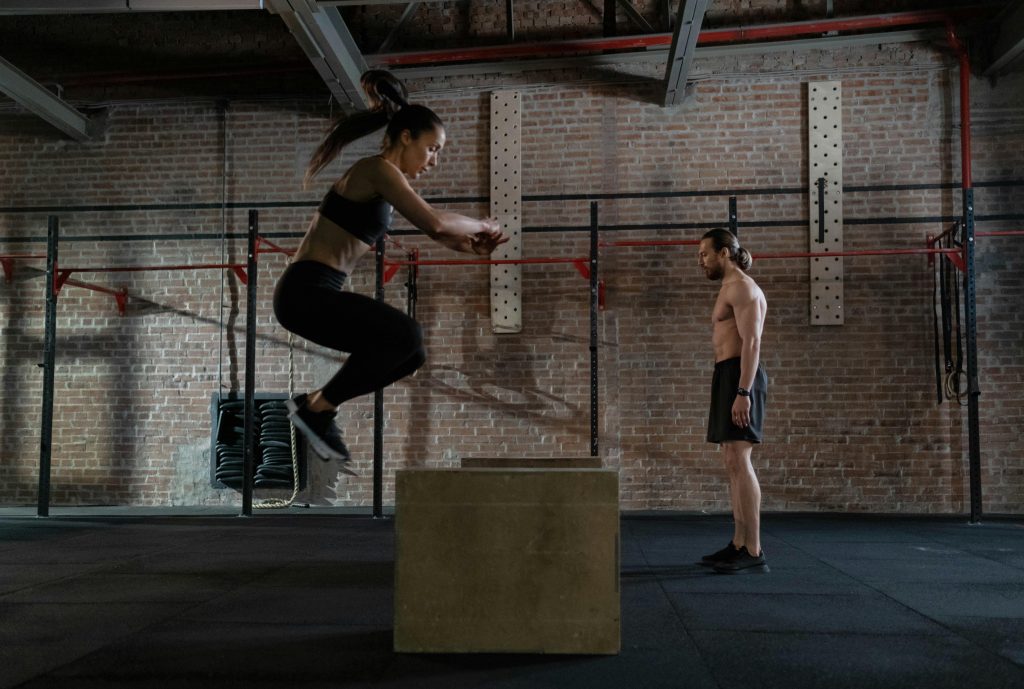
You’re watching your favourite football match when a striker launches into the air, seemingly defying gravity to head the ball into the net. Or perhaps you’ve seen videos of athletes performing box jumps that look impossibly high, landing softly before exploding upward again. Maybe you’ve wondered how sprinters generate such explosive acceleration from the starting blocks, propelling themselves forward with tremendous force. These impressive displays of power aren’t genetic gifts reserved for elite athletes. They’re the result of plyometric training—a scientifically-proven method for developing explosive strength, improving athletic performance, and building the kind of functional power that translates to virtually every sport and physical activity. Yet most recreational exercisers never tap into this training approach, missing out on dramatic improvements in speed, jumping ability, and overall athleticism.
This comprehensive guide will transform your understanding of plyometric training and show you exactly how to incorporate it safely and effectively into your fitness routine. You’ll discover the science behind explosive movements, learn proper progression from beginner-friendly exercises to advanced techniques, and understand how to programme plyometrics for maximum results whilst minimising injury risk. Whether you’re a weekend warrior looking to improve your sports performance or simply want to add variety and challenge to your training, this guide provides everything you need.
Who This Guide Is For
This guide serves UK readers aged 25-45 who want to enhance their athletic performance and functional fitness. You might be:
- A recreational athlete wanting to improve speed, power, or jumping ability
- Someone looking to break through training plateaus with new stimulus
- A former athlete seeking to recapture explosive
capabilities
- A fitness enthusiast wanting to add variety beyond traditional strength training
- Anyone interested in evidence-based methods for developing explosive power
What Is Plyometric Training? Understanding the Fundamentals
Plyometric training represents a specialized form of power training that develops explosive strength through rapid, forceful movements. Rather than lifting heavy weights slowly, plyometrics involves quick, powerful actions that train your muscles and nervous system to produce maximum force in minimum time.
Defining Plyometric Training
Plyometric exercises involve an eccentric (lengthening) muscle contraction followed immediately by a concentric (shortening) contraction. Think of jumping off a box, landing, then immediately exploding back upward. The landing phase loads your muscles and tendons like springs. The immediate takeoff releases that stored energy, producing more force than you could generate from a static position.
The term “plyometric” comes from the Greek words “pleythyein” (to increase) and “metric” (length), originally referring to exercises that increase muscle length under tension before rapid shortening. Soviet sports scientists developed these methods in the 1960s and 1970s, initially calling them “shock training.” Western coaches adopted and refined these techniques, recognizing their remarkable ability to improve athletic performance.
Traditional plyometric exercises include box jumps, depth jumps, bounding, medicine ball throws, and clapping press-ups. Each exercise shares the common element of rapid transition from eccentric to concentric contraction, training your body to generate explosive power efficiently.
The Science of the Stretch-Shortening Cycle
The stretch-shortening cycle (SSC) forms the physiological foundation of plyometric training. This three-phase mechanism allows your muscles to produce greater force than they could through concentric contraction alone. Understanding the SSC helps you maximize training effectiveness whilst maintaining safety.
The eccentric phase involves active lengthening of muscles under load. When you land from a jump, your quadriceps and glutes lengthen whilst contracting to control the descent. This action stores elastic energy in your muscles and tendons, similar to stretching a rubber band. Research published in the Journal of Applied Physiology demonstrates that this eccentric loading can store significant elastic energy that contributes to subsequent power output.
The amortization phase represents the brief transition between eccentric and concentric phases. This critical period should be as short as possible—typically under 0.2 seconds for effective plyometric training. Longer amortization phases allow elastic energy to dissipate as heat, reducing the power benefit. Training improves your ability to minimize this transition time.
The concentric phase involves explosive muscle shortening that generates movement. Stored elastic energy from the eccentric phase, combined with the stretch reflex and voluntary muscle contraction, produces greater force than concentric contraction alone. Studies show properly executed plyometrics can increase power output by 20-30% compared to movements without pre-stretch.
Benefits of Plyometric Training
Plyometric training delivers numerous performance benefits that extend well beyond simply jumping higher. Research consistently demonstrates improvements across multiple fitness domains, making plyometrics valuable for athletes and fitness enthusiasts alike.
Explosive power development represents the primary benefit. Studies in the Journal of Strength and Conditioning Research show 8-12 weeks of plyometric training can increase vertical jump height by 4-10cm and improve sprint speed by 2-4%. These improvements reflect enhanced ability to generate force rapidly, essential for virtually all sports.
Injury prevention emerges as an unexpected but significant benefit. Plyometric training improves landing mechanics, teaches proper force absorption, and strengthens connective tissues. Research on ACL injury prevention demonstrates that programmes including plyometrics reduce injury rates by 50% or more in team sport athletes.
Bone density improvements occur through the high-impact nature of plyometric exercises. The mechanical stress signals bones to increase density, particularly beneficial for maintaining skeletal health as you age. Studies show regular plyometric training can increase bone mineral density comparably to heavy resistance training.
Metabolic conditioning benefits include improved cardiovascular fitness and calorie expenditure. Plyometric circuits elevate heart rate substantially whilst building power, making them time-efficient for those balancing multiple training goals. The high metabolic cost of explosive movements burns significant calories both during and after training.
💡 Pro Tip: Plyometric training improves the quality of muscle tissue, not just quantity. Your muscles become better at rapid force production, improving functional strength that transfers directly to sports and daily activities requiring quick, powerful movements.
How Plyometrics Build Explosive Power
Understanding the mechanisms behind plyometric adaptations helps you train more intelligently and appreciate why proper execution matters so much for results.
Neuromuscular Adaptations
Plyometric training creates profound changes in your nervous system’s ability to recruit and coordinate muscle fibers. These neural adaptations often occur faster than structural muscle changes and significantly impact performance.
Motor unit recruitment patterns improve dramatically with plyometric training. Your nervous system learns to activate more motor units simultaneously, particularly fast-twitch fibers responsible for explosive movements. Research using electromyography shows experienced plyometric athletes can activate up to 95% of available motor units, compared to 70-80% in untrained individuals.
Rate coding improvements allow your nervous system to send signals to muscles faster. This increased firing frequency produces greater force generation. Studies demonstrate that plyometric training increases motor neuron firing rates from typical ranges of 10-30 Hz to optimal ranges of 30-50 Hz during explosive efforts.
Inter-muscular coordination enhances through the complex, multi-joint nature of plyometric exercises. Your nervous system learns to coordinate multiple muscle groups with precise timing. Box jumps, for instance, require coordinated activation of calves, quadriceps, glutes, core, and arms. This improved coordination transfers to athletic movements requiring similar patterns.
Rate of Force Development
Rate of force development (RFD) measures how quickly you can generate force—often more important than maximum force in sports. Plyometric training specifically targets RFD improvements, making athletes more explosive even without increasing maximum strength.
Traditional strength training improves maximum force production but doesn’t necessarily improve how quickly that force can be applied. Many athletic movements occur in under 300 milliseconds—too brief to reach maximum force. Plyometrics train your body to apply available force rapidly, crucial for sprinting, jumping, and changing direction.
Research comparing plyometric training to heavy strength training shows superior RFD improvements from plyometrics despite similar or even lower maximum strength gains. Studies in the European Journal of Applied Physiology demonstrate that 8 weeks of plyometric training can improve RFD by 20-40%, with benefits appearing within 2-3 weeks.
Sport-specific transfer from improved RFD includes faster sprint acceleration, higher jump heights, quicker change of direction, and more powerful throwing. These improvements occur because athletic movements rely on rapid force application rather than maximum force generation.
Elastic Energy Storage and Release
Tendons and muscle connective tissues act as biological springs during plyometric movements, storing and releasing elastic energy that contributes significantly to power output. Training enhances this mechanism through both structural and functional adaptations.
Tendon stiffness increases with regular plyometric training, allowing better energy storage and transmission. Stiffer tendons lose less energy during the stretch-shortening cycle, functioning more efficiently as springs. Ultrasound studies show Achilles tendon stiffness can increase 15-25% after 10-14 weeks of plyometric training.
Muscle-tendon unit optimization occurs as your body learns to utilize elastic properties more effectively. Even without structural changes, improvements in timing and coordination enhance elastic energy contribution. Athletes become more efficient at loading tendons during eccentric phases and utilizing stored energy during concentric phases.
Fascial network adaptations extend beyond individual tendons to the entire connective tissue system surrounding and penetrating muscles. This fascial network stores and transmits force, with emerging research suggesting plyometric training enhances its mechanical properties and contribution to power production.
[After this section, suggest image: “close-up diagram showing muscle-tendon unit during plyometric action, with labels for muscle fibers, tendon, elastic energy storage (shown as compressed spring), and force production arrows”]
📊 Research Insight: Studies using motion analysis and force plates demonstrate that up to 30-40% of power during jumping movements comes from elastic energy storage and release. This free energy contribution explains why plyometric movements produce greater power than purely concentric actions.
Prerequisites and Safety Considerations
Plyometric training places substantial stress on muscles, tendons, and joints. Meeting prerequisites and following safety guidelines dramatically reduces injury risk whilst maximizing benefits.
Strength Requirements Before Starting
Adequate strength forms the foundation for safe, effective plyometric training. Attempting plyometrics without sufficient strength dramatically increases injury risk, particularly to knees, ankles, and lower back.
General strength guidelines suggest being able to squat at least 1.5 times your bodyweight before progressing to advanced plyometrics. Beginners should demonstrate competent bodyweight squats for 20+ repetitions with excellent form before attempting even basic plyometric exercises. This baseline ensures adequate eccentric strength to control landings safely.
Single-leg strength proves equally important since many plyometric exercises involve unilateral force production. You should comfortably perform 10-15 Bulgarian split squats or step-ups per leg with your bodyweight before progressing to single-leg plyometric variations. Unilateral strength prevents compensations that lead to asymmetrical loading and injury.
Core strength requirements include maintaining neutral spine position during dynamic movements. Plank holds for 60 seconds, side planks for 45 seconds per side, and dead bugs with excellent control indicate sufficient core stability. Inadequate core strength allows excessive spinal movement during plyometrics, increasing injury risk.
Landing strength assessment involves controlled depth jumps. If you cannot step off a 30cm box and land softly with good form, you need more strength development before progressing. Quality landings demonstrate eccentric control essential for safe plyometric training.
Joint Health and Injury Prevention
Pre-existing joint issues require careful consideration before starting plyometric training. The high-impact nature of these exercises can exacerbate certain conditions whilst potentially benefiting others when progressed appropriately.
Knee health concerns, particularly history of patellofemoral pain or ligament injuries, warrant conservative progression. Begin with low-impact variations like pogo jumps and medicine ball throws before advancing to box jumps or depth jumps. Some individuals find plyometrics actually improve knee health by strengthening muscles and improving movement patterns, but professional assessment is advisable with significant injury history.
Ankle stability must be adequate before plyometric training. History of ankle sprains, especially recurrent sprains, requires addressing through specific stability work before introducing plyometrics. Single-leg balance exercises, resistance band work, and progressive hopping help build ankle resilience necessary for safe landings.
Back issues, particularly disc problems or chronic lower back pain, require modified approaches. Focus on proper landing mechanics, maintain neutral spine throughout exercises, and emphasize exercises with less spinal loading initially. Some back conditions improve with carefully progressed plyometrics that strengthen core and teach better movement patterns.
Warm-up protocols become non-negotiable with plyometric training. Spend 10-15 minutes elevating heart rate, mobilizing joints, and performing progressive dynamic movements. Include exercises like leg swings, walking lunges, light jogging, and submaximal jumps before intense plyometric work.
Proper Landing Mechanics
Landing technique determines both injury risk and training effectiveness. Mastering proper landing mechanics before progressing to high-intensity plyometrics prevents injuries and improves performance.
Soft landings involve absorbing force through ankle, knee, and hip flexion rather than landing stiff-legged. Think of landing like a cat, not like dropping a plank of wood. Your ankles, knees, and hips should flex progressively to decelerate your body smoothly. Force absorption should be quiet—loud landings indicate insufficient control and excessive joint stress.
Foot positioning requires landing on the balls of your feet with weight distributed evenly. Heels should touch down briefly, but initial contact occurs through the forefoot. Landing flat-footed or heel-first transfers excessive force to joints. Feet should point forward with knees tracking over toes, preventing valgus collapse (knees caving inward) that stresses ACL and medial knee structures.
It’s All About The Angles
Hip and knee alignment demands conscious attention, particularly for women who typically have wider hips and greater Q-angle. Knees must track over toes during landing, resisting inward collapse. Imagine pushing knees slightly outward while landing, activating hip external rotators. This alignment distributes forces appropriately across knee structures.
Trunk position throughout landings requires maintaining neutral spine with chest upright. Excessive forward lean shifts forces anteriorly, stressing lower back and knees unnecessarily. Core engagement prevents unwanted spinal movement, protecting both back and creating stable platform for force transfer.
⚠️ Common Mistake: Attempting to land quietly by landing stiff-legged or barely flexing joints. True soft landings involve significant joint flexion to absorb force. Don’t confuse silent with stiff—proper landings are quiet because force absorption occurs through controlled movement, not through rigid joint structure.
Essential Plyometric Exercises
Building a comprehensive plyometric training programme requires understanding key exercises across different intensities and movement patterns. These fundamental movements form the foundation for athletic power development.
Lower Body Plyometrics
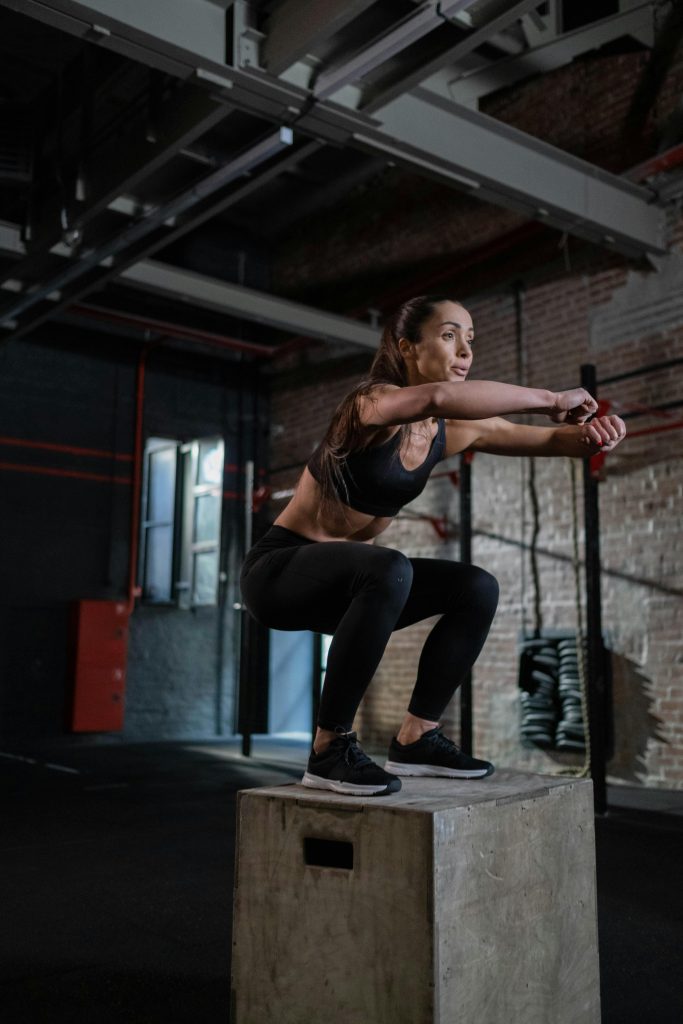
Box jumps represent the quintessential lower body plyometric exercise. Stand facing a sturdy box or platform, swing arms back, then explosively jump onto the box, landing softly with both feet. Step down carefully—don’t jump down between repetitions during training. Start with 30-45cm heights and progress gradually as competency improves.
Depth jumps involve stepping off a box, landing, then immediately jumping vertically or onto another platform. This advanced exercise maximizes stretch-shortening cycle loading. Begin with 30cm drops, focusing on minimal ground contact time. Progress height only when you can transition explosively and land with excellent control.
Broad jumps develop horizontal power by jumping forward for maximum distance. Stand with feet hip-width apart, swing arms back whilst loading through a quarter squat, then explode forward, swinging arms for momentum. Land softly with feet together and stick the landing without stepping forward.
Lateral bounds train side-to-side power essential for sports involving cutting and changing direction. Jump laterally from one leg to the other, covering maximal distance while maintaining balance upon landing. Hold each landing briefly before exploding to the opposite leg, building control alongside power.
Pogo jumps emphasize rapid stretch-shortening cycles with minimal ground contact. Jump repeatedly in place using primarily ankles and calves, keeping knees relatively straight. Focus on bouncing quickly off the ground like a pogo stick. These develop reactive strength important for running efficiency and change of direction.
Upper Body Plyometrics
Plyometric press-ups involve explosively pushing yourself off the ground during the concentric phase. Progress from standard explosive press-ups (hands leave ground briefly) to clapping press-ups (clap hands mid-air) to elevated press-ups (hands push off raised platform). These build upper body explosive power often neglected in plyometric programmes.
Medicine ball chest passes develop explosive pushing power through the arms and chest. Stand 2-3 metres from a wall or partner, hold a medicine ball at chest level, and explosively throw it forward. Catch the rebound and immediately throw again, minimizing time between catches. Start with 3-5kg balls and progress gradually.
Medicine ball slams combine upper body power with core engagement. Hold a medicine ball overhead, rise onto toes, then violently slam the ball into the ground while following through with your entire body. This total-body explosive movement builds power whilst providing excellent metabolic challenge.
Medicine ball rotational throws develop rotational power crucial for throwing sports and swinging movements. Stand perpendicular to a wall, rotate torso away from wall whilst holding medicine ball, then explosively rotate and throw ball against wall. Catch rebound and repeat. Train both sides equally to prevent imbalances.
Plyometric pull-ups or chin-ups release hands from bar during explosive pulling phase. Pull explosively enough that hands leave bar at top of movement. This advanced exercise requires significant pulling strength as prerequisite. Progress from explosive pull-ups (without releasing bar) to true plyometric variations.
Core and Rotational Plyometrics
Medicine ball woodchops involve explosive rotational movements from high to low or low to high. Hold medicine ball overhead to one side, then explosively rotate and bring ball down across body toward opposite hip. This diagonal movement pattern mimics many athletic actions and builds powerful core rotation.
Medicine ball figure-8 tosses require passing medicine ball around waist in figure-8 pattern while jumping. Jump and switch direction of ball movement each jump, challenging coordination alongside rotational power. This complex movement improves multi-directional power and core control.
Plyometric sit-up throws combine core flexion with explosive upper body power. Lie on back holding medicine ball, perform explosive sit-up whilst simultaneously throwing ball to partner or against wall. Catch returning ball and control eccentric phase before exploding into next repetition.
Kneeling medicine ball throws eliminate lower body contribution, isolating core and upper body power. Kneel with knees hip-width apart, toes down for stability. Throw medicine ball forward or rotationally, relying on trunk and arms for power. This variation teaches hip-to-shoulder power transfer important for throwing.
Plyometric Training Progressions
Systematic progression from beginner to advanced exercises ensures safety whilst maximizing performance gains. Rushing progression increases injury risk; moving too conservatively limits results. Following structured progressions balances these concerns.
Beginner Level Exercises
Jump-in-place variations establish fundamental landing mechanics before progressing to more complex movements. Perform squat jumps by squatting down, then jumping vertically. Focus on soft landings with immediate postural control. Build to 3 sets of 8-10 repetitions before progressing.
Step-ups onto low boxes develop single-leg strength and control necessary for more advanced plyometrics. Use 30cm box, step up explosively onto one leg, stand completely, then step down with control. The explosive drive upward introduces plyometric elements whilst remaining relatively low-risk.
Line hops involve hopping back and forth over a line on the ground. This simple exercise develops reactive strength and coordination. Perform forward-backward line hops and side-to-side line hops for 20-30 seconds continuously, focusing on minimal ground contact time.
Medicine ball chest passes from kneeling position teach explosive upper body power without lower body complexity. Kneel and throw 3-5kg medicine ball against wall forcefully, catch rebound, and immediately throw again. Build power gradually before progressing to standing variations.
Skipping emphasizes proper foot contact and ankle stiffness while introducing rhythmic, repeated ground contacts. Skip for 20-30 metres, focusing on bouncing off forefeet with quick ground contact. This preparatory exercise builds reactive strength in calves and Achilles.
Intermediate Level Exercises
Box jumps to moderate heights (45-60cm) challenge power production whilst allowing controlled landing on elevated surface. The box landing reduces impact compared to landing on ground from equivalent jump height, allowing greater training volume. Focus on explosive takeoff and soft, controlled box landing.
Repeated vertical jumps build endurance alongside power by performing multiple maximal jumps with minimal rest between efforts. Complete 5-8 consecutive maximal vertical jumps, resting 2-3 minutes between sets. This develops repeated-effort power important for most sports.
Bounding involves exaggerated running with maximal effort per stride. Drive forward powerfully off one leg, covering maximum distance through the air, landing on opposite leg, then immediately bounding off that leg. Maintain forward lean and aggressive arm swing. Build from 20 metres to 40 metres as capacity improves.
Lateral box jumps require jumping laterally onto a box positioned to your side. Start from box, jump down laterally to one side, land, and immediately explode back onto box. This builds lateral power and challenges landing control in frontal plane. Use 30-45cm boxes initially.
Plyometric press-ups introduce upper body plyometric intensity by requiring hands to leave ground during pressing phase. Perform press-up explosively enough that hands clear ground briefly at top. Progress to clapping hands before landing, then to raising hands onto elevated platforms between repetitions.
Advanced Level Exercises
Depth jumps from 60-90cm boxes maximize eccentric loading and teach rapid force production. Step off box, land on both feet, and immediately jump vertically as high as possible with minimal ground contact (<0.2 seconds). These intense exercises should be used sparingly—typically 3-4 sets of 3-5 repetitions per session.
Single-leg box jumps demand exceptional unilateral power and balance. Stand on one leg facing box, jump onto box using only that leg, land on same leg. Step down carefully and repeat. These identify and address left-right strength imbalances whilst building sport-specific power for running and jumping.
Depth jumps to box combine maximal eccentric loading with immediate horizontal explosion. Drop from one box, land, then immediately jump forward onto another box positioned 1-2 metres away. This teaches rapid multi-directional force application under high load.
Multiple hurdle hops involve jumping forward over a series of hurdles (30-60cm high) placed 0.5-1 metre apart. Complete entire series continuously, focusing on minimal ground contact between hurdles. This builds reactive strength and plyometric endurance important for repeated efforts in sports.
Medicine ball rotational slams with full body engagement involve explosive rotation combined with slamming motion. Hold heavy medicine ball (7-10kg), rotate fully away from target, then explosively unwind whilst slamming ball into ground or against wall. This total-body power movement replicates many athletic actions.
✅ Quick Win: Film yourself performing plyometric exercises from the side to assess landing mechanics. Watch for excessive knee valgus (inward collapse), stiff landings with minimal joint flexion, or asymmetrical loading. Address technique issues before progressing intensity or volume.
Programming Plyometric Training
Effective plyometric programming requires careful attention to volume, intensity, frequency, and integration with other training. Systematic planning maximizes benefits whilst managing fatigue and injury risk.
Volume and Frequency Guidelines
Foot contacts provide the standard measure for plyometric volume. One jump equals two foot contacts (one landing, one takeoff), whilst repeated jumps count contacts individually. Research-based guidelines help determine appropriate volumes for different training goals and experience levels.
Beginner volumes should remain conservative to allow adaptation whilst minimizing injury risk. Start with 40-60 total foot contacts per session, distributed across 2-3 exercises. Train plyometrics twice weekly with at least 48 hours between sessions. This conservative approach builds tissue resilience and allows technique mastery.
Intermediate volumes range from 60-120 foot contacts per session for those with 3-6 months of consistent plyometric training. Frequency can increase to 2-4 sessions weekly depending on overall training volume and sport demands. Ensure at least one full rest day between plyometric sessions and avoid consecutive high-volume days.
Advanced volumes may reach 120-200 foot contacts per session for experienced athletes preparing for competition. Frequency depends on training phase, ranging from 2 sessions weekly during strength-building phases to 4-5 sessions during power-focused blocks. Volume and intensity vary throughout training cycles to prevent overtraining.
Exercise intensity affects appropriate volume inversely. Low-intensity exercises like ankle hops allow higher volumes (100+ contacts), whilst high-intensity depth jumps require limited volume (20-30 contacts). Never combine maximum volumes with maximum intensity—one variable should always be controlled.
Integration with Strength Training
Plyometric training complements strength training but requires careful integration to avoid excessive fatigue and optimize adaptations. Strategic timing and exercise selection enhance benefits of both training modalities.
Complex training pairs strength and plyometric exercises targeting similar movement patterns. Perform a heavy strength exercise (e.g., squats at 85-90% 1RM for 3-5 reps), rest 3-4 minutes, then perform explosive plyometric exercise (e.g., box jumps). The heavy loading potentiates the nervous system, allowing greater power output in subsequent plyometric work.
Session structure typically places plyometrics early when you’re fresh and neurologically primed. Complete dynamic warm-up, then perform plyometric work as primary training or immediately after warm-up. Save strength training, particularly high-volume or fatiguing work, for after plyometrics. Plyometric quality deteriorates significantly under fatigue, reducing benefits and increasing injury risk.
Weekly structure separates high-intensity plyometric and strength sessions by 24-48 hours minimum. If training 4-5 days weekly, consider alternating emphasis: Monday (plyometric focus), Wednesday (strength focus), Friday (plyometric focus). This allows recovery whilst maintaining training frequency.
Deload weeks every 3-4 weeks reduce plyometric volume by 40-50% whilst maintaining intensity through exercise selection. This recovery period allows super-compensation and prevents accumulating fatigue that increases injury risk and impairs performance.
Periodisation for Plyometrics
Periodisation—systematic variation in training variables—optimizes long-term development and prevents plateaus. Plyometric training responds particularly well to periodised approaches that vary volume, intensity, and exercise complexity.
Anatomical adaptation phases (4-6 weeks) focus on building strength foundation and teaching basic plyometric mechanics. Use primarily low-intensity plyometrics with controlled execution. Volume remains moderate (40-80 contacts per session) with emphasis on perfect technique. Build eccentric strength simultaneously through traditional strength training.
Maximal strength phases (4-8 weeks) emphasize heavy strength training with limited, low-volume plyometrics maintaining coordinative elements. Plyometric volume drops to 30-50 contacts per session, maintaining neuromuscular patterns whilst prioritizing strength development. This strength increase provides greater foundation for subsequent power training.
Power development phases (4-6 weeks) emphasize moderate to high plyometric volumes with exercise selection matching sport-specific demands. Volume increases to 80-120+ contacts across multiple sessions weekly. Include variety of intensities and movement patterns. This phase directly targets athletic performance improvements.
Competition phases maintain plyometric training at lower volumes (40-60 contacts, 1-2 sessions weekly) to preserve power whilst managing fatigue. Exercise selection becomes highly specific to sport demands. Focus on maintaining explosive qualities rather than developing new capacities.
Sport-Specific Plyometric Applications
Different sports place unique demands on the neuromuscular system. Tailoring plyometric training to sport-specific movement patterns and energy systems maximizes transfer to competitive performance.
Plyometrics for Team Sports
Football, rugby, and basketball require repeated explosive efforts with limited recovery between actions. Players must sprint, jump, change direction, and decelerate frequently throughout matches. Plyometric training should emphasize reactive strength and multi-directional power.
Lateral plyometrics gain priority for sports involving cutting and changing direction. Lateral bounds, lateral box jumps, and crossover bounds develop frontal plane power often neglected in traditional training. Include rotational medicine ball throws that mimic throwing, passing, or swinging movements.
Repeated effort capacity matters more than single maximal jumps. Programme repeated vertical jumps (5-8 consecutive maximal efforts), repeated broad jumps, or repeated lateral bounds. This builds power endurance necessary for maintaining explosive capacity throughout matches.
Mixed intensities mimic game demands where maximal efforts follow submaximal activities. Within single sessions, include exercises ranging from high-intensity depth jumps to moderate-intensity repeated jumps. This prepares athletes for variable intensity demands during competition.
Plyometrics for Running and Endurance
Distance runners benefit from plyometric training despite running being a submaximal activity. Improved running economy, enhanced tissue resilience, and better force application make plyometrics valuable for endurance athletes.
Low to moderate intensity plyometrics suit endurance athletes best. Ankle hops, pogo jumps, and skipping variations build reactive strength in calves and Achilles without excessive fatigue. These exercises improve running economy by enhancing elastic energy contribution during ground contact.
Volume remains moderate since endurance training itself involves significant ground contacts. Limit plyometric sessions to 1-2 weekly with 60-80 contacts per session. Timing matters—avoid plyometrics immediately before or after high-volume running days. Position plyometric sessions after rest days or easy run days.
Hill sprints bridge plyometric training and running-specific work. Short (10-30 second) uphill sprints build power whilst maintaining running-specific movement patterns. The incline reduces impact forces compared to flat sprinting, allowing power development with lower injury risk.
Plyometrics for Combat Sports
Boxing, MMA, and other combat sports require explosive punching power, rapid footwork, and ability to generate force from various positions. Plyometric training should emphasize rotational power, upper body explosiveness, and reactive agility.
Medicine ball training becomes central for combat athletes. Rotational throws develop punching power through similar movement patterns. Overhead throws build explosive hip extension important for takedowns and clinch work. Chest passes improve pushing power for controlling opponents.
Upper body plyometrics gain greater emphasis than most sports. Plyometric press-ups, medicine ball slams, and explosive landmine presses build arm and shoulder power directly transferable to striking. Volume should remain moderate to avoid excessive upper body fatigue affecting technical training.
Multi-directional footwork drills combine plyometric elements with sport-specific patterns. Burpees with explosive jump, lateral shuffle with explosive direction changes, and forward-backward reactive jumps develop footwork agility essential for positioning and defense.
🎯 Action Step: Analyze your sport or primary physical activity to identify the key explosive movements required. Select 3-4 plyometric exercises that closely mimic those movement patterns and incorporate them into your next training week.
Common Mistakes and How to Avoid Them
Even experienced athletes make errors when implementing plyometric training. Understanding common pitfalls helps you avoid setbacks and maximize results.
Technique and Execution Errors
Mistake 1: Landing Stiff-Legged
Many athletes land with minimal joint flexion, transferring excessive force to joints rather than absorbing it through controlled eccentric contraction. Stiff landings sound loud, feel jarring, and dramatically increase injury risk. Solution: Focus on landing like a cat, allowing ankles, knees, and hips to flex progressively. Practice landing quietly from small heights before progressing intensity.
Mistake 2: Excessive Amortization Phase
Pausing significantly between landing and takeoff during plyometric exercises diminishes the stretch-shortening cycle benefit. Long transitions allow elastic energy to dissipate, reducing power output and training effectiveness. Solution: Minimize ground contact time by focusing on immediate transition from landing to jumping. Think “hot coals” under feet, bouncing off ground quickly.
Mistake 3: Poor Landing Alignment
Allowing knees to collapse inward (valgus) during landing dramatically increases ACL strain and knee injury risk. This compensation often reflects weak hip stabilizers or poor movement awareness. Solution: Consciously push knees slightly outward during landing, activating gluteus medius. Video yourself to identify alignment issues. Address hip strength deficits through targeted exercises.
Programming and Progression Errors
Mistake 4: Inadequate Strength Foundation
Starting plyometric training without sufficient strength base creates unnecessary injury risk. Joints, tendons, and muscles must be strong enough to handle impact forces safely. Solution: Build baseline strength first—minimum 1.5x bodyweight squat or 20+ quality bodyweight squats. Focus on eccentric strength through slow lowering phases in exercises.
Mistake 5: Excessive Volume Too Soon
Enthusiasm leads many to perform too many foot contacts before tissues adapt, resulting in overuse injuries. Tendons particularly require substantial time to strengthen, often lagging behind muscle adaptations. Solution: Start conservatively with 40-60 contacts per session, progress 10-15% weekly. Take deload weeks every 3-4 weeks. If joint pain develops, reduce volume immediately.
Mistake 6: Neglecting Recovery
Plyometric training creates significant neuromuscular fatigue requiring adequate recovery. Training when incompletely recovered impairs performance and increases injury risk. Solution: Schedule at least 48 hours between plyometric sessions. Monitor readiness through jump height testing or subjective fatigue ratings. Reduce frequency if performance declines consistently.
Exercise Selection Errors
Mistake 7: Only Training Vertical Movements
Many programmes emphasize vertical jumping exclusively whilst neglecting horizontal and lateral power. Sports rarely occur in purely vertical plane, limiting transfer from vertical-only training. Solution: Include horizontal plyometrics (broad jumps, bounding), lateral movements (lateral bounds, lateral box jumps), and rotational exercises (medicine ball throws). Aim for roughly 50-60% vertical, 25-30% horizontal, 15-20% lateral distribution.
Mistake 8: Progressing to Depth Jumps Too Soon
Depth jumps create tremendous eccentric loading and should only be attempted by advanced athletes with significant training history. Premature progression risks serious injury. Solution: Reserve depth jumps for athletes with 6+ months consistent plyometric training who can box jump to 60cm+ height easily. Start depth drops from 30cm before progressively increasing height.
Mistake 9: Ignoring Upper Body Plyometrics
Lower body exercises receive disproportionate attention whilst upper body explosive power goes underdeveloped. Many sports require upper body power equally to lower body power. Solution: Include medicine ball throws and plyometric press-up variations in all programmes. Allocate 20-30% of plyometric volume to upper body exercises for complete development.
Mistake 10: Training Plyometrics When Fatigued
Performing plyometric exercises at the end of workouts when significantly fatigued reduces quality and increases injury risk. Neural fatigue impairs coordination and landing control. Solution: Always train plyometrics early in sessions after warm-up but before strength training. If combining with endurance work, perform plyometrics on easy days or before runs, never after hard efforts.
Sample Plyometric Training Programmes
These templates provide starting points for different experience levels. Adjust based on individual assessment, recovery capacity, and specific goals.
Beginner Programme (Weeks 1-6)
Beginner Programme (Weeks 1-6)
Focus: Establishing proper landing mechanics and building foundation for progressive plyometric training.
Session Frequency: Twice weekly (Monday/Thursday or Tuesday/Friday) Total Foot Contacts: 40-60 per session
Sample Session:
- Dynamic warm-up: 10 minutes (leg swings, walking lunges, light jogging, arm circles)
- Pogo jumps in place: 3 sets x 10 contacts
- Squat jumps: 3 sets x 6 reps
- Forward line hops: 3 sets x 10 contacts
- Medicine ball chest passes (kneeling): 3 sets x 8 reps
- Step-ups (alternating legs): 3 sets x 6 reps per leg
Progression: Increase repetitions by 1-2 per week whilst maintaining perfect form. After 4 weeks, begin introducing low box jumps (30cm). Week 6 should reach 60-70 total contacts with mixture of exercises.
Intermediate Programme (Weeks 8-16)
Intermediate Programme (Weeks 8-16)
Focus: Increasing intensity and introducing more complex multi-directional movements.
Session Frequency: 2-3 times weekly with at least 48 hours between sessions Total Foot Contacts: 70-100 per session
Monday – Lower Body Emphasis:
- Dynamic warm-up: 10 minutes
- Box jumps (45-60cm): 4 sets x 5 reps
- Broad jumps: 3 sets x 6 reps
- Lateral bounds: 3 sets x 8 per side
- Pogo jumps: 3 sets x 15 contacts
- Single-leg line hops: 3 sets x 8 per leg
Thursday – Upper Body & Total Body:
- Dynamic warm-up: 10 minutes
- Medicine ball slams: 4 sets x 8 reps
- Plyometric press-ups: 3 sets x 6 reps
- Medicine ball rotational throws: 3 sets x 6 per side
- Squat jumps: 3 sets x 8 reps
- Bounding: 3 sets x 20 metres
Optional Saturday (if recovering adequately):
- Light plyometric session: 40-50 contacts focusing on reactive work
- Ankle hops, skipping, and medicine ball work
- Maintain quality and avoid fatigue
Progression: Increase box heights by 5-10cm every 2-3 weeks. Add repetitions gradually to maintain 70-100 contacts range. Introduce more single-leg variations as balance improves.
Advanced Programme (Week 16+)
Advanced Programme (Week 16+)
Focus: Sport-specific power development with high-intensity exercises and varied training stimuli.
Session Frequency: 3-4 times weekly depending on training phase Total Foot Contacts: 80-140 per session (varies by intensity)
Monday – Maximum Power:
- Dynamic warm-up: 15 minutes including submaximal jumps
- Depth jumps (60cm): 4 sets x 4 reps
- Single-leg box jumps (45cm): 3 sets x 4 per leg
- Repeated broad jumps: 3 sets x 5 consecutive jumps
- Medicine ball overhead throws: 4 sets x 6 reps
- Total contacts: ~80
Wednesday – Reactive Strength:
- Dynamic warm-up: 12 minutes
- Multiple hurdle hops (6 hurdles, 40cm): 4 sets
- Repeated vertical jumps: 4 sets x 6 jumps
- Lateral box jumps: 3 sets x 6 per side
- Plyometric press-ups to platform: 3 sets x 5 reps
- Bounding: 4 sets x 30 metres
- Total contacts: ~120
Friday – Sport-Specific:
- Dynamic warm-up: 12 minutes
- Mixed height box jumps: 4 sets x 5 (varying 30-60cm heights)
- Lateral bounds with direction changes: 4 sets x 8
- Medicine ball rotational slams: 4 sets x 6 per side
- Depth jumps to box: 3 sets x 4 reps
- Total contacts: ~100
Sunday (Optional) – Low Intensity Volume:
- Extended warm-up: 15 minutes
- Ankle hops: 5 sets x 20 contacts
- Skipping variations: 4 sets x 30 metres
- Medicine ball work: Various throws, 20-30 total reps
- Total contacts: ~140
Periodisation Notes: Every 4th week, reduce volume by 40-50% whilst maintaining exercise selection. Every 8-12 weeks, take full week with no plyometrics. Adjust volume based on competition schedule—reduce during intense competition periods.
Measuring Progress and Performance
Systematic testing helps assess plyometric training effectiveness and informs programme adjustments. Multiple metrics capture different aspects of explosive power development.
Performance Testing Protocols
Vertical jump testing provides the gold standard for measuring lower body explosive power. Use either countermovement jump (with arm swing) or squat jump (from static position) consistently for comparison. Test every 4-6 weeks using same protocol. Record jump height using jump mat, force plate, or video analysis with phone app. Improvements of 2-5cm over 8-12 weeks indicate effective training.
Broad jump distance measures horizontal power production. Stand behind line, perform maximal broad jump, and measure distance from start line to nearest landing point (usually heels). Average three attempts with full recovery between trials. Progress of 10-20cm over 8-12 weeks demonstrates improved horizontal power.
Reactive strength index (RSI) assesses fast stretch-shortening cycle ability. Drop from 30cm box, land, and jump vertically as high as possible. RSI equals jump height divided by ground contact time. Higher scores indicate better reactive strength. Force plates or specialized phone apps can calculate RSI. Target improvements of 0.2-0.4 units over training blocks.
Upper body power testing involves medicine ball chest throw from kneeling position. Use consistent ball weight (4-6kg), throw maximally forward from chest, and measure distance ball travels. Average three attempts. Progress of 0.5-1.0 metres over 8-12 weeks shows improved upper body explosive strength.
Sprint testing over 10-30 metres captures acceleration improvements from plyometric training. Use timing gates or video analysis for accuracy. Test same distances consistently. Improvements of 0.05-0.15 seconds over 10 metres reflect enhanced power application during running.
Subjective Assessments
Movement quality improves significantly even when quantitative measures change minimally. Video yourself performing standard plyometric exercises monthly, comparing landing mechanics, takeoff explosiveness, and overall movement fluency. Progressive improvement in technical execution indicates beneficial adaptations.
Training response monitoring includes tracking readiness, soreness, and perceived effort. Use simple 1-10 scales daily to assess muscle soreness, training motivation, and sleep quality. Persistent high scores indicate inadequate recovery requiring programme modification. Improvements in subjective measures often precede objective performance gains.
Sport performance transfer represents the ultimate validation. Notice improvements in sport-specific explosive actions—quicker first steps, higher jumps during basketball, faster sprint acceleration during football. These functional improvements matter more than isolated test scores for recreational athletes.
Programme Adjustment Based on Testing
Test results guide intelligent programme modifications. Plateaus or declining performance indicate overtraining, inadequate recovery, or need for different training stimulus. Consider reducing volume 20-30%, taking full deload week, or changing exercise selection if performance stagnates or decreases across two consecutive test sessions.
Rapid improvements suggest training stimulus is appropriate but don’t necessarily warrant increased volume immediately. Progressive small increases (10-15% per month) work better than dramatic jumps that increase injury risk. Let adaptations consolidate before adding significant training stress.
Asymmetrical improvements between left and right sides during single-leg tests require addressing through additional unilateral work. Add single-leg box jumps, split jumps, or single-leg bounds to correct imbalances that could lead to injury or performance limitations.
📊 Research Insight: Studies tracking plyometric training adaptations show that improvements typically follow non-linear progressions. Expect rapid early gains (weeks 2-6), followed by slower improvements (weeks 8-12), then plateau periods requiring programme modifications. This pattern is normal and doesn’t indicate training failure.
Frequently Asked Questions
How long before I see results from plyometric training?
Initial adaptations appear quickly due to neural improvements. Many people notice enhanced jumping ability or quicker acceleration within 2-4 weeks of consistent training. Neuromuscular coordination improves faster than structural changes, allowing rapid performance gains. Measurable vertical jump improvements of 2-5cm typically occur within 6-8 weeks for beginners. More significant gains require 12-16 weeks of progressive training. Structural adaptations like increased tendon stiffness take longer, developing over 10-14 weeks. Maintain realistic expectations—elite athletes might gain 5-10cm vertical jump over a full training year, whilst beginners can see larger percentage improvements due to starting from lower baseline.
Can plyometric training damage my joints?
When progressed appropriately, plyometric training actually strengthens joints and reduces injury risk. Research on ACL injury prevention demonstrates that programmes including plyometrics reduce knee injury rates by 50%+ in team sport athletes. The key is proper progression and adequate strength foundation before starting. Problems arise when people jump into high-intensity plyometrics without preparation or when volume exceeds recovery capacity. If you have existing joint issues, consult physiotherapists before beginning. Many find carefully progressed plyometrics improve joint health by strengthening surrounding musculature and improving movement mechanics. Start conservatively, focus on landing technique, and progress gradually to build tissue resilience safely.
Do I need special shoes for plyometric training?
Proper footwear matters for safety and performance during plyometric training. Choose shoes with good cushioning to absorb impact forces, stable heel counters to prevent excessive ankle motion, and secure fit preventing foot sliding within shoe. Cross-training or basketball shoes work well for most plyometric exercises. Avoid running shoes with excessive cushioning that reduces ground feel and reactive ability. Minimalist shoes can work for low-intensity exercises but provide insufficient protection for high-impact depth jumps. Court shoes offering responsive cushioning with stable platform prove ideal. Replace shoes showing signs of midsole compression or worn outsoles. Never train plyometrics barefoot—injury risk far exceeds any theoretical benefits.
Can plyometrics help me lose weight?
Plyometric training burns significant calories through high-intensity, total-body movements. A 30-minute plyometric session can burn 300-500 calories depending on intensity and body size. The explosive nature creates substantial metabolic demand both during and after training through elevated post-exercise oxygen consumption (EPOC). However, weight loss fundamentally requires calorie deficit achieved through nutrition. Plyometrics support fat loss by building muscle (increasing metabolic rate), improving insulin sensitivity, and burning calories, but cannot compensate for poor dietary habits. Combine 2-3 plyometric sessions weekly with strength training, moderate cardio, and calorie-controlled nutrition for effective fat loss whilst maintaining muscle and performance. Focus on sustainable changes rather than extreme approaches.
How do plyometrics differ from regular jump training?
Plyometric training specifically emphasizes the rapid stretch-shortening cycle—eccentric loading immediately followed by explosive concentric contraction with minimal transition time. Regular jump training might involve jumping from static positions without pre-stretch, reducing the plyometric effect. True plyometrics require landing from height (depth jumps), continuous rebounding actions (pogo jumps), or dynamic approaches (broad jumps with continuous movement). The key distinction is minimizing amortization phase—the time between landing and takeoff should be under 0.2 seconds for maximum plyometric benefit. Static jumps from squat positions, whilst valuable for building power, don’t fully engage elastic energy mechanisms. Both types of training have merit, but plyometrics specifically targets reactive strength and rapid force production unique to athletic movements.
Can older adults do plyometric training safely?
Age isn’t an absolute barrier to plyometric training, though modifications become important. Adults over 40-50 should begin very conservatively, focusing on low-intensity variations like ankle hops, small box jumps, and medicine ball work. Pre-existing joint health matters more than age—many 50-year-olds with excellent movement quality can train plyometrics effectively, whilst some 30-year-olds with joint issues require careful modification. Bone density actually improves through controlled impact training, potentially beneficial for preventing osteoporosis. Medical clearance is advisable before starting, particularly with history of knee, hip, or back problems. Progress even more gradually than younger trainees, allowing extended adaptation periods. Focus on landing quality and joint control rather than maximum intensity. Many older adults successfully incorporate low-to-moderate intensity plyometrics, improving functional capacity and bone health.
Will plyometrics make me bulky?
Plyometric training builds power and explosive strength without significant muscle size increases. The low-volume, high-intensity nature doesn’t create enough mechanical tension or metabolic stress for substantial hypertrophy. Athletes training plyometrics typically develop lean, athletic physiques rather than bulky muscle mass. Women particularly need not worry about excessive muscle gain—hormonal profiles make building significant muscle difficult even with hypertrophy-focused training. Plyometrics improve muscle quality and neuromuscular efficiency rather than simply adding size. If muscle gain is desired, combine plyometrics with higher-volume strength training and adequate caloric surplus. If maintaining lean physique is priority, plyometrics support that goal through calorie burning and developing athletic muscle characteristics. The explosive, powerful movements create functional strength that looks athletic rather than bodybuilder-bulky.
How do I prevent shin splints from plyometric training?
Shin splints commonly develop when plyometric volume or intensity increases too rapidly for tissues to adapt. Prevention focuses on gradual progression, proper footwear, and addressing biomechanical issues. Start with low-impact variations and progress slowly—increase volume by maximum 10% weekly. Ensure adequate calf strength through heel raises and tibialis anterior strength through toe raises. Address ankle mobility restrictions that might alter landing mechanics. Train on appropriate surfaces—wooden gym floors, rubber tracks, or athletic turf absorb impact better than concrete. Avoid consecutive high-impact days; alternate plyometrics with other training. If shin splints develop, reduce volume immediately and focus on tissue recovery through ice, elevation, and gradual return. Sometimes switching to upper body plyometrics temporarily while lower body recovers proves necessary. Persistent cases require professional assessment to address underlying biomechanical causes.
Can I do plyometrics if I’m overweight?
Bodyweight significantly affects joint stress during plyometric training. Carrying excess weight amplifies impact forces on knees, ankles, and lower back during landings. This doesn’t preclude plyometric training but requires modifications. Focus on low-impact variations like medicine ball throws, upper body plyometrics, and small-amplitude movements initially. Seated or kneeling medicine ball exercises provide explosive training without excessive joint loading. As fitness and movement quality improve whilst weight decreases, gradually introduce low box jumps and controlled jumping movements. Consider water-based plyometrics (pool jumping) that reduce bodyweight loading whilst maintaining training effect. Prioritize fat loss through nutrition and sustainable training including strength work, moderate cardio, and modified plyometrics. Lost weight dramatically reduces joint stress, making higher-intensity plyometrics progressively safer. Professional guidance helps ensure appropriate exercise selection and progression for heavier individuals.
Should I do plyometrics before or after strength training?
Always perform plyometric exercises before heavy strength training within the same session. Neural fatigue from strength training impairs explosive performance and increases landing error risks. Plyometric quality depends on fresh, responsive neuromuscular system. Structure sessions with dynamic warm-up, then plyometric work, followed by strength training. If training goals emphasize power development, consider dedicating entire sessions to plyometrics rather than combining with heavy lifting. Some athletes use complex training (heavy strength exercise followed by explosive plyometric targeting same muscles) with adequate rest between exercises. This advanced technique potentiates nervous system but requires experience and careful timing. For most people, keeping plyometrics and strength work in separate sessions or performing plyometrics first optimizes results. Never attempt plyometrics after exhausting strength work—injury risk rises dramatically whilst training quality plummets.
How long should rest periods be between plyometric sets?
Rest duration depends on exercise intensity and training goals. High-intensity exercises like depth jumps require 2-4 minutes between sets to allow complete phosphocreatine system recovery and maintain quality. Lower intensity exercises like ankle hops need only 60-90 seconds. Power development demands quality over quantity—insufficient rest compromises neural recovery, reducing explosiveness. If developing reactive strength or plyometric endurance, shorter rests (30-60 seconds) create desired conditioning effect but compromise maximum power expression. General guideline: rest long enough that each set feels explosive and controlled. If landing quality deteriorates or takeoff feels sluggish, extend rest periods. Between exercises, take 3-4 minutes especially when transitioning from lower body to upper body or vice versa. During training blocks emphasizing power, prioritize complete recovery. During conditioning phases, strategically reduce rest to build work capacity.
Can plyometrics improve my vertical jump if I’m already strong?
Plyometric training improves vertical jump even in individuals with excellent strength. Maximum strength and explosive power represent different qualities requiring distinct training approaches. Many strong athletes can’t rapidly apply their strength—they might squat 200kg but jump no higher than someone squatting 120kg who trains plyometrics consistently. Rate of force development often limits jumping performance more than maximum force capacity. Plyometric training specifically targets rapid force application and reactive strength that strength training doesn’t fully develop. Studies show that combining strength and plyometric training produces superior jumping improvements compared to strength work alone. Even elite jumpers continue plyometric training to maintain and improve performance. If you’re strong but plateau in jumping, plyometrics likely provide the missing training stimulus. Focus on higher-intensity variations like depth jumps and bounding that challenge already-developed strength base with increased speed demands.
Do I need to warm up before plyometric training?
Thorough warm-up is absolutely essential before plyometric training. Cold muscles and tendons lack elasticity and responsiveness necessary for explosive movements, dramatically increasing injury risk. Dedicate minimum 10-15 minutes to progressive warm-up. Begin with 5 minutes light aerobic activity elevating heart rate and body temperature. Follow with dynamic mobility exercises—leg swings, walking lunges, arm circles, torso rotations. Include activation exercises for glutes and core—glute bridges, planks, dead bugs. Finish with movement-specific warm-up using low-intensity versions of planned exercises—small jumps, light medicine ball throws. Progress intensity gradually within warm-up. Never perform maximal plyometric efforts until thoroughly warm. Cold-weather training requires extended warm-ups. Post-warm-up, begin session with lower-intensity exercises before progressing to highest-intensity work. Proper warm-up enhances performance whilst dramatically reducing injury risk. Never skip or rush this critical component.
How do I know if plyometrics are working?
Multiple indicators reveal effective plyometric training. Performance testing shows quantifiable improvements—increased vertical jump height, longer broad jump distances, faster sprint times. Expect measurable gains within 6-8 weeks of consistent training. Subjective improvements include feeling more explosive during sport movements, noticing quicker acceleration when sprinting, or jumping higher during recreational activities. Movement quality improves—landings become softer and more controlled, transitions between eccentric and concentric phases feel smoother. Recovery patterns provide feedback—if constantly sore or fatigued, programming may need adjustment. Positive signs include feeling energized after sessions (not destroyed), maintaining enthusiasm for training, and steadily progressing through exercise progressions. Take videos periodically comparing movement quality from training start. Visual improvements in technique, height achieved, or speed of execution indicate beneficial adaptations. Track multiple metrics rather than single measures to capture comprehensive progress picture.
Dive Deeper: Related Guides
(These links will be added as cluster posts are published)
- Box Jump Mastery: Complete progression from beginner to advanced box jumping technique
- Depth Jump Guide: Everything you need to safely implement this powerful training method
- Medicine Ball Training: Comprehensive guide to explosive upper body and rotational power
- Sprint Training for Power: Develop acceleration and maximum velocity through systematic sprint work
- Strength Training for Athletes: Build the foundation necessary for advanced plyometric training
- Injury Prevention Strategies: Protect joints and soft tissues whilst training explosively
- Rate of Force Development: Understanding and improving this critical athletic quality
- Landing Mechanics Guide: Master safe, effective landing technique for all plyometric exercises
- Reactive Strength Training: Develop the ability to rapidly produce force under time constraints
- Periodisation for Power Athletes: Structure training for peak explosive performance
- Assessment and Testing Protocols: Measure and track explosive power improvements systematically
- Recovery Strategies for Power Training: Optimize rest and recovery between intense plyometric sessions
Conclusion: Building Explosive Power That Lasts
Plyometric training represents one of the most effective methods for developing explosive power, improving athletic performance, and building functional strength that transfers to sports and daily activities. Rather than being reserved for elite athletes, properly progressed plyometric training benefits anyone seeking to enhance their physical capabilities.
Key Takeaways
- Plyometric training develops explosive power through the stretch-shortening cycle, teaching your body to rapidly generate maximum force
- Adequate strength foundation (1.5x bodyweight squat minimum) and proper landing mechanics form essential prerequisites for safe training
- Progressive training from low-intensity exercises to advanced variations prevents injury whilst maximizing adaptations
- Volume should start conservatively (40-60 contacts per session) and increase gradually, with frequency of 2-4 sessions weekly depending on experience
- Integration with strength training enhances both power and maximum force development when timing and recovery are managed properly
- Sport-specific exercise selection and periodised programming optimize performance improvements for athletic goals
- Consistent measurement through performance testing reveals progress and guides programme adjustments
Your First Steps Today
- Assess your current strength and movement quality to determine appropriate starting point for plyometric training
- Film yourself performing basic landing mechanics from small heights (30cm box) to establish baseline technique
- Select 3-4 low-intensity plyometric exercises matching your capability and begin with conservative volumes (40-50 contacts total per session)
The Path Forward
Explosive power isn’t a genetic gift reserved for naturally athletic individuals. It’s a trainable quality that responds predictably to systematic training. Plyometric training provides the stimulus your neuromuscular system needs to develop rapid force production, reactive strength, and athletic movement capabilities.
The journey from basic squat jumps to advanced depth jumps and sport-specific explosive movements takes months of consistent, patient progression. Respect the process, prioritize landing quality over flashy exercises, and increase intensity gradually as your body adapts. The explosive capabilities you build will enhance athletic performance, reduce injury risk, and provide functional fitness benefits that extend far beyond the gym.
Start with appropriate exercises for your current level. Focus relentlessly on technique and controlled landings. Progress systematically as strength and coordination improve. The power you develop will transform how you move, compete, and feel physically.
Build power that matters. Train movements explosively. Pursue athletic capability over appearance. Your plyometric training journey begins today.


