
You’ve been following generic workout programmes designed for men, wondering why results come slowly or feel wrong for your body. Perhaps you’ve heard conflicting advice about lifting heavy, worried that strength training will make you “bulky,” or confused about how your menstrual cycle affects performance. Maybe you’re frustrated by fitness content that ignores the specific physiological and hormonal factors affecting women’s training. The truth is that female training requires understanding the unique aspects of women’s physiology, hormonal fluctuations, and biomechanics. Research from Loughborough University demonstrates that women who follow programmes accounting for female-specific factors achieve 30-40% better results compared to those using generic protocols designed without considering sex differences.
Most people approach training for women with either complete disregard for physiological differences (assuming what works for men works identically) or excessive caution (avoiding heavy weights or intense training unnecessarily). Both extremes prevent optimal progress. Effective female training requires evidence-based programming that acknowledges genuine physiological differences whilst recognising that women can train hard, lift heavy, and achieve remarkable strength and fitness.
This comprehensive guide will teach you everything you need for successful training as a woman. You’ll discover how women’s physiology differs from men’s, learn science-backed strategies for building strength and fitness, and receive practical frameworks for designing effective programmes. Whether you’re new to training or experienced with fitness, you’ll gain actionable knowledge to optimise results whilst supporting your body’s unique needs.
Who This Guide Is For
This guide is designed for UK women aged 25-45 who want to train effectively and intelligently. You’ll benefit if you’re confused by conflicting advice about women’s fitness, want to understand how hormones affect performance, need strategies for training throughout your menstrual cycle, or simply want evidence-based guidance rather than myths and misconceptions.
Understanding Female Physiology and Training
Before diving into specific strategies, you need to understand how women’s bodies differ from men’s and what these differences mean for programming. These aren’t limitations; they’re characteristics requiring informed approaches.
Women typically have 50-60% of the upper body strength and 60-70% of the lower body strength of similarly trained men. This results from differences in muscle mass distribution, testosterone levels, and muscle fibre composition rather than any inherent inability to build strength. Research from the University of Birmingham shows that women’s relative strength gains (percentage improvements) match or exceed men’s when following appropriate programmes.
Body composition differs significantly, with women naturally carrying 6-11% more essential body fat than men due to reproductive function requirements. Women’s bodies distribute fat preferentially around hips, thighs, and breasts, whilst men store more abdominal fat. This difference is biological necessity, not a training failure. Understanding this prevents unrealistic expectations based on male physiques.
Women’s skeletal structure differs, typically featuring wider hips relative to shoulders, different femur angles affecting knee mechanics, and generally smaller bone density. These structural differences influence exercise selection and form requirements. A wider Q-angle (angle between hip and knee) means women need particular attention to knee tracking during squats and lunges.
Hormonal Influences on Performance
Hormonal fluctuations throughout the menstrual cycle significantly impact training capacity, recovery, and adaptation. The average cycle lasts 28 days, though 21-35 days is normal, divided into distinct phases affecting performance differently.
Follicular Phase (Days 1-14): Estrogen rises whilst progesterone remains low. This phase typically supports higher training capacity, better recovery, and increased strength. Many women feel strongest and most motivated during late follicular phase (days 8-14). Programmes can include higher volume and intensity during this phase.
Ovulation (Around Day 14): Estrogen peaks just before ovulation, potentially increasing injury risk slightly as estrogen affects ligament laxity. Whilst performance remains high, pay extra attention to warm-ups and movement quality around this time.
Luteal Phase (Days 15-28): Progesterone rises whilst estrogen fluctuates. Early luteal phase (days 15-21) often maintains good training capacity. Late luteal phase (days 22-28, the week before menstruation) frequently brings reduced performance, increased fatigue, and decreased recovery capacity. Many women benefit from reduced training volume during this phase.
Menstruation (Days 1-5): Hormone levels drop, often bringing improved performance compared to late luteal phase. Some women train their best during menstruation; others need reduced intensity. Individual variation is significant in responses during this phase.
Metabolic Differences and Nutrition Implications
Women’s metabolism differs from men’s in several ways affecting training and nutrition. Women utilise fat for fuel more efficiently during endurance exercise, preserving glycogen stores better than men. This metabolic advantage makes women naturally suited for endurance activities, though it doesn’t prevent strength development.
Women’s resting metabolic rate is typically 5-10% lower than men’s due to less muscle mass and smaller body size. This means calorie requirements differ, requiring careful attention to energy balance when training. Undereating remains more common than overeating among women who train regularly, often sabotaging both performance and recovery.
Protein synthesis in women responds similarly to men when adequate protein is consumed, though women historically under-consume protein relative to needs. Aim for 1.6-2.2g protein per kilogram bodyweight daily for optimal results, distributed across multiple meals.
Essential Principles for Effective Training
Effective programming for women rests on several key principles that acknowledge physiological differences whilst avoiding unnecessary limitations or misconceptions.
Progressive Overload and Strength Development
Progressive overload remains fundamental: you must gradually increase demands to drive adaptation. Women build strength through the same mechanisms as men, though absolute strength levels differ due to muscle mass and hormonal factors. Relative strength gains (percentage improvements) equal or exceed men’s with proper training.
Women should train with challenging loads, not just light weights for high repetitions. The myth that women should avoid heavy lifting to prevent “bulkiness” has no scientific basis. Building substantial muscle mass requires years of dedicated training, specific nutrition, and often genetic predisposition. Heavy lifting (70-85% of maximum) builds strength efficiently without unwanted bulk.
Track progress across multiple metrics: weight lifted, repetitions completed, training volume, recovery quality, and subjective performance. Women’s strength fluctuates more than men’s across the menstrual cycle, making monthly or cycle-based comparisons more meaningful than week-to-week.
Training Throughout the Menstrual Cycle
Cycle-based periodisation optimises training by aligning demands with hormonal phases. This approach isn’t mandatory, but many women find it enhances results and prevents fighting their physiology.
High Training Phase (Days 1-14, follicular phase): Programme higher volume, intensity, or frequency when energy and recovery capacity peak. This is ideal timing for personal records, challenging workouts, and progressive overload.
Moderate Training Phase (Days 15-21, early luteal): Maintain good training stimulus whilst monitoring recovery. Most women continue training normally during this phase, though some begin noticing slight fatigue increases.
Recovery-Focused Phase (Days 22-28, late luteal): Reduce volume by 20-30% or intensity by 10-15% if experiencing significant premenstrual symptoms. This prevents accumulated fatigue whilst maintaining fitness. Some women train normally throughout; others need substantial reduction. Individual variation is significant.
Not every woman experiences pronounced cycle effects on training capacity. Those with minimal symptoms often train consistently throughout their cycle without periodisation. Hormonal contraceptives alter or eliminate natural hormonal fluctuations, affecting how cycle-based approaches apply.
Recovery and Adaptation Strategies
Recovery requirements don’t inherently differ from men’s, though hormonal fluctuations affect recovery capacity across the cycle. Sleep needs remain 7-9 hours nightly, with quality particularly important during the luteal phase when progesterone affects sleep architecture.
Nutrition timing matters for recovery. Consume protein within 2 hours post-training, though total daily intake matters most. Carbohydrate needs increase during the luteal phase when metabolic rate rises slightly. Under-fuelling sabotages recovery more commonly in women than men, often stemming from excessive calorie restriction.
Active recovery and deload weeks prevent accumulated fatigue. Include at least one complete rest day weekly. Every 4-6 weeks (or every 4-6 cycles if using cycle-based periodisation), implement a deload reducing volume by 40-50% whilst maintaining intensity.
Strength Training for Women: Building Muscle and Power
Resistance training provides the foundation for women’s fitness, building strength, muscle, bone density, and metabolic health. Strategic strength training produces remarkable results.
Essential Movement Patterns and Exercise Selection
Focus on compound movements training multiple muscle groups simultaneously. These exercises provide maximum return on investment, building functional strength efficiently. The essential patterns include squat, hinge, push, pull, and carry variations.
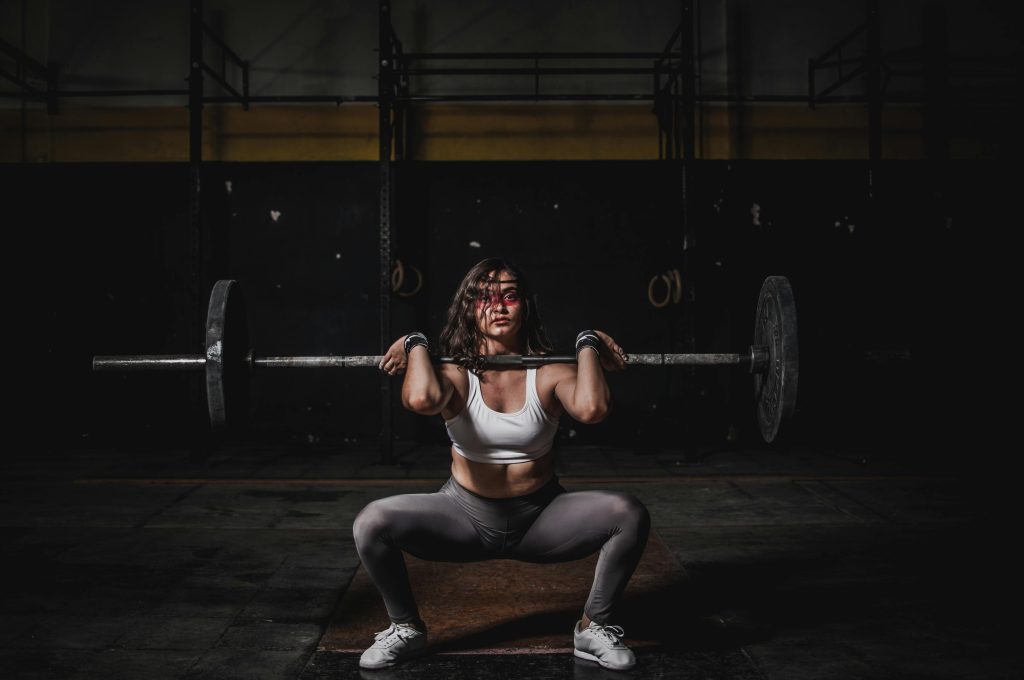
Squat Variations: Goblet squats, front squats, or back squats build lower body strength crucial for daily activities and athletic performance. Women’s wider Q-angle requires attention to knee tracking, ensuring knees follow toe direction without excessive inward collapse. Start with bodyweight squats perfecting form before adding load.
Hinge Patterns: Deadlifts, Romanian deadlifts, and hip thrusts develop posterior chain strength essential for posture, athletic performance, and injury prevention. Hip thrusts particularly target glutes, often a priority for women. Master the hip hinge pattern with lighter loads before attempting heavy deadlifts.
Pushing Movements: Press-ups, dumbbell presses, and overhead pressing build upper body strength. Women typically need more volume for upper body compared to lower body due to naturally lower upper body muscle mass. Include both horizontal (bench press) and vertical (overhead press) pressing movements.
Pulling Movements: Rows, pull-ups (or assisted variations), and lat pulldowns develop back strength crucial for posture and shoulder health. Most women need to build pulling strength progressively, starting with assisted variations or inverted rows before full pull-ups.
Training Frequency and Programme Structure
Three to five strength sessions weekly provide excellent results for most women. Beginners might start with 3 full-body sessions, whilst experienced lifters might use 4-5 sessions with upper/lower or push/pull/legs splits.
Full-body training works exceptionally well, training each major pattern 2-3 times weekly with adequate recovery between sessions. A typical week includes Monday, Wednesday, and Friday training, allowing rest days between. Each session includes one squat variation, one hinge, one push, and one pull.
Upper/lower splits separate upper body and lower body training, enabling 4 weekly sessions whilst maintaining recovery. Monday and Thursday train lower body; Tuesday and Friday train upper body. This approach suits women wanting more frequent training without compromising recovery.
Push/pull/legs splits divide training across three movement categories, typically repeated twice weekly. This advanced approach suits experienced women with excellent recovery capacity and significant time for training.
Rep Ranges and Loading Strategies
Varied rep ranges optimise different adaptations. Include work across the full spectrum rather than exclusively using any single range.
Strength Focus (3-6 reps at 80-90% maximum): Builds maximum strength and neural adaptations. Include one or two exercises per session in this range, typically compound movements like squats or deadlifts. Women should absolutely train in this range despite myths suggesting otherwise.
Hypertrophy Focus (6-12 reps at 70-80% maximum): Builds muscle mass most efficiently. This range forms the bulk of most programmes, providing excellent stimulus for strength and muscle development. Women respond particularly well to this range.
Endurance Focus (12-20+ reps at 60-70% maximum): Builds muscular endurance and provides additional volume. Include one or two exercises in this range, often on isolation movements or during recovery weeks.
Women can and should train across all rep ranges. The misconception that women should only use high reps with light weights has no scientific basis and limits strength development.
| Training Split | Weekly Sessions | Best For | Recovery Demands | Time Per Session |
|---|---|---|---|---|
| Full-Body | 3 | Beginners, time-limited | Moderate | 45-60 min |
| Upper/Lower | 4 | Intermediate lifters | Moderate-High | 45-60 min |
| Push/Pull/Legs | 4-6 | Experienced trainees | High | 60-75 min |
Cardiovascular Training and Conditioning for Women
Cardiovascular fitness supports heart health, metabolic function, and athletic performance. Strategic aerobic training complements strength work.
Balancing Intensity and Volume
An 80/20 approach to cardiovascular work proves effective: 80% of weekly volume at easy, conversational pace; 20% at high intensity. This distribution builds aerobic base whilst maintaining power and speed without excessive fatigue.
Easy aerobic training occurs at 60-70% of maximum heart rate, where you can hold conversations comfortably. This intensity builds mitochondrial density and develops cardiovascular efficiency. Most of your weekly aerobic work should occur here, particularly during the luteal phase.
High-intensity intervals (85-95% maximum heart rate) for brief periods maintain cardiovascular capacity and muscle power. One to two interval sessions weekly suffice for most women, providing adequate stimulus without overtaxing recovery. Schedule these during the follicular phase when possible.
Women’s superior fat oxidation during aerobic exercise means they excel at endurance activities. However, excessive endurance training can interfere with strength development. Balance cardio with resistance training rather than focusing exclusively on either.
Exercise Selection and Joint Health
Women’s biomechanics influence exercise selection. The wider Q-angle and different pelvic structure affect lower body mechanics, requiring attention to form and exercise variation.
Lower-impact options like cycling, swimming, rowing, or elliptical training provide excellent cardiovascular stimulus without excessive joint stress. Women can absolutely run, but mixing running with lower-impact alternatives prevents overuse injuries, particularly in knees and hips.
Jump training and plyometrics benefit female athletes when programmed appropriately. Women need particular attention to landing mechanics due to biomechanical factors affecting knee stability. Start with lower-intensity plyometrics before progressing to high-impact variations.
Sample Weekly Cardiovascular Programme
This intermediate programme includes three cardiovascular sessions weekly.
Monday: Easy run, cycle, or swim – 30-40 minutes at conversational pace (60-70% max heart rate). This session builds aerobic base without creating fatigue that would interfere with strength training.
Wednesday: Interval training – 5 minute warm-up, then 6-8 intervals of 1-2 minutes hard effort (85-90% max HR) with 2-3 minutes easy recovery between, followed by 5 minute cool-down. Total: 30-40 minutes. These intervals maintain power and speed.
Saturday: Longer easy session – 45-60 minutes at conversational pace. This extended duration builds endurance whilst remaining low-intensity. Choose activities you enjoy to maintain consistency.
Adjust this schedule based on your menstrual cycle if desired, reducing volume or intensity during the late luteal phase if experiencing significant symptoms.
Nutrition Strategies for Women Who Train
Nutrition supports training adaptation, recovery, and overall health. Strategic eating becomes crucial as women’s nutritional needs differ from men’s in several important ways.
Protein Requirements for Women
Protein needs equal men’s relative to bodyweight: 1.6-2.2g protein per kilogram bodyweight daily. A 65kg woman should consume 105-145g protein daily spread across multiple meals. Women historically under-consume protein, limiting strength and muscle development.
Distribute protein intake across the day rather than concentrating in one or two meals for optimal results. Each meal should include 25-40g protein. Leucine-rich protein sources (animal proteins, dairy, soy) particularly support muscle protein synthesis.
Protein needs may increase slightly during the luteal phase when metabolic rate rises. Don’t fear protein; it won’t cause unwanted bulk. Adequate protein supports recovery, maintains muscle during fat loss, and promotes satiety.
Managing Energy Balance and Body Composition
Women’s metabolic rate is typically 5-10% lower than men’s due to less muscle mass and smaller body size. This means calorie requirements differ, requiring careful attention to energy balance.
Under-eating represents a more common problem than overeating among women who train regularly. Chronic under-fuelling sabotages training performance, recovery, menstrual function, and bone health. Low energy availability (inadequate calories for training demands) can lead to RED-S (Relative Energy Deficiency in Sport), causing hormonal disruption, bone loss, and impaired performance.
Track calories periodically, ensuring intake matches training demands. Maintenance calories approximate 14-16 calories per pound of bodyweight for moderately active women. During heavy training phases, particularly the follicular phase, increase calories by 200-300 daily to support recovery.
For fat loss, create a modest 300-500 calorie daily deficit. Lose weight gradually (0.5-1% bodyweight weekly) rather than aggressively, preserving muscle mass and maintaining hormonal function. Avoid severe restriction, particularly during intensive training phases.
Carbohydrate and Fat Considerations
Carbohydrate needs increase during heavy training and throughout the luteal phase when metabolic rate rises. Active women need 3-5g carbohydrates per kilogram bodyweight daily, potentially more during high-volume phases. Under-consuming carbohydrates impairs training performance and recovery.
Fat requirements for women equal or exceed men’s due to hormonal function needs. Aim for 0.8-1.2g fat per kilogram bodyweight daily, ensuring adequate intake of essential fatty acids. Extremely low-fat diets can disrupt hormonal function and menstrual cycles, sabotaging training.
During the luteal phase, slightly increasing carbohydrate and fat intake often improves energy levels and training quality. Your body’s metabolic rate increases by 5-10% during this phase, requiring additional fuel for optimal performance.
Key Supplements for Female Athletes
Several supplements deserve consideration, though whole food nutrition remains the foundation.
Iron: Women lose iron through menstruation, making deficiency common. Iron deficiency impairs endurance and causes fatigue. Consider supplementing 15-20mg daily or consuming iron-rich foods regularly. Check iron levels (ferritin) annually, particularly if experiencing unusual fatigue.
Vitamin D: Most UK residents have suboptimal vitamin D levels. Supplement 2,000-4,000 IU daily supporting bone health, immune function, and mood. Cost: £5-10 for several months’ supply.
Omega-3 Fatty Acids: Fish oil or algae-based omega-3s (1-2g EPA/DHA daily) support joint health, reduce inflammation, and promote hormonal function. Particularly beneficial if you don’t regularly eat fatty fish. Cost: £10-20 monthly.
Magnesium: Many women consume insufficient magnesium, affecting sleep quality, muscle function, and recovery. Supplement 300-400mg daily. Cost: £8-15 for 2-3 months.
Creatine: This well-researched supplement supports strength and muscle mass. Women respond similarly to men, gaining strength without bulk. Take 5g daily; timing doesn’t matter significantly. Cost: £10-15 for 3-4 months’ supply.

Training Throughout Life Stages
Women’s training needs evolve across different life stages, requiring programme adaptations.
Reproductive Years and Contraception
Hormonal contraceptives significantly affect how cycle-based periodisation applies. Combined oral contraceptives eliminate natural hormonal fluctuations, creating consistent (though lower) hormone levels. Women using hormonal contraception may not experience cycle-based performance variations, making traditional periodisation less relevant.
Non-hormonal contraception (copper IUD) preserves natural cycles, allowing cycle-based approaches. Hormonal IUDs affect individuals differently; some maintain regular cycles whilst others experience suppression.
Pregnancy and postpartum require specialised guidance beyond this article’s scope. Generally, women can continue training during pregnancy with modifications, and gradually return postpartum. Consult healthcare providers and specialists in prenatal/postnatal fitness for personalised guidance.
Perimenopause and Menopause
Perimenopause (the transition to menopause, typically ages 45-55) brings hormonal fluctuations affecting training. Estrogen levels fluctuate erratically before declining, potentially causing irregular performance, changed body composition, and altered recovery capacity.
Strength training becomes increasingly important during this phase, combating muscle loss and bone density decline. Women going through perimenopause benefit from prioritising resistance training over excessive cardio.
Post-menopause, without monthly hormonal fluctuations, training can follow more consistent patterns. However, lower overall hormone levels mean recovery may take longer. Adjust expectations and training volume accordingly during this life stage.
Common Challenges in Women’s Fitness
Understanding obstacles that typically arise helps you prepare solutions proactively.
Overcoming “Bulking” Fears
Perhaps the most persistent myth: that lifting heavy weights makes women “bulky.” This fear, rooted in misinformation, prevents countless women from strength training effectively. The reality differs dramatically from the myth.
Building substantial muscle mass requires years of dedicated training, specific nutrition (calorie surplus), and often genetic predisposition. Women’s testosterone levels (15-20 times lower than men’s) make building large muscles extremely difficult without extraordinary effort and often pharmaceutical assistance.
The lean, athletic physiques many women admire typically result from strength training and low body fat percentage, not avoiding weights. “Toned” muscles are simply muscles that have been strengthened and revealed through reduced body fat. There’s no special “toning” programme; there’s strength training paired with appropriate nutrition.
Managing Under-Fuelling and RED-S
Chronic under-eating represents a serious concern in women’s fitness. Many women restrict calories excessively whilst training intensively, creating low energy availability that impairs performance, recovery, and health.
RED-S symptoms include irregular or absent menstrual cycles, persistent fatigue, declining performance, frequent injuries, and difficulty building strength. If experiencing these symptoms, increase calorie intake, particularly carbohydrates, and consult healthcare providers specialising in sports medicine.
Your menstrual cycle serves as a vital sign of health. Regular cycles indicate adequate energy balance; irregular or absent cycles often signal under-fuelling or excessive training stress. Prioritise health over aesthetics; sustainable results require supporting your body properly.
Addressing Pelvic Floor Considerations
Many women, particularly postpartum, experience pelvic floor dysfunction affecting training. Symptoms include urinary leakage during exercise, heaviness or pressure in the pelvis, or difficulty controlling bladder or bowel function.
Pelvic floor physiotherapy addresses these issues effectively. Kegel exercises represent only one tool; proper assessment and treatment require specialised physiotherapists. Don’t accept pelvic floor dysfunction as inevitable; seek appropriate treatment supporting your training.
High-impact activities require proper pelvic floor function. If experiencing symptoms, modify activities whilst seeking treatment rather than pushing through discomfort that could worsen dysfunction.
Frequently Asked Questions About Women’s Training
Should women train differently from men?
Women should follow the same fundamental training principles (progressive overload, proper recovery, balanced programming) whilst accounting for specific physiological factors. Women can and should lift heavy, train intensely, and pursue strength. The differences lie in details like cycle-based periodisation, nutritional needs, and biomechanical considerations rather than fundamental approach.
How much protein do women need?
Women need 1.6-2.2g protein per kilogram bodyweight daily when training regularly, identical to men’s relative needs. A 65kg woman should consume 105-145g protein daily. This supports muscle building, recovery, and maintains muscle during fat loss. Don’t fear protein; inadequate intake limits results far more than excess protein causes problems.
Will lifting heavy make me bulky?
No. Building substantial muscle requires years of dedicated training, calorie surplus, and often genetic predisposition. Women’s lower testosterone levels make building large muscles extremely difficult. Lifting heavy builds strength, improves body composition, and creates the “toned” aesthetic many women desire. The lean, athletic physiques you admire typically result from strength training.
How does the menstrual cycle affect training?
Many women experience performance variations across their cycle. The follicular phase (days 1-14) typically supports higher training capacity. The late luteal phase (days 22-28) often brings reduced performance and increased fatigue. Cycle-based periodisation aligns training with these fluctuations, though it’s optional. Individual variation is significant; some women notice minimal cycle effects.
Can I train during my period?
Absolutely. Many women train their best during menstruation as hormone levels normalise. Some experience discomfort requiring modified training; others feel no different. Listen to your body, adjusting intensity or volume if needed, but menstruation doesn’t require avoiding training unless you’re experiencing severe symptoms.
What about training during pregnancy?
Most women can continue training during pregnancy with modifications, though this requires guidance beyond this article’s scope. Generally, maintain rather than build fitness, avoid exercises risking falls or abdominal trauma, and listen carefully to your body. Consult healthcare providers and specialists in prenatal fitness for personalised guidance.
How do I prevent osteoporosis through training?
Weight-bearing exercise, particularly resistance training and high-impact activities, builds and maintains bone density. Strength training throughout life provides the most effective osteoporosis prevention. Combine training with adequate calcium (1,000-1,200mg daily) and vitamin D supplementation. Women who train consistently maintain bone density far better than sedentary peers.
Should I supplement with creatine?
Yes, creatine benefits women identically to men, improving strength and muscle mass without causing bulk or water retention (despite persistent myths). Take 5g daily, timing doesn’t matter significantly. Creatine is one of the most researched, safe, and effective supplements. Cost: £10-15 for 3-4 months.
How do I get started with strength training?
Start with 2-3 full-body sessions weekly, mastering fundamental movement patterns (squat, hinge, push, pull). Begin with bodyweight or light loads, focusing on proper form before progressing weight. Consider hiring a qualified coach for initial guidance. Progress gradually, adding weight when movements feel easy whilst maintaining proper form.
Related Guides: Dive Deeper Into Specific Topics
- Strength Training for Beginners: Master fundamental movement patterns
- Cycle-Based Training: Optimise training around your menstrual cycle
- Body Composition Guide: Build muscle and manage body fat effectively
- Nutrition for Female Athletes: Support training with strategic eating
- Bone Health and Training: Prevent osteoporosis through exercise
- Pelvic Floor Health: Maintain function whilst training
- Training During Life Changes: Navigate pregnancy, postpartum, and menopause
- Building Strength Without Bulk: Address common concerns
Conclusion: Embracing Your Strength
Female training doesn’t mean training timidly or following programmes designed for men. It means understanding your body’s unique characteristics whilst pursuing strength, fitness, and performance without unnecessary limitations. The difference between women who thrive physically and those accepting suboptimal results comes down to evidence-based training informed by female physiology.
Key Takeaways:
- Women can and should lift heavy weights across all rep ranges for optimal results
- Hormonal fluctuations affect training capacity; cycle-based periodisation optimises results but isn’t mandatory
- Adequate nutrition, particularly protein and overall calories, supports success
- Women’s biomechanics require attention to form but don’t limit training capacity
- The “bulky” fear has no scientific basis; building substantial muscle requires extraordinary effort
- Recovery needs vary across the menstrual cycle; adjust training volume accordingly
- Strength training provides the foundation, supported by appropriate cardiovascular work
- Individual variation is significant; what works for others may need adjustment for you
Your First Three Actions:
- Assess your current programme: Evaluate whether your training includes adequate strength work with challenging loads across varied rep ranges, or if you’re limiting yourself based on myths about women’s fitness.
- Track your menstrual cycle: Monitor how your training capacity, energy, and recovery vary throughout your cycle, identifying patterns that could inform programme adjustments.
- Evaluate your nutrition: Calculate your protein intake and overall calories, ensuring you’re fuelling training adequately rather than under-eating, which commonly sabotages results.
Remember that effective training for women isn’t about accepting limitations; it’s about understanding your physiology and using that knowledge to optimise results. Women are capable of remarkable strength, power, and fitness. With evidence-based programming and adequate support for your body’s needs, you can achieve outstanding results and enjoy the process.
Your female training journey is yours alone. Comparison to others, male or female, serves no purpose. Focus on progressive improvement, support your body properly, and embrace the strength you’re capable of building through intelligent training.


