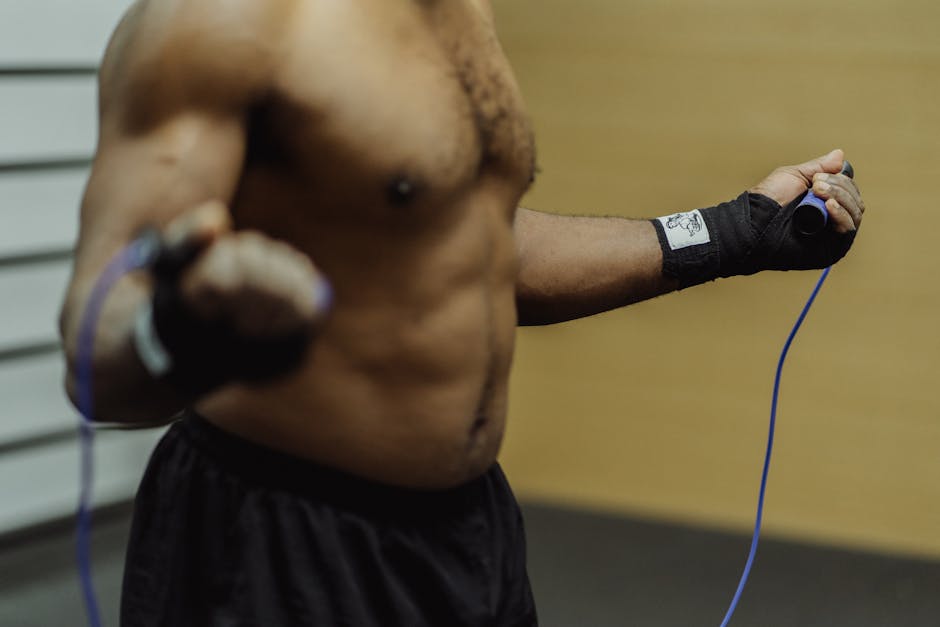
Why Jump Rope Workouts Are the Secret Weapon Busy Brits Are Using to Get Fit in Less Time
You’ve probably walked past a skip rope gathering dust in a sports shop and thought, “That’s just for kids in the playground, isn’t it?” Here’s the thing: while you’ve been contemplating yet another expensive gym membership or scrolling through complicated workout programmes, one of the most effective cardio exercises has been hiding in plain sight. A proper jump rope workout can torch up to 400 calories in just 30 minutes—that’s more than running at a moderate pace—and you can do it in your back garden, local park, or even your living room if you’ve got the ceiling height.
📖 Reading time: 13 minutes
I’ll admit, I used to be deeply skeptical about skipping. When my mate Sarah told me she’d ditched her treadmill for a £15 rope, I thought she’d lost the plot. But after three months of watching her transform her fitness levels—and her energy—I finally gave it a go during lockdown when my usual gym routine went out the window. Turns out, that childhood activity is actually one of the most efficient full-body workouts you can do, and it’s absolutely brilliant for people who are time-poor but results-focused. No wonder boxers have sworn by it for decades.
Common Myths About Jump Rope Workouts
For more on this topic, you might enjoy: Your First Elliptical Machine Workout: A Beginner’s Guide to Getting Started.
Before we dive into the proper techniques and routines, let’s clear up some rubbish you’ve probably heard about skipping.
Myth: “Jump rope workouts are too hard on your knees and joints.”
Reality: When done with proper form on an appropriate surface, skipping is actually lower impact than running. According to research from the NHS guidelines on physical activity, the small, controlled jumps required for rope work create less impact force than the heel-strike of running. You’re landing on the balls of your feet with knees slightly bent—it’s a cushioned, controlled movement. The key is proper technique and a forgiving surface (more on that later).
Myth: “You need to be coordinated and athletic to do a jump rope workout.”
Reality: Absolutely not. Yes, you might trip over the rope a few times when you start—we all do. But unlike many fitness activities that require complex movement patterns, skipping is a skill you can master in days, not months. You literally learned this as a child. Your body remembers more than you think. Start with 20-second intervals, expect to mess up, laugh about it, and keep going. Within a week, you’ll be hitting consecutive jumps you never thought possible.
Myth: “It’s just cardio, so you won’t build any strength.”
Reality: A jump rope workout engages your calves, quads, hamstrings, glutes, core, shoulders, and forearms simultaneously. While it’s primarily cardiovascular, you’re also building muscular endurance throughout your entire body. It’s what trainers call a “compound movement”—multiple muscle groups working together. That’s why boxers use it not just for conditioning but for developing explosive power and coordination.
The Science-Backed Benefits of Jump Rope Workouts
Related: Your Ultimate HIIT Treadmill Workout: Burn Fat and Build Fitness Fast.
Let’s talk about why this simple piece of equipment deserves a spot in your fitness routine.
Cardiovascular Efficiency That Saves You Time
Time is the excuse I hear most often from friends who’ve let their fitness slide. Here’s where a jump rope workout becomes genuinely revolutionary: just 10 minutes of skipping at a moderate intensity provides similar cardiovascular benefits to 30 minutes of jogging. A study published in the Journal of Sports Science found that participants who did jump rope exercises three times weekly for 12 weeks significantly improved their VO2 max—that’s your body’s ability to use oxygen efficiently.
For busy professionals juggling work, family, and everything else life throws at you, this time efficiency is game-changing. You can get a proper workout done during your lunch break without needing a shower afterwards (well, maybe just a quick freshen-up).
Bone Density and Joint Health
This might surprise you, but moderate-impact exercises like skipping can actually improve bone density, which is particularly important as we age. The NHS notes that weight-bearing exercises are crucial for preventing osteoporosis. The repetitive, controlled impact signals your bones to strengthen themselves. It’s like a workout for your skeleton, not just your muscles.
Coordination and Cognitive Benefits
Jump rope workouts require timing, rhythm, and bilateral coordination—your left and right sides working in harmony. This isn’t just physical; it’s neurological training. Research suggests that activities requiring this type of coordination can improve cognitive function and even support brain health as we age. Ever notice how boxers are sharp mentally as well as physically? This is part of why.
Mental Health and Stress Relief
There’s something almost meditative about the rhythm of a jump rope workout. The repetitive motion, the focus required, and the endorphin release create a perfect storm for stress relief. In our always-on, notification-heavy British lives, having 15 minutes where you must focus on just one rhythmic activity can be incredibly grounding. Plus, you can do it outside—and we all know how much better exercise feels with some fresh air.
Essential Kit: What You Actually Need
You may also find this helpful: Your Essential Beginner Home Workout Routine: No Gym, No Problem.
One of the best things about jump rope workouts? The barrier to entry is refreshingly low.
Choosing Your Rope
Not all skip ropes are created equal, and that £3 plastic one from the pound shop will likely tangle and frustrate you within minutes. Here’s what to look for:
Speed ropes (£10-25) are lightweight with thin cables, perfect for fast-paced workouts and developing rhythm. They’re what most fitness enthusiasts use. Brands like Evoke, which you can find on Amazon UK, offer excellent quality without breaking the bank.
Weighted ropes (£15-35) have heavier handles or cables, providing more resistance for strength building. These are brilliant for adding variety once you’ve mastered basic technique.
Beaded ropes (£8-15) are more durable and hold their shape better, making them excellent for beginners who are still getting their rhythm sorted. They’re also better for outdoor use on rougher surfaces.
For sizing, stand on the middle of the rope with one foot. The handles should reach approximately to your armpits. Most adjustable ropes let you customize this easily.
Surface Matters
Concrete will destroy your joints and your rope. Grass is too soft and uneven. The sweet spot? Wooden floors, rubber gym mats, or outdoor sports surfaces. If you’re working out at home, invest in a £20-30 exercise mat designed for high-impact activities. Your knees and your downstairs neighbours will thank you.
Footwear
Wear proper trainers with good cushioning and arch support. This isn’t the time for minimalist shoes or going barefoot. Cross-trainers work brilliantly for jump rope workouts because they provide both cushioning and lateral stability.
Mastering Your Technique: The Foundation of Effective Jump Rope Workouts
Rubbish technique will leave you frustrated and potentially injured. Proper form makes everything easier and more effective.
The Basic Bounce
Stand with feet hip-width apart, core engaged, and shoulders relaxed. Hold the handles lightly—you’re not strangling them. Your elbows should stay close to your ribs, and the rotation comes from your wrists, not your entire arms flailing about like you’re at a rave.
Jump only an inch or two off the ground—just enough for the rope to pass under your feet. Land softly on the balls of your feet with knees slightly bent. Think light and springy, like you’re bouncing on a trampoline, not doing heavy thuds.
This video demonstration from Jump Rope Dudes offers excellent visual guidance on proper form: Basic Jump Rope Technique for Beginners.
Common Form Issues
Most beginners jump too high (wasting energy), use their whole arms instead of wrists (causing fatigue), or look down at their feet (affecting balance and posture). Fix these by focusing on small jumps, compact arm position, and keeping your gaze forward at eye level.
Breathing Properly
Don’t hold your breath—sounds obvious, but it’s surprisingly common when you’re concentrating. Establish a rhythm: breathe in for four jumps, out for four jumps. As you improve, this will become automatic.
Your First Four Weeks: A Progressive Jump Rope Workout Plan
Right, let’s get practical. This plan assumes you’re starting from scratch and can currently manage basic fitness activities without issues. Always check with your GP if you have any health concerns.
Week 1: Building Your Foundation
Sessions: 3 times this week, with at least one rest day between
- 5-minute warm-up: Light jogging on the spot, arm circles, ankle rotations
- Work interval: 20 seconds of skipping, then 40 seconds rest (repeat 10 times)
- Alternative if struggling: Skip without the rope to practice timing, or do single skips instead of continuous
- Cool-down: 5 minutes of walking and gentle stretching
Goal: Don’t worry about how many jumps you complete. Focus entirely on form and getting comfortable with the rope’s rhythm. If you trip up, just reset and go again.
Week 2: Increasing Duration
Sessions: 3-4 times this week
- 5-minute warm-up
- Work interval: 30 seconds skipping, 30 seconds rest (repeat 12 times)
- Focus: Aim for consecutive jumps without stopping. If you can’t complete 30 seconds, break it into two 15-second efforts
- Cool-down: 5 minutes
By now, your calves might be rather indignant about this new activity. That’s normal. Light stretching and perhaps a foam roller session will help.
Week 3: Adding Intensity
Sessions: 4 times this week
- 5-minute warm-up
- Main workout: 45 seconds skipping, 15 seconds rest (repeat 10 times)
- Variation day: Once this week, try alternating between regular bounce and high knees (lifting knees higher with each jump)
- Cool-down: 5-7 minutes with extra calf stretches
Week 4: Building Endurance
Sessions: 4-5 times this week
- 5-minute warm-up
- Main workout: 1 minute skipping, 20 seconds rest (repeat 8-10 times)
- Challenge day: Try one session where you aim for 2 minutes continuous (rest as needed, then repeat)
- Cool-down: 7-10 minutes
After four weeks, you should be able to comfortably skip for several minutes at a stretch. Your coordination will have improved dramatically, and you’ll likely notice better cardiovascular fitness in other activities too.
Intermediate and Advanced Jump Rope Workout Variations
Once you’ve mastered the basic bounce, a world of variations opens up to keep your workouts challenging and engaging.
Technique Progressions
Alternate foot step: Like running on the spot—one foot at a time instead of both together. This is actually easier on your calves and brilliant for longer duration workouts.
High knees: Drive your knees up to hip height with each skip. Prepare for your core and hip flexors to burn.
Double unders: The rope passes under your feet twice per jump. This requires explosive power and precise timing. Don’t attempt these until you can comfortably do 2-3 minutes of continuous basic skipping.
Criss-cross: Cross your arms in front of your body mid-jump so the rope forms an X. Looks impressive, and it’s fantastic for coordination.
Side swings: Swing the rope to one side without jumping, then the other side, then jump through. Great for active recovery between intense intervals.
Sample Intermediate Workout
- 5-minute warm-up
- 2 minutes basic bounce (moderate pace)
- 30 seconds high knees (intense effort)
- 30 seconds side swings (active recovery)
- 1 minute alternate foot step (moderate pace)
- 30 seconds fast basic bounce (intense effort)
- 30 seconds rest
- Repeat circuit 3-4 times
- 10-minute cool-down with thorough stretching
Total time: 25-30 minutes for a genuinely challenging full-body workout.
Structuring Your Jump Rope Workout Routine
How often should you incorporate jump rope workouts into your overall fitness plan?
For general fitness and cardiovascular health, 3-4 sessions weekly is ideal. This provides adequate recovery time while building consistent improvement. According to NHS physical activity recommendations, adults should aim for at least 150 minutes of moderate-intensity activity weekly. Four 30-minute jump rope workouts easily meet this target.
If you’re combining skipping with other training, consider using it as:
- Cardio day replacement: Instead of running or cycling
- Warm-up: 5-10 minutes before strength training to elevate heart rate and activate muscles
- Finisher: 5 minutes of intervals after weights for extra calorie burn
- Active recovery: Light, easy skipping on rest days to promote blood flow
Listen to your body. Your calves and shoulders will need recovery time initially. If you’re still sore, take an extra rest day or do gentle movement instead.
Mistakes to Avoid
Doing Too Much Too Soon
This is the number one way people injure themselves or give up entirely. Your cardiovascular system might be ready for 20 minutes of intense skipping, but if your calves, Achilles tendons, and feet aren’t conditioned to the repetitive impact, you’re asking for trouble. Shin splints, Achilles tendinitis, and stress fractures are real risks when you progress too aggressively. Be patient. Follow a progressive plan. Your future self will thank you.
Skipping on Inappropriate Surfaces
Concrete, tarmac, and tile floors are joint-destroyers. They offer no shock absorption, meaning every landing sends impact straight through your ankles, knees, and hips. Invest in proper flooring or find appropriate outdoor spaces. Sports courts at local parks are often perfect and free to use.
Using a Poorly Sized or Cheap Rope
A rope that’s too long will hit the ground too soon and tangle. Too short, and you’ll be hitting your feet constantly. Cheap ropes twist, tangle, and create frustration that has nothing to do with your ability. Spend £15-20 on a decent adjustable speed rope. It’s less than two takeaway coffees and will last years.
Neglecting Proper Footwear
Those knackered old trainers with worn-down soles? Not suitable. The repetitive impact of jump rope workouts requires proper cushioning and support. Wearing inappropriate shoes is a fast track to plantar fasciitis and knee pain. Invest in proper cross-trainers if you’re serious about making skipping part of your routine.
Holding Your Breath or Poor Breathing Rhythm
When concentrating on coordination, many people unconsciously hold their breath or breathe irregularly. This leads to premature fatigue and dizziness. Establish a conscious breathing pattern early on—even if it feels forced initially—and it’ll become automatic within a week or two.
Ignoring Warm-Up and Cool-Down
Jumping straight into intense skipping with cold muscles is asking for a pulled calf or worse. Your warm-up should gradually elevate your heart rate and warm up the specific muscles you’ll use: calves, ankles, shoulders, and wrists. Similarly, cooling down helps remove lactic acid and reduces next-day soreness. These aren’t optional extras; they’re essential components of a proper jump rope workout.
Quick Reference Checklist
- Invest in a quality adjustable speed rope (£15-25) sized to your height (handles to armpits when standing on rope’s centre)
- Always warm up for 5 minutes before starting your jump rope workout—light jogging, arm circles, ankle rotations
- Focus on wrist rotation, not big arm movements; keep elbows close to ribs
- Jump only 1-2 inches off the ground—small, controlled bounces on the balls of your feet
- Start with short intervals (20-30 seconds) and gradually increase as fitness improves
- Schedule 3-4 sessions weekly with rest days between for recovery
- Use appropriate surfaces—wooden floors, rubber mats, or sports court surfaces; avoid concrete
- Cool down and stretch thoroughly, especially calves, shoulders, and hip flexors
Frequently Asked Questions
Can I do a jump rope workout if I live in a flat?
It depends on your ceiling height and consideration for neighbours below. You need at least 8-9 feet of clearance, ideally 10 feet. If you have downstairs neighbours, the repetitive impact will likely disturb them even with a good exercise mat. Consider using local parks or sports facilities instead. Alternatively, you can practice the footwork without the rope for some cardiovascular benefit, though you’ll lose the coordination and upper body elements. Many council leisure centres offer affordable “pay as you go” gym sessions where you could use their studios


