You’ve been told that effective cardio means pounding the pavement or jumping through high-intensity workouts until you’re drenched in sweat. But what if your knees protest after every run? What if your joints ache for days following a HIIT session? Here’s the truth: low impact cardio exercises can deliver remarkable cardiovascular benefits and calorie burn without subjecting your body to the relentless pounding that high-impact activities demand.
📖 Reading time: 20 minutes
Picture this: You’re standing in your living room at 7am on a Tuesday morning. You know you should exercise, but last week’s run left your knees throbbing for three days. Your fitness tracker sits accusingly on the nightstand, reminding you of missed movement goals. Meanwhile, your neighbour seems to effortlessly maintain their fitness routine without the wincing and limping that’s become your post-workout signature. The problem isn’t your commitment or willpower—it’s that you’ve been led to believe the only effective cardio is the kind that hammers your joints into submission.
Common Myths About Low Impact Cardio Exercises
For more on this topic, you might enjoy: Core Strengthening Exercises: Your Complete Guide to Building a Stronger Middle.
Myth: Low Impact Means Low Intensity and Poor Results
Reality: Low impact simply refers to activities that keep at least one foot on the ground at all times, minimizing the force transmitted through your joints. Research from the British Journal of Sports Medicine demonstrates that low impact cardio exercises can elevate your heart rate to 70-85% of maximum capacity—the optimal zone for cardiovascular conditioning and fat burning. Swimming, for instance, can burn between 400-700 calories per hour whilst being completely non-weight bearing. The intensity is entirely within your control, determined by your speed, resistance, and duration rather than how hard you strike the ground.
Myth: You Need to Be Elderly or Injured to Benefit from Low Impact Workouts
Reality: Professional athletes routinely incorporate low impact cardio exercises into their training programmes to allow recovery whilst maintaining cardiovascular fitness. According to UK Athletics coaching guidelines, even Olympic runners dedicate 20-30% of their training to low impact alternatives like cycling and swimming to reduce cumulative stress on their bodies. Whether you’re 25 or 75, protecting your joints from unnecessary impact is simply intelligent training that extends your active years.
Myth: Low Impact Cardio Is Boring and Limited
Reality: The variety within low impact cardio exercises is staggering. From dance-based workouts to water aerobics, from rowing machines to elliptical intervals, you have dozens of engaging options that challenge different muscle groups and energy systems. Many people actually find low impact alternatives more enjoyable because they can sustain the activity longer without exhaustion or discomfort, allowing them to enter that satisfying flow state that makes exercise feel effortless.
Why Your Joints Will Thank You for Choosing Low Impact Cardio
Related: 7 Resistance Band Upper Body Exercises That Build Serious Strength at Home.
Every time your foot strikes the ground during running, your body absorbs a force equivalent to approximately three times your body weight. For a 70kg person, that’s 210kg of force transmitted through ankles, knees, hips, and spine—with each step. During a typical 5km run, you’ll take roughly 6,000 steps, meaning your joints absorb around 1,260,000 kg of cumulative force in a single session.
The NHS reports that over 8.75 million people in the UK live with osteoarthritis, with knee problems being among the most common musculoskeletal complaints presenting at GP surgeries. Whilst exercise is crucial for joint health—strengthening surrounding muscles and maintaining cartilage nutrition—the type of exercise matters enormously. Low impact cardio exercises provide all the cardiovascular benefits whilst dramatically reducing mechanical stress on vulnerable joints.
What’s more, protecting your joints isn’t just about preventing pain today. Research from the University of Oxford’s Nuffield Department of Orthopaedics demonstrates that cumulative joint stress throughout life significantly influences osteoarthritis risk in later years. By choosing low impact alternatives now, you’re investing in pain-free movement decades into the future.
15 Low Impact Cardio Exercises You Can Start Today
1. Swimming and Water-Based Cardio
Water supports approximately 90% of your body weight, making swimming the ultimate low impact cardio exercise. The resistance water provides means you’re constantly working against force, building strength alongside cardiovascular endurance. A moderate swimming session burns 400-500 calories per hour whilst engaging every major muscle group. Can’t swim laps? Water walking, aqua aerobics, and even water jogging with a flotation belt deliver similar benefits. Most UK leisure centres offer dedicated aqua fitness classes with options for all abilities.
2. Cycling (Stationary or Outdoor)
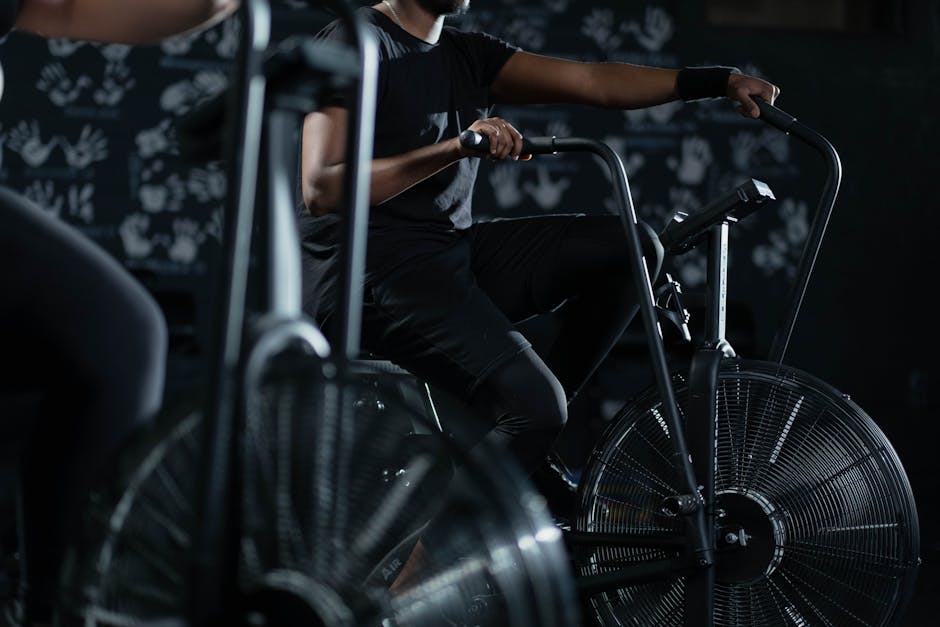
Whether you’re pedalling through countryside lanes or spinning on a stationary bike in your spare bedroom, cycling provides outstanding cardiovascular conditioning without impact stress. Your body weight is supported by the saddle, eliminating ground reaction forces entirely. Moderate cycling burns 300-600 calories per hour depending on intensity. The beauty of cycling is its scalability—you control the challenge through speed, resistance, and terrain rather than impact. If you’re considering indoor cycling, a basic stationary bike with adjustable resistance gives you weather-proof cardio year-round.
3. Elliptical Training
The elliptical machine mimics running motion whilst your feet never leave the pedals, eliminating impact entirely. Studies comparing joint stress during elliptical training versus treadmill running show ellipticals reduce knee joint loading by approximately 40%. Many machines include arm handles that transform the exercise into full-body cardio. A 30-minute elliptical session burns roughly 270-400 calories whilst engaging legs, core, and upper body simultaneously.
4. Rowing Machine Workouts
Rowing might be the most underrated low impact cardio exercise available. It engages 85% of your body’s muscles in every stroke—legs, core, back, arms, and shoulders work in coordinated rhythm. Because you’re seated throughout the movement, there’s zero impact on joints. A vigorous rowing session can burn 500-800 calories per hour, rivalling running’s calorie expenditure without any of the joint stress. The NHS recommends rowing as an excellent full-body workout suitable for various fitness levels.
5. Power Walking
Don’t underestimate the humble walk. Power walking—maintaining a brisk pace of 5-6.5 km/hour with purposeful arm swing—elevates your heart rate into the aerobic training zone whilst keeping impact forces relatively low. The key is maintaining continuous movement at a pace that makes conversation slightly challenging. Walking burns 250-400 calories per hour, and research from the University of Cambridge shows that even a brisk 20-minute daily walk reduces all-cause mortality risk by 16-30%. Bonus: it’s completely free and requires no equipment beyond comfortable trainers.
6. Step Machine or Stair Climbing (Controlled Pace)
When performed at a controlled pace without jumping, stair climbing provides excellent cardiovascular stimulus whilst strengthening lower body muscles that support knee joints. The step machine at your gym offers adjustable resistance and consistent motion. Climbing actual stairs works beautifully too—just maintain a steady, sustainable pace rather than sprinting. This activity burns approximately 400-500 calories per hour whilst building gluteal and quadriceps strength that protects knees during daily activities.
7. Low Impact Aerobic Dance
Dance-based fitness doesn’t require jumping or bouncing to be effective. Low impact aerobic dance keeps one foot grounded whilst incorporating side steps, knee lifts, arm movements, and hip motion that elevate heart rate and burn 300-450 calories per hour. Many UK leisure centres and community halls offer classes like Zumba Gold (designed for older adults but suitable for anyone), ballroom fitness, and gentle aerobics. Alternatively, YouTube channels like The Body Coach TV offer free low impact dance workouts you can follow at home.
8. Cross-Country Skiing (or Ski Erg Machine)
If you’ve access to a gym with a ski erg machine, you’ve found a phenomenal low impact cardio exercise. This machine simulates the pulling motion of Nordic skiing, engaging arms, core, and legs in fluid motion without impact. Real cross-country skiing (when British weather and geography permit) provides similar benefits across snowy terrain. Both variations burn 450-600 calories per hour whilst developing upper body strength often neglected in traditional cardio.
9. Tai Chi
Whilst gentler than other options on this list, tai chi’s continuous flowing movements maintain elevated heart rate whilst dramatically improving balance, flexibility, and body awareness. Research published in the British Journal of Sports Medicine found tai chi comparable to conventional exercise for improving cardiovascular fitness in previously sedentary adults. It burns approximately 200-300 calories per hour—modest compared to vigorous options, but the joint-protective benefits and stress reduction make it valuable cross-training.
10. Kayaking or Paddleboarding
Water sports offer outstanding low impact cardio with the added bonus of being outdoors in nature. Kayaking burns 300-500 calories per hour whilst strengthening upper body, core, and stabilising muscles. Stand-up paddleboarding (SUP) adds balance challenge that engages core muscles intensely. Many UK waterways, reservoirs, and coastal locations offer equipment hire and instruction. The rhythmic paddling motion is meditative, making time pass quickly whilst you accumulate serious cardiovascular work.
11. Yoga Flow Classes (Vinyasa or Power Yoga)
Not all yoga is gentle stretching. Vinyasa and power yoga styles link poses in continuous flowing sequences that elevate heart rate substantially. Sun salutations performed continuously for 20-30 minutes provide genuine cardiovascular challenge whilst building strength and flexibility. These dynamic yoga styles burn 250-400 calories per hour with zero impact stress. The flowing transitions between poses create sustained muscular engagement that challenges your cardiovascular system differently than traditional steady-state cardio.
12. Recumbent Bike Sessions
The recumbent bike positions you in a reclined, supported posture that eliminates strain on lower back whilst providing excellent cardiovascular conditioning. This makes it particularly suitable if you experience back discomfort with upright cycling. The larger seat and backrest support allow you to maintain longer sessions comfortably, accumulating significant calorie burn (300-500 per hour) without joint or spinal stress. Many people find they can push harder on recumbent bikes because they’re not fighting fatigue from maintaining an upright posture.
13. Shadow Boxing and Martial Arts (Without Jumps)
Boxing-style workouts without the jumping component deliver outstanding cardiovascular stimulus. Continuous punching combinations—jabs, crosses, hooks, and uppercuts—performed in structured rounds with active recovery periods between can burn 400-600 calories per hour. The constant arm movement elevates heart rate substantially whilst strengthening shoulders, back, and core. You can follow along with YouTube boxing workouts, ensuring you choose “low impact” versions that eliminate jumping or plyometric movements. A basic set of light boxing gloves can add resistance and protect your hands and wrists during extended sessions.
14. Pilates Reformer Classes
The Pilates reformer machine uses springs, pulleys, and a sliding carriage to create resistance through a full range of motion. Whilst traditional mat Pilates focuses primarily on core strength, reformer classes can be structured for cardiovascular challenge through continuous flowing exercises with minimal rest. These sessions burn 250-400 calories per hour whilst dramatically improving core strength, posture, and body awareness. The machine supports your body throughout movements, eliminating impact whilst providing adjustable resistance that challenges muscles thoroughly.
15. Gardening (Yes, Really)
Before you dismiss this suggestion, consider that vigorous gardening—digging, raking, pushing a lawn mower, carrying watering cans—can burn 300-450 calories per hour whilst keeping you in continuous moderate-intensity movement. The variety of movements engages different muscle groups, and the functional nature means you’re accomplishing practical tasks whilst exercising. Research from the Royal Horticultural Society highlights gardening’s significant health benefits, including cardiovascular conditioning comparable to gym-based exercise. The varied terrain and movements make it genuine low impact cardio that’s productive and psychologically rewarding.
How to Build an Effective Low Impact Cardio Routine
Understanding individual exercises is valuable, but structuring them into a coherent routine delivers results. The NHS recommends adults achieve 150 minutes of moderate-intensity aerobic activity weekly, or 75 minutes of vigorous activity. Low impact cardio exercises fit perfectly within these guidelines.
Start by selecting 2-3 activities you genuinely enjoy—sustainability matters more than perfection. Sarah, a 42-year-old teacher from Bristol, transformed her fitness by combining three 30-minute power walks weekly with two swimming sessions. Within eight weeks, she’d lost 6kg, reduced her resting heart rate by 12 beats per minute, and eliminated the knee pain that had plagued her running attempts.
Consider variety your ally against boredom and overuse. Alternating between weight-bearing activities (walking, elliptical) and non-weight-bearing options (swimming, cycling) challenges your body differently whilst allowing specific muscle groups to recover. Monday might be a 40-minute cycling session, Wednesday a 30-minute rowing workout, Friday a power walk, and Saturday a swimming session. This variation maintains enthusiasm whilst distributing mechanical stress across different joints and movement patterns.
Progressive overload applies equally to low impact cardio as to any training. Every 2-3 weeks, increase duration by 5-10 minutes, boost intensity slightly (faster pace, higher resistance), or add an extra session weekly. This gradual progression ensures continued adaptation without overwhelming your body.
Maximising Calorie Burn During Low Impact Cardio
Concerned that low impact means low calorie burn? Strategic approaches amplify energy expenditure significantly without adding impact stress.
Interval training transforms moderate activities into calorie-burning powerhouses. Rather than maintaining steady pace throughout your session, alternate between higher and lower intensities. During a cycling workout, pedal vigorously for 2 minutes, then recover at easier pace for 1 minute, repeating this pattern throughout your session. Research from Loughborough University demonstrates interval training increases calorie burn during exercise and elevates metabolic rate for hours afterwards—the “afterburn effect” that extends calorie burning beyond your actual workout.
Incline work adds intensity without speed. Walking on a treadmill at 5 km/hour burns modest calories, but increase the incline to 8-10% and you’ve transformed the demand substantially, burning 50-70% more calories at the same pace. Hills during outdoor walks, higher resistance on ellipticals and bikes, or using the incline function on rowing machines achieve similar effects.
Duration matters. Whilst high-intensity workouts fatigue you quickly, low impact cardio exercises allow sustained effort. You might manage only 20 minutes of intense running before exhaustion, but could comfortably sustain 45-60 minutes of cycling or swimming, ultimately accumulating greater total calorie expenditure and cardiovascular stimulus.
Consistency trumps intensity every time. Three 40-minute moderate sessions weekly, maintained reliably for months, deliver far superior results to sporadic intense workouts that leave you too sore or unmotivated to continue. Low impact cardio’s gentler nature on your body facilitates the consistency that produces transformation.
Your First Month Low Impact Cardio Action Plan
Knowing what to do is useless without a clear implementation strategy. Follow this progressive four-week plan to establish your low impact cardio routine.
- Week 1 – Experimentation Phase: Try 3-4 different low impact cardio exercises from the list above. Perform each for just 15-20 minutes to assess which you genuinely enjoy. Schedule these trials on non-consecutive days. Monitor how your body feels during and 24-48 hours afterwards. This week is about discovery, not performance.
- Week 2 – Establishing Baseline: Select your two favourite activities from Week 1. Perform each twice this week (four sessions total) for 20-25 minutes each. Maintain a pace where you can hold a conversation but feel you’re working moderately. Note your exertion level, distance covered, or calories burned to establish baseline metrics. Schedule sessions with at least one rest day weekly.
- Week 3 – Building Volume: Continue your chosen activities but extend duration to 30 minutes per session. Maintain four sessions this week. Focus on steady, sustainable effort rather than pushing intensity. You should finish feeling pleasantly tired but not exhausted. If using equipment like bikes or ellipticals, keep resistance moderate. Your body is adapting to regular training, so recovery remains crucial.
- Week 4 – Adding Intensity: Maintain 30-minute sessions but introduce basic intervals to two of your four weekly workouts. During these interval sessions, alternate between 3 minutes at moderate pace and 2 minutes at slightly elevated intensity (where conversation becomes challenging). Repeat this pattern throughout the session. Keep two sessions at steady pace for active recovery. By week’s end, assess your progress—has your resting heart rate dropped? Do the same activities feel easier? Are you recovering more quickly?
After completing this four-week foundation, you’re prepared to progress systematically. Add 5 minutes monthly to session duration, introduce a fifth weekly session if time permits, or increase interval intensity gradually. The key is sustainable progression that your joints, cardiovascular system, and schedule can accommodate long-term.
Mistakes to Avoid (And How to Fix Them)
Mistake 1: Starting Too Aggressively
Why it’s a problem: Even though low impact cardio exercises are gentler than high-impact alternatives, your cardiovascular system, muscles, and connective tissues still require adaptation time. Launching into hour-long daily sessions from a sedentary starting point creates overwhelming fatigue, potential injury, and motivation collapse. Many people abandon exercise entirely after this overzealous beginning.
What to do instead: Follow the progressive four-week plan outlined above. Begin with just 15-20 minutes three times weekly, allowing your body to adapt gradually. You’ll ultimately achieve better results through patient consistency than aggressive unsustainable efforts. Remember: building fitness is a marathon, not a sprint (pun absolutely intended).
Mistake 2: Staying Within Your Comfort Zone Indefinitely
Why it’s a problem: Your body adapts to training stimulus within 4-6 weeks. If you continue exactly the same 25-minute moderate-pace walk indefinitely, initial improvements plateau as your body becomes efficient at that specific demand. Progress stalls, motivation wanes, and you wonder why results have stopped despite continued effort.
What to do instead: Apply progressive overload every 2-3 weeks. Increase duration, boost intensity, add resistance, incorporate intervals, or introduce new movement patterns. Small incremental challenges maintain adaptation and results. Even adding just 5 minutes monthly or selecting hillier walking routes provides sufficient progression stimulus.
Mistake 3: Neglecting Strength Training
Why it’s a problem: Cardiovascular fitness is crucial, but low impact cardio exercises alone create imbalanced development. Strong muscles surrounding joints provide protection and stability. Neglecting resistance training means missing opportunity to enhance bone density, metabolic rate, and functional capacity. What’s more, stronger muscles improve performance in your cardio activities themselves.
What to do instead: Incorporate 2-3 strength training sessions weekly alongside your cardio routine. These needn’t be lengthy—20-30 minutes targeting major muscle groups suffices. Bodyweight exercises, resistance bands, or dumbbells all work effectively. The NHS provides excellent guidance on strength and flexibility exercises appropriate for all fitness levels.
Mistake 4: Ignoring Recovery Signals
Why it’s a problem: Because low impact cardio feels gentler, people sometimes dismiss subtle fatigue signals. Persistent muscle soreness, declining performance, disrupted sleep, or increased resting heart rate all indicate insufficient recovery. Pushing through these signs leads to overtraining syndrome, increased injury risk, and burnout.
What to do instead: Schedule at least one complete rest day weekly. Monitor subjective energy levels and objective markers like resting heart rate. If you’re consistently fatigued or performance is declining despite consistent training, reduce volume by 20-30% for one week to facilitate recovery. Your fitness improves during recovery, not during the workout itself.
Mistake 5: Using Improper Form or Equipment Setup
Why it’s a problem: Even low impact activities can create problems with poor form. Incorrect bike saddle height stresses knees unnecessarily. Hunching over an elliptical strains your lower back. Swimming with poor technique creates shoulder irritation. These form issues accumulate over time, eventually causing discomfort that undermines the protective benefits you sought from low impact cardio.
What to do instead: Invest time learning proper technique for your chosen activities. Many gyms offer complimentary equipment orientations—take advantage. YouTube provides excellent form tutorials for virtually every exercise. Consider a single session with a qualified fitness professional to assess your technique, particularly if you’re experiencing any discomfort. Proper form isn’t optional; it’s fundamental to sustainable training.
Quick Reference Checklist
- Start with just 15-20 minutes three times weekly, progressing gradually rather than aggressively
- Select 2-3 low impact cardio exercises you genuinely enjoy to maintain long-term consistency
- Apply progressive overload every 2-3 weeks by increasing duration, intensity, or frequency
- Incorporate interval training once you’ve established a baseline to maximise calorie burn
- Alternate between weight-bearing (walking, elliptical) and non-weight-bearing (swimming, cycling) activities
- Schedule at least one complete rest day weekly to facilitate recovery and adaptation
- Monitor both subjective energy levels and objective metrics like resting heart rate
- Combine low impact cardio with 2-3 weekly strength training sessions for balanced fitness
- Prioritise proper form over intensity, duration, or speed in all activities
- Allow 24-48 hours between sessions initially to assess how your body responds
Frequently Asked Questions
Can low impact cardio exercises really help me lose weight as effectively as running?
Absolutely. Weight loss depends on creating a calorie deficit—burning more energy than you consume. Low impact cardio exercises like swimming, cycling, and rowing can burn 400-700 calories per hour, matching or exceeding running’s calorie expenditure. The crucial advantage is sustainability. Many people can maintain low impact activities more consistently and for longer durations because they’re not battling joint pain or excessive fatigue. That consistency ultimately produces superior weight loss results compared to sporadic high-impact exercise interrupted by injury or discomfort.
How quickly will I see improvements in my cardiovascular fitness?
Most people notice initial improvements within 2-3 weeks of consistent training. Your resting heart rate typically drops by 5-10 beats per minute within the first month. Activities that initially left you breathless will feel noticeably easier by week 4-6. Measurable fitness improvements—like increased distance covered in the same time or ability to sustain higher intensity—become apparent within 6-8 weeks. However, cardiovascular adaptation continues for months and years with consistent training. The key is patience combined with progressive challenge.
Do I need to buy expensive equipment to do low impact cardio exercises effectively?
Not at all. Power walking requires only comfortable trainers. Bodyweight exercises, shadow boxing, dancing to music at home, and stair climbing all cost nothing. If you do want to invest, basic equipment like resistance bands or a jump rope offers variety for under £20. That said, equipment like a stationary bike, elliptical, or rowing machine provides weather-proof convenience if your budget allows and space permits. Many people find equipment makes consistency easier, particularly during British winter when outdoor exercise loses appeal. Ultimately, the best equipment is whatever you’ll actually use regularly.
I have arthritis in my knees—are low impact cardio exercises safe for me?
Low impact cardio exercises are generally excellent for arthritis management, but individual circumstances vary. Swimming and water aerobics are typically the safest options because water’s buoyancy eliminates weight-bearing stress whilst the warmth can soothe stiff joints. Cycling (particularly recumbent bikes) and elliptical training are also usually well-tolerated. However, consult your GP or physiotherapist before starting any exercise programme with existing joint conditions. They can provide personalised guidance on appropriate activities and modifications. Regular appropriate exercise actually helps arthritis by maintaining joint mobility, strengthening supporting muscles, and managing weight—all factors that reduce joint stress.
Should I do low impact cardio every day, or do I need rest days?
Whilst low impact cardio is gentler than high-impact alternatives, recovery remains essential for adaptation and injury prevention. Most people benefit from scheduling 3-5 cardio sessions weekly with at least 1-2 complete rest days. Active recovery days where you perform very light movement like gentle walking or stretching can facilitate recovery better than complete inactivity. Listen to your body—persistent fatigue, declining performance, disrupted sleep, or elevated morning heart rate all signal inadequate recovery. Your fitness improves during rest periods when your body adapts to training stimulus, not during the workouts themselves. Strategic rest is productive, not lazy.
Making Low Impact Cardio Work for Your Life
Low impact cardio exercises offer something precious: sustainable fitness that protects your joints whilst delivering genuine cardiovascular benefits and calorie burn. You needn’t choose between effectiveness and longevity. You needn’t push through pain to prove your commitment. Intelligent training that respects your body’s limitations whilst progressively challenging your capabilities is superior to aggressive approaches that create injury and burnout.
The variety within low impact options means you’ll find activities that genuinely suit your preferences, schedule, and circumstances. Swimming, cycling, rowing, walking, dancing, or any combination thereof can form the foundation of outstanding fitness. Start modestly, progress patiently, prioritise consistency over perfection, and trust that small sustainable efforts accumulate into remarkable transformation.
Your joints are irreplaceable. Your cardiovascular health is crucial. Low impact cardio exercises honour both whilst moving you toward your fitness goals with intelligence and sustainability.


