Picture this: you’re playing with your children in the park, and they challenge you to touch your toes. You bend forward, feel the familiar tightness in your hamstrings, and can barely reach your knees. Or perhaps you’ve noticed that turning your head to check your blind spot whilst driving has become increasingly difficult. You’re not alone. Research from the University of Portsmouth suggests that 80% of adults in the UK experience significant movement restrictions by age 40, yet most assume this decline is inevitable. The truth is that improving your mobility and flexibility can reverse these limitations at any age.
It’s not too late.
Mobility and flexibility are foundational elements of physical fitness that often get overlooked in favour of strength training or cardiovascular exercise. Yet they’re arguably more crucial for your long-term quality of life. The ability to move freely through a full range of motion affects everything from your workout performance to your risk of injury, from your posture at your desk to your ability to enjoy physical activities with friends and family.
This comprehensive guide will teach you everything you need to know about developing and maintaining optimal mobility and flexibility. You’ll discover the science-backed differences between these two crucial components of movement, learn evidence-based techniques to improve both, and receive practical programmes you can implement immediately, regardless of your current fitness level.
Whether you’re a complete beginner who struggles to touch your toes, an athlete looking to enhance performance, or someone recovering from injury, this guide provides the roadmap to moving better, feeling better, and living without movement restrictions.
Who This Guide Is For
This guide is designed for UK adults aged 25-45 who want to move freely without pain or restriction. You’ll benefit from this resource if you’re experiencing stiffness from desk work, want to prevent injuries during exercise, need to recover mobility after injury, or simply wish to maintain your body’s natural movement capabilities as you age. No prior flexibility training experience is required.
Understanding Mobility vs Flexibility: The Foundation of Better Movement
Before diving into techniques and programmes, you need to understand what you’re actually working to improve. Many people use “mobility” and “flexibility” interchangeably, but they’re distinct qualities that require different approaches.
Flexibility refers to the passive range of motion in your muscles and connective tissues. This is your ability to lengthen a muscle, typically measured when someone else moves your limb or when gravity assists the stretch. When you sit on the floor with your legs straight and lean forward to touch your toes, you’re testing your hamstring flexibility.
Mobility, on the other hand, is your active range of motion. It combines flexibility with strength, coordination, and control throughout a movement pattern. Mobility is your ability to move a joint through its full range of motion under your own muscular control. A deep squat with proper form demonstrates hip, ankle, and thoracic spine mobility.
Why This Distinction Matters for Your Training
Understanding this difference transforms how you approach movement training. You might be flexible enough to pull your knee to your chest whilst lying down (flexibility), but lack the strength and control to lift it there whilst standing (mobility). This explains why some yoga enthusiasts can perform impressive passive stretches but struggle with dynamic movements, whilst some weightlifters possess excellent mobility under load despite appearing “tight” in static stretches.
Research from Loughborough University demonstrates that mobility training provides superior injury prevention benefits compared to flexibility training alone, particularly for athletic populations. Mobility work teaches your nervous system to control and stabilise joints at end ranges of motion, where injuries most commonly occur.
The Science Behind Range of Motion
Your range of motion is limited by several factors: muscle and fascial tension, joint capsule restrictions, bone structure, and most importantly, your nervous system’s protective mechanisms. Your brain constantly monitors joint position and muscle tension, restricting movement when it perceives danger.
This is why you can often achieve greater range of motion in a passive stretch than you can actively control. Your nervous system hasn’t learned to trust that range yet. Effective mobility and flexibility training gradually expands both what your body can do and what your nervous system permits.
The Benefits of Improved Mobility and Flexibility Training
Developing better mobility and flexibility delivers benefits far beyond being able to impress your mates at the gym. Enhanced mobility and flexibility improvements cascade through every aspect of your physical health and daily function.
Enhanced Athletic Performance

Greater range of motion directly translates to improved exercise performance across virtually all activities. Adequate hip mobility allows you to squat deeper, recruiting more muscle fibres and building greater strength. Shoulder mobility enables full overhead pressing movements and swimming strokes. Ankle mobility improves running efficiency and reduces impact forces.
Studies conducted at the University of Bath found that athletes with superior mobility scores lifted 12-15% more weight in compound movements and demonstrated 8% better sprint times compared to less mobile counterparts with similar strength levels.
Significant Injury Risk Reduction
Perhaps the most compelling reason to prioritise mobility and flexibility work is injury prevention. Movement restrictions force your body to compensate, placing excessive stress on joints and tissues not designed to handle those forces. Poor ankle mobility, for instance, causes your knees to cave inward during squats and lunges, dramatically increasing ACL injury risk.
Research tracking construction workers in Manchester over three years revealed that those who participated in a 15-minute daily mobility routine experienced 47% fewer musculoskeletal injuries compared to control groups. The financial and personal costs of injury make prevention through mobility work an exceptional investment.
Relief from Chronic Pain Patterns
Chronic pain, particularly in the lower back, neck, and shoulders, often stems from movement restrictions rather than structural damage. Your body develops compensation patterns around tight areas, eventually overloading tissues elsewhere. Improving mobility and flexibility breaks these dysfunctional patterns.
A comprehensive study from King’s College London followed office workers experiencing chronic lower back pain. After 12 weeks of targeted hip and thoracic spine mobility and flexibility work, 68% reported significant pain reduction, with many becoming completely pain-free despite no direct treatment of the lower back itself.
Improved Posture and Daily Function
Modern life involves endless hours sitting, creating the “sitting disease” posture: rounded shoulders, forward head position, and tight hip flexors. These restrictions make standing upright feel uncomfortable, perpetuating poor posture. Mobility and flexibility work reverses these adaptations, making good posture feel natural rather than forced.
Better movement quality also enhances daily activities you rarely consider until they become difficult. Getting in and out of your car, picking objects off the floor, reaching overhead cupboards, and playing with children or grandchildren all become easier and more enjoyable with improved mobility and flexibility.
Essential Mobility and Flexibility Principles
Success in mobility and flexibility training requires understanding the fundamental principles that govern how your body adapts to stretching and movement work. These aren’t optional guidelines but rather the rules your nervous system follows when determining whether to grant you access to greater ranges of motion.
Progressive Overload for Flexibility Gains
Just as muscles require progressively heavier weights to grow stronger, your range of motion requires progressive challenge to improve. This means gradually increasing stretch intensity, duration, or complexity over time. Start with basic stretches held for 30 seconds. Over weeks, progress to 60-90 seconds, then advance to more challenging variations.
Consistency Trumps Intensity
The biggest mistake in mobility and flexibility training is aggressive, infrequent stretching sessions. Your nervous system interprets intense stretching as a threat, tightening muscles in response. Gentle, daily practice teaches your brain that these positions are safe, gradually resetting your body’s comfortable range of motion.
Research from the University of Edinburgh compared two groups: one performing intense 60-minute flexibility sessions twice weekly, the other doing gentle 15-minute routines daily. After eight weeks, the daily group demonstrated 23% greater improvements in all flexibility measures.
The Importance of Pain-Free Movement
Pain is your nervous system’s alarm bell, warning you of potential tissue damage. Stretching should create a sensation of tension and pulling, never sharp pain or joint discomfort. The sensation you’re seeking is a “comfortable discomfort”, a pulling feeling that you could sustain for several minutes if needed.
Breathing as a Mobility Tool
Your breathing pattern profoundly influences your nervous system’s willingness to allow movement. Shallow, chest-based breathing signals stress, causing muscles to tighten protectively. Deep, diaphragmatic breathing activates your parasympathetic nervous system, telling your body it’s safe to relax.
During any stretch or mobility drill, focus on breathing deeply into your belly. Exhale slowly and completely, allowing your body to sink deeper into the position with each breath.
Types of Flexibility and Mobility Work
Different training methods produce different results. Understanding the various types of flexibility and mobility work allows you to select the most appropriate mobility and flexibility techniques for your specific goals.
Static Stretching Techniques
Static stretching involves holding a position at the end of your comfortable range of motion for an extended period, typically 30-90 seconds. This traditional method remains effective for improving passive flexibility, particularly when performed at the end of workouts or as a separate mobility and flexibility session.
Current evidence suggests holding each static stretch for 30-60 seconds produces optimal results. Aim for 2-4 sets per muscle group, performed at least three times weekly. Avoid static stretching immediately before activities requiring strength or power, as it temporarily reduces muscle force production by 5-8%.
Dynamic Stretching Applications
Dynamic stretching uses controlled movements to take joints and muscles through their full range of motion actively. Rather than holding positions, you perform rhythmic movements that progressively increase reach and speed. Leg swings, arm circles, and walking lunges are classic examples.
This method proves superior as a warm-up before exercise or sport. Dynamic stretching increases muscle temperature, activates the nervous system, and rehearses movement patterns you’ll use during your activity. Research from Bath University shows that dynamic warm-ups improve subsequent exercise performance by 7-12% compared to static stretching protocols.
Proprioceptive Neuromuscular Facilitation Methods
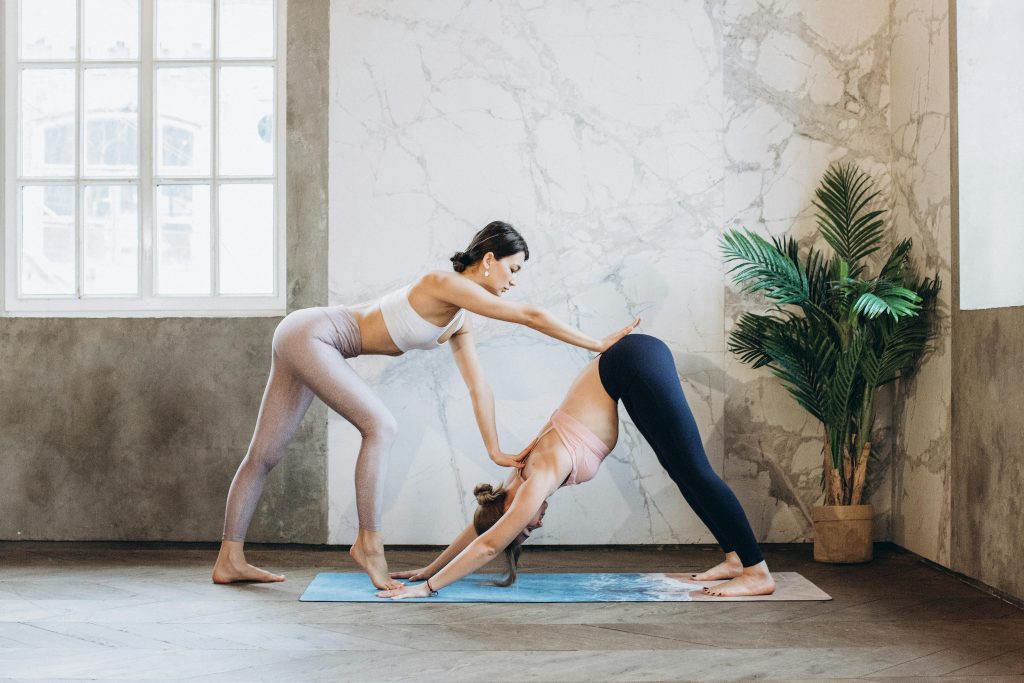
Proprioceptive Neuromuscular Facilitation, commonly called PNF stretching, represents one of the most effective mobility and flexibility techniques for rapidly improving range of motion. The most common PNF technique is “contract-relax”: stretch the muscle to the point of tension, isometrically contract it against resistance for 5-10 seconds, then relax and stretch further.
PNF stretching requires a partner or immovable object for resistance. However, studies consistently show PNF produces 10-20% greater immediate flexibility gains compared to static stretching. Use this technique 2-3 times weekly for stubborn areas that resist other methods.
Mobility Drills and Movement Flows
Mobility drills combine elements of stretching, strengthening, and motor control into dynamic movement patterns. These exercises train your ability to move through full ranges of motion with control and stability. Examples include Cossack squats, thoracic spine rotations, and controlled articular rotations.
Dedicate 10-20 minutes to mobility drills before main workouts, or use longer 30-45 minute flow sessions on recovery days. Focus on quality of movement rather than rushing through repetitions.
Creating Your Personalised Mobility and Flexibility Assessment
Before beginning any mobility and flexibility programme, you need to understand your current limitations and identify which areas require the most attention. This self-assessment takes 15-20 minutes and provides a baseline to track your progress.
Lower Body Mobility Tests
Deep Squat Assessment: Stand with feet shoulder-width apart, arms extended overhead. Lower into the deepest squat possible whilst keeping heels down and torso relatively upright. This tests hip, ankle, and thoracic spine mobility simultaneously.
Ideal performance sees your hip crease below knee level, heels flat, knees tracking over toes, and torso upright with arms remaining overhead. Common restrictions include heels lifting (ankle mobility limitation), excessive forward lean (hip and ankle issues), or inability to reach parallel.
Straight Leg Raise: Lie on your back, one leg extended flat on the floor. Keeping the test leg completely straight, lift it as high as possible towards the ceiling. This isolates hamstring flexibility without compensation from the lower back. Your goal is 80-90 degrees of hip flexion with the knee locked straight.
Upper Body Mobility Tests
Shoulder Flexion: Stand with your back against a wall, feet slightly forward. Raise both arms overhead whilst keeping your lower back flat against the wall. This reveals shoulder and thoracic spine mobility limitations.
You should be able to touch your thumbs to the wall without your lower back arching away from the wall. If your arms stop short or your back arches excessively, you have shoulder or thoracic spine restrictions.
Spine Mobility Evaluation
Thoracic Rotation: Sit on the floor with legs crossed, one hand behind your head. Rotate your upper body as far as possible, keeping your hips facing forward. This isolates thoracic spine rotation, crucial for golf, tennis, and throwing sports. Adequate thoracic rotation allows you to rotate 35-45 degrees in each direction from neutral.
The Essential Mobility and Flexibility Toolkit
Whilst you can improve mobility and flexibility with no equipment whatsoever, certain tools significantly enhance your practice and accelerate results.
Essential Equipment for Beginners
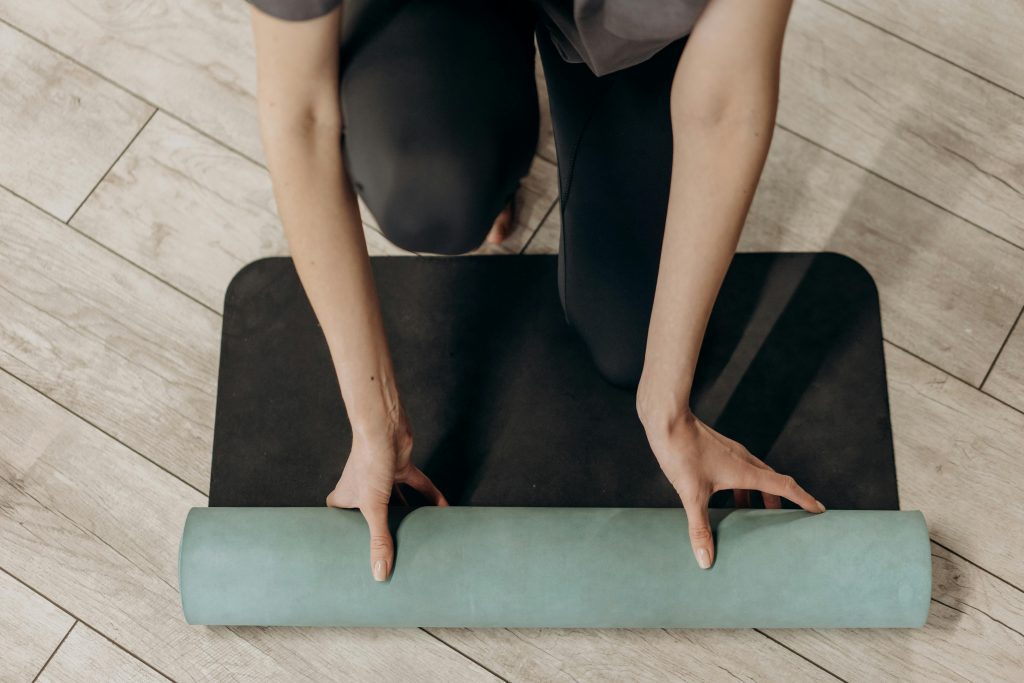
Yoga Mat (£15-30): A quality non-slip mat provides cushioning for floor work and defines your practice space. Look for 4-6mm thickness for comfort without excessive squishiness. Brands like Manduka and Liforme offer excellent options available from Sports Direct or Amazon UK.
Resistance Band Set (£10-25): Loop bands and therapy bands enable assisted stretching and PNF techniques. Purchase a set with varying resistances from Amazon or Decathlon.
Foam Roller (£15-25): A standard 90cm foam roller addresses muscle tension that limits mobility. Medium-density rollers balance effectiveness with comfort. Trigger Point and GRID offer quality options widely available in the UK.
These three items cover 90% of mobility needs and cost under £60 total.
Recommended Apps and Digital Resources
Free Options: YouTube channels “Mobility WOD” by Kelly Starrett and “Tom Merrick” provide exceptional free content with progressive programmes. The NHS Active 10 app includes basic flexibility routines.
Paid Applications: GOWOD (£10/month) offers personalised mobility assessments and daily routines. Romwod (£12/month) provides 15-20 minute guided flexibility sessions.
Common Flexibility and Mobility Restrictions: Problems and Proven Solutions
Certain areas of the body commonly develop restrictions in modern populations. Understanding why these limitations occur and how to address them ensures your mobility and flexibility work targets the right areas.
Ankle Mobility Limitations
Why It Happens: Hours sitting with feet at 90 degrees, rigid footwear, and insufficient varied movement cause your calf muscles and ankle joint capsules to adapt to limited ranges. Previous ankle sprains often result in permanent restrictions if not rehabilitated properly.
How to Overcome It: Perform ankle dorsiflexion mobilisations daily. Stand facing a wall, one foot forward with toes against the wall. Drive your knee towards the wall whilst keeping your heel down. Gradually move your foot further from the wall to increase challenge. Aim for 10-12cm between toes and wall, 10 reps per side.
Prevention Strategies: Spend time barefoot or in minimalist shoes. Include calf stretching after runs or walks. Practice deep squats regularly, which requires and maintains ankle mobility.
Hip Flexor Tightness
Why It Happens: Prolonged sitting shortens hip flexors, particularly the psoas and rectus femoris. These muscles hold your hip in flexion, causing anterior pelvic tilt and lower back pain when you stand.
How to Overcome It: The couch stretch aggressively targets hip flexors. Kneel with one shin against a wall, other foot forward. Squeeze your glutes and maintain a neutral pelvis whilst pushing your hips forward. Hold 90-120 seconds per side, three times weekly.
Prevention Strategies: Stand and walk during breaks every 30-45 minutes. Set up a standing desk for part of your workday. Include hip extension exercises like glute bridges in your training routine.
Thoracic Spine Immobility
Why It Happens: Upper back immobility stems from slouched sitting posture and excessive phone use. Your thoracic spine adapts by losing extension and rotation capacity. This forces your neck and lower back to compensate during overhead and rotational movements.
How to Overcome It: Practice thoracic extensions over a foam roller. Position the roller at mid-back level, support your head with hands, and extend backwards over the roller. Perform 10-15 reps, moving the roller to different segments. Follow with quadruped thoracic rotations: 10 controlled reps per side.
Prevention Strategies: Improve your workspace ergonomics. Take regular breaks to perform extension stretches. Include rowing exercises to strengthen mid-back muscles that support proper positioning.
Hamstring Inflexibility
Why It Happens: Sitting places hamstrings in a shortened position for hours daily. Many people also develop hamstring tightness as compensation for weak glutes or poor pelvic positioning.
How to Overcome It: Use the PNF contract-relax method for rapid gains. Lie on your back, loop a belt around one foot, and pull your leg towards your chest with knee straight. Push your heel into the belt for 5 seconds, relax, then pull further. Perform 5 cycles per leg.
Prevention Strategies: Strengthen your glutes to reduce hamstring overuse. Perform regular hip hinges with proper form. Include eccentric hamstring exercises like Nordic curls weekly.
Shoulder Internal Rotation Restrictions
Why It Happens: Excessive pressing movements without balanced pulling work creates tight, internally rotated shoulders. Hours hunched over keyboards reinforce this pattern. The resulting rounded shoulder position restricts overhead motion and increases injury risk.
How to Overcome It: Prioritise pulling exercises at a 2:1 ratio to pressing movements. Perform doorway pec stretches holding 60 seconds, twice daily. Include shoulder external rotation exercises using resistance bands, 15 reps for 3 sets, three times weekly.
Prevention Strategies: Improve posture awareness at your desk. Add face pulls and band pull-aparts to your routine. Sleep on your back rather than on your side with shoulders rolled forward.
Sample Mobility and Flexibility Programmes
These ready-to-implement programmes provide structured approaches for different experience levels and time availability. Choose the mobility and flexibility programme matching your current level.
15-Minute Morning Mobility Routine for Beginners
This gentle sequence prepares your body for the day whilst gradually improving baseline mobility and flexibility. Perform every morning, ideally before breakfast, to build a consistent mobility and flexibility practice.
Minutes 1-3: Breathing and Cat-Cow Start on hands and knees. Perform 10 slow cat-cow cycles, coordinating movement with breath. Inhale into cow (arched back), exhale into cat (rounded back).
Minutes 4-5: Hip Circles From hands and knees, perform 5 large hip circles in each direction per leg. Focus on smooth, controlled movement through maximum range.
Minutes 6-7: World’s Greatest Stretch Step forward into a lunge, drop your back knee down, rotate your torso towards your front leg, then reach your arm overhead. Hold 5 seconds, perform 3 reps per side.
Minutes 8-10: Downward Dog to Cobra Flow Move from downward dog (inverted V position) to cobra (lying face down, pressing chest up with arms). Alternate between positions 8 times, moving slowly and breathing deeply.
Minutes 11-12: Shoulder Circles and Thoracic Rotations Stand and perform 10 large arm circles forward and backward. Follow with 5 thoracic rotations per side.
Minutes 13-15: Deep Squat Hold Lower into the deepest squat you can manage comfortably. Hold for up to 2 minutes, gently rocking side to side and forward and back.
30-Minute Full-Body Mobility Session
Perform this comprehensive routine 3-4 times weekly, ideally on non-consecutive days. This programme systematically addresses all major joints and movement patterns.
Lower Body Block (12 minutes)
- Ankle mobilisation against wall: 15 reps per side
- 90/90 hip stretch: 60 seconds per side
- Cossack squats: 10 reps per side
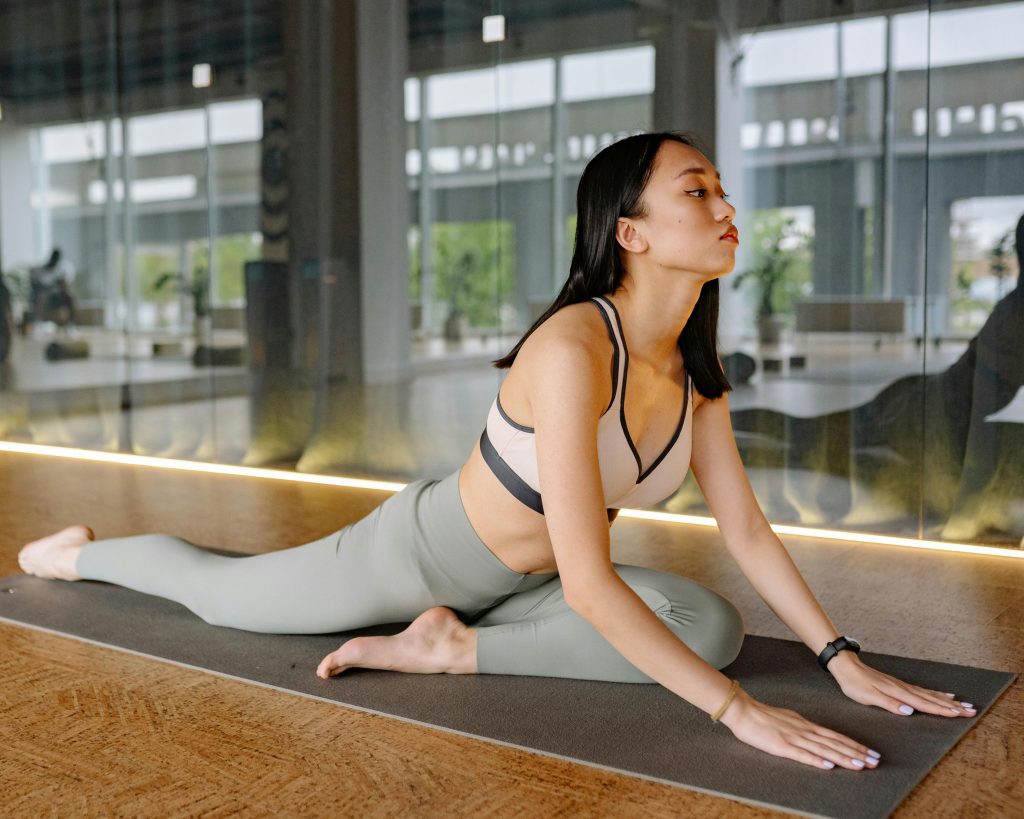
- Pigeon pose: 90 seconds per side
- Hamstring PNF stretch: 5 cycles per leg
- Deep squat hold with rotation: 2 minutes
Upper Body Block (10 minutes)
- Shoulder dislocations with band: 15 reps
- Doorway pec stretch: 60 seconds per side
- Wall angels: 12 reps
- Thoracic extensions over foam roller: 15 reps
- Thread the needle: 60 seconds per side
Spine and Core (8 minutes)
- Cat-cow: 15 cycles
- Child’s pose with side reaches: 45 seconds per side
- Cobra to downward dog: 10 transitions
- Supine twist: 60 seconds per side
- Bridge hold with reaches: 10 reps
12-Week Progressive Mobility Development Plan
This structured programme builds mobility and flexibility systematically over three months, suitable for committed individuals starting from moderate restriction.
Weeks 1-4: Foundation Building Focus on basic positions and establishing daily mobility and flexibility practice. Use the beginner 15-minute routine every morning. Add two 30-minute sessions weekly. Track your performance in the assessment tests weekly. Expect 10-15% improvements in most measures by week four.
Weeks 5-8: Intensity Increase Maintain daily morning routine. Increase full-body sessions to three weekly. Add challenge by increasing hold times to 90-120 seconds and introducing more difficult variations. You should notice significantly easier movement in daily activities.
Weeks 9-12: Refinement and Specialisation Continue daily mobility and flexibility practice with increased difficulty. Focus additional work on remaining problem areas identified in your assessments. By week twelve, aim for 30-50% improvements from baseline in all tested positions.
Tracking Your Mobility and Flexibility Progress
Effective mobility and flexibility training requires objective progress tracking. Subjective feelings of improvement aren’t reliable because your perception adapts as you develop.
Quantitative Measurements
Flexibility Tests: Retest your mobility assessment positions every 2-4 weeks. Record specific measurements where possible. During the straight leg raise, measure the angle using a smartphone protractor app. Photograph yourself performing key tests from consistent angles.
Range of Motion Tracking: Use a goniometer (available from Amazon UK for £8-12) or smartphone app to measure joint angles. Track shoulder flexion, hip flexion, ankle dorsiflexion weekly. Aim for 2-5 degrees improvement per month when working systematically.
Qualitative Indicators of Progress
Movement Quality Changes: Notice improvements in exercise technique. Can you squat deeper with better form? Does overhead pressing feel smoother? These functional changes matter more than arbitrary flexibility goals.
Daily Life Improvements: Enhanced mobility manifests in surprising places. Putting on shoes becomes easier. You can turn further to check blind spots whilst driving. Playing with children on the floor doesn’t leave you stiff.
Realistic Timeline Expectations
Weeks 1-4: Initial adaptations are primarily neurological. Your nervous system learns to relax into positions previously perceived as threatening. Expect 10-20% range improvements in most areas.
Months 2-3: Structural changes begin as muscles lengthen and connective tissues remodel. Progress slows compared to the initial adaptation period but represents more permanent changes. Improvements of 5-10% per month are typical.
Months 4-6: Continued steady progress with occasional plateaus. Focus shifts towards maintaining gains and exploring advanced positions.
Integrating Mobility and Flexibility Work with Your Training
Mobility and flexibility training shouldn’t exist in isolation but rather enhance and support your other fitness pursuits. Strategic integration of mobility and flexibility work maximises benefits whilst maintaining training efficiency.
Before Strength Training
Replace static stretching with a dynamic mobility warm-up lasting 8-12 minutes. Focus on movements specific to your planned workout. Before squats, mobilise ankles, hips, and thoracic spine. This approach warms muscles, primes movement patterns, and improves performance.
After Strength Training
Post-workout static stretching takes advantage of elevated muscle temperature and provides recovery benefits. Spend 10-15 minutes stretching primary movers from your session. Hold stretches for 45-60 seconds, breathing deeply and allowing the stretch to intensify as muscles relax.
On Rest and Recovery Days
Longer, comprehensive mobility sessions fit perfectly into rest days between intense training. Use these days for 30-60 minute practices exploring ranges, working on challenging positions, and addressing stubborn restrictions.
For Desk Workers and Sedentary Lifestyles
If you sit extensively for work, implement micro-mobility breaks every 60-90 minutes. Stand, perform 2-3 minutes of gentle movements addressing hips, spine, and shoulders, then continue working.
Frequently Asked Questions About Mobility and Flexibility
How quickly can I improve my flexibility?
Most people notice meaningful improvements in their mobility and flexibility within 2-4 weeks of consistent daily practice. Initial gains come primarily from neurological adaptation. Structural changes to muscle and connective tissue occur over 2-3 months. Individuals starting with severe restrictions may see 30-50% improvements within eight weeks.
Should I stretch every day or take rest days?
Gentle mobility and flexibility work can and should be performed daily. Your nervous system responds best to frequent, moderate stimulation rather than intense, occasional sessions. A good approach combines 10-15 minutes of gentle daily work with 2-3 longer, more intense mobility and flexibility sessions weekly.
Why am I more flexible on some days than others?
Multiple factors affect your available range of motion day-to-day. Hydration status significantly impacts tissue extensibility. Sleep quality, stress levels, and recent activity all influence your nervous system’s protective responses. Women often notice flexibility variations throughout their menstrual cycle due to hormonal fluctuations.
Can you be too flexible?
Yes, excessive flexibility without corresponding strength creates joint instability and injury risk. Hypermobile individuals need strengthening work more than stretching. The goal is balanced mobility and flexibility, with sufficient range for your activities plus the strength to control those ranges under load.
Will lifting weights make me less flexible?
This persistent myth has been thoroughly debunked by research. Properly performed strength training through full ranges of motion actually improves mobility and flexibility. The key is training full ranges rather than partial movements. A deep squat builds hip mobility whilst developing strength.
How long should I hold stretches?
Current evidence suggests 30-60 seconds per stretch provides optimal results. Longer durations don’t significantly enhance benefits for most people. Holding stretches for 15 seconds or less proves insufficient for creating lasting change. Perform 2-4 sets per stretch, 3-5 days weekly.
Is it normal to feel sore after stretching?
Mild muscle soreness 24-48 hours after aggressive stretching is normal, similar to soreness following strength training. However, sharp pain during stretching, joint discomfort, or severe soreness indicates you’ve pushed too hard.
Should I stretch before or after exercise?
Dynamic stretching and mobility drills before exercise prepare your body for activity and improve performance. Static stretching before training temporarily reduces muscle force production and should be avoided. Perform static stretching after exercise when muscles are warm.
Why can my friend touch their toes easily but I can’t?
Individual variation in flexibility stems from multiple factors beyond training. Bone structure, particularly hip socket depth and orientation, significantly affects achievable range. Genetics influence baseline muscle and tendon compliance. Focus on your personal improvement rather than comparing yourself to others.
Can I improve flexibility after 40, 50, or 60?
Absolutely. Whilst connective tissues become less pliable with age, consistent mobility and flexibility training still produces significant improvements at any age. Many people become more flexible in their 50s than they were in their 30s simply because they finally prioritise the work.
Will yoga or Pilates improve my mobility?
Both practices can significantly improve mobility and flexibility when performed consistently. Yoga emphasises static holds and deep stretching, building passive flexibility. Pilates focuses more on controlled movement and core stability, developing active mobility. Choose based on your preferences and goals.
How do I know if I need to see a physiotherapist?
Seek professional assessment if you experience joint pain during stretching, significant asymmetries between sides, or mobility and flexibility restrictions following injury. Sharp, shooting pain, numbness, or tingling during mobility work always warrants professional evaluation.
Related Guides: Dive Deeper Into Specific Topics
- Desk Posture Essentials: Combat the effects of prolonged sitting with targeted corrective exercises
- Injury Prevention Strategies for Runners: Mobility work specifically designed to keep runners healthy
- Complete Guide to Foam Rolling: Master self-myofascial release techniques for all muscle groups
- Shoulder Mobility for Overhead Athletes: Specialised routines for swimmers, tennis players, and CrossFit enthusiasts
- Hip Mobility Mastery: Deep dive into hip flexibility for squatting, running, and pain-free movement
- Morning Routines That Transform Your Day: Build comprehensive morning practices including mobility work
- Recovery Strategies for Active Adults: Integrate mobility training into your recovery protocol
Conclusion: Your Journey to Better Movement Starts Today
Improving your mobility and flexibility represents one of the highest-return investments you can make in your long-term health and quality of life. Unlike many fitness pursuits that deliver primarily aesthetic benefits, enhanced movement capacity through better mobility and flexibility directly impacts your daily function, injury resilience, exercise performance, and ability to enjoy physical activities throughout your lifespan.
The information in this guide provides everything you need to transform your movement capabilities. You now understand the science behind range of motion, can differentiate mobility from flexibility, and possess specific programmes and techniques to address your unique restrictions.
Key Takeaways:
- Mobility (active range with control) differs from flexibility (passive range) and requires different training approaches
- Consistency trumps intensity; gentle daily mobility and flexibility practice produces superior results to aggressive weekly sessions
- Common restrictions in ankles, hips, thoracic spine, and shoulders respond well to targeted work
- Proper assessment of your mobility and flexibility identifies your specific limitations and tracks genuine progress over time
- Integration with existing training enhances all aspects of fitness without requiring excessive additional time
Your First Three Actions:
- Complete the mobility assessment today: Perform the tests outlined in this guide to establish your baseline and identify priority areas.
- Start tomorrow with the 15-minute morning routine: Commit to this gentle daily practice for the next 30 days.
- Schedule three 30-minute mobility sessions weekly: Block time in your calendar specifically for comprehensive mobility work.
Remember that mobility and flexibility development is a practice, not a destination. There’s no “flexible enough” finish line after which you can stop. Your body will gradually lose range without consistent work, but maintaining mobility and flexibility requires less effort than developing it initially. View this as an investment in moving well for life rather than a short-term project.
The quality of your movement determines the quality of your physical life. Start small, stay consistent, and watch as better mobility and flexibility create positive cascading effects throughout your health, fitness, and daily function.


