Your lower back aches when you stand up from your desk. Your neck feels permanently tight. You bend down to tie your shoes and wonder when exactly your hamstrings turned into guitar strings. If you’re nodding along, you’re not alone—research shows that over 80% of UK adults experience musculoskeletal pain, much of it directly linked to prolonged sitting and lack of flexibility work.
📖 Reading time: 16 minutes
Picture this: You’ve just finished another long day hunched over your laptop. You stand up and feel that familiar stiffness radiating from your shoulders down through your spine. You know you should stretch, but where do you even start? The thought of complicated yoga poses or hour-long flexibility sessions feels overwhelming when you can barely touch your knees, let alone your toes. Meanwhile, that nagging discomfort isn’t going anywhere—in fact, it’s getting worse with each passing week.
Common Myths About Stretching for Beginners
For more on this topic, you might enjoy: The 15-Minute Full Body Stretching Routine That Finally Fixed My Desk-Bound Stiffness.
Myth: You Need to Be Flexible to Start Stretching
Reality: This is like saying you need to be fit before you can exercise. Stretching is actually how you develop flexibility, not something you do once you’re already bendy. Your current lack of flexibility is precisely why you need to start. Every flexible person you’ve ever seen started exactly where you are now—tight, uncomfortable, and possibly unable to touch their toes. The difference is they started anyway.
Myth: Stretching Should Hurt to Be Effective
Reality: The outdated “no pain, no gain” mentality has injured countless beginners. Effective stretching should feel like mild tension or a gentle pull—never sharp pain. According to NHS guidelines on stretching, pushing into painful ranges actually triggers your muscles to contract protectively, which is the opposite of what you’re trying to achieve. You should feel sensation, yes, but discomfort that makes you wince or hold your breath means you’ve gone too far.
Myth: Static Stretching Before Exercise Prevents Injury
Reality: Research has actually shown that static stretching (holding stretches for extended periods) before intense exercise can temporarily reduce muscle power and doesn’t significantly prevent injury. A study published in the British Journal of Sports Medicine found that dynamic warm-ups are far more effective pre-workout. Save your static stretching routine for after exercise or as a standalone practice when your muscles are warm—not as your primary injury prevention strategy before a run or gym session.
Why Your Body Is Desperate for This Stretching Routine
Related: HIIT for Beginners: Your No-Nonsense Guide to Getting Started.
Your muscles weren’t designed for the lives most of us lead. We sit for an average of 9.5 hours daily according to UK health surveys—more time than we spend sleeping. This prolonged sitting shortens your hip flexors, weakens your glutes, rounds your shoulders forward, and creates a cascade of compensations throughout your body. Your muscles essentially “learn” these shortened positions, which is why standing up feels uncomfortable.
But here’s the encouraging news: flexibility responds remarkably quickly to consistent attention. Unlike building muscle or losing weight, which can take months to show results, you’ll likely notice improvements in how your body feels within the first week. Many people report reduced stiffness after just three or four sessions. Your nervous system starts adapting almost immediately, allowing your muscles to relax into greater ranges of motion.
What’s more, regular stretching offers benefits that extend far beyond just touching your toes. Studies show it can reduce chronic pain, improve circulation, enhance your posture, increase your range of motion for daily activities, and even improve your sleep quality. When you’re less physically tense, you’re often less mentally stressed too—there’s a genuine mind-body connection at work here.
The Essential 10-Minute Beginner Stretching Routine
You may also find this helpful: Your Complete Morning Jog Routine: A Beginner-Friendly Guide.
This routine targets the areas that become tightest from modern life: your hips, lower back, shoulders, and hamstrings. You’ll hold each stretch for 30 seconds on each side where applicable, breathing deeply throughout. The entire sequence takes just 10 minutes, requires no equipment, and can be done in your living room wearing whatever’s comfortable.
Neck Rolls (1 minute)
Start here because most of us hold tremendous tension in our necks and shoulders. Sit or stand with your spine tall. Slowly drop your right ear toward your right shoulder—don’t force it, just let gravity do the work. Hold for 30 seconds while breathing steadily. You should feel a gentle pull along the left side of your neck. Return to center, then repeat on the left side.
After both sides, gently roll your chin down toward your chest and hold for 30 seconds. This stretches the back of your neck, where tension often accumulates from looking down at phones and screens. Never roll your head backward or do full circular neck rolls—this can compress the cervical spine unnecessarily.
Shoulder Rolls and Chest Opener (1.5 minutes)
Roll your shoulders backward in large circles ten times—imagine drawing circles on the wall behind you with your shoulder blades. This mobilises the shoulder joint and begins to counteract that forward-hunched position from sitting.
Next, clasp your hands behind your back (or hold a small towel between your hands if you can’t comfortably clasp them). Straighten your arms and gently lift your hands away from your body while opening your chest. Hold this for 45 seconds. You should feel a stretch across your chest and the front of your shoulders. This is the antidote to hours of reaching forward toward keyboards and steering wheels.
Cat-Cow Stretch (1 minute)
Get onto your hands and knees with your wrists under your shoulders and knees under your hips. Inhale as you drop your belly toward the floor, lifting your chest and tailbone toward the ceiling (this is “cow”). Exhale as you round your spine toward the ceiling, tucking your tailbone and dropping your head (this is “cat”). Flow between these two positions for one minute, moving with your breath.
This gentle movement lubricates your entire spine and is particularly beneficial if you experience lower back stiffness. Many people find this single exercise provides more relief than anything else in the routine.
Child’s Pose (1 minute)
From hands and knees, sit your hips back toward your heels and extend your arms forward on the floor. Rest your forehead on the ground (or on a cushion if it doesn’t comfortably reach). Let your entire body relax here for a full minute. This stretches your lower back, hips, thighs, and ankles simultaneously while giving your nervous system a chance to downregulate.
If sitting back on your heels feels uncomfortable, place a rolled towel behind your knees or simply don’t sit back as far. The goal is relaxation, not discomfort.
Hip Flexor Stretch (2 minutes)
This is arguably the most important stretch for anyone who sits regularly. Step your right foot forward into a lunge position, lowering your left knee to the ground (place a cushion under it for comfort). Keep your right knee directly over your right ankle. Gently press your hips forward until you feel a stretch in the front of your left hip and thigh. Hold for 45 seconds, then switch sides.
Your hip flexors become chronically shortened from sitting, which pulls your pelvis forward and contributes to lower back pain. This stretch directly addresses that issue. You should feel this in the front of the hip of whichever leg is behind you, not in your knee or lower back.
Seated Hamstring Stretch (2 minutes)
Sit on the floor with your right leg extended straight and your left leg bent, with the sole of your left foot against your right inner thigh. Sit up tall, then hinge forward at your hips—not by rounding your back, but by tilting your pelvis forward. Reach toward your right foot (or shin, or knee—wherever you can comfortably reach). Hold for 45 seconds, breathing into the stretch, then switch legs.
Tight hamstrings are incredibly common and contribute to lower back pain and poor posture. If sitting on the floor is uncomfortable, you can do this stretch while sitting on your bed or even standing with one foot elevated on a low step.
Figure-Four Glute Stretch (1.5 minutes)
Lie on your back with both knees bent and feet flat on the floor. Cross your right ankle over your left thigh, just above the knee, creating a “figure four” shape with your legs. Reach through the opening and clasp your hands behind your left thigh (or on top of your left shin). Gently pull your left leg toward your chest until you feel a stretch in your right glute and outer hip. Hold for 45 seconds, then switch sides.
This targets your glutes and piriformis muscle, which become tight from sitting and can even cause sciatic nerve irritation. Many people feel immediate relief in their lower back from this single stretch.
Your First Two Weeks Action Plan
Starting a new habit requires more than just knowing what to do—you need a realistic implementation strategy. Here’s exactly how to integrate this routine into your life without it feeling like another chore on your endless to-do list.
- Days 1-3: Choose your anchor—the existing habit you’ll attach stretching to. Morning coffee? Right after work? Before bed? Pick one time and commit to just going through the motions, even if the stretches don’t feel particularly intense yet. Your goal is consistency, not perfection. Set a timer for 10 minutes so you’re not clock-watching.
- Days 4-6: Focus on your breathing. Many beginners hold their breath during stretches, which increases tension rather than releasing it. Practice breathing slowly and steadily throughout each position. If you can’t take comfortable breaths, you’re pushing too hard—ease off slightly.
- Days 7-9: Notice what’s changing. By now, you should feel less resistance going into certain positions. Perhaps that hip flexor stretch isn’t quite as intense, or your hamstrings don’t protest quite so loudly. Keep a simple note on your phone tracking which stretches feel different. This positive feedback will motivate you to continue.
- Days 10-12: Experiment with timing. Try your routine at a different time of day and notice how your body responds differently. Most people are stiffer in the morning but find stretches more effective then for reducing all-day stiffness. Evening stretching often feels easier but may not provide as much functional benefit for the next day.
- Days 13-14: Add five extra seconds to each stretch. You’re ready for slightly longer holds now that your nervous system is adapting. This gradual progression prevents plateaus. Consider getting a yoga mat if you’ve been stretching on carpet—the slight cushioning and defined space can make the practice more comfortable and consistent.
Mistakes to Avoid (And How to Fix Them)
Mistake 1: Bouncing or Using Momentum
Why it’s a problem: Ballistic stretching (bouncing in and out of positions) can actually trigger the stretch reflex, causing your muscles to tighten protectively rather than lengthen. This increases injury risk, particularly for beginners whose muscles aren’t accustomed to stretching.
What to do instead: Move into each stretch slowly and smoothly, then hold the position steady. Any movement should be gradual deepening as your muscle releases, not rhythmic bouncing. Think of stretching as patient negotiation with your muscles, not a battle you need to win through force.
Mistake 2: Comparing Your Flexibility to Others
Why it’s a problem: Flexibility varies enormously based on genetics, gender, age, activity history, and even bone structure. Someone else’s range of motion tells you absolutely nothing about what yours should be. Comparison breeds discouragement, which leads to quitting.
What to do instead: Your only meaningful comparison is with your past self. Can you reach slightly further this week than last week? Does the stretch feel less intense at the same position? That’s progress. Take a photo on day one so you have an objective record of your starting point, then check again after a month.
Mistake 3: Only Stretching When You’re Already in Pain
Why it’s a problem: Waiting until your back is seizing or your neck is frozen means you’re always playing catch-up. Reactive stretching helps, but it’s far less effective than consistent preventive practice. You’re also more likely to overstretch when you’re desperate for relief.
What to do instead: Think of stretching like brushing your teeth—daily maintenance that prevents bigger problems. Even on days when you feel fine, do your routine. That’s actually when you’ll make the most progress because you’re not fighting against acute tightness.
Mistake 4: Holding Your Breath
Why it’s a problem: Breath-holding activates your sympathetic nervous system (your stress response), which causes muscles to tense. You’re essentially working against yourself. According to research on proprioceptive neuromuscular facilitation, proper breathing can increase stretch effectiveness by up to 20%.
What to do instead: Breathe in through your nose for four counts, out through your mouth for six counts. The longer exhale activates your parasympathetic nervous system, which promotes muscle relaxation. If you find yourself holding your breath, it’s a clear signal you’ve pushed too far—ease off until you can breathe comfortably.
Mistake 5: Rushing Through the Routine
Why it’s a problem: Your nervous system needs time to adapt and allow muscles to lengthen. Quick, hurried stretching provides minimal benefit and increases injury risk. You might as well not bother if you’re going to rush through in five minutes.
What to do instead: Protect your 10 minutes. Set a timer. Put your phone in another room. This is your time for body maintenance, and it deserves the same priority as showering or eating. If you genuinely cannot find 10 minutes, start with just three stretches done properly rather than racing through all seven.
When and Where to Stretch for Maximum Benefit
The best time to stretch is when your muscles are warm, which means after a hot shower, after light activity like a walk, or at the end of your workday when you’ve been moving around. Never stretch cold muscles first thing in the morning without at least a few minutes of gentle movement—perhaps some arm circles and knee lifts while you wait for the kettle to boil.
That said, a warm muscle isn’t a requirement if you’re gentle and patient. You can safely stretch cold if you move slowly, don’t push to your maximum range immediately, and allow extra time for your body to adapt. Evening stretching, even if your muscles aren’t particularly warm, can be excellent for reducing next-day stiffness and improving sleep quality.
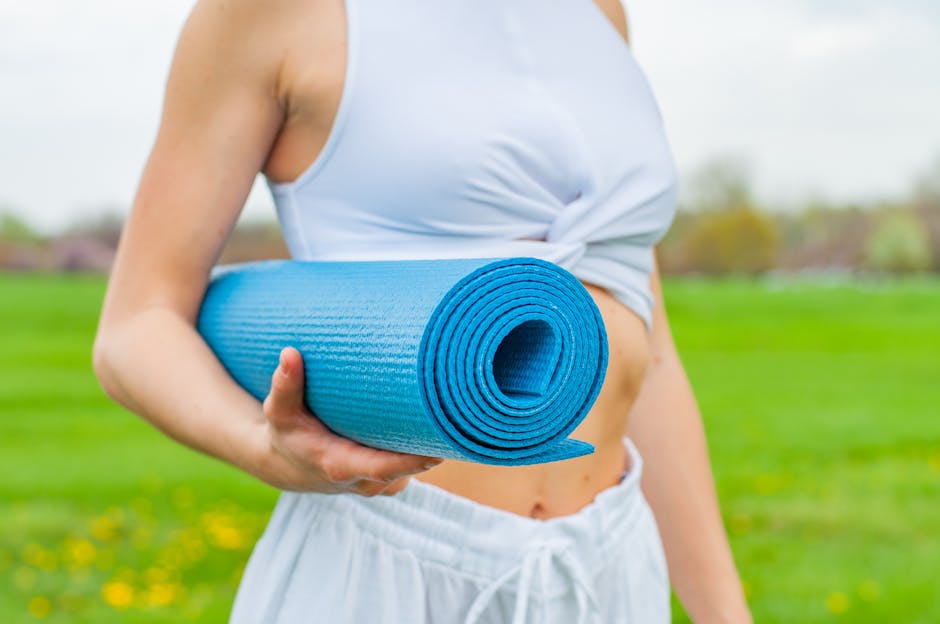
As for location, all you need is enough floor space to lie down with your arms extended. Carpet provides some cushioning, but a yoga mat offers better support and defines your stretching space psychologically. Many people find that having a dedicated spot makes them more likely to actually do their routine. Whether that’s beside your bed, in front of the television, or in a quiet corner of your living room doesn’t matter—just make it accessible and inviting.
How to Progress Your Stretching Practice
After four to six weeks of consistent practice, you’ll likely find that the beginner routine feels significantly easier. This is the perfect time to deepen your practice rather than assuming you’ve “completed” stretching. Here’s how to progress intelligently without risking injury.
First, increase your hold times gradually. Move from 30-second holds to 45 seconds, then to a full minute for each stretch. Research shows that longer holds (up to 90 seconds) produce greater improvements in flexibility, but build up to this gradually over months, not weeks.
Second, add complexity to familiar stretches. For the hip flexor stretch, try reaching your arms overhead while pressing forward—this increases the stretch. For hamstrings, flex your foot back toward you rather than pointing it forward. Small adjustments can make familiar stretches newly challenging.
Third, consider exploring gentle yoga classes designed for beginners. Organizations like the British Wheel of Yoga maintain directories of qualified teachers throughout the UK. A skilled instructor can provide personalized guidance on your form and suggest progressions appropriate for your body. Even attending just one or two classes can dramatically improve your home practice.
Finally, listen to your body’s specific needs. If your hips always feel tightest, add a second hip-focused stretch. If your shoulders need extra attention, include a doorway chest stretch. Your routine should evolve to address your body’s particular patterns, not follow a rigid prescription forever.
Quick Reference Stretching Checklist
- Schedule your 10-minute session at the same time daily for the first two weeks to build the habit
- Always breathe steadily throughout each stretch—if you’re holding your breath, you’ve gone too far
- Hold each position for at least 30 seconds to allow your nervous system time to adapt
- Feel mild tension, never sharp pain—discomfort that makes you wince means back off immediately
- Warm up with light movement first if stretching first thing in the morning
- Focus on the areas where you hold the most tension rather than trying to achieve perfect symmetry
- Stay consistent even on days you feel flexible—maintenance prevents regression
- Track your progress weekly by noting which positions feel easier or which reach further
Frequently Asked Questions
How quickly will I see improvements in my flexibility?
Most people notice they can move more comfortably within the first week, though you’re not actually more flexible yet—your nervous system is simply allowing you to access ranges of motion it was previously guarding. Genuine structural changes in muscle length typically appear after three to four weeks of consistent practice. By eight weeks, you should see significant improvements in how far you can stretch. That said, daily activities like reduced back pain or easier movement often improve even sooner, sometimes within just a few days.
Should I stretch every single day, or do I need rest days?
Unlike strength training, which requires rest days for muscle recovery, gentle stretching can and should be done daily. Your flexibility actually regresses quickly without consistent practice—miss three or four days and you’ll likely notice you’ve lost ground. That said, if you’re feeling genuinely sore (not just tight), take a day off or do a gentler version of your routine. Seven days per week is ideal, but five consistent days will still produce noticeable results.
I can barely touch my knees, let alone my toes. Am I too inflexible to start?
Absolutely not. Your current level of inflexibility is precisely why you need to start stretching, and it says nothing about your potential for improvement. Some people naturally have shorter muscle bellies or different bone structures that affect their range of motion, and that’s completely fine. Your goal isn’t to touch your toes for the sake of it—it’s to improve your functional flexibility so daily movements feel easier and you experience less pain. Every single flexible person you’ve ever seen started somewhere, and many started exactly where you are now.
What’s the difference between dynamic and static stretching, and which should I do?
Static stretching means holding a position for an extended period, like the routine described in this article. Dynamic stretching involves controlled movements through your range of motion, like leg swings or arm circles. Both have their place. For a standalone flexibility practice or cool-down, static stretching is ideal. If you’re warming up before a gym workout or playing sports, Dynamic stretching is great for getting the muscles used to the range of motion that they’ll be subjected to, helping prevent injuries.


