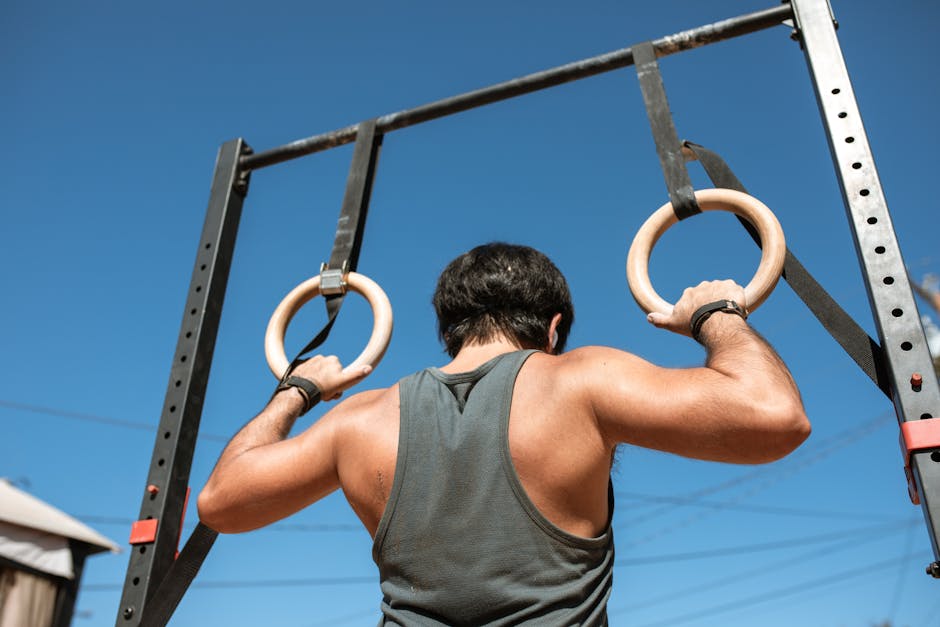
Picture this: You’re at the gym, feeling motivated, ready to tackle your first pull up in ages. You grip the bar, engage your muscles, and immediately feel that sharp, unwelcome pain shooting through your shoulders. Sound familiar? You’re not alone, and more importantly, you’re not doing something catastrophically wrong.
Shoulder pain during pull ups affects roughly 60% of people attempting them for the first time or after a long break. The problem isn’t the exercise itself—it’s that pull ups expose weaknesses and mobility issues most people don’t realise they have until they’re hanging from a bar.
Most fitness advice treats pull ups like they’re simple: just grab and pull. But your shoulders are complex joints that require specific strength, mobility, and positioning to handle the load safely. When any of these elements are missing, pain becomes your body’s warning system. Understanding why your shoulders hurt when you try a pull up is the first step toward fixing the problem and actually building the strength you’re after.
Common Myths About Pull Up Shoulder Pain
Related reading: Why Your Stomach Feels Like a Bottomless Pit When You’re Eating Healthy.
Myth: Shoulder pain means you’re too weak for pull ups
Reality: Pain during pull ups isn’t always about lacking strength. More often, it’s about mobility restrictions, improper scapular movement, or muscle imbalances. Someone might have adequate pulling strength but lack the shoulder mobility to get into the correct starting position. That disconnect creates compensatory movement patterns that strain the joint, regardless of how strong you are.
Myth: Push through the pain and it’ll get better
Reality: This is terrible advice that leads to injuries. When you feel sharp pain during a pull up, your body is signaling a problem. Continuing to work through it reinforces faulty movement patterns and can damage your rotator cuff, shoulder capsule, or surrounding tendons. Pain isn’t weakness leaving the body—it’s your warning system doing exactly what it should.
Myth: Wide grip pull ups are best for building a strong back
Reality: Wide grip pull ups actually place your shoulders in a mechanically disadvantaged position, increasing stress on the joint capsule and rotator cuff. For most people, especially those experiencing shoulder pain, a shoulder-width or slightly narrower grip reduces strain while still effectively targeting the lats and upper back muscles.
The Anatomy Behind Why Your Shoulders Hurt During Pull Ups
You might also enjoy: When Should You Drink Electrolytes Instead of Plain Water During Exercise.
Your shoulder is a ball-and-socket joint designed for mobility, not stability. That’s brilliant for reaching overhead or throwing, but it makes the joint vulnerable when bearing your full bodyweight. When you attempt a pull up, your shoulders must coordinate multiple movements simultaneously: upward rotation of the scapula, external rotation of the humerus, and controlled depression of the shoulder girdle.
Here’s what happens when things go wrong. As you grip the bar and begin to hang, your scapulae should naturally retract and depress—pulling down and together. Many people lack the strength in their lower trapezius and serratus anterior muscles to control this movement properly. Instead, their shoulders hike up toward their ears, a position called scapular elevation. This compresses the space where your rotator cuff tendons live, creating impingement and pain.
The rotator cuff itself deserves attention. These four small muscles—supraspinatus, infraspinatus, teres minor, and subscapularis—work to stabilise your shoulder joint during movement. According to NHS guidance on shoulder pain, weakness or dysfunction in these muscles is one of the leading causes of shoulder discomfort during overhead activities. Pull ups demand serious rotator cuff engagement to maintain joint centration while your larger muscles do the pulling work.
Common structural issues that cause pull up shoulder pain
Several specific problems tend to show up repeatedly. Anterior shoulder tightness from hours spent hunched over desks or phones pulls your shoulder blades forward into protraction. When you try to pull up from this position, your shoulders can’t get into the mechanically sound position they need. The joint ends up in internal rotation, which narrows the subacromial space and pinches soft tissues.
Weak scapular stabilisers create another common issue. Your rhomboids, middle trapezius, and serratus anterior need to work in precise coordination. When these muscles are underdeveloped compared to your lats and biceps, your shoulder blade moves erratically during the pull, creating uneven forces across the joint. That irregular loading pattern causes pain, even if you have the raw strength to complete the movement.
Thoracic spine stiffness plays a sneaky role too. Your upper back needs to extend slightly during a proper pull up. When your thoracic spine is locked into flexion—that rounded upper back position from sitting—your shoulders compensate by moving through excessive range of motion. This compensation overworks the shoulder joint capsule and surrounding muscles, leading to that familiar ache or sharp pain when you try a pull up.
Five Specific Reasons Why Your Shoulders Hurt When You Try a Pull Up
1. Poor scapular control during the hang position
The dead hang position at the bottom of a pull up should involve active shoulder engagement, not passive hanging. When you simply grab the bar and let gravity take over, your shoulders roll forward and upward into a vulnerable position. This passive hang places enormous stress on the anterior shoulder capsule and can irritate the long head of your biceps tendon where it attaches near the top of your shoulder.
What makes a difference is learning to engage your scapular depressors before you even begin pulling. Think about pulling your shoulder blades down and back, creating space between your shoulders and ears. This active engagement pre-loads the correct muscles and positions your shoulder joint for safe, effective pulling.
2. Insufficient external rotation strength
Your shoulder needs to maintain external rotation throughout the entire pull up movement. External rotation keeps the ball of your shoulder joint properly centred in the socket and maintains adequate space for your rotator cuff tendons. Most people are internally rotated at rest due to modern lifestyle patterns—driving, typing, smartphone use all promote internal rotation.
When you attempt a pull up without sufficient external rotation strength, your humerus drifts forward in the socket. This forward translation compresses the bursa and rotator cuff tendons against the acromion bone above. The result is sharp anterior shoulder pain that stops you mid-pull, even if your back and arms have plenty of strength left.
3. Muscle imbalances between pushing and pulling strength
How many press ups can you do compared to pull ups? For most people, the ratio is heavily skewed toward pushing movements. Years of bench pressing, press ups, and anterior shoulder work without equal pulling creates a structural imbalance. Your pectorals and anterior deltoids become overdeveloped and tight, while your posterior shoulder muscles—infraspinatus, teres minor, rear deltoids—lag behind.
This imbalance pulls your shoulders into chronic internal rotation and protraction. When you then attempt a pull up, you’re asking your weak posterior chain to not only pull your bodyweight but also fight against tight anterior structures. The result is excessive joint stress and pain, particularly felt in the front or top of the shoulder.
4. Inadequate shoulder mobility
Pull ups require significant overhead shoulder mobility. Specifically, you need roughly 170-180 degrees of shoulder flexion to achieve a proper overhead position without compensation. Many people lack this range due to tightness in the latissimus dorsi (ironically, the muscle you’re trying to strengthen), teres major, or posterior shoulder capsule.
When you lack the mobility to reach overhead properly, your body compensates elsewhere. Your lower back might hyperextend, your ribs might flare forward, or your shoulder blades might wing outward. All these compensations create abnormal loading patterns that strain the shoulder joint. University research on shoulder mechanics shows that even 10-15 degrees of mobility restriction can significantly alter joint forces during overhead movements.
5. Starting with the wrong grip width or hand position
Grip width dramatically affects shoulder positioning during pull ups. That wide grip you’ve seen in bodybuilding magazines places your shoulders in maximum abduction—the position where impingement is most likely. For most people experiencing shoulder pain during pull ups, a narrower grip immediately reduces discomfort by allowing better scapular mechanics and reducing joint stress.
Hand position matters too. A pronated grip (palms facing away) requires more external rotation strength than a supinated grip (palms facing you) or neutral grip (palms facing each other). If you’re experiencing shoulder pain with standard pull ups, switching to a neutral grip often provides immediate relief while still building pulling strength effectively.
Your 28-Day Shoulder Preparation Protocol
Before jumping back to pull ups, spend four weeks building the foundation your shoulders need. This isn’t wasted time—it’s essential preparation that prevents injury and accelerates your progress once you return to the bar.
Week 1-2: Scapular stability and mobility foundation
- Day 1-3: Practice scapular wall slides for 3 sets of 12 reps daily. Stand with your back against a wall, arms at shoulder height. Slide your arms overhead while keeping your shoulder blades pulled down and back. This teaches the scapular control that pull ups demand.
- Day 4-7: Add dead hangs with active shoulders. Hang from a bar for 3 sets of 10-15 seconds, focusing on pulling your shoulder blades down away from your ears. You should feel tension through your lats and mid-back, not strain in your shoulder joints.
- Day 8-10: Introduce band pull-aparts. Hold a resistance band at chest height with straight arms, pull it apart until it touches your chest. Perform 3 sets of 15 reps. This strengthens the posterior shoulder muscles that stabilise during pull ups.
- Day 11-14: Begin thoracic spine mobility work. Foam rolling your upper back for 2 minutes daily, followed by cat-cow stretches for 10 reps. Better thoracic extension reduces compensation at the shoulder joint.
Something worth noting: you might not feel dramatically different after two weeks, but microscopic adaptations are occurring in muscle activation patterns and joint proprioception. Trust the process.
Week 3-4: Progressive loading and movement patterning
- Day 15-17: Advance to eccentric-only pull ups. Jump or step up to the top position of a pull up, then lower yourself as slowly as possible over 5-8 seconds. Perform 3 sets of 3-5 reps. Control the descent completely—no dropping.
- Day 18-21: Incorporate inverted rows at various angles. Lie under a bar set at waist height, pull your chest to the bar while maintaining a straight body. Adjust the angle to find a challenging but pain-free position. Complete 3 sets of 8-10 reps.
- Day 22-24: Add external rotation strengthening. Using a light resistance band, perform 3 sets of 15 external rotations per arm daily. Keep your elbow tucked at 90 degrees by your side, rotate your hand outward against band resistance.
- Day 25-28: Test assisted pull ups using a resistance band looped around the bar. Choose a band that allows 5-8 controlled reps with perfect form. Focus on smooth scapular movement and pain-free shoulders throughout the range.
By day 28, most people notice significantly reduced shoulder discomfort when attempting pull up variations. The key is maintaining this foundation work even as you progress to full pull ups.
Fixing Your Pull Up Form to Eliminate Shoulder Pain
Proper pull up technique isn’t just about getting your chin over the bar. Every phase of the movement requires specific attention to shoulder positioning.
The setup phase
Approach the bar with intention. Jump or step up to grip the bar at shoulder width or slightly wider. Before you begin, create an active hang: pull your shoulder blades down and slightly back. You should feel your lats engage and your shoulders settle into their sockets. Your shoulders should be nowhere near your ears. This active position is non-negotiable if you want pain-free pull ups.
Engage your core by tilting your pelvis slightly backward and bracing your abs as if preparing for a punch. This prevents excessive lower back arching, which often accompanies shoulder compensation patterns. Your body should form a relatively straight line from head to heels, perhaps with knees slightly bent if needed.
The pulling phase
Initiate the pull by driving your elbows down toward your hips, not by bending your arms. Think “elbows to pockets” rather than “pull up”. This cue engages your lats as the primary movers and keeps your shoulders in better alignment throughout the movement. As you rise, maintain that shoulder blade position—down and back—that you established in the active hang.
Your chest should rise toward the bar, not just your chin. Pulling to your upper chest ensures full scapular retraction and complete lat engagement. Pulling only until your chin clears the bar often involves excessive neck extension and incomplete shoulder mechanics. Quality trumps ego every time.
The lowering phase
Control your descent over 2-3 seconds minimum. Lowering quickly wastes the eccentric strengthening opportunity and can shock your shoulders at the bottom position. Maintain active shoulder engagement throughout—don’t just drop into a passive hang at the bottom. Your scapular stabilisers should stay engaged from the first rep to the last.
At the bottom position, allow your elbows to fully extend but keep those shoulder blades actively depressed. Take a breath, reset your position if needed, and begin the next rep with the same attention to detail. Rushed reps with deteriorating form are where shoulder injuries happen.
Alternative Exercises When Pull Ups Still Cause Shoulder Pain
Sometimes you need to build pulling strength through different movement patterns while your shoulders heal and adapt. These alternatives target the same muscle groups without the high shoulder demands of traditional pull ups.
Lat pulldowns with various grips allow you to control the load precisely. Start with a weight that allows 10-12 smooth reps with perfect form. Focus on the same scapular mechanics—pull your shoulder blades down and back before bending your elbows. Gradually increase weight as your shoulders adapt.
Single-arm dumbbell rows offer excellent pulling strength development with lower shoulder stress. Support yourself on a bench with one hand, row a dumbbell with the other arm. The unilateral nature helps identify and address strength imbalances between sides. Perform 3 sets of 10-12 reps per arm, focusing on pulling your elbow toward your hip.
Resistance band pull-downs provide variable resistance that’s often more shoulder-friendly than fixed weights. Loop a band over a secure anchor point above head height. Pull down using the same movement pattern as a pull up but with controlled, adjustable resistance. Bands work brilliantly for those building back to full pull ups after injury.
For those ready to progress but not quite at bodyweight pull ups, something like an assisted pull up machine at your local gym provides excellent transitional training. Alternatively, resistance bands looped around a pull up bar reduce the load in a way that maintains proper movement patterns.
Mobility Work That Actually Addresses Pull Up Shoulder Pain
Generic shoulder stretches won’t cut it. You need targeted mobility work that addresses the specific restrictions that cause pain during pull ups.
Lat and teres major lengthening
Kneel beside a bench or box. Place one elbow on the elevated surface with your arm overhead. Sit your hips back toward your heels while keeping your elbow planted. You should feel a deep stretch along the side of your back and armpit. Hold for 45-60 seconds per side, breathing deeply into the stretch.
Perform this daily, ideally before any upper body training. Tight lats limit overhead shoulder mobility, forcing your shoulder joint into compensatory positions during pull ups. Addressing this restriction often provides immediate improvement in shoulder comfort.
Thoracic extension mobility
Lie on your back with a foam roller positioned horizontally across your upper back at shoulder blade level. Support your head with your hands, extend backward over the roller, hold for 3-5 seconds, then return to neutral. Move the roller up or down slightly and repeat. Spend 3-4 minutes working through your entire upper back.
Better thoracic extension means your shoulders don’t need to compensate with excessive motion. This reduces joint stress during the overhead reaching required for pull ups. Most people notice an immediate increase in overhead range after thoracic mobility work.
Pec minor and anterior shoulder release
Stand in a doorway with your arm extended at shoulder height, forearm against the door frame. Gently turn your body away from your extended arm until you feel a stretch across your chest and front shoulder. Hold for 45 seconds, then move your arm higher and repeat. Do both sides daily.
Tight pecs pull your shoulders forward into protraction, making proper scapular positioning during pull ups nearly impossible. This stretch, combined with strengthening of posterior shoulder muscles, helps restore balanced shoulder mechanics. According to research on shoulder muscle balance, addressing this anterior-posterior imbalance is crucial for overhead movement health.
Mistakes to Avoid When Troubleshooting Pull Up Shoulder Pain
Mistake 1: Jumping straight to full pull ups without building prerequisites
Why it’s a problem: Pull ups are an advanced movement that requires significant scapular stability, rotator cuff strength, and pulling power. Attempting them without adequate foundation guarantees poor form and potential injury. Your shoulders take the brunt of these deficiencies.
What to do instead: Spend 4-6 weeks building strength through progressions: dead hangs, scapular pull ups (just the first few inches of movement), inverted rows, and eccentric pull ups. Graduate to full pull ups only when you can perform 3 sets of 5 eccentric pull ups with perfect control.
Mistake 2: Using momentum and kipping to complete reps
Why it’s a problem: Swinging your body or kicking your legs to generate momentum removes control from the movement. Your shoulders experience sudden force changes they’re not prepared for, leading to strain and pain. Kipping pull ups serve specific athletic purposes but aren’t appropriate when learning the movement or addressing shoulder pain.
What to do instead: Perform strict, controlled pull ups even if it means doing fewer reps or using assistance. Cross your ankles behind you to prevent kicking. Lower yourself over 2-3 seconds to build eccentric strength. Quality matters infinitely more than quantity when your shoulders hurt.
Mistake 3: Ignoring pain signals and pushing through discomfort
Why it’s a problem: Sharp pain during pull ups indicates something is wrong—poor mechanics, inadequate strength, mobility restrictions, or actual tissue damage. Continuing to train through pain reinforces faulty patterns and can turn minor issues into serious injuries requiring months of rehabilitation.
What to do instead: Distinguish between muscular fatigue (burning, general tiredness) and joint pain (sharp, pinching, catching sensations). Stop immediately if you feel joint pain. Assess your form, reduce the load, or switch to an alternative exercise. Seek assessment from a physiotherapist if pain persists beyond a few weeks despite modifications.
Mistake 4: Neglecting posterior shoulder and upper back strengthening
Why it’s a problem: Most people’s training creates push-pull imbalances. Overdeveloped chest and front shoulders pull your shoulder blades forward, creating the protracted position that makes pull ups painful. Without dedicated posterior strengthening, this imbalance only worsens.
What to do instead: For every pushing exercise in your routine, include at least one pulling exercise. Add face pulls, rear delt flyes, and band pull-aparts as regular accessories. Aim for a 1:1 or even 1:1.5 push-to-pull ratio in your weekly training volume. Your shoulders will thank you.
Mistake 5: Using grip width that’s too wide
Why it’s a problem: Wide grip pull ups look impressive and target the lats differently, but they place your shoulders in maximum abduction—the position most likely to cause impingement. For people with shoulder pain, wide grips exacerbate the problem by reducing mechanical advantage and increasing joint stress.
What to do instead: Start with a shoulder-width or slightly narrower grip. Better yet, use a neutral grip (palms facing each other) if you have access to parallel handles. These positions allow better scapular mechanics and reduce shoulder joint stress while still building excellent pulling strength. Progress to wider grips only after months of pain-free training with moderate grips.
Quick Reference Shoulder Health Checklist for Pull Ups
- Establish an active hang before every set—shoulders down, lats engaged, never passive
- Perform scapular wall slides for 2 sets of 10 reps as part of your warm-up routine
- Check that you can comfortably reach overhead with straight arms without arching your lower back excessively
- Include face pulls or band pull-aparts 3-4 times weekly to strengthen posterior shoulder muscles
- Stretch your lats and pecs for 60 seconds each side on training days
- Stop immediately if you feel sharp, pinching, or catching sensations in your shoulder joint
- Focus on 2-3 second controlled lowering phases rather than rushing through reps
- Start with neutral or shoulder-width grips before progressing to wider hand positions
When to Seek Professional Assessment for Pull Up Shoulder Pain
Most shoulder discomfort during pull ups responds well to the modifications and strengthening work outlined above. However, certain symptoms warrant professional evaluation from a physiotherapist or sports medicine physician.
Persistent pain that doesn’t improve after 2-3 weeks of modified training needs assessment. Pain that worsens despite reducing load or switching to alternatives suggests something beyond simple movement dysfunction. Sharp pain that stops you mid-movement, rather than general soreness or fatigue, requires investigation.
Night pain that disrupts your sleep is a red flag. Shoulder injuries that cause nocturnal pain often involve significant rotator cuff damage or capsular inflammation. Similarly, pain that radiates down your arm or is accompanied by numbness or tingling suggests nerve involvement that needs proper diagnosis.
Catching, clicking, or clunking sensations in your shoulder during movement can indicate labral tears, cartilage damage, or severe tendon issues. While some clicking is benign, new sounds accompanied by pain deserve professional attention. The NHS provides guidance on finding qualified physiotherapists throughout the UK who specialise in shoulder injuries.
Previous shoulder injuries or dislocations make you more susceptible to problems during pull ups. If you have a history of shoulder issues, getting movement screening before beginning pull up training is sensible prevention.
Your Pull Up Questions Answered
How long does it take to fix shoulder pain from pull ups?
Most people experience significant improvement within 4-6 weeks of addressing mobility restrictions, strengthening scapular stabilisers, and modifying their technique. Minor discomfort from poor form often resolves within 2 weeks once you correct the movement pattern. More significant issues involving rotator cuff strain or impingement may require 8-12 weeks of dedicated rehabilitation. Consistency with corrective exercises matters more than the severity of initial pain in determining recovery timeline.
Can I still train my back while my shoulders hurt during pull ups?
Absolutely. Lat pulldowns, cable rows, dumbbell rows, and inverted rows all build pulling strength without the high shoulder demands of pull ups. Choose variations that allow pain-free movement through full range of motion. Focus on perfect scapular mechanics during these alternatives—they’re not just substitutes, they’re building the foundation you need for eventual pain-free pull ups. Many people actually build better pulling strength through these exercises than they ever did attempting pull ups with poor shoulder mechanics.
Should I use resistance bands to make pull ups easier if my shoulders hurt?
Resistance bands can help, but only after you’ve addressed the underlying cause of your shoulder pain. If pain stems from poor scapular control or mobility restrictions, assistance won’t fix the problem—you’ll just perform the faulty movement pattern with slightly less load. First, build proper mechanics through the progressions outlined earlier. Then, use band assistance to bridge the gap between perfect-form assisted movements and unassisted pull ups. The band should reduce load, not mask dysfunction.
Is shoulder pain normal when you’re new to pull ups?
Muscular fatigue and soreness are normal when starting any new exercise. Sharp joint pain, pinching sensations, or discomfort that stops you mid-movement are not normal and indicate a problem. New exercises should feel challenging to your muscles, potentially awkward as you learn coordination, but never painful in your joints. If you experience joint pain during your first attempts at pull ups, your shoulders lack the prerequisites for the movement. Step back to foundational exercises rather than pushing through.
What’s the best grip width to prevent shoulder pain during pull ups?
For most people experiencing shoulder pain, a grip at shoulder width or slightly narrower provides the best mechanical advantage while minimising joint stress. Neutral grip pull ups (palms facing each other on parallel handles) often feel most comfortable because they allow your shoulders to maintain better alignment throughout the movement. Start conservative with grip width and only progress to wider grips after several months of pain-free training. Remember, the goal is building strength safely, not impressing anyone with wide grip variations.
Building Toward Pain-Free Pull Ups: The Long View
Understanding why your shoulders hurt when you try a pull up gives you the roadmap to fix the problem. The solution isn’t one dramatic change but rather consistent attention to mobility, scapular stability, posterior shoulder strength, and movement quality.
Most shoulder pain during pull ups stems from attempting an advanced movement without the prerequisites in place. Your shoulders need adequate overhead mobility, strong rotator cuff muscles, coordinated scapular control, and balanced push-pull strength ratios. Building these foundations takes weeks, not days. That might feel frustrating when you just want to do pull ups, but this groundwork prevents injuries that would sideline you for months.
The rehabilitation and preparation work outlined here—scapular stability exercises, mobility drills, progressive strengthening, and technique refinement—builds more than just pull up ability. You’re developing shoulder health that translates to every overhead activity in your life. Better shoulder mechanics improve your swimming, throwing, lifting, and even just reaching overhead to grab something from a high shelf.
Truth is, the person who spends two months building proper foundations will eventually perform more pull ups with better form and less pain than someone who fights through shoulder discomfort trying to force the movement. Patience with the process pays long-term dividends.
Start with the Week 1 exercises tomorrow. Commit to the full 28-day protocol even when it feels slow. Test your pull up carefully at the end, paying attention to shoulder comfort throughout the movement. If pain persists despite dedicated work, seek professional assessment. Your shoulders are complex, valuable joints worth protecting. Build the strength to use them properly, and pull ups will follow naturally.


