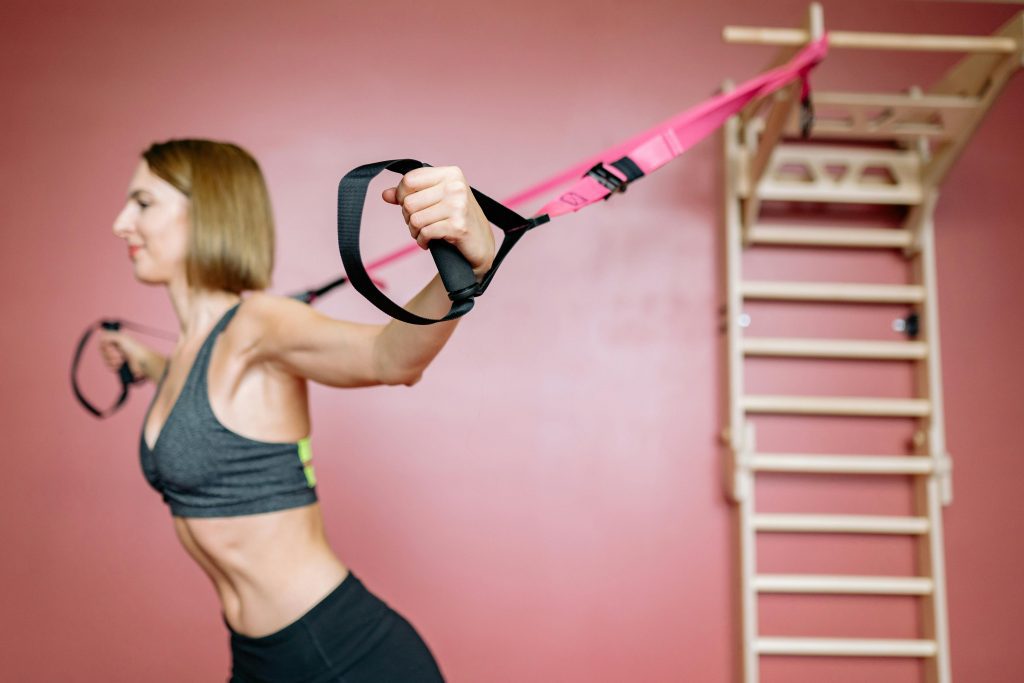
Your gym membership expired three months ago, and while you meant to renew it, you’ve realized something surprising: you don’t actually miss it. What you do miss, though, is the feeling of genuine upper body strength—being able to carry all the shopping bags in one trip, feeling confident in a sleeveless top, or simply not wincing when you have to push a heavy door open. The good news? You can build remarkable upper body strength without ever stepping foot in a gym or investing in bulky equipment, with a resistance band upper body workout!
Related reading: 7 Home Office Gadgets That Actually Make Working From Home Easier (According to Remote Workers).
📖 Reading time: 21 minutes
Picture this: It’s 6:30pm on a Tuesday, and you’ve just finished a long day at work. The thought of driving to the gym, finding parking, and navigating crowded equipment feels exhausting. But what if you could get an effective upper body workout in your living room, using a piece of equipment that fits in a drawer and costs less than a month’s gym membership? Thousands of people across the UK are discovering that resistance band upper body workouts deliver results that rival traditional weight training—without the hassle, expense, or intimidation factor.
Common Myths About Resistance Band Training
For more on this topic, you might enjoy: Lower Body Dumbbell Workout: Your Complete Guide to Stronger Legs at Home.
Myth: Resistance Bands Are Only for Beginners or Rehabilitation
Reality: Professional athletes, physiotherapists, and elite trainers use resistance bands precisely because they provide constant tension throughout the entire range of motion—something even expensive gym machines can’t replicate. Research published by the National Institutes of Health shows that resistance band training produces similar strength gains to conventional weight training when matched for intensity. The bands create progressive resistance, meaning the exercise gets harder as you stretch the band further, maximizing muscle activation at the peak of each movement.
Myth: You Can’t Build Real Muscle with Resistance Bands
Reality: Your muscles don’t distinguish between resistance from bands, dumbbells, or barbells—they only respond to tension, time under load, and progressive overload. A study from the Journal of Strength and Conditioning Research found that eight weeks of resistance band training increased muscle thickness comparably to weight training. The key is choosing appropriate resistance levels and progressively challenging your muscles by using thicker bands, increasing repetitions, or slowing down your tempo.
Myth: Resistance Bands Aren’t Worth It Because They’re So Cheap
Reality: The misconception that quality correlates directly with price simply doesn’t apply to resistance bands. A quality set of bands offers variable resistance from 5 to 60 pounds or more—equivalent to an entire rack of dumbbells that would cost hundreds of pounds and require dedicated storage space. The portability means you’ll actually use them consistently, which matters far more than having expensive equipment gathering dust in the corner.
Why Resistance Band Upper Body Workouts Actually Work
Related: Quick Full Body Workout: Get Fit in 20 Minutes or Less.
Traditional weights rely on gravity for resistance, which means you’re only working against force in the downward direction. Resistance bands, however, create tension in all directions—horizontal, vertical, and diagonal. This unique property means you can target muscles from angles that would be impossible or awkward with dumbbells alone.
What’s more, the variable resistance pattern of bands provides something fitness experts call “accommodating resistance.” As you move through an exercise, your mechanical advantage changes. With bands, the resistance increases precisely when your muscles are strongest (at full extension) and decreases when they’re weakest (at the start of the movement). This creates a perfect strength curve that keeps your muscles working optimally throughout the entire exercise.
According to NHS guidelines on physical activity, adults should do strengthening activities that work all major muscle groups at least two days per week. A resistance band upper body workout routine perfectly fulfills these recommendations, targeting your chest, back, shoulders, biceps, and triceps in a single session.
The convenience factor can’t be overstated either. Research shows that one of the primary barriers to consistent exercise is access to facilities. When you can complete an effective resistance band upper body workout in your bedroom, living room, or even a hotel room when travelling, you eliminate the most common excuse for skipping workouts.
The Essential Resistance Band Upper Body Exercises
You may also find this helpful: Your Complete Kettlebell Full Body Workout: Build Strength From Home.
These seven exercises form the foundation of a comprehensive resistance band upper body workout that targets every major muscle group. You’ll need just one or two resistance bands with varying thickness levels to adjust difficulty.
1. Banded Chest Press
This movement replicates the bench press but with unique benefits. Loop the band around a sturdy post, door anchor, or even a heavy piece of furniture at chest height. Hold the handles with your palms facing down and step forward until you feel tension in the band.
Position your hands at chest level with elbows bent at 90 degrees. Press forward until your arms are fully extended, squeezing your chest muscles at the peak. Control the return to the starting position, taking 2-3 seconds to resist the band pulling your hands back.
The constant tension throughout the movement activates more muscle fibres than traditional press-ups, particularly in the outer chest. Aim for 3 sets of 12-15 repetitions, adjusting your distance from the anchor point to increase or decrease difficulty.
2. Single-Arm Banded Row
Your back muscles are notoriously difficult to train at home without equipment, but this exercise solves that problem brilliantly. Secure the band at waist height and grasp one handle. Step back until the band is taut, then hinge slightly at the hips with your core braced.
Pull the handle toward your ribcage, keeping your elbow close to your body. Focus on squeezing your shoulder blade toward your spine at the end of the movement. This mind-muscle connection, as fitness professionals call it, significantly increases muscle activation.
Perform 3 sets of 10-12 repetitions per arm. The single-arm variation forces your core to work harder to resist rotation, giving you a bonus abdominal workout whilst building your back muscles. Research indicates that unilateral exercises like this also help correct strength imbalances between your dominant and non-dominant sides.
3. Overhead Shoulder Press
Stand on the centre of the band with feet hip-width apart, holding the handles at shoulder height with palms facing forward. Press the handles straight overhead until your arms are fully extended, being careful not to arch your lower back excessively.
The beauty of this resistance band upper body exercise is that the resistance increases precisely when your shoulders are strongest—at the top of the movement. This creates superior muscle activation compared to dumbbells, where the resistance actually feels lighter at the top.
Complete 3 sets of 10-12 repetitions. If the resistance feels too light, widen your stance or use a thicker band. Your shoulders are capable of handling significant load, so don’t be afraid to challenge them properly.
4. Lateral Raises
Stand on the band with feet together, holding the handles at your sides. Keeping a slight bend in your elbows, raise your arms out to the sides until they’re parallel with the floor. Your thumbs should point slightly downward at the top, as if you’re pouring water from a jug.
This seemingly simple movement targets the often-neglected lateral deltoids, which create that defined shoulder appearance. The continuous tension from the band throughout the range of motion means your muscles never get a rest, maximizing the effectiveness of each repetition.
Perform 3 sets of 12-15 repetitions. Focus on controlled movement rather than momentum—swinging the bands up defeats the purpose entirely. If you feel this primarily in your upper traps (the muscles between your neck and shoulders) rather than your side delts, you’re likely using too much weight or shrugging as you lift.
5. Bicep Curls
Stand on the band with feet hip-width apart and hold the handles with palms facing forward. Keep your elbows tucked against your sides and curl the handles toward your shoulders, squeezing your biceps at the top.
The key difference between band curls and dumbbell curls is that the resistance increases as you approach the top of the movement—exactly where your biceps are strongest. This means you maintain maximum muscle tension throughout the entire exercise, not just the middle portion.
Complete 3 sets of 12-15 repetitions. For variety and comprehensive bicep development, try different hand positions: palms facing each other (hammer curls) or palms facing down (reverse curls). Each variation targets slightly different muscles in your arms and forearms.
6. Tricep Extensions
Anchor the band above your head (a door anchor works perfectly here). Grasp both handles and step forward until there’s tension, positioning your hands behind your head with elbows pointing forward. Extend your arms downward and forward until they’re straight, keeping your upper arms stationary.
Your triceps make up approximately two-thirds of your upper arm mass, yet many people neglect them in favour of bicep exercises. This resistance band upper body exercise effectively targets all three heads of the triceps, creating that defined appearance on the back of your arms.
Aim for 3 sets of 12-15 repetitions. The constant tension prevents your triceps from resting at any point in the movement, which explains why this exercise often feels more challenging than equivalent dumbbell versions despite using lighter resistance.
7. Face Pulls
Anchor the band at upper chest height and hold both handles with palms facing each other. Step back until the band is taut, then pull the handles toward your face, separating your hands as they approach. Your elbows should flare out to the sides, ending higher than your wrists.
This exercise is arguably the most important in your entire resistance band upper body workout, despite being the least glamorous. Face pulls strengthen your rear deltoids and the small muscles of your rotator cuff—the very muscles that maintain shoulder health and prevent the rounded-forward posture that plagues office workers.
According to physiotherapy research, the muscles worked during face pulls are chronically weak in most adults, contributing to shoulder pain and poor posture. Perform 3 sets of 15-20 repetitions with lighter resistance, focusing on the squeeze between your shoulder blades at the end of each rep.
Structuring Your Resistance Band Upper Body Workout
Simply knowing the exercises isn’t enough—you need a strategic approach to organize them into an effective workout routine. The order matters because certain exercises fatigue muscles needed for subsequent movements.
Begin with compound movements that work multiple muscle groups simultaneously (chest press, rows, overhead press), then progress to isolation exercises that target specific muscles (lateral raises, curls, extensions, face pulls). This structure allows you to lift heavier resistance when you’re fresh, maximizing strength development.
A complete resistance band upper body workout should take 30-45 minutes, including a proper warm-up. Before starting, perform 5-10 minutes of light cardio—marching in place, arm circles, or gentle jumping jacks—to increase blood flow to your muscles. Follow this with dynamic stretches specifically for your upper body: arm swings, shoulder rolls, and torso rotations.
For most people, training your upper body 2-3 times per week provides optimal results. Your muscles need approximately 48 hours to recover and adapt to the stimulus you’ve provided, so leave at least one day between sessions. You might structure your week like this: Monday and Thursday for upper body, Tuesday and Friday for lower body, with active recovery or rest on the remaining days.
Rest periods between sets matter more than many people realize. For muscle growth and endurance, rest 30-60 seconds between sets. If you’re focusing primarily on strength, extend this to 60-90 seconds. Use this time to shake out the working muscles and prepare mentally for the next set.
Progressive Overload: The Key to Continued Results
Your body adapts remarkably quickly to new stimuli. Within 4-6 weeks, the workout that initially challenged you becomes noticeably easier. This adaptation is wonderful—it means you’re getting stronger—but it also means you need to progressively increase the challenge to continue seeing results.
With resistance bands, you have several methods to create progressive overload. The most obvious is using thicker bands with greater resistance. A quality set of resistance bands typically includes 3-5 different thickness levels, often color-coded for easy identification. When you can comfortably complete 15 repetitions of an exercise with good form, it’s time to progress to the next band thickness.
But resistance isn’t the only variable you can manipulate. Increasing your repetitions from 10 to 15 provides progressive overload. Adding an extra set to each exercise increases total volume. Slowing down your tempo—particularly the lowering phase—dramatically increases time under tension, forcing your muscles to work harder with the same resistance.
You can also adjust your position relative to the anchor point. Moving further from the anchor increases the stretch on the band, creating more resistance throughout the movement. For exercises where you stand on the band, widening your stance has the same effect.
Track your workouts in a simple notebook or phone app. Record which band thickness you used, how many sets and repetitions you completed, and how challenging it felt. This data proves invaluable for planning progressive increases and maintaining motivation as you see concrete evidence of your improvements.
Your First Month Action Plan
Starting a new resistance band upper body workout routine can feel overwhelming, so here’s a structured four-week progression that removes the guesswork.
- Week 1: Focus entirely on learning proper form. Perform 2 sets of 8-10 repetitions of each exercise using light resistance. It should feel almost too easy—that’s intentional. Film yourself performing each exercise or work in front of a mirror to check your form. Aim for 2 sessions this week, with at least two days between them.
- Week 2: Increase to 3 sets of 10-12 repetitions per exercise. The resistance should feel moderately challenging by the final few repetitions of each set, but you should still maintain perfect form. If you’re compromising form to complete reps, reduce the resistance. Maintain 2 sessions this week.
- Week 3: Progress to 3 sets of 12-15 repetitions. You can also begin experimenting with slightly heavier resistance on exercises where you feel confident in your form. Consider adding a third session this week if your recovery feels good and you’re not experiencing excessive soreness.
- Week 4: This is your assessment week. Perform the workout with the heaviest resistance you can handle while maintaining proper form for 3 sets of 12 repetitions. Take notes on how each exercise felt and which ones felt strongest or weakest. Use this information to plan your next training cycle, perhaps adding extra volume to lagging muscle groups.
After this initial month, you can begin implementing more advanced techniques like supersets (performing two exercises back-to-back without rest), drop sets (completing a set to failure, then immediately reducing resistance and continuing), or tempo variations (3-second lowering phases for increased time under tension).
Mistakes to Avoid (And How to Fix Them)
Mistake 1: Using Momentum Instead of Muscle
Why it’s a problem: Swinging, jerking, or bouncing through repetitions might allow you to complete more reps or use heavier resistance, but it dramatically reduces muscle activation and increases injury risk. Your muscles should move the band, not momentum or gravity.
What to do instead: Perform each repetition with deliberate control, taking 1-2 seconds for the lifting phase and 2-3 seconds for the lowering phase. If you can’t maintain this controlled tempo, you’re using too much resistance. Remember: your muscles don’t count repetitions; they respond to time under tension and mechanical load.
Mistake 2: Neglecting Your Warm-Up
Why it’s a problem: Cold muscles are less elastic and more prone to strain. Jumping straight into resistance training without proper preparation significantly increases your risk of injury and reduces your performance during the workout. Your first working set shouldn’t serve as your warm-up.
What to do instead: Dedicate 5-10 minutes to general movement that elevates your heart rate and increases blood flow to your upper body. Follow with specific warm-up sets using very light resistance—just the movements with minimal band tension—before progressing to your working sets. This preparation can improve your performance by 10-15% whilst protecting your joints and connective tissues.
Mistake 3: Training to Complete Failure Every Set
Why it’s a problem: The old bodybuilding mantra of “no pain, no gain” leads many people to push every set until they physically can’t complete another repetition. Whilst occasionally training to failure has value, doing so consistently leads to excessive fatigue, increased injury risk, and compromised form on subsequent exercises and workouts.
What to do instead: Stop each set when you have 1-2 good repetitions remaining. This approach, called “training to near failure” or “leaving reps in reserve,” provides the same muscle-building stimulus whilst managing fatigue better and allowing more consistent training. Save true failure for the occasional final set of an exercise when you’re feeling particularly motivated.
Mistake 4: Forgetting About Back and Shoulder Health
Why it’s a problem: Most people naturally gravitate toward exercises for muscles they can see in the mirror—chest, biceps, front shoulders. This creates muscular imbalances that pull your shoulders forward, contributing to poor posture, shoulder pain, and that hunched appearance that’s increasingly common in our desk-based society.
What to do instead: For every pushing exercise (chest press, overhead press, tricep extensions), perform an equal or greater volume of pulling exercises (rows, face pulls). The NHS recognizes that muscular imbalances contribute to repetitive strain injuries, making this balance particularly important if you work at a computer or frequently look down at your phone.
Mistake 5: Choosing the Wrong Resistance Band
Why it’s a problem: Not all resistance bands are created equal. Thin, stretchy tubes with plastic handles often snap after minimal use, whilst some heavy-duty bands provide too much resistance for effective upper body training. Using inappropriate equipment frustrates your progress and potentially causes injury.
What to do instead: Look for resistance bands with fabric covering or quality rubber construction that includes multiple resistance levels. Loop bands and bands with comfortable handles both work excellently—choose based on your preference. The set should include resistance ranges from approximately 5 pounds up to at least 40 pounds so you can progressively challenge different muscle groups appropriately. Features like door anchors and ankle straps expand exercise variety considerably.
Making Your Resistance Band Upper Body Workout More Effective
Beyond just performing the exercises, several strategies can significantly enhance your results without requiring more time or equipment.
Mind-Muscle Connection
Research in exercise physiology demonstrates that consciously focusing on the muscle you’re working—rather than simply moving the band—increases muscle activation by up to 30%. Before each set, mentally identify which muscle should be doing the work. During the exercise, visualize that muscle contracting and lengthening.
This might sound abstract, but try this experiment: perform a bicep curl whilst thinking about anything else, then perform another curl whilst intensely focusing on feeling your bicep muscle contract. The difference in muscle engagement is immediately noticeable. This principle, called the mind-muscle connection, represents one of the most underutilized tools in strength training.
Breathing Technique
Proper breathing isn’t just about getting oxygen—it stabilizes your core and allows you to generate more force. The general rule: exhale during the exertion phase (when you’re working against the band) and inhale during the easier phase (when the band returns to the starting position).
Never hold your breath during resistance training. This creates excessive intra-abdominal pressure and can cause dangerous spikes in blood pressure. Controlled breathing also helps you maintain a steady rhythm, preventing the momentum-based cheating that reduces effectiveness.
Recovery Strategies
Your muscles don’t grow during workouts—they grow during recovery. After a challenging resistance band upper body workout, your muscles need protein for repair (aim for 20-30 grams within two hours of finishing), adequate hydration (muscle tissue is approximately 75% water), and quality sleep (when growth hormone secretion peaks).
Light movement on rest days—walking, gentle yoga, or swimming—promotes blood flow to recovering muscles without creating additional fatigue. This active recovery often feels better than complete rest for managing delayed onset muscle soreness, the technical term for that stiff, achy feeling that appears 24-48 hours after an intense workout.
Quick Reference Checklist
- Complete 5-10 minutes of general warm-up before starting your resistance band upper body workout
- Perform exercises in this order: compound movements first, isolation exercises last
- Maintain 2-3 seconds for lowering phases to maximize time under tension
- Stop each set with 1-2 repetitions still possible to manage fatigue effectively
- Balance every pushing exercise with equal or greater pulling volume for shoulder health
- Train your upper body 2-3 times weekly with at least 48 hours between sessions
- Progress by increasing resistance, repetitions, sets, or time under tension every 3-4 weeks
- Record your workouts to track progress and identify when to increase challenge
Frequently Asked Questions
How long until I see results from resistance band upper body workouts?
Most people notice improved muscle endurance within 2-3 weeks, evidenced by exercises feeling easier or being able to complete more repetitions. Visible muscle definition typically appears after 6-8 weeks of consistent training combined with adequate protein intake. Strength gains occur throughout this period, though you’ll feel stronger before you look noticeably different. Remember that results depend heavily on consistency, progressive overload, nutrition, and recovery—not just the exercises themselves.
Can I build muscle with resistance bands if I’m already quite strong from previous weight training?
Absolutely. Many strength athletes and bodybuilders incorporate resistance band training alongside traditional weights because bands provide unique benefits like variable resistance and constant tension. The key is choosing sufficiently heavy resistance bands and employing advanced techniques like slow tempo training, pause reps, and drop sets. Heavy-duty bands can provide resistance equivalent to 60-100 pounds or more, which challenges even experienced lifters when applied correctly. Your muscles respond to mechanical tension regardless of whether it comes from bands, barbells, or bodyweight.
Do I need different resistance bands for different exercises, or will one band work for everything?
Your chest, back, and legs can handle significantly more resistance than your shoulders and arms, so a single band won’t optimally challenge all muscle groups. A set with 3-5 different resistance levels allows you to select appropriate challenge for each exercise. For example, you might use heavy resistance for rows and chest presses but medium resistance for lateral raises and light resistance for face pulls. This variety ensures each muscle group receives appropriate stimulus without compromising form due to excessive resistance.
I travel frequently for work—can I maintain my upper body strength with just resistance bands in hotel rooms?
This is actually one of the greatest advantages of resistance band training. A complete set weighs under a kilogram and fits easily in your luggage, yet provides comprehensive upper body training anywhere. Door anchors allow you to secure bands in hotel rooms for exercises like chest presses and rows. Many frequent travellers report maintaining or even improving their strength during travel periods by using bands, primarily because the convenience eliminates the common excuse of not having gym access. Just ensure your hotel room has sturdy furniture or doors for anchoring the bands safely.
My shoulders sometimes feel uncomfortable during overhead exercises—is this normal or should I be worried?
Some muscle fatigue is normal, but sharp pain, clicking, or discomfort in the joint itself warrants attention. Shoulder pain during overhead movements often indicates insufficient shoulder mobility, rotator cuff weakness, or previous injury. Start by reducing resistance and ensuring your technique is correct—your shoulder blades should move naturally with your arms rather than remaining locked in place. Prioritize face pulls and rows to strengthen your rotator cuff and posterior shoulder muscles. If discomfort persists beyond two weeks or worsens, consult a physiotherapist. The NHS provides guidance on shoulder pain and when to seek professional assessment. Never train through sharp or worsening pain.
Transform Your Upper Body Without Leaving Home
Building genuine upper body strength doesn’t require expensive gym memberships, complicated equipment, or hours of time. A simple resistance band upper body workout, performed consistently 2-3 times weekly, delivers remarkable results: improved strength, visible muscle definition, better posture, and the practical capability to handle everyday physical tasks with ease.
The seven exercises outlined here target every major muscle group in your upper body, creating balanced development that looks good and functions even better. Combined with proper progressive overload, adequate recovery, and reasonable patience, your resistance band training will produce results that surprise you within weeks and transform you within months.
Most importantly, resistance bands eliminate the common barriers that prevent people from training consistently. No commute, no crowds, no judgment, no excuses. Just you, a band, and 30-45 minutes to invest in becoming stronger, healthier, and more capable.
Which of these resistance band exercises are you most excited to try first? Have you used bands before and discovered any favorite variations? Share your experiences in the comments below—we’d love to hear what’s worked for you!


