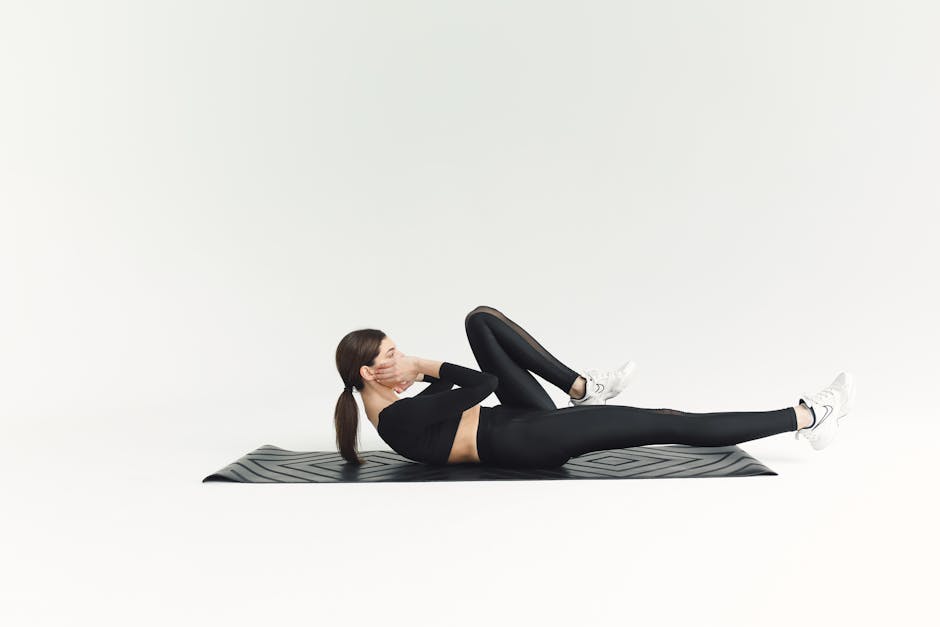
Your alarm just went off, and you’ve got exactly 15 minutes before you need to jump in the shower. Can you really strengthen your core in that tiny window? Absolutely. The myth that building strong abs requires hour-long gym sessions and fancy equipment is exactly that—a myth. What you actually need is a focused, efficient approach that targets your entire core, not just the surface muscles.
📖 Reading time: 24 minutes
Picture this: You’re getting dressed for work, and that shirt you bought last month feels just a bit snugger around the middle. You know you should be doing something about it, but between work deadlines, family commitments, and trying to maintain some semblance of a social life, who has time for lengthy workout sessions? Sound familiar? You’re not alone. Research from NHS guidelines on physical activity shows that lack of time is the number one barrier preventing UK adults from exercising regularly. The good news? When it comes to quick abs workouts, quality trumps quantity every single time.
Common Myths About Quick Abs Workouts
For more on this topic, you might enjoy: Quick Full Body Workout: Get Fit in 20 Minutes or Less.
Myth: You need at least 30-60 minutes to see results from ab exercises
Reality: Your abdominal muscles respond to intensity and proper form, not marathon sessions. Studies on high-intensity interval training demonstrate that focused 10-15 minute workouts can be just as effective—sometimes more so—than longer, less intense sessions. The key is engaging the correct muscles with proper technique rather than mindlessly cranking out hundreds of crunches while watching television.
Myth: Doing endless crunches is the fastest way to get visible abs
Reality: Crunches only target your rectus abdominis (the front ab muscles), completely neglecting your obliques, transverse abdominis, and the deeper stabilizing muscles that actually create functional core strength. What’s more, visible abs are primarily revealed through reducing body fat percentage, not just building muscle. A comprehensive quick abs workout that includes varied movements and combines with proper nutrition will always outperform isolated crunches.
Myth: You need expensive equipment or a gym membership for effective ab training
Reality: Your core muscles don’t know the difference between a £2,000 ab machine and your living room floor. Bodyweight exercises create resistance using gravity and your own mass, which is more than sufficient for building serious core strength. In fact, equipment-free exercises often engage more stabilizing muscles because you’re not supported by a machine.
Why Traditional Ab Workouts Take Too Long (And What Works Better)
Related: 15 Quick Healthy Breakfast Ideas You Can Make in Under 10 Minutes.
Traditional gym-based ab routines typically include multiple sets of various exercises with rest periods between each, easily stretching to 45 minutes or more. But here’s what research on muscle activation tells us: your core muscles fatigue relatively quickly compared to larger muscle groups. This means shorter, more intense sessions can actually produce superior results.
The secret lies in circuit-style training—moving from one exercise directly to the next with minimal rest. This approach keeps your heart rate elevated, burns more calories, and thoroughly exhausts your core muscles in a fraction of the time. You’re essentially getting a cardiovascular workout whilst building abdominal strength simultaneously.
According to research from the American Council on Exercise, the most effective ab exercises activate multiple core muscle groups at once. Compound movements that challenge your stability engage up to 30% more muscle fibres than isolated exercises. This means you can accomplish more in 15 minutes of smart training than in an hour of unfocused crunching.
The 7 Essential Quick Abs Exercises That Actually Work
You may also find this helpful: 20-Minute Resistance Band Workout That Transforms Your Living Room Into a Complete Gym.
These seven exercises form the foundation of an efficient quick abs workout. Each one targets different areas of your core whilst challenging your stability and endurance. Perform each exercise for 40 seconds, followed by 20 seconds of rest before moving to the next one. Complete two full circuits, and you’ve got yourself a comprehensive 15-minute session.
1. Plank with Hip Dips
Start in a forearm plank position with your elbows directly beneath your shoulders. Your body should form a straight line from head to heels. Slowly rotate your hips to the right, dipping them towards the floor without letting them touch. Return to centre, then rotate to the left. This movement absolutely hammers your obliques whilst maintaining that crucial plank tension through your entire core.
The brilliance of this exercise lies in its anti-rotation component—your abs work overtime to control the movement rather than just creating it. Keep your movements slow and controlled. If you find yourself swinging wildly from side to side, you’ve lost the core engagement that makes this exercise effective.
2. Mountain Climbers
Begin in a high plank position with your hands directly under your shoulders. Drive your right knee towards your chest, then quickly switch legs, bringing your left knee forward as your right leg extends back. Continue alternating at a pace that challenges you whilst maintaining proper form.
Mountain climbers elevate your heart rate whilst forcing your core to stabilize against the dynamic leg movements. This quick abs exercise also engages your hip flexors and shoulders, making it a genuine full-body movement. The faster you go, the harder your core must work to prevent your hips from bouncing up and down.
3. Bicycle Crunches
Lie on your back with your hands gently supporting your head (never pulling on your neck). Lift your shoulder blades off the floor and bring your knees to a 90-degree angle. Extend your right leg whilst rotating your torso to bring your right elbow towards your left knee. Switch sides in a pedalling motion.
Research consistently ranks bicycle crunches among the most effective ab exercises for rectus abdominis and oblique activation. The twisting motion engages more muscle fibres than standard crunches, whilst the alternating leg movement adds an element of coordination that increases the challenge.
4. Dead Bug
Lie flat on your back with your arms extended straight up towards the ceiling. Lift your legs so your knees are at 90 degrees above your hips. Slowly lower your right arm behind your head whilst simultaneously extending your left leg, keeping both just above the floor. Return to start and repeat on the opposite side.
This oddly-named exercise teaches core stability in a way few others can. The challenge isn’t creating movement—it’s preventing movement in your lower back whilst your limbs are moving. Your transverse abdominis (the deep core muscle that acts like a natural weight belt) works intensely to keep your spine neutral.
5. Reverse Crunches
Lie on your back with your arms by your sides or hands beneath your hips for support. Bend your knees and lift them so your thighs are perpendicular to the floor. Using your lower abs, lift your hips off the ground, bringing your knees towards your chest. Lower back down with control.
Standard crunches primarily work your upper abs, but reverse crunches shift the emphasis to your lower abdominal region—the area many people find most challenging to strengthen. The key is moving your pelvis, not just your legs. Imagine trying to point your knees towards the ceiling by curling your lower back off the floor.
6. Side Plank with Rotation
Start in a side plank position on your right forearm, with your body forming a straight line. Extend your left arm towards the ceiling. Rotate your torso down and thread your left arm under your body. Return to the starting position. Complete 40 seconds on one side during your first circuit, then switch to the other side during your second circuit.
Side planks target your obliques and the often-neglected quadratus lumborum (a deep core muscle crucial for spine stability). Adding rotation increases oblique activation whilst challenging your balance. This exercise also strengthens your shoulders and improves overall body control.
7. Flutter Kicks
Lie flat on your back with your legs extended and hands underneath your glutes to protect your lower back. Lift both legs roughly 15 centimetres off the ground. Alternately raise and lower each leg in small, quick movements, keeping your core tight and your lower back pressed into the floor.
Flutter kicks maintain constant tension in your lower abs and hip flexors, creating that deep burning sensation that signals your muscles are thoroughly engaged. The challenge intensifies as fatigue sets in—resist the urge to let your legs drop or your lower back arch away from the floor.
Structuring Your 15-Minute Quick Abs Workout
Having the right exercises is only half the battle. How you structure your quick abs workout determines whether you finish feeling accomplished or simply exhausted without results. Here’s the framework that maximizes your limited time:
Warm-up (2 minutes): Never dive straight into intense core work with cold muscles. Spend two minutes doing gentle torso twists, standing side bends, and cat-cow stretches if you’re comfortable getting down on the floor. This brief warm-up increases blood flow to your core muscles and prepares your spine for movement.
Circuit 1 (5.5 minutes): Perform each of the seven exercises for 40 seconds with 20 seconds of rest between exercises. Focus on maintaining proper form over speed. If an exercise becomes too challenging to complete with good technique, modify it or slow down—never sacrifice form for the sake of finishing.
Recovery (1 minute): Take a full minute between circuits to catch your breath, hydrate, and reset mentally. Walk around rather than sitting down; active recovery keeps your metabolism elevated whilst allowing your heart rate to decrease slightly.
Circuit 2 (5.5 minutes): Repeat the same seven exercises in the same order. You’ll likely find certain exercises more challenging during the second round—this is normal and actually beneficial. The cumulative fatigue forces your muscles to recruit additional muscle fibres.
Cool-down (1 minute): Finish with gentle stretching, focusing on your hip flexors, lower back, and obliques. Child’s pose works beautifully for releasing tension in your core and lower back. Proper cooling down reduces muscle soreness and improves flexibility over time.
As you become more comfortable with this quick abs workout routine, you can progress by increasing the work intervals to 45 seconds and decreasing rest to 15 seconds. Alternatively, add a third circuit once or twice weekly for an extra challenge.
When and How Often Should You Do Quick Abs Workouts
Your abdominal muscles, like all muscles, need recovery time to repair and strengthen. The sweet spot for most people is three to four quick abs workout sessions per week, with at least one rest day between sessions. This frequency allows adequate recovery whilst providing enough stimulus for improvement.
Timing matters less than consistency, but many people find morning workouts most reliable—there are fewer opportunities for life to interfere when you exercise first thing. That said, if you’re more energized in the evening, that’s perfectly fine. The NHS recommends breaking up long periods of sitting, so a quick lunchtime abs session can be an excellent way to combat desk-bound lethargy.
Can you do abs every day? Technically yes, but it’s not optimal. Unlike low-intensity walking, intense core work creates micro-tears in muscle tissue that require 24-48 hours to heal. Training the same muscles daily prevents proper recovery and can actually slow your progress. If you want to exercise daily, alternate your quick abs workout with other activities like walking, cycling, or upper body strength training.
Maximizing Results: What to Do Beyond Your 15 Minutes
Your quick abs workout is the foundation, but these additional factors determine whether you’ll see visible results or just feel stronger underneath a layer of body fat:
Nutrition: The Non-Negotiable Element
The expression “abs are made in the kitchen” contains substantial truth. You can have exceptionally strong abdominal muscles, but they’ll remain hidden beneath body fat if your nutrition doesn’t support fat loss. This doesn’t mean crash dieting or eliminating entire food groups—sustainable changes work best.
Focus on creating a modest calorie deficit through a combination of increased activity and mindful eating. Prioritize protein (aim for 1.6-2.2 grams per kilogram of body weight daily), which helps preserve muscle mass whilst you lose fat. Include plenty of vegetables for fibre and micronutrients, and don’t fear healthy fats from sources like olive oil, avocados, and oily fish.
Meal prep containers can make portion control and consistent eating patterns much easier to maintain. Look for compartmentalized options that help you visualize balanced meals—a palm-sized portion of protein, two fists of vegetables, and a modest serving of complex carbohydrates like brown rice or sweet potato.
Progressive Overload: Keeping Your Muscles Challenged
Your body adapts to exercise stimulus remarkably quickly. What felt impossibly difficult in week one becomes manageable by week four. To continue seeing improvements, you must progressively increase the challenge. With bodyweight quick abs exercises, this means:
- Adding time to each exercise (45 seconds instead of 40)
- Decreasing rest periods between exercises
- Adding a third circuit
- Performing exercises more slowly to increase time under tension
- Incorporating advanced variations (single-leg planks, weighted dead bugs)
Once you’ve mastered bodyweight exercises and want additional challenge, a simple ab wheel provides excellent progression without requiring much space or investment. Look for one with dual wheels for better stability when you’re starting out.
Full-Body Strength Training
Isolating your core work is fine for targeted development, but compound exercises like squats, deadlifts, and overhead presses also heavily engage your core muscles whilst building overall strength. If you have time for additional workouts, incorporate full-body strength training two to three times weekly. This creates a more balanced physique and actually increases the effectiveness of your dedicated quick abs workout sessions.
Your 4-Week Quick Abs Workout Progression Plan
Knowing what to do is valuable; knowing when to progress is essential. Follow this structured four-week plan to build sustainable core strength:
Week 1: Establishing Your Baseline
Goal: Complete the workout three times this week with proper form. Don’t worry about speed or perfection—focus on learning the movement patterns and understanding how each exercise should feel.
Action steps: Perform the workout on Monday, Wednesday, and Friday. Film yourself doing each exercise to check your form. Notice which exercises feel most challenging—this awareness helps you focus your attention during subsequent weeks. Keep your rest periods at a full 20 seconds between exercises.
Week 2: Building Consistency and Endurance
Goal: Increase to four sessions this week (Monday, Tuesday, Thursday, Saturday, for example) and focus on maintaining tension throughout each 40-second interval without breaks.
Action steps: During exercises where you typically pause mid-set, push through for the full 40 seconds even if you need to slow down. Begin reducing your between-exercise rest to 15 seconds if you’re recovering adequately. Pay attention to your breathing—exhale during the exertion phase and never hold your breath.
Week 3: Intensifying the Challenge
Goal: Increase work intervals to 45 seconds whilst maintaining 15-second rest periods. Continue with four sessions this week.
Action steps: This week will feel noticeably harder—embrace it. Your body is adapting and getting stronger. If 45 seconds proves too ambitious for all exercises, start with just two or three exercises at the longer interval and gradually expand. Take progress photos this week; changes are happening even if you don’t see them yet.
Week 4: Consolidating Your Progress
Goal: Master the complete routine at 45 seconds work, 15 seconds rest, and consider adding a third circuit to one or two workouts.
Action steps: Continue with four sessions, but attempt a three-circuit workout on your midweek session when you’re freshest. Evaluate your progress—can you hold plank positions longer? Do mountain climbers feel more controlled? Celebrate these victories. Begin planning your progression for the following month, whether that’s advanced variations, additional circuits, or incorporating weighted exercises.
Mistakes to Avoid (And How to Fix Them)
Mistake 1: Letting Your Lower Back Arch During Floor Exercises
Why it’s a problem: When your lower back arches away from the floor during exercises like dead bugs or flutter kicks, you’re no longer engaging your deep core muscles. Instead, you’re placing stress on your lumbar spine, which can lead to discomfort or injury. This compensation pattern often develops because people attempt to lift their legs too high or hold positions beyond their current capability.
What to do instead: Press your lower back firmly into the floor before beginning any supine ab exercise. If you can’t maintain that connection, you’ve extended your legs too far. Bend your knees more or don’t lower your limbs as close to the floor. It’s better to work within a smaller range of motion with proper form than to complete the “full” movement incorrectly.
Mistake 2: Racing Through Exercises at Maximum Speed
Why it’s a problem: Quick abs workouts don’t mean fast, sloppy movements. When you rush, you rely on momentum rather than muscle contraction. This reduces time under tension—the key stimulus for strength development—and increases injury risk as your joints take on stress that your muscles should be absorbing.
What to do instead: Focus on controlled movement with deliberate muscle engagement. Yes, exercises like mountain climbers involve speed, but that speed should be controlled and rhythmic, not chaotic. For exercises like bicycle crunches or side planks with rotation, slower is actually more effective. Count to two during each phase of movement as a pacing guide.
Mistake 3: Training Your Core Exclusively Without Addressing Overall Fitness
Why it’s a problem: Your core doesn’t exist in isolation. Neglecting cardiovascular fitness, full-body strength, and flexibility creates muscular imbalances and limits functional fitness. Moreover, you can’t spot-reduce fat, so even the most dedicated quick abs workout won’t reveal definition if your overall body fat percentage remains high.
What to do instead: View your 15-minute ab sessions as one component of a balanced fitness approach. Include at least 150 minutes of moderate-intensity cardiovascular activity weekly (brisk walking, cycling, swimming). Add two to three strength training sessions that work your legs, back, chest, and arms. This comprehensive approach creates better overall results and actually enhances your core development.
Mistake 4: Expecting Visible Results Within Days or Weeks
Why it’s a problem: Unrealistic expectations lead to disappointment and abandonment of otherwise effective programs. Building visible muscle definition and reducing body fat percentage is a gradual process that varies significantly between individuals based on genetics, starting point, nutrition, and consistency.
What to do instead: Shift your focus to performance-based goals during the first 4-6 weeks. Can you hold planks longer? Complete more repetitions with good form? Feel your core engage during daily activities like carrying shopping bags? These functional improvements precede visible changes. Take measurements and progress photos every four weeks rather than scrutinizing your reflection daily. Most people notice initial changes in how their clothes fit before seeing dramatic visual differences.
Mistake 5: Training Through Pain or Ignoring Proper Recovery
Why it’s a problem: There’s a crucial difference between muscle fatigue (the burning sensation during exercise) and pain (sharp, shooting, or lingering discomfort in joints or specific areas). Training through actual pain can transform a minor issue into a serious injury requiring extended rest. Similarly, inadequate recovery prevents the muscle-building process that occurs during rest periods.
What to do instead: Learn to distinguish between productive discomfort and warning signs. If you experience sharp pain, particularly in your lower back or hip joints, stop immediately and assess your form. Consider consulting a physiotherapist if pain persists. Prioritize sleep (7-9 hours nightly) and proper nutrition to support recovery. On rest days, engage in gentle activity like walking or yoga rather than complete inactivity, which can increase stiffness.
Quick Reference Checklist for Your Quick Abs Workout
- Schedule your sessions in advance—treat them as non-negotiable appointments with yourself
- Keep a water bottle nearby and hydrate before, during, and after your workout
- Warm up for two minutes before diving into intense exercises
- Focus on pressing your lower back into the floor during supine exercises to protect your spine
- Breathe consistently throughout each exercise—never hold your breath
- Reduce range of motion rather than sacrificing proper form when fatigue sets in
- Progress gradually by increasing work time, decreasing rest, or adding circuits
- Pair your quick abs workout with balanced nutrition for visible results
- Take at least one rest day between core-focused sessions
- Track your progress through performance metrics rather than just appearance
Adapting Your Quick Abs Workout for Different Fitness Levels
The beauty of bodyweight exercises is their inherent scalability. Whether you’re returning to fitness after years of inactivity or you’re an experienced exerciser looking for time-efficient core work, these modifications ensure the workout meets you where you are.
Beginner Modifications
If you’re new to structured exercise or haven’t trained your core specifically, start with these adaptations. There’s no shame in modifications—they allow you to build strength safely and effectively.
For planks with hip dips, drop to your knees whilst maintaining the hip rotation movement. For mountain climbers, slow the pace significantly and focus on bringing one knee forward at a time with control. During bicycle crunches, keep your feet on the floor and focus solely on the twisting motion. For dead bugs, keep your knees bent throughout rather than extending your legs. Perform reverse crunches with small movements, barely lifting your hips off the floor. Hold a standard side plank without rotation, and perform flutter kicks with bent knees raised above your hips.
Complete just one circuit initially, working up to two circuits over several weeks. There’s no prize for rushing progression—consistency matters more than intensity at this stage.
Advanced Progressions
Once the standard workout feels manageable, these variations increase the challenge substantially. Advanced doesn’t necessarily mean better; only progress when you can complete the standard version with perfect form for the full duration.
Add a shoulder tap to each plank hip dip, lifting your hand off the ground to tap the opposite shoulder whilst rotating. Increase mountain climber speed or add a twist, bringing each knee towards the opposite elbow. During bicycle crunches, straighten your extended leg completely and hover just above the floor. For dead bugs, pause for two seconds with your opposite arm and leg fully extended. Add a pulse at the top of each reverse crunch. Include a hip dip during your side plank rotation, lowering your hips towards the floor before threading your arm underneath. For flutter kicks, keep your legs straight and lower them until they’re just 10 centimetres off the ground.
Consider adding light ankle weights for flutter kicks and dead bugs once bodyweight versions become too easy. Look for adjustable options starting around 0.5-1kg per ankle—going too heavy too quickly can strain your hip flexors unnecessarily.
Understanding What You’re Actually Building
Many people focus solely on the rectus abdominis (the “six-pack” muscles), but your core comprises numerous muscle groups working together. Understanding this anatomy helps you appreciate why varied exercises matter.
Your rectus abdominis runs vertically along the front of your abdomen, responsible for flexing your spine forward. Your obliques (internal and external) run diagonally along your sides, enabling rotation and side-bending movements. The transverse abdominis is the deepest layer, wrapping around your midsection like a corset to provide stability and protect your spine. Your erector spinae muscles along your lower back work in opposition to your abs, and a comprehensive quick abs workout should engage these as well.
According to research published in BBC Health reports on core strength, developing comprehensive core strength improves posture, reduces lower back pain risk, enhances balance, and improves performance in virtually every physical activity. These functional benefits matter more than aesthetics for most people’s quality of life.
The seven exercises in this quick abs workout target all these muscle groups through different movement patterns—flexion, rotation, anti-rotation, and stabilization. This comprehensive approach builds functional strength that translates to real-world activities, not just isolated muscles that look good but don’t perform well.
Frequently Asked Questions
Will doing this quick abs workout give me a flat stomach?
This workout will absolutely strengthen your abdominal muscles and improve core stability, but visible abs depend primarily on body fat percentage rather than ab exercises alone. You could have incredibly strong abs that remain hidden beneath body fat. To reveal definition, you’ll need to combine your quick abs workout with a balanced nutrition plan that creates a modest calorie deficit and full-body exercise that increases your overall metabolic rate. Most men begin to see ab definition around 12-15% body fat, whilst most women see definition around 18-22% body fat due to physiological differences in fat distribution.
Can I do this workout every day?
Whilst you technically could, it’s not optimal for results. Your muscles grow and strengthen during recovery periods, not during the workout itself. Training intensely every day prevents adequate recovery and can lead to overuse issues or plateaus in progress. Three to four sessions weekly with at least one rest day between workouts provides the ideal balance of stimulus and recovery for most people. On rest days, you can still be active with walking, yoga, or training different muscle groups—just give your core a proper break.
I have lower back problems—is this workout safe for me?
Many people with lower back issues actually benefit from strengthening their core muscles, as weakness in this area often contributes to back pain. However, you should always consult with your GP or physiotherapist before beginning any new exercise program if you have existing back problems. That said, several exercises in this routine (particularly the dead bug and plank variations) are commonly prescribed by physiotherapists for back rehabilitation. Start with the beginner modifications, pay meticulous attention to keeping your lower back pressed to the floor during supine exercises, and stop immediately if you experience any sharp or shooting pain. Strengthening your core properly can actually reduce back discomfort over time.
Do I need to buy any equipment or special clothing for this workout?
Not at all—that’s the beauty of this quick abs workout. You can perform every exercise on any comfortable surface in whatever clothing allows you to move freely. That said, an exercise mat or yoga mat can make floor exercises more comfortable, especially if you’re working on hard flooring. Look for one that’s at least 6mm thick with a non-slip surface. As for clothing, anything you can comfortably move in works perfectly—no need for expensive gym gear. Many people prefer fitted clothing that doesn’t ride up during exercises, but baggy t-shirts and comfortable shorts work just fine if that’s your preference.
How long before I’ll see results from this quick abs workout?
This depends on what type of results you’re measuring and your starting point. You’ll likely feel stronger and notice improved core stability within 2-3 weeks—tasks like carrying shopping bags or maintaining good posture will feel easier. Visible muscle definition typically takes longer, usually 6-12 weeks of consistent training combined with proper nutrition, though this varies dramatically based on your starting body fat percentage and genetic factors. Rather than fixating on visible changes, celebrate performance improvements: holding planks longer, completing exercises with better form, or noticing reduced lower back discomfort during daily activities. These functional improvements are genuinely more valuable than aesthetics and will come first.
Making Your Quick Abs Workout a Lasting Habit
Knowledge means nothing without implementation. You now have a comprehensive, efficient quick abs workout that requires minimal time and zero equipment. The challenge isn’t knowing what to do—it’s actually doing it consistently.
Start by committing to just four weeks. Mark your workout days in your calendar or phone. Prepare your space the night before if you exercise in the morning. Tell someone about your commitment—accountability dramatically increases adherence. Track each completed session, and after four weeks, reassess how you feel, how your clothes fit, and what functional improvements you’ve noticed.
Remember that building core strength isn’t just about appearance. It’s about moving through life with greater ease, reducing injury risk, improving posture at your desk, and feeling capable in your own body. These benefits accumulate with every 15-minute session you complete, regardless of whether your abs are visible yet.
The perfect workout completed never beats the good workout completed consistently. Don’t let perfectionism prevent you from starting. Your 15 minutes begins now.


