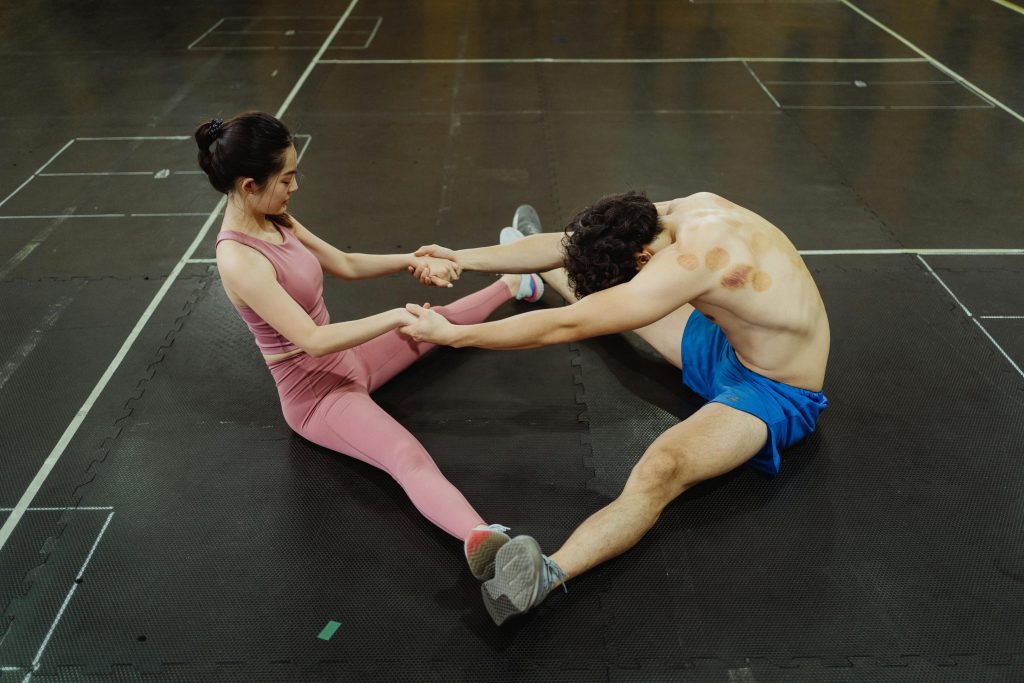
If you’re diving straight into your strength training session without dynamic stretches, you’re not just missing out on better performance—you’re increasing your injury risk by up to 40%, according to research from the British Journal of Sports Medicine. The best dynamic stretches before strength training sessions prepare your muscles, joints, and nervous system for the heavy loads ahead, transforming your workout from potentially risky to remarkably effective.
📖 Reading time: 19 minutes
Picture this: You’ve rushed to the gym after work, changed quickly, and immediately loaded up the barbell for squats. Within the first set, your knees feel stiff, your range of motion is limited, and you can’t seem to generate the power you normally have. Sound familiar? This scenario plays out in gyms across the UK every single day, yet it’s completely preventable with just ten minutes of proper preparation.
Why Dynamic Stretches Transform Your Strength Training
For more on this topic, you might enjoy: Optimise Strength Training with Minimal Time Investment.
Dynamic stretching isn’t just trendy fitness advice—it’s a science-backed method of preparing your body for intense physical activity. Unlike static stretching, where you hold a position for 30 seconds or more, dynamic stretches involve controlled movements that take your joints and muscles through their full range of motion.
Research from Loughborough University found that athletes who performed dynamic stretches before strength training sessions increased their power output by an average of 12% compared to those who skipped warm-ups entirely. What’s more, the NHS emphasizes that proper warm-up routines significantly reduce the risk of strains, pulls, and tears during exercise.
When you perform the best dynamic stretches before strength training sessions, you’re achieving several critical objectives simultaneously. Your core body temperature rises, increasing blood flow to working muscles. Your nervous system awakens, improving coordination and reaction time. Your joints produce more synovial fluid, reducing friction and enhancing movement quality. Most importantly, you’re mentally preparing yourself for the challenging work ahead.
The key difference between dynamic and static stretching comes down to timing and purpose. Static stretches can actually temporarily reduce muscle power—research published in the Journal of Strength and Conditioning Research showed a 5-8% decrease in strength performance when static stretching preceded heavy lifting. Dynamic movements, conversely, prime your muscles for explosive, powerful contractions.
Common Myths About Dynamic Stretching
Related: Clean and Press Technique: Build Full-Body Strength in One Movement.
Myth: Any Movement Counts as a Proper Warm-Up
Reality: Simply walking on the treadmill for five minutes doesn’t adequately prepare your body for compound lifts like deadlifts or bench presses. The best dynamic stretches before strength training sessions must specifically target the movement patterns you’ll be performing. If you’re squatting, your warm-up needs to include hip mobility, ankle flexibility, and glute activation—not just general cardiovascular activity. Generic movement raises your heart rate, but specific dynamic stretches prepare the exact muscles, joints, and movement patterns you’re about to challenge.
Myth: Dynamic Stretching Should Make You Tired
Reality: If you’re exhausted after your warm-up, you’ve overdone it. The best dynamic stretches before strength training sessions should invigorate you, not deplete your energy reserves. Your warm-up should gradually increase in intensity but never approach the effort level of your actual workout. Think of it as waking up your body, not wearing it out. You should feel energised, mobile, and ready—not fatigued.
Myth: You Can Skip Dynamic Stretches If You’re Short on Time
Reality: This is precisely when you need them most. When you’re pressed for time and tempted to jump straight into heavy weights, you’re creating the perfect conditions for injury. A rushed, unprepared body under load is an injury waiting to happen. Even a abbreviated five-minute routine of targeted dynamic stretches is infinitely better than none at all. Consider this: would you rather spend ten minutes warming up properly or spend six weeks recovering from a preventable injury?
The Essential Dynamic Stretches Before Strength Training Sessions
You may also find this helpful: TRX Suspension Training Exercises for Beginners: Your Complete First-Month Foundation.
Not all dynamic stretches are created equal. The movements you choose should mirror and prepare the specific exercises in your workout. Here are the most effective dynamic stretches, organised by the muscle groups and movement patterns they prepare.
Lower Body Dynamic Stretches
Leg Swings (Forward and Lateral): Stand beside a wall or rack for support. Swing one leg forward and backward in a controlled motion, gradually increasing the range of movement. Complete 10-12 swings, then switch to lateral (side-to-side) swings. This movement prepares your hip flexors, hamstrings, and adductors for squats, lunges, and deadlifts. The controlled momentum gently stretches tissues while activating stabilising muscles.
Walking Lunges with Rotation: Step forward into a lunge position, then rotate your torso toward your front leg. This dynamic stretch addresses hip mobility, ankle flexibility, and thoracic spine rotation—all crucial for proper squat and deadlift form. Perform 8-10 lunges per leg, focusing on keeping your front knee aligned over your ankle.
Inchworms: From a standing position, bend forward and walk your hands out into a plank position, then walk your feet toward your hands. This movement dynamically stretches your hamstrings, calves, and lower back whilst engaging your core and shoulders. It’s particularly valuable before deadlift sessions. Complete 6-8 repetitions, moving slowly and deliberately.
Bodyweight Squats: Before loading a barbell onto your back, perform 15-20 bodyweight squats with perfect form. Focus on depth, keeping your chest up, and driving through your heels. This rehearses the exact movement pattern you’re about to perform under load, allowing your nervous system to establish proper motor patterns.
Upper Body Dynamic Stretches
Arm Circles and Crossovers: Extend your arms out to the sides and make progressively larger circles, both forward and backward. Follow with arm crossovers, swinging your arms across your chest. These movements prepare your shoulders, chest, and upper back for pressing and pulling exercises. Complete 10-15 circles in each direction, then 10-12 crossovers.
Band Pull-Aparts: If you have access to a resistance band (and these are genuinely worth having in your gym bag), hold it at shoulder height with arms extended and pull it apart, squeezing your shoulder blades together. This activates your rear deltoids and upper back muscles—often neglected areas that are crucial for shoulder health and pressing strength. Perform 12-15 repetitions with a light band.
Scapular Push-Ups: In a plank position, keep your arms straight and allow your shoulder blades to come together, then push them apart, protracting and retracting your scapulae. This subtle movement prepares the small stabilising muscles around your shoulder blades for the demands of pressing exercises. Complete 10-12 repetitions, focusing on the quality of movement rather than speed.
Thread the Needle: From a quadruped position (hands and knees), reach one arm under your body and across to the opposite side, then return and reach upward toward the ceiling, rotating your thoracic spine. This dynamic stretch improves spinal mobility and shoulder flexibility, essential for overhead pressing and pulling movements. Perform 8-10 repetitions per side.
Full-Body Dynamic Stretches
World’s Greatest Stretch: Despite the grandiose name, this movement genuinely deserves its reputation. From a plank position, step one foot outside your hand, drop the opposite elbow toward the ground, then rotate your torso and reach toward the ceiling. This single movement addresses hip mobility, thoracic rotation, hamstring flexibility, and shoulder mobility. Perform 5-6 repetitions per side, moving slowly through each component.
Bear Crawls: Moving on hands and feet with your knees hovering just above the ground, crawl forward for 10-15 meters. This full-body movement activates your core, shoulders, hips, and improves coordination. It’s particularly effective before compound lifting sessions that demand total-body tension.
Your 10-Minute Pre-Workout Dynamic Stretching Protocol
Knowing the best dynamic stretches before strength training sessions is valuable, but having a structured protocol ensures you actually implement them consistently. Here’s a time-efficient routine that comprehensively prepares your body for heavy lifting.
Minutes 1-2: General Movement Begin with light cardiovascular activity—jumping jacks, jogging in place, or rowing at low intensity. This raises your core temperature and gets blood flowing to your extremities. You should feel slightly warm but not winded.
Minutes 3-5: Lower Body Dynamics Progress through leg swings (forward and lateral, 10 each leg), walking lunges with rotation (8 per leg), and bodyweight squats (15-20 reps). Move deliberately, gradually increasing your range of motion as your body warms.
Minutes 6-8: Upper Body Dynamics Complete arm circles (15 each direction), band pull-aparts if available (12-15 reps), scapular push-ups (10-12 reps), and thread the needle (8 per side). Focus on quality movement and full range of motion.
Minutes 9-10: Full-Body Integration Finish with inchworms (6-8 reps) and the world’s greatest stretch (5-6 per side). These movements integrate everything you’ve prepared, ensuring your entire body is connected and ready.
After completing these dynamic stretches, perform 1-2 warm-up sets of your first exercise with light weight before progressing to your working sets. This final step rehearses the specific movement with external load, bridging the gap between dynamic preparation and actual training.
Customising Dynamic Stretches for Different Strength Training Sessions
The best dynamic stretches before strength training sessions vary depending on your workout focus. A leg day demands different preparation than a bench press session.
Lower Body Focus (Squats, Deadlifts, Lunges): Prioritise hip mobility and ankle flexibility. Spend extra time on leg swings, walking lunges, and bodyweight squats. Add goblet squats holding a light kettlebell or dumbbell to further prepare your movement pattern. Hip circles—rotating your leg in large circles from the hip joint—are particularly valuable before squatting sessions.
Upper Body Push (Bench Press, Overhead Press, Dips): Emphasise shoulder mobility and thoracic spine rotation. Increase volume on arm circles, band pull-aparts, and thread the needle movements. Add wall slides—standing with your back against a wall and sliding your arms up and down whilst maintaining contact—to prepare for overhead pressing.
Upper Body Pull (Rows, Pull-Ups, Deadlifts): Focus on scapular activation and lat engagement. Scapular push-ups become crucial here, along with band pull-aparts. Dead hangs from a pull-up bar for 20-30 seconds can effectively prepare your grip and shoulder girdle for pulling movements.
Full Body or Olympic Lifting: You need comprehensive preparation that addresses mobility, stability, and power. Include elements from all categories, but add explosive movements like jump squats or medicine ball slams to prepare your nervous system for high-velocity lifts.
Mistakes to Avoid (And How to Fix Them)
Mistake 1: Rushing Through Your Dynamic Stretches
Why it’s a problem: Racing through dynamic stretches defeats their purpose. Your nervous system needs time to activate, your joints need time to produce lubricating fluid, and your muscles need gradual temperature increases. Hurrying through movements means you’re not achieving adequate range of motion or proper muscle activation.
What to do instead: Allocate a genuine ten minutes for your warm-up. Set a timer if necessary. Move deliberately through each dynamic stretch, focusing on quality over quantity. If you genuinely have limited time, perform fewer movements well rather than many movements poorly.
Mistake 2: Using Momentum Instead of Control
Why it’s a problem: Swinging your limbs wildly using momentum might look like dynamic stretching, but it bypasses the muscular control that protects your joints under load. Uncontrolled movements can actually strain cold tissues rather than prepare them.
What to do instead: Begin each dynamic movement with small ranges of motion, gradually increasing amplitude as you warm up. You should always feel in control. If a movement feels jerky or uncontrolled, reduce the range until you can execute it smoothly.
Mistake 3: Ignoring Tight or Problematic Areas
Why it’s a problem: Most people have specific areas of tightness or limited mobility—tight hip flexors from desk work, stiff shoulders from poor posture, restricted ankles from previous injuries. Generic dynamic stretching might miss these individual problem areas, leaving vulnerabilities that can compromise your lifting.
What to do instead: Identify your personal limitation areas and add 2-3 minutes of targeted dynamic work. If your ankles are stiff, add extra ankle circles and calf stretches. If your hips are tight, include additional hip circles and 90/90 position work. The best dynamic stretches before strength training sessions are personalised to address your specific needs.
Mistake 4: Performing Static Stretches Before Lifting
Why it’s a problem: We’ve mentioned this briefly, but it’s worth emphasising: holding static stretches for 30 seconds or more before strength training temporarily reduces your force production capacity. Studies show this effect can last for up to 30 minutes, directly impacting your workout performance.
What to do instead: Save static stretching for after your workout when it can aid recovery and long-term flexibility improvements. Before training, stick exclusively to dynamic movements that involve motion through ranges rather than sustained holds.
Mistake 5: Using the Same Routine Regardless of Training Focus
Why it’s a problem: A generic warm-up fails to specifically prepare the movement patterns and muscle groups you’re about to challenge. If you’re deadlifting, you need different preparation than if you’re bench pressing. One-size-fits-all approaches leave gaps in your readiness.
What to do instead: Customise your dynamic stretching based on your workout’s primary focus. Keep the general temperature-raising phase consistent, but adjust the specific movements to match your training session. Review the customisation section above and create 2-3 different warm-up protocols for different training days.
Quick Reference Checklist
- Allocate a full ten minutes for dynamic stretches before every strength training session—no exceptions
- Start with general movement to raise core temperature before progressing to specific dynamic stretches
- Match your dynamic stretching routine to your workout focus (lower body, upper body push, upper body pull, or full body)
- Move with control through progressively larger ranges of motion—never use uncontrolled momentum
- Spend extra time on your personal areas of tightness or limited mobility
- Complete 1-2 light warm-up sets of your first exercise after finishing dynamic stretches
- Save static stretching for after your workout, never before
- If extremely short on time, perform a abbreviated five-minute routine focusing on your workout’s primary movement patterns
Advanced Considerations for Dynamic Stretching
Once you’ve mastered the fundamental dynamic stretches before strength training sessions, you can refine your approach based on training age, time of day, and environmental factors.
Training in the Morning
If you train first thing in the morning, your body needs more extensive preparation. You’ve been stationary for 6-8 hours, your core temperature is lower, and your joints are stiffer. Research from the University of Birmingham found that morning exercisers required 20-30% longer warm-up periods to reach optimal performance readiness compared to evening trainers.
Add an extra 3-5 minutes to your dynamic stretching routine. Consider a warm shower before training or arriving at the gym 5 minutes early to perform some light cardio. Pay particular attention to spinal mobility—cat-cow stretches and thoracic rotations are especially valuable after a night’s sleep.
Cold Weather Considerations
UK winters present unique challenges for strength training preparation. Cold muscles and joints are more susceptible to injury, and achieving optimal warm-up takes longer in cold environments. If you train in an unheated garage or outdoor space, layer your clothing and consider performing your dynamic stretches indoors before heading to your training area.
In cold conditions, extend your general warm-up phase to 3-4 minutes instead of 2, and perform additional repetitions of each dynamic stretch. You should feel genuinely warm—not just elevated heart rate, but actual warmth in your working muscles—before attempting heavy loads.
Training Age and Experience
Beginners often need longer, more deliberate warm-ups because they’re still developing body awareness and movement patterns. Advanced lifters working with very heavy loads also need comprehensive preparation, but they typically require less time to achieve readiness because their nervous systems are well-trained.
If you’re new to strength training, don’t rush your dynamic stretches. Use this time to practice movement quality and develop kinesthetic awareness. Film yourself performing dynamic stretches to check your form—this investment pays dividends when you progress to loaded exercises.
The Science Behind Effective Dynamic Stretching
Understanding why the best dynamic stretches before strength training sessions work helps you appreciate their importance and execute them more effectively.
When you perform dynamic movements, you’re activating the muscle spindles—sensory receptors that detect changes in muscle length. These spindles send signals to your spinal cord and brain, informing your nervous system about your body’s position and movement. This neurological wake-up call improves proprioception (body awareness) and coordination, essential for executing complex lifts safely.
Dynamic stretching also triggers the stretch reflex in a controlled manner. Unlike ballistic stretching (which uses bouncing movements and can be risky), proper dynamic stretches involve smooth, controlled motions that gradually take muscles through increasing ranges. This teaches your nervous system to allow greater range of motion whilst maintaining control—exactly what you need for deep squats or full-range bench presses.
Temperature increase is another crucial factor. According to research published in the British Journal of Sports Medicine, each degree Celsius increase in muscle temperature improves contraction speed by approximately 4%. The best dynamic stretches before strength training sessions can raise muscle temperature by 2-3 degrees Celsius, potentially improving contraction speed by 8-12%.
Post-activation potentiation (PAP) is a fascinating phenomenon where muscle force production temporarily increases following a dynamic warm-up. When you perform dynamic movements, you’re creating optimal conditions for the interaction between actin and myosin—the proteins responsible for muscle contraction. This priming effect can last 5-15 minutes, which is why you should transition to your working sets relatively soon after completing your dynamic stretches.
Building a Sustainable Dynamic Stretching Habit
Knowledge without implementation changes nothing. The best dynamic stretches before strength training sessions only benefit you if you consistently perform them. Here’s how to make dynamic stretching a non-negotiable part of your training routine.
Schedule it as part of your workout time: If you’ve allocated 60 minutes for training, the first 10 minutes are for dynamic stretches—full stop. Don’t view it as something separate or optional. Your workout begins the moment you start moving, not when you touch a barbell.
Create environmental cues: Place your resistance band (if you use one) and any other warm-up tools in the front of your gym bag. When you arrive at the gym, immediately move to an open space designated for warm-ups before even glancing at the weights. These small environmental prompts make the right behaviour automatic.
Track your warm-ups: In your training log, note whether you completed your full dynamic stretching routine. You might notice patterns—perhaps you’re more likely to skip warm-ups on lower body days, or when training after work. Awareness enables correction.
Notice the difference: Pay attention to how your body feels during workouts when you’ve warmed up properly versus sessions when you’ve cut corners. Most people quickly recognize that properly prepared training sessions feel better, perform better, and reduce next-day soreness.
Frequently Asked Questions
Do I really need dynamic stretches if I’m only lifting light weights?
Yes, absolutely. Even light weight training benefits from proper preparation. Dynamic stretches aren’t just about preventing injury from heavy loads—they improve movement quality, range of motion, and muscle activation regardless of the weight on the bar. Additionally, what you consider “light” still requires proper form and control, which dynamic stretching facilitates. Building the habit of always warming up properly means you’ll never skip it on heavy days when injury risk is higher.
How long should I wait between finishing dynamic stretches and starting my first working set?
Ideally, transition to your first exercise within 5-10 minutes of completing your dynamic stretches. The benefits of dynamic stretching—increased muscle temperature, neurological activation, and improved range of motion—begin diminishing after about 15 minutes of inactivity. Complete your dynamic routine, perhaps grab a quick drink of water, then begin your light warm-up sets. This timing maintains the physiological benefits whilst giving you a brief mental transition.
Can I do dynamic stretches on rest days to improve flexibility?
While dynamic stretches are primarily designed for pre-workout preparation, performing them on rest days can certainly support your mobility work. However, for long-term flexibility improvements, rest days are better suited to longer-duration static stretching, foam rolling, and dedicated mobility sessions. Think of dynamic stretches as activation and preparation, whilst static stretching and mobility work are recovery and development tools. Both have their place, just at different times.
What if I train at a busy commercial gym and don’t have space for walking lunges or bear crawls?
Space limitations are common in busy UK gyms, especially during peak evening hours. Adapt your routine to include stationary alternatives that are equally effective. Instead of walking lunges, perform reverse lunges in place. Replace bear crawls with mountain climbers or high knees performed in a small space. Leg swings can be done holding any stable surface. The best dynamic stretches before strength training sessions are the ones you’ll actually do consistently, so adapt to your environment whilst maintaining the core principles of controlled, progressive movement through full ranges of motion.
How quickly will I notice improvements in my strength training from proper dynamic stretching?
You’ll likely notice immediate improvements in how your body feels during workouts—better range of motion, less stiffness, and improved initial performance. However, the real benefits accumulate over weeks and months. Within 2-3 weeks of consistent dynamic stretching, most people report noticeable improvements in exercise form, reduced muscle soreness, and the ability to handle slightly heavier loads more comfortably. After 6-8 weeks, the cumulative effect of better-quality training sessions and reduced injury setbacks becomes significant. Remember, the best dynamic stretches before strength training sessions don’t just improve today’s workout—they protect your long-term training consistency, which is where real progress happens.
Your Path Forward
The best dynamic stretches before strength training sessions aren’t optional extras for elite athletes—they’re fundamental preparation for anyone who wants to train safely, effectively, and sustainably. Whether you’re squatting twice your bodyweight or just beginning your strength journey, these ten minutes of purposeful movement protect your body, enhance your performance, and demonstrate respect for the physical demands you’re about to place on yourself.
The protocols outlined here—from basic leg swings to the comprehensive 10-minute routine—provide everything you need to prepare properly for any strength training session. Customise them to your specific needs, adjust for your environment and schedule, but never skip them entirely. Your future self, training injury-free and progressing steadily, will thank you for the small investment you make in preparation today.
Remember, the hardest rep of any workout is the first step through the gym door. Now that you know how to properly prepare your body with the best dynamic stretches before strength training sessions, you have no excuses. Start your next workout with intention, purpose, and proper preparation. The weights can wait ten minutes—your body cannot.


