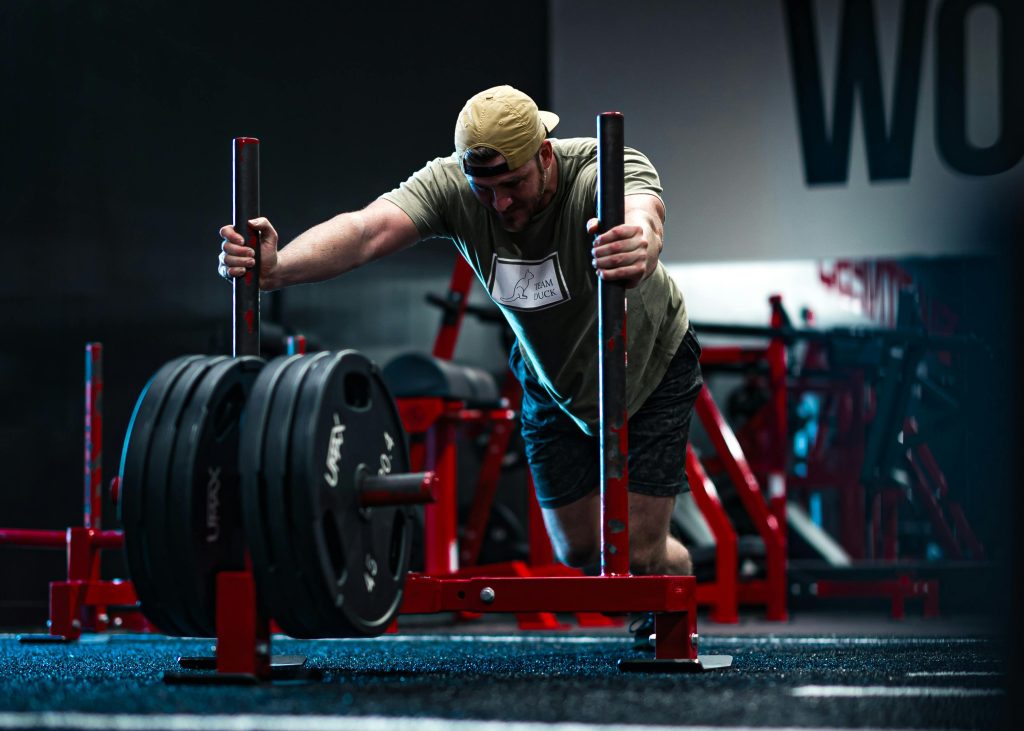
Weighted sled workouts for athletic conditioning power have revolutionised how athletes train across the UK, from grassroots rugby clubs to professional football academies. If you’ve been searching for a training method that builds explosive speed, raw strength, and unshakeable endurance simultaneously, you’ve just found it. The weighted sled doesn’t lie – it reveals exactly where your conditioning falls short and provides the perfect stimulus to fix it.
📖 Reading time: 21 minutes
Picture this: You’re three minutes into your five-a-side match, and your legs already feel like concrete. Your mind wants to chase down that loose ball, but your body simply won’t respond. Meanwhile, that bloke who’s ten years older than you sprints past effortlessly for the third time. Sound familiar? The gap between wanting to perform and actually performing often comes down to one missing element in your training – the kind of sport-specific conditioning that weighted sled workouts deliver better than almost any other method.
Common Myths About Weighted Sled Workouts for Athletic Conditioning Power
For more on this topic, you might enjoy: Explosive Conditioning for Muay Thai Beginners: Build Fight-Ready Power in 8 Weeks.
Myth: Sled Work Makes You Slow and Bulky
Reality: Weighted sled workouts actually enhance speed when programmed correctly. Research from the University of Bath demonstrates that sled training improves acceleration mechanics and stride power without adding excessive muscle mass. The key lies in load selection – using 10-20% of body weight for speed work and 30-50% for strength-endurance creates lean, explosive power rather than bulk. Elite sprinters across UK Athletics programmes regularly incorporate sled work precisely because it builds the kind of functional power that translates directly to faster times.
Myth: You Need a Fancy Gym to Do Sled Training
Reality: Some of the most effective weighted sled workouts happen on football pitches, car parks, and park paths across Britain. While commercial gyms might have dedicated sleds, a simple weight sled costs less than a month’s gym membership and lasts for years. Many amateur rugby clubs and athletics teams share equipment, making it accessible to anyone serious about improving their conditioning power. The surface matters more than the equipment – grass, artificial turf, and tarmac all work brilliantly.
Myth: Sled Training Is Only for Advanced Athletes
Reality: Weighted sled workouts suit everyone from complete beginners to international competitors. The beauty of sled work lies in its scalability – you control the intensity through weight, distance, and rest periods. A teenager just starting their fitness journey might push an empty sled for 10 metres, whilst a seasoned athlete drags 100 kilos for 40 metres. Both gain tremendous conditioning benefits at their respective levels. The low-impact nature actually makes sleds safer for beginners than many traditional conditioning methods like repeated sprinting on hard surfaces.
Why Weighted Sled Workouts Build Superior Athletic Conditioning Power
Related: Battle Rope Exercises Transform Fat Loss and Endurance in Just 20 Minutes
The magic of weighted sled training lies in its unique mechanical demands. Unlike running or cycling, sled work eliminates the eccentric (lowering) phase of movement. Your muscles contract concentrically – shortening under load – which means you’re building power without the muscle damage that causes debilitating soreness. This allows for higher training frequency and faster recovery, essential factors when you’re trying to build conditioning power that lasts an entire match or competition.
What’s more, weighted sled workouts force your body to produce horizontal force, the exact same force vector you use when accelerating in football, rugby, cricket, or tennis. Traditional gym exercises like squats develop vertical force brilliantly, but they don’t fully transfer to the horizontal plane where sports actually happen. A study published in the Journal of Strength and Conditioning Research found that athletes who added weighted sled training improved their 10-metre sprint times by an average of 0.18 seconds – a massive margin in competitive sport.
Your cardiovascular system receives an extraordinary stimulus from weighted sled workouts as well. Pushing or pulling a loaded sled elevates your heart rate rapidly whilst simultaneously demanding muscular endurance from your legs, core, and upper body. This combination creates what exercise physiologists call “concurrent training effects” – you’re building strength and endurance in the same session, something that’s notoriously difficult to achieve with conventional methods.
The metabolic demands are equally impressive. Weighted sled workouts for athletic conditioning power tap into both your anaerobic and aerobic energy systems, depending on work-to-rest ratios. Short, heavy pushes with long rest periods develop explosive power and phosphocreatine recovery. Longer pushes with moderate weight and shorter rest intervals build lactate tolerance and cardiovascular capacity. This versatility means you can design sled protocols that precisely match the energy demands of your specific sport.
Essential Weighted Sled Workout Protocols for Athletic Conditioning Power
The acceleration protocol forms the foundation of speed development. Load your sled with 10-15% of your body weight and perform 8-10 repetitions of 10-20 metre pushes with 2-3 minutes complete rest between efforts. Focus entirely on explosive starts and powerful strides. This protocol enhances your ability to change direction quickly and accelerate out of static positions – crucial for football, rugby, and racquet sports. Perform this workout twice weekly during your competitive season to maintain explosive power.
For building the kind of conditioning power that keeps you strong in the final quarter, the strength-endurance protocol delivers exceptional results. Load the sled with 30-40% of body weight and push for 30-40 metres, completing 6-8 rounds with 90 seconds rest. Your legs will burn intensely, but that’s precisely the adaptation you’re after. This protocol builds muscular endurance in your quads, glutes, and calves whilst simultaneously training your cardiovascular system to clear lactate efficiently. Athletes report feeling noticeably stronger in the closing stages of matches after just four weeks of this protocol.
The cardiac output method uses lighter loads (20-25% body weight) for longer distances (50-80 metres) with 60-90 seconds rest between rounds. Complete 10-12 rounds, maintaining a steady, sustainable pace rather than sprinting. This weighted sled workout builds aerobic capacity and general conditioning without the joint impact of long-distance running. Many UK-based personal trainers prefer this method for team sport athletes during pre-season, as it develops a robust aerobic base without interfering with speed and power development.
Advanced athletes benefit tremendously from the contrast protocol, which alternates between heavy and light loads within the same session. Push a heavy sled (50-60% body weight) for 20 metres, rest two minutes, then immediately push a light sled (10% body weight) for 20 metres with maximal speed. This contrast creates a potentiation effect – the nervous system remains highly activated from the heavy load, allowing you to move the light load explosively. Complete 5-6 contrast pairs with 3-4 minutes between pairs. This sophisticated approach to weighted sled workouts develops both raw strength and explosive speed simultaneously.
Proper Technique for Maximum Conditioning Power Development
Your body position determines whether weighted sled workouts build athletic power or simply waste energy. Start with your hands positioned at chest height on the sled poles, arms fully extended. Your torso should lean forward at approximately 45 degrees – not too upright, which reduces force production, and not too horizontal, which compromises your stride mechanics. Many athletes make the mistake of standing too tall, turning the exercise into a leg press rather than a sprint-specific movement.
Drive through the balls of your feet with each stride, maintaining a high knee lift and powerful ground contact. Your foot should strike the ground directly beneath your hips, not out in front, which would create a braking effect. Think about pushing the ground away behind you rather than reaching forward. This subtle mental cue transforms your technique immediately. Elite sprint coaches across the UK consistently emphasise this coaching point because it’s the difference between effective weighted sled training and simply going through the motions.
Core engagement remains absolutely critical throughout weighted sled workouts for athletic conditioning power. Brace your abdominals as if expecting a punch, maintaining this tension through the entire push or pull. A weak or disengaged core allows energy to leak through your midsection rather than transferring from your legs to the sled. If you notice your lower back arching excessively or your hips rotating side to side, reduce the weight immediately. These compensation patterns indicate insufficient core strength for the load you’ve chosen.
Breathing strategy matters more than most athletes realise. For explosive speed work with heavy loads, take a deep breath before initiating the push and exhale forcefully as you drive. For longer conditioning efforts, establish a rhythmic breathing pattern that matches your stride cadence – typically inhaling for two strides and exhaling for two strides. Never hold your breath for extended periods, as this spikes blood pressure unnecessarily and reduces performance.
Integrating Weighted Sled Work Into Your Training Week
The placement of weighted sled workouts within your training week dramatically impacts results. For team sport athletes, schedule high-intensity sled sessions (acceleration and contrast protocols) 48-72 hours before matches to allow adequate recovery whilst maintaining neural readiness. Your nervous system stays primed for explosive performance without the residual fatigue that heavy gym sessions create. Many Championship and League One football clubs in England follow this exact pattern during the competitive season.
Strength-endurance protocols fit beautifully after technical training sessions when you’re already fatigued but want to build match-specific conditioning. This approach, called “training in a fatigued state,” enhances your ability to maintain technique when tired – exactly what separates good athletes from great ones in the closing stages of competition. Rugby clubs particularly favour this strategy, running weighted sled conditioning circuits after contact sessions to replicate the demands of the final 20 minutes of a match.
During pre-season or off-season phases, you can increase weighted sled workout frequency to 3-4 sessions weekly, varying the protocols to target different energy systems. Monday might focus on acceleration development, Wednesday on strength-endurance, Friday on cardiac output, and Sunday on contrast work. This high-frequency approach builds conditioning power rapidly when you’re not managing competitive demands. Always monitor your resting heart rate and subjective fatigue levels – if either spikes significantly, insert an extra recovery day.
Recovery between sled sessions deserves as much attention as the workouts themselves. The NHS recommends adequate sleep (7-9 hours for adults) as the foundation of athletic recovery. Protein intake of 1.6-2.2 grams per kilogram of body weight supports muscle repair after demanding weighted sled workouts. Many athletes find that simple tools like foam rollers help reduce muscle tension between sessions, particularly in the hip flexors and quadriceps which bear the brunt of sled work.
Sport-Specific Applications of Weighted Sled Workouts for Athletic Conditioning Power
Football players gain tremendous benefits from weighted sled training because the sport demands repeated accelerations over 10-30 metres. The acceleration protocol mentioned earlier directly improves your ability to beat opponents to loose balls and make recovery runs. Premier League academies across England have incorporated sled work into youth development programmes, recognising that early exposure to proper conditioning methods prevents injuries whilst enhancing performance. Midfielders particularly benefit from the strength-endurance protocol, as it replicates the sustained high-intensity running their position demands.
Rugby players require a different emphasis in their weighted sled workouts. The physical collisions and sustained power demands of rugby make the strength-endurance and heavy resistance protocols particularly valuable. Forward packs benefit from heavier loads (40-60% body weight) pushed for moderate distances to build the leg drive necessary for scrums and mauls. Backs need more speed-focused work with lighter loads to maintain their acceleration advantage. Many grassroots rugby clubs in Wales and the North of England have made weighted sleds central to their conditioning programmes, seeing measurable improvements in tackle effectiveness and late-game performance.
Cricket might seem an unlikely candidate for weighted sled training, but fast bowlers and explosive batsmen benefit enormously. The explosive acceleration protocol enhances a batsman’s ability to sprint between wickets, whilst bowlers develop the leg drive necessary for consistent pace. The England and Wales Cricket Board has researched the application of weighted sled workouts for athletic conditioning power in cricket specifically, finding that targeted sled work reduced soft tissue injuries in fast bowlers whilst improving bowling speed.
Tennis players face unique conditioning demands – they need explosive first-step quickness combined with the endurance to maintain intensity through five-set matches. Weighted sled workouts address both requirements brilliantly. Light sled pushes with directional changes replicate the movement patterns of tennis, whilst cardiac output protocols build the aerobic base that prevents performance decline in the later sets. British tennis coaches working with junior players increasingly incorporate sled training as a low-impact alternative to endless court sprints, which can cause overuse injuries on hard surfaces.
Your Four-Week Weighted Sled Conditioning Power Programme
This progressive plan takes you from introduction to advanced weighted sled workouts for athletic conditioning power. Adjust loads based on your current fitness level – the percentages provided suit intermediate athletes, so beginners should reduce by 5-10% and advanced athletes can increase similarly.
Weeks 1-4
1: Foundation Phase
- Session 1 (Monday): Acceleration focus – 8 rounds of 15-metre pushes with 10% body weight, 2 minutes rest between rounds. Concentrate entirely on technique and explosive starts. Film yourself if possible to check body position.
- Session 2 (Thursday): Cardiac output – 8 rounds of 40-metre pushes with 20% body weight, 90 seconds rest. Maintain a steady, controlled pace. Your heart rate should reach approximately 150-160 beats per minute.
- Session 3 (Saturday): Active recovery – Light sled pulls backwards for 30 metres, 6 rounds with 15% body weight. This variation strengthens your posterior chain whilst allowing your quads to recover from the pushing emphasis earlier in the week.
2: Volume Increase
- Session 1: Acceleration – 10 rounds of 20-metre pushes with 12% body weight, 2.5 minutes rest. Focus on maintaining power output across all repetitions rather than fading towards the end.
- Session 2: Strength-endurance introduction – 6 rounds of 30-metre pushes with 30% body weight, 2 minutes rest. Expect significant leg burn. This is normal and desirable.
- Session 3: Cardiac output – 10 rounds of 50-metre pushes with 20% body weight, 90 seconds rest. Your breathing will be laboured, but maintain rhythmic inhalation and exhalation.
3: Intensity Progression
- Session 1: Contrast protocol – 6 pairs of heavy (50% body weight for 20 metres) followed immediately by light (10% body weight for 20 metres). Rest 3 minutes between pairs. The light push should feel effortless after the heavy load.
- Session 2: Strength-endurance – 8 rounds of 35-metre pushes with 35% body weight, 90 seconds rest. This session builds serious mental toughness alongside physical conditioning power.
- Session 3: Acceleration – 12 rounds of 15-metre pushes with 15% body weight, 2 minutes rest. Despite the higher load, maintain explosive technique on every single repetition.
4: Peak Conditioning
- Session 1: Advanced contrast – 5 pairs of very heavy (60% body weight for 15 metres) followed by very light (bodyweight only sprint for 20 metres). Rest 4 minutes between pairs. This potentiation effect creates remarkable neural adaptations.
- Session 2: Extended strength-endurance – 6 rounds of 40-metre pushes with 40% body weight, 2 minutes rest. If you complete all six rounds successfully, you’ve built extraordinary conditioning power in just four weeks.
- Session 3: Cardiac output peak – 12 rounds of 60-metre pushes with 25% body weight, 60 seconds rest. This final session demonstrates how far your conditioning has progressed since week one.
Mistakes to Avoid (And How to Fix Them)
Mistake 1: Starting Too Heavy
Why it’s a problem: Loading the sled excessively on your first sessions compromises technique and creates excessive soreness that prevents consistent training. Many enthusiastic athletes add far too much weight initially, thinking more resistance equals better results. Instead, they develop poor movement patterns and often injure themselves within the first fortnight.
What to do instead: Begin with embarrassingly light loads that feel almost too easy. Master the movement pattern with 10% of your body weight before progressing. Your ego might protest, but your body will thank you. Proper weighted sled workouts prioritise movement quality over absolute load, especially during the initial learning phase. Add 5% of body weight weekly once technique is solid.
Mistake 2: Inadequate Rest Periods Between Sets
Why it’s a problem: Rushing rest intervals transforms a power-building session into an unstructured conditioning mess. Incomplete recovery prevents you from producing maximum force on subsequent sets, which means you’re not actually training the qualities you intended. The cumulative fatigue also increases injury risk as technique deteriorates.
What to do instead: Time your rest periods religiously using your phone or a stopwatch. For explosive work, rest until your breathing returns to near-normal and you feel genuinely ready to attack the next set with full intensity. This typically requires 2-3 minutes minimum. For conditioning protocols, the prescribed rest is part of the training stimulus – taking longer rest defeats the purpose, whilst cutting it short prevents completion of the workout.
Mistake 3: Neglecting Surface Selection
Why it’s a problem: Performing weighted sled workouts on inappropriate surfaces dramatically reduces effectiveness and increases injury risk. Concrete creates excessive friction that turns speed work into a grinding strength session. Extremely soft surfaces like sand provide inconsistent resistance that prevents proper force development. Slippery wet grass causes your feet to slide rather than grip.
What to do instead: Seek out artificial turf, natural grass in good condition, or smooth tarmac for your weighted sled training. These surfaces provide consistent resistance and reliable traction. Check your training surface before each session – after heavy rain, move to a different location rather than pushing through slippery conditions. Many UK council sports facilities allow public use of their artificial pitches during off-peak hours, providing ideal surfaces for weighted sled workouts for athletic conditioning power.
Mistake 4: Training Sleds in Isolation
Why it’s a problem: Some athletes become so enthusiastic about sled work that it becomes their entire training programme. Whilst weighted sled workouts build tremendous conditioning power, they don’t address all athletic qualities. Mobility, upper body strength, change-of-direction ability, and sport-specific skills all require dedicated attention that sleds alone cannot provide.
What to do instead: Integrate weighted sled workouts as one component of a comprehensive training programme. Dedicate 2-3 sessions weekly to sled work during peak conditioning phases, but continue strength training, mobility work, and sport-specific practice. Think of the sled as a powerful tool in your athletic development toolkit, not the only tool you need.
Mistake 5: Ignoring Progressive Overload Principles
Why it’s a problem: Using the same weights, distances, and rest periods week after week eventually yields no additional adaptation. Your body becomes efficient at that specific workload and stops improving. Many athletes plateau after impressive initial gains simply because they never progressed their weighted sled training variables beyond the introductory level.
What to do instead: Systematically increase one variable every 1-2 weeks. Add 5% more weight, extend distances by 5-10 metres, complete additional rounds, or reduce rest periods by 15 seconds. Keep detailed training logs noting loads, distances, times, and rest periods so you can track progression objectively. When you can complete a workout that previously felt crushing whilst barely breathing hard, it’s definitely time to progress.
Quick Reference Checklist for Effective Weighted Sled Conditioning
- Start every weighted sled workout with a thorough 10-minute warm-up including dynamic stretching and progressive movement prep
- Position your body at 45-degree forward lean with arms extended and hands at chest height on the sled poles
- Drive through the balls of your feet with high knee lift, landing directly beneath your hips rather than reaching forward
- Use 10-20% of body weight for acceleration work, 30-50% for strength-endurance, and 20-25% for cardiovascular conditioning
- Rest completely between explosive sets (2-3 minutes minimum) but reduce rest for conditioning protocols (60-90 seconds)
- Train weighted sleds 2-3 times weekly with at least 48 hours between high-intensity sessions
- Choose surfaces with consistent resistance and good traction – artificial turf, quality grass, or smooth tarmac work best
- Progress systematically by increasing load, distance, rounds, or reducing rest every 1-2 weeks to maintain adaptation
Frequently Asked Questions
How quickly will I see improvements in my athletic conditioning from weighted sled workouts?
Most athletes notice improved acceleration and reduced fatigue during competition within 2-3 weeks of consistent weighted sled training. Measurable improvements in sprint times, repeated sprint ability, and sport-specific conditioning tests typically appear after 4-6 weeks of progressive training. The speed of adaptation depends on your training history – complete beginners often see dramatic improvements quickly, whilst advanced athletes require longer adaptation periods. Keep detailed records of your performance metrics to track progress objectively rather than relying on subjective feel.
Can I build conditioning power with weighted sled workouts if I have knee problems?
Weighted sled workouts actually place less stress on knee joints than many traditional conditioning methods because they eliminate the eccentric loading phase that causes most joint discomfort. The concentric-only nature of sled pushing often makes it suitable even for people with knee concerns. That said, always consult with a physiotherapist or sports medicine professional before starting any new training programme if you have existing injuries. Many athletes recovering from knee injuries use light sled work as part of their rehabilitation under professional guidance, gradually progressing as strength and confidence return.
Do I need expensive equipment to benefit from weighted sled training?
Basic weight sleds start at around £80-120 and last for years, making them remarkably cost-effective compared to gym memberships or other training equipment. Some ingenious athletes create DIY versions using old tyres, ropes, and weight plates, though commercial sleds generally provide better control over resistance and body positioning. Many grassroots sports clubs share sled equipment among members, dramatically reducing individual cost. If you’re genuinely committed to building athletic conditioning power, a quality sled represents one of the best training investments you’ll make.
How do I know if I’m using the correct weight on the sled?
Your training goal determines the appropriate load for weighted sled workouts. For explosive acceleration work, choose a weight that allows you to maintain sprint technique whilst providing noticeable resistance – you should cover 10-20 metres in roughly 3-4 seconds. When introducing strength-endurance protocols, select a load that causes significant leg burn by the final 10 metres but doesn’t force you to stop mid-set. For conditioning work, the weight should elevate your heart rate to approximately 150-170 beats per minute whilst allowing steady, continuous movement. Start lighter than you think necessary and add weight gradually – it’s far easier to add resistance than recover from training with excessive loads.
Can weighted sled workouts replace my current conditioning training entirely?
Weighted sled workouts provide exceptional conditioning benefits but work best as part of a varied training programme rather than a complete replacement for all other methods. Sleds excel at building horizontal force production, acceleration ability, and muscular endurance in the lower body. However, they don’t fully develop change-of-direction ability, lateral movement, or sport-specific agility patterns. Most high-performing athletes combine weighted sled training with complementary methods like interval work, sport-specific drills, and strength training for comprehensive athletic development. The ideal approach uses weighted sled workouts for athletic conditioning power as your primary lower-body conditioning method whilst incorporating other modalities to address different athletic qualities.
Building Unstoppable Conditioning Power
Weighted sled workouts for athletic conditioning power offer something genuinely rare in fitness – a training method that delivers exactly what it promises without gimmicks or exaggeration. The mechanical demands of pushing or pulling a loaded sled create adaptations that transfer directly to improved sports performance. Your acceleration becomes more explosive, your endurance deepens, and your ability to sustain high-intensity efforts throughout competition strengthens dramatically.
The beauty of weighted sled training lies not just in its effectiveness but in its simplicity. You don’t need complex programming, expensive facilities, or years of experience to benefit. Load the sled appropriately for your goal, maintain proper technique, and push with genuine effort. The sled provides immediate, honest feedback – you either move it or you don’t. This clarity creates remarkable progress when you commit to consistent training over weeks and months.
Remember that building authentic conditioning power requires patience and progressive overload. The four-week programme outlined above provides an excellent foundation, but your development continues far beyond that initial month. Athletes who incorporate weighted sled workouts into their long-term training consistently outperform those who chase the latest fitness trends. The research supports what coaches have known for decades – simple, demanding, progressive training produces superior results.
You now possess everything needed to transform your athletic conditioning through intelligent weighted sled training. Start with the foundation phase, respect the recovery requirements, and progress systematically. Within one month, you’ll move differently on the pitch, court, or field. Your teammates will notice your improved ability to accelerate and your capacity to maintain intensity when others fade. More importantly, you’ll feel the difference – that satisfying sensation of physical capability that comes from proper conditioning work. The weighted sled is waiting. Your next level of athletic performance starts with that first push.


