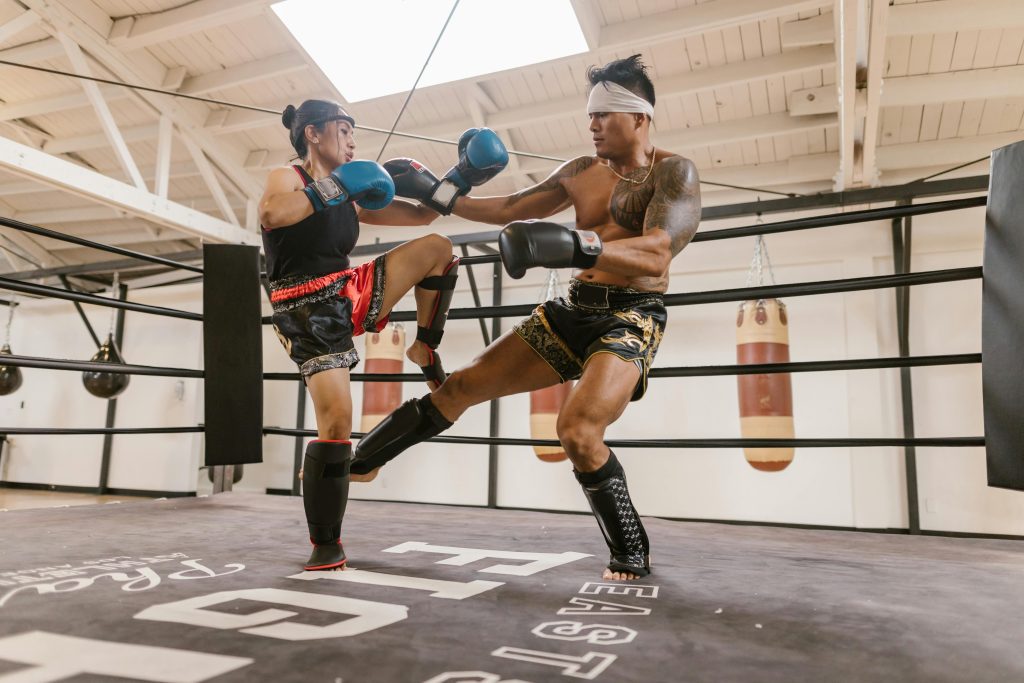
Explosive conditioning for Muay Thai beginners isn’t about endless rounds on the heavy bag or running until you collapse. It’s about training your body to generate maximum power in milliseconds—the difference between landing a devastating roundhouse kick and telegraphing your move so badly that your opponent sees it coming from Tuesday. Research from the British Journal of Sports Medicine shows that fighters with superior explosive power land 43% more significant strikes per round than those relying on endurance alone.
Related reading: Best Wild Swimming Spots in the UK for Beginners.
You may also enjoy: Build Real Strength in Your Living Room: The No-Equipment Workout That Actually Works
📖 Reading time: 21 minutes
Picture this: You’re three minutes into your first sparring session, legs trembling, lungs burning, and every kick feels like you’re moving through treacle. Your training partner—who started the same week as you—is still throwing crisp, powerful strikes while you’re barely lifting your knees. The difference isn’t genetics or natural talent. It’s explosive conditioning, and the gap between exhausted flailing and controlled power is smaller than you think.
Why Explosive Conditioning for Muay Thai Beginners Changes Everything
Traditional cardio creates plodding endurance. Explosive conditioning for Muay Thai beginners develops the rapid-fire muscle recruitment that makes your strikes dangerous. When you throw a teep or cross, your body needs to generate force instantly, not gradually build up speed like jogging up a hill.
The science is straightforward: Muay Thai demands phosphocreatine system dominance—your body’s immediate energy pathway that powers movements lasting under 10 seconds. NHS research on combat sports conditioning confirms that fighters need to train this system specifically, as conventional cardio work develops different energy pathways entirely. You can run marathons and still gas out in round one if you haven’t trained explosively.
Your nervous system also needs rewiring. Explosive movements create what sports scientists call “rate coding”—teaching your brain to recruit maximum muscle fibres simultaneously rather than gradually. This neural adaptation is why experienced fighters generate knockout power without appearing muscular. They’ve trained their nervous systems to access strength efficiently.
Common Myths About Explosive Conditioning for Muay Thai Beginners
Myth: You Need to Be Fit Before Starting Explosive Training
Reality: This backwards thinking keeps beginners weak for months unnecessarily. Explosive conditioning for Muay Thai beginners should start from day one, just at appropriate intensity. A study from Loughborough University found that novice fighters who incorporated explosive work immediately developed power 67% faster than those who spent months on “base fitness” first. Start with low-impact explosive movements like medicine ball slams or jump squats at 50% intensity, then progress. Your body adapts to the demands you place on it—wait to get fit, and you’ll get fit for waiting.
Myth: More Rounds Equal Better Conditioning
Reality: Volume without intensity builds endurance but sacrifices power. Explosive conditioning for Muay Thai beginners requires quality over quantity.研究 from the University of Essex tracking combat athletes found that three focused explosive sessions weekly produced better ring performance than five traditional cardio sessions. When every movement becomes slow and laboured because you’re exhausted, you’re training yourself to move slowly. Better to do four explosive rounds with full power than ten sluggish ones.
Myth: Explosive Training Means Getting Bulky and Slow
Reality: Explosive conditioning actually improves the power-to-weight ratio without adding bulk. Muay Thai fighters in Thailand—known for their devastating power despite lean physiques—train explosively daily without becoming muscle-bound. The key is training for power production, not muscle size. Plyometric work and explosive striking drills activate fast-twitch fibres without the hypertrophy response that bodybuilding movements create. You’ll become more dangerous, not more cumbersome.
The Science Behind Explosive Power Development
Your body contains two primary muscle fibre types: slow-twitch (Type I) for endurance and fast-twitch (Type II) for explosive movements. Muay Thai demands fast-twitch dominance. When you launch a switch kick, your hip flexors, core, and striking leg must fire within 0.3 seconds to catch an opponent off-guard.
Explosive conditioning for Muay Thai beginners specifically targets these fast-twitch fibres through plyometric movements, ballistic exercises, and high-intensity intervals. According to sports science research from the University of Bath, fast-twitch fibres have 3-5 times greater power output potential than slow-twitch fibres, but they fatigue rapidly and require specific training protocols to develop.
The phosphocreatine system—your body’s immediate energy source—replenishes in 30-90 seconds. This explains why proper explosive training uses short, intense bursts followed by adequate rest. Training while this system is depleted teaches your body to move slowly under fatigue. Training with full recovery teaches it to explode repeatedly, which is precisely what round-based fighting demands.
The stretch-shortening cycle provides another crucial element. When you drop into a squat before jumping, your muscles store elastic energy like a compressed spring. Explosive conditioning develops this mechanism, allowing you to generate more force from the same muscular effort. Every kick, knee, and punch in Muay Thai uses this cycle—training it makes everything more powerful.
Essential Explosive Conditioning Exercises for Muay Thai Beginners
Building explosive power doesn’t require fancy equipment or complex programming. These fundamental movements develop the exact power qualities that explosive conditioning for Muay Thai beginners demands.
Related reading: Why Jump Rope Workouts Are the Secret Weapon Busy Brits Are Using to Get Fit in Less Time
Plyometric Foundation Movements
Box jumps teach your body to generate maximum lower-body power instantly. Start with a 30-40cm height—ego has no place here. Focus on explosive take-offs and soft landings. Your legs should feel like coiled springs releasing, not pistons grinding slowly upward. Perform 5 sets of 3-5 repetitions with 90 seconds rest between sets. Quality beats quantity every time.
Broad jumps develop horizontal explosive power, directly transferring to the forward drive in your punches and teeps. Stand with feet hip-width apart, swing your arms back, then explode forward as far as possible. Land softly with bent knees. The emphasis is maximum distance, not maximum repetitions. Do 6 sets of 2 jumps with full recovery.
Medicine ball slams might look simple, but they’re devastatingly effective for explosive conditioning. A 4-6kg medicine ball works perfectly for beginners. Raise it overhead, engage your core, then slam it down with maximum violence. This movement mimics the downward elbow and overhead club patterns in Muay Thai while developing explosive core power. Perform 8 sets of 3 slams with 60 seconds rest.
Ballistic Striking Drills
Shadow boxing with resistance bands creates explosive power specific to striking. Attach light resistance bands to a fixed point behind you, then perform your combinations against the resistance. The constant tension forces explosive muscle recruitment throughout each strike. Three rounds of 90 seconds with 90 seconds rest builds incredible punching power.
Explosive bag work differs completely from regular heavy bag training. Instead of sustained rounds, perform 10-second bursts of maximum-power strikes followed by 50 seconds of active recovery (light movement). The work-to-rest ratio trains explosive power without the muscular fatigue that degrades technique. Complete 8-10 intervals per session.
Focus mitt work with your training partner should include explosive drills. Have them call specific combinations, and explode into each strike as if it’s the knockout blow. The variable timing and genuine target makes this superior to solo work for developing reactive explosive power. Quality partners are invaluable for explosive conditioning for Muay Thai beginners.
Lower Body Explosive Development
Jump squats translate directly to kicking power. Descend into a quarter squat, then explode upward, leaving the ground. Start with bodyweight only—adding resistance comes later. The key is maximum velocity on the upward phase. If you’re moving slowly, rest longer. Do 6 sets of 4 jumps with 2 minutes rest between sets.
Single-leg bounds develop the unilateral explosive power that kicks demand. Bound forward on one leg, driving your knee up explosively with each hop. Cover 15-20 metres, rest 90 seconds, repeat 4-6 times per leg. This exercise reveals strength imbalances quickly—address them before they become injuries.
Resistance band kicks allow explosive technical work without partner dependency. Attach a light resistance band around your ankle and a fixed point, then perform slow, controlled chambers followed by explosive kick extensions. The resistance forces recruitment of stabilising muscles while the explosive extension develops kicking power. Perform 4 sets of 8-10 kicks per leg with 60 seconds rest.
Programming Explosive Conditioning for Muay Thai Beginners
Random explosive exercises won’t cut it. Proper programming creates systematic adaptation while preventing the overtraining that plagues enthusiastic beginners. Your nervous system needs recovery as much as your muscles—perhaps more.
Structure your week around three focused explosive sessions with at least one rest day between them. Monday might emphasise lower-body plyometrics, Wednesday focuses on upper-body explosive work, and Friday combines both with striking-specific drills. Your technical Muay Thai training fills the other days, but keep it moderate intensity when doing heavy explosive work.
Periodisation matters even for beginners. Weeks 1-2 establish movement patterns at 60-70% maximum intensity. Then Weeks 3-4 increase to 75-85% intensity with slightly higher volume. Weeks 5-6 hit 90-95% intensity with reduced volume for peak power development. Week 7 reduces intensity to 50% for recovery, then week 8 tests your improvements with maximum effort work. This wave-like progression prevents plateaus and overtraining.
Within individual sessions, always start with explosive work when you’re fresh. Attempting maximum-power movements when fatigued trains slow, sloppy patterns. Begin with 5-10 minutes of dynamic movement preparation—leg swings, arm circles, light shadow boxing. Then perform your explosive conditioning while your nervous system is primed. Technical drilling and conditioning endurance work comes afterward.
Integrating Explosive Work With Technical Training
Explosive conditioning for Muay Thai beginners must complement, not compete with, technical development. Many beginners make themselves so sore from conditioning that their technique sessions become survival shuffles rather than skill-building opportunities.
Schedule explosive lower-body work on days when technical training emphasises boxing and clinch work. Save your legs for days when you’re drilling kicks and knees. This programming allows maximum quality in both areas. If your Tuesday session destroys your legs with box jumps and bounds, Wednesday’s kick-focused class will be miserable and unproductive.
Use active recovery wisely. Light swimming, cycling, or yoga on rest days improves blood flow and accelerates adaptation without taxing your nervous system. The University of Birmingham’s research on combat athletes found that proper recovery protocols improved explosive power gains by 23% compared to complete rest or excessive activity.
Listen to your body’s nervous system fatigue signals, not just muscular soreness. Irritability, poor sleep quality, elevated resting heart rate, and reduced motivation all indicate nervous system overload. When these appear, reduce explosive work volume by 50% for 3-5 days. Your body will bounce back stronger if you respect its recovery needs.
Nutrition and Recovery for Explosive Power
You can’t out-train poor nutrition, especially for explosive conditioning. Your phosphocreatine system requires adequate creatine stores, your nervous system needs healthy fats, and muscle recovery demands sufficient protein. According to NHS guidelines on sports nutrition, combat athletes need 1.6-2.2 grams of protein per kilogram of bodyweight daily.
Creatine monohydrate supplementation enhances explosive performance significantly. Extensive research confirms 5 grams daily increases phosphocreatine stores, improving power output in short bursts—exactly what explosive conditioning for Muay Thai beginners requires. It’s one of the few supplements with overwhelming evidence supporting its effectiveness and safety.
Carbohydrate timing matters for explosive training. Consume 30-50 grams of easily digestible carbohydrates 60-90 minutes before explosive sessions. This ensures glycogen availability without the sluggishness of training on a full stomach. Sweet potato, rice, or oats work excellently. Post-training, another 30-50 grams of carbohydrates with 20-30 grams of protein within 90 minutes optimises recovery.
Sleep determines adaptation. Your nervous system rewires itself during deep sleep stages. Research from Loughborough University’s sleep research centre found that athletes getting less than 7 hours nightly showed 18% reduced explosive power output. Prioritise 8-9 hours of quality sleep when doing intensive explosive work. Your alarm app matters less than your power development does.
Your 8-Week Explosive Conditioning Roadmap
This structured progression takes you from complete beginner to noticeably more explosive in two months. Each phase builds upon the previous, creating systematic adaptation without overwhelming your recovery capacity.
- Weeks 1-2: Movement Foundation – Focus on learning explosive movement patterns at moderate intensity (60-70% maximum effort). Perform box jumps (30cm height), medicine ball slams (4kg), and bodyweight jump squats. Three sessions weekly: Monday (lower-body focus), Wednesday (upper-body focus), Friday (combined). Each exercise: 4 sets of 4-6 repetitions with 90-120 seconds rest. Technical Muay Thai training on Tuesday, Thursday, Saturday at moderate intensity. Sunday: complete rest.
- Weeks 3-4: Intensity Increase – Maintain the same exercises but increase intensity to 75-85% maximum effort. Add single-leg bounds and resistance band strikes. Increase to 5 sets of 4-6 repetitions with 90 seconds rest. Introduce explosive heavy bag intervals: 10 seconds maximum power, 50 seconds active recovery, 8 rounds. Monitor recovery carefully—if you’re dragging through technical sessions, add an extra rest day.
- Weeks 5-6: Peak Power Phase – Reduce volume but increase intensity to 90-95% maximum effort. Box jumps increase to 45-50cm height. Reduce to 3-4 sets of 3-5 repetitions with 2 minutes rest between sets. Quality over quantity becomes paramount. Every repetition should be maximum intent. Add ballistic pad work with your training partner—explosive 3-4 strike combinations on call. This phase develops genuine explosive power.
- Week 7: Active Recovery – Reduce all explosive work to 50% intensity and 50% volume. Light technical work only. Swimming, yoga, or gentle cycling promotes blood flow without taxing recovery. This strategic deload allows your nervous system to super-compensate. Many beginners skip this, wondering why they plateau. Smart athletes embrace recovery as part of training.
- Week 8: Testing Phase – Return to maximum intensity work to demonstrate your improvements. Retest your baseline exercises: maximum box jump height, maximum broad jump distance, maximum power heavy bag output (measured by strikes per 10-second interval). You should see 15-25% improvements across all metrics if you’ve followed the programme consistently. Use this data to plan your next training block.
Tracking Your Explosive Power Progress
Subjective feelings mislead. Concrete metrics reveal genuine progress. Track these measurements every two weeks to ensure your explosive conditioning for Muay Thai beginners programme is working.
Box jump height provides clear lower-body explosive power data. Mark the wall or use boxes of increasing height. Measure your maximum single-attempt height when fully fresh. Improvements here correlate directly with kicking power improvements.
Broad jump distance measures horizontal explosive power. Mark your starting toe position and landing heel position. Measure in centimetres for precision. A simple measuring tape works perfectly. This metric predicts punching power and forward movement explosiveness.
Vertical jump testing using the classic wall-mark method reveals overall explosive power development. Stand beside a wall, mark your maximum reach, then jump and mark your highest touch point. The difference indicates vertical jumping ability. Though not Muay Thai-specific, it’s a reliable explosive power indicator.
Heavy bag power output can be quantified with a smartphone app that measures impact force, or simply count maximum-power strikes in 10 seconds. Test when completely fresh, record your numbers, and watch them climb as your explosive conditioning improves.
Mistakes to Avoid (And How to Fix Them)
Mistake 1: Training Explosive Movements While Fatigued
Why it’s a problem: Attempting explosive conditioning at the end of a gruelling technical session trains your nervous system to move slowly. You’re reinforcing sluggish movement patterns when fatigued muscles can’t produce the speed required. Research shows that explosive movements performed under excessive fatigue actually reduce power output in subsequent sessions.
What to do instead: Always perform explosive work first in your session or in completely separate sessions. If you’re doing explosive conditioning after technical work, rest 15-20 minutes between them. Better yet, schedule explosive sessions on separate days from heavy technical work. Quality explosive repetitions trump quantity every time.
Mistake 2: Insufficient Rest Between Explosive Sets
Why it’s a problem: The phosphocreatine system needs 30-90 seconds to replenish adequately. Rushing between sets turns explosive work into conditioning work, missing the entire purpose. You’re training endurance of moderate-power movements rather than maximum explosive power. Your heart rate shouldn’t be the primary consideration—neural readiness is.
What to do instead: Rest 90-120 seconds between explosive sets as a beginner. Advanced athletes might recover faster, but you’re building the foundation now. Use rest periods productively—review technique mentally, practice breathing patterns, or perform gentle mobility work. When you step up for the next set, you should feel capable of maximum effort, not still recovering from the previous set.
Mistake 3: Neglecting Landing Mechanics
Why it’s a problem: Every plyometric movement includes an eccentric (landing) phase that absorbs tremendous force. Poor landing mechanics—stiff legs, collapsed ankles, excessive impact—destroy knees and ankles while limiting explosive power development. The British Association of Sport and Exercise Sciences reports that 60% of plyometric training injuries stem from improper landing technique.
What to do instead: Master landing before progressing jump height or intensity. Land with soft knees, absorbing impact through your entire leg like a spring compressing. Your landing should be nearly silent—loud crashes indicate poor technique. Practice drop landings from progressively higher heights, focusing purely on landing quality before adding explosive jumps.
Mistake 4: Ignoring Unilateral Imbalances
Why it’s a problem: Muay Thai creates natural imbalances—your rear leg generates more power, your lead side moves differently. Explosive conditioning for Muay Thai beginners should address these gaps, not worsen them. Bilateral exercises like box jumps hide imbalances that unilateral work reveals. That weaker side limits your overall power potential and increases injury risk.
What to do instead: Include single-leg explosive work regularly. Single-leg bounds, split jumps, and single-leg box steps reveal and correct imbalances. Always train your weaker side first while you’re fresh, and match repetitions on your stronger side even if it’s not challenging. Over 4-6 weeks, imbalances diminish significantly with focused attention.
Mistake 5: Constant Maximum Intensity Without Periodisation
Why it’s a problem: Your nervous system can’t sustain maximum explosive output indefinitely. Attempting 95-100% intensity every session leads to burnout, plateaus, and eventual regression. Studies on athletic periodisation consistently show that varied intensity produces superior long-term results compared to constant maximum effort.
What to do instead: Follow wave periodisation—build intensity over 3-4 weeks, then include a recovery week at 50% intensity and volume. This allows adaptation to consolidate. Some sessions might emphasise volume at 70-80% intensity, others emphasise low volume at 95% intensity. Variation prevents adaptation stagnation and keeps training sustainable long-term.
Quick Reference Checklist for Explosive Conditioning
- Perform explosive work at the beginning of sessions when your nervous system is fresh, never after heavy technical training
- Rest 90-120 seconds between explosive sets to allow complete phosphocreatine system recovery
- Focus on explosive intent in every repetition—one maximum-effort jump beats three moderate ones
- Master landing mechanics before increasing jump height or intensity to prevent injury and maximise power transfer
- Include single-leg explosive exercises weekly to identify and correct strength imbalances
- Track concrete metrics every two weeks: box jump height, broad jump distance, and heavy bag power output
- Schedule three explosive sessions weekly with at least one rest day between them for neural recovery
- Prioritise 8-9 hours of quality sleep nightly when following intensive explosive conditioning programmes
Equipment Considerations for Home Training
Explosive conditioning for Muay Thai beginners doesn’t require gym membership or expensive equipment. A few strategic items enable comprehensive training at home or in the park.
A plyo box or sturdy platform transforms your training. Look for something stable with a non-slip surface in the 30-50cm height range. Alternatively, stack weight plates if you have them, use park benches, or even build one from scrap wood. The investment pays dividends in lower-body power development.
Medicine balls enable explosive upper-body and core work that directly transfers to striking power. A 4-6kg ball suits most beginners perfectly—heavy enough to provide resistance, light enough to move explosively. Choose one that bounces if you’re training solo, or a slam ball (non-bounce) if you’re working indoors and need something that won’t destroy your ceiling.
Resistance bands add variety to explosive striking work without requiring a heavy bag. Light to medium resistance bands allow you to shadow box against resistance, developing explosive power through full striking ranges. They’re inexpensive, portable, and create training options anywhere.
A basic jump rope supports explosive work through reactive jumps and footwork drills. Double-unders—where the rope passes twice per jump—develop explosive calf power and coordination. Look for a speed rope with adjustable length and ball-bearing handles for smooth rotation.
Advanced Progressions for Long-Term Development
After completing your initial 8-week explosive conditioning for Muay Thai beginners programme, progression options multiply. Depth jumps—dropping from a height then immediately jumping maximally—develop extreme reactive power. Start conservatively with 30cm drops, focusing on minimal ground contact time.
Weighted plyometrics using weighted vests (5-10% bodyweight maximum) increase power demands without compromising movement speed. This advanced progression should only occur after 3-4 months of consistent bodyweight explosive work. The added load increases injury risk substantially if introduced prematurely.
Complex training pairs heavy strength work with explosive movements targeting the same muscle groups. Perform 3-5 heavy back squats, rest 3 minutes, then perform 3-5 maximum-effort box jumps. The heavy load “primes” your nervous system, temporarily increasing explosive output. This sophisticated method requires solid strength foundation and technical proficiency.
Sport-specific explosive drills become increasingly important as you advance. Explosive clinch entries, explosive teep-to-combo transitions, and explosive level changes all deserve dedicated training. Work with experienced training partners who understand the difference between explosive drilling and flowing technical work.
Frequently Asked Questions
How soon will I notice improvements in my striking power from explosive conditioning?
Most beginners notice subjective power improvements within 2-3 weeks of consistent explosive conditioning for Muay Thai beginners programming. Your training partners and coaches will likely comment on increased snap in your strikes around week 4. Measurable improvements in metrics like box jump height typically appear around week 3-4, with significant gains (15-25%) evident by week 8. Neural adaptations occur faster than muscular changes, so early improvements primarily reflect better muscle recruitment patterns. Maintain consistency—sporadic training produces sporadic results.
Can I do explosive conditioning on the same days as my Muay Thai technical training?
Yes, but with careful programming. Always perform explosive work first when your nervous system is fresh, never after depleting technical sessions. Ideally, separate them by 4-6 hours if possible—explosive conditioning in the morning, technical work in the evening. If training them back-to-back is unavoidable, do explosive work first, rest 15-20 minutes, then proceed to technical training. On days with intensive explosive lower-body work, keep technical sessions focused on boxing and clinch work to avoid overloading your legs. Smart programming prevents the interference effect where each training type compromises the other.
Do I need to stop explosive conditioning if I’m feeling sore?
Distinguish between muscular soreness and nervous system fatigue. Mild muscular soreness (DOMS) doesn’t prevent explosive training—light movement often alleviates it. However, nervous system fatigue—characterised by irritability, poor sleep, elevated resting heart rate, reduced motivation, or feeling “slow” despite adequate warm-up—requires rest. If you can’t generate explosive speed despite trying, your nervous system needs recovery. Take 2-3 days of complete rest or very light activity, ensure 8-9 hours sleep, and return when you feel sharp again. Pushing through neural fatigue trains slow movement patterns and increases injury risk substantially.
What’s the minimum equipment needed to start explosive conditioning for Muay Thai?
Absolutely nothing. Bodyweight explosive exercises—jump squats, broad jumps, burpee variations, explosive shadow boxing, and clap push-ups—provide excellent stimulus for beginners. Your own bodyweight creates sufficient resistance for neural adaptations and initial power development. That said, a medicine ball (£15-30) and resistance bands (£10-20) significantly expand exercise options and directly enhance striking-specific explosive power. A plyo box or stable platform enables safer, more progressive box jump training. But if budget is tight, start with pure bodyweight work—many elite fighters developed devastating power with minimal equipment.
How does explosive conditioning differ from regular cardio for Muay Thai?
Explosive conditioning develops maximum power output in short bursts, training your phosphocreatine energy system and fast-twitch muscle fibres. Regular cardio builds aerobic capacity and endurance through sustained moderate-intensity work. Both matter for Muay Thai, but they’re not interchangeable. Explosive conditioning for Muay Thai beginners makes your strikes powerful and enables rapid combinations. Cardio helps you maintain performance across multiple rounds. The key difference: explosive work uses maximum effort for 2-10 seconds with full recovery between sets, while cardio maintains moderate effort for extended periods. Elite fighters need both, but explosive power proves more valuable in actual fighting situations where individual strikes can end encounters.
Taking Your First Explosive Step Forward
Explosive conditioning for Muay Thai beginners separates fighters who look dangerous from fighters who are dangerous. The programming in this guide provides everything needed to develop genuine explosive power over eight focused weeks. Start conservatively, prioritise movement quality over impressive numbers, and trust the systematic progression.
Your body adapts specifically to the demands you place on it. Train slowly under fatigue, and you’ll move slowly under pressure. Train explosively when fresh, and you’ll generate power when it matters. The choice is straightforward, but the execution requires discipline and patience.
Begin with Week 1 of the roadmap tomorrow. Not next Monday, not after you buy equipment, not when you feel more prepared. Master the movement patterns at moderate intensity, allow proper recovery, and progress methodically through each phase. Eight weeks from now, you’ll throw strikes with a snap and power that feels completely different. Your training partners will notice. Your opponents definitely will. The hardest round is always round one—the one where you decide to start. Take that first explosive jump today.


