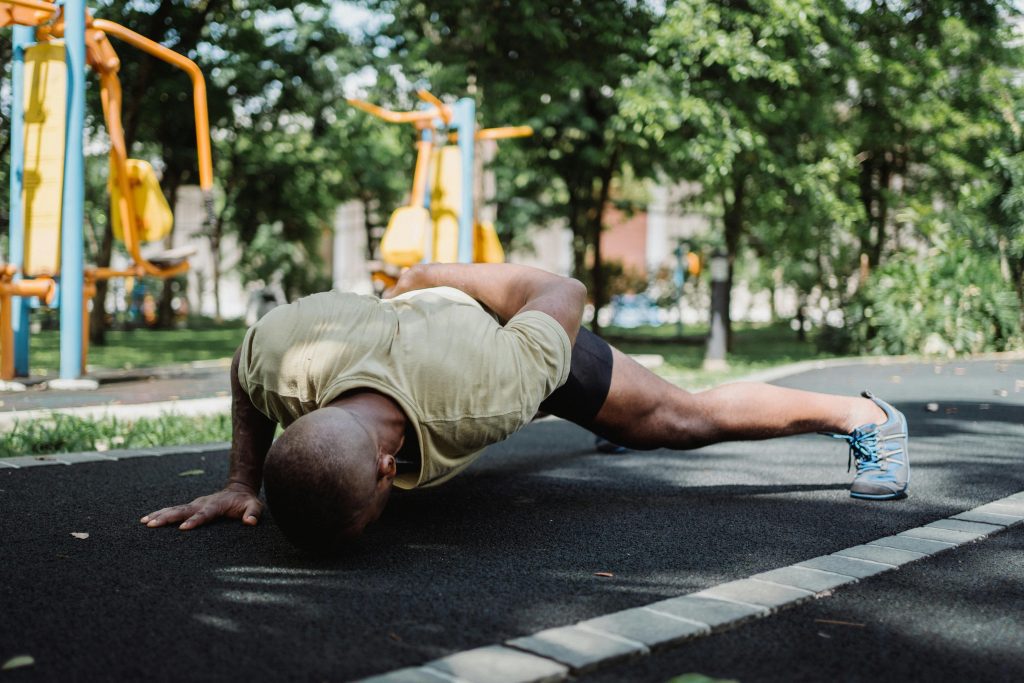
Think outdoor bodyweight circuit training is just for fitness influencers and military recruits? Look at any UK park on a Wednesday morning and you’ll see accountants, teachers, and busy parents getting proper workouts done without a gym membership in sight. The great outdoors offers everything you need for a challenging, full-body session that builds real strength.
Related reading: Resistance Band Workouts That Transform Your Home Training.
Picture this: You’re rushing between work deadlines, family obligations, and that growing list of things you meant to do three weeks ago. The gym membership you barely use sits like a guilty reminder in your wallet. Meanwhile, there’s a perfectly good park five minutes from your house with benches, grass, and more space than any crowded fitness studio could offer.
Common Myths About Outdoor Bodyweight Workouts
Related reading: Kettlebell Training for Beginners: Build Full Body Strength Fast.
Myth: You Can’t Build Real Strength Without Equipment
Reality: Your body provides all the resistance you need for significant strength gains. Research from the University of Bath shows that progressive bodyweight training produces similar muscle development to traditional weight training when performed at comparable intensities. The key lies in understanding leverage, tempo, and progression strategies that make outdoor bodyweight circuit training continuously challenging.
Myth: Outdoor Training Only Works in Summer
Reality: British weather builds character, right? Truth is, exercising outdoors year-round offers distinct advantages. Studies from the NHS indicate that cold weather training actually burns more calories as your body works to maintain core temperature. Layer properly, warm up thoroughly, and that autumn drizzle becomes less obstacle and more motivation.
Myth: Circuit Training Means Endless Burpees
Reality: Effective outdoor bodyweight circuit training involves strategic exercise selection targeting every major muscle group. While burpees have their place, a well-designed circuit includes push variations, pull movements (using park structures), squat patterns, core work, and dynamic movement. Variety prevents overuse injuries and keeps sessions engaging.
Why Outdoor Bodyweight Circuit Training Works Brilliantly
You might also enjoy: Park Bench Workout Routine: Build Full Body Strength Outdoors in 30 Minutes.
Here’s what makes this approach special: You’re combining functional movement patterns with natural vitamin D exposure and fresh air. Research published in Environmental Science & Technology found that outdoor exercise significantly improves mental wellbeing compared to indoor alternatives, with participants reporting greater enjoyment and likelihood of repeating the activity.
The circuit format keeps your heart rate elevated throughout the session, creating both cardiovascular and muscular adaptations. Unlike traditional strength training with long rest periods, outdoor bodyweight circuit training delivers metabolic conditioning alongside strength development. You’re essentially getting two workouts in one efficient package.
Most UK parks offer surprising equipment options when you know what to look for. Benches become elevated platforms for incline press-ups or step-ups. Low railings transform into dip stations. Trees provide anchors for stretching and mobility work. That patch of grass? Perfect for core exercises and explosive movements without joint stress.
The Full-Body Advantage
Traditional gym routines often isolate muscle groups, training chest Monday, legs Wednesday, back Friday. Outdoor bodyweight circuit training takes a different approach, engaging multiple muscle groups simultaneously through compound movements. When you perform a proper press-up, you’re not just working your chest. Your core stabilizes, your legs engage, your shoulders and triceps contribute. That’s functional fitness that translates directly to real-world activities.
This integrated approach builds coordination alongside strength. Your nervous system learns to fire multiple muscle groups in synchronization, improving athletic performance and reducing injury risk during daily activities. Carrying shopping bags, lifting children, moving furniture all become easier when your body functions as an integrated system rather than a collection of isolated parts.
Metabolic Benefits That Last
The continuous nature of outdoor bodyweight circuit training creates what exercise physiologists call “excess post-exercise oxygen consumption” or EPOC. Your metabolism stays elevated for hours after finishing, continuing to burn calories while you’re showering, working, or sleeping. A 2019 study referenced by NHS guidance showed that circuit-style training produces greater metabolic effects than steady-state cardio of equivalent duration.
For busy professionals looking to maximize limited exercise time, this efficiency matters enormously. A focused 30-minute outdoor bodyweight circuit training session can deliver results that match or exceed an hour of traditional gym work when intensity and exercise selection are properly managed.
Building Your Outdoor Circuit Training Workout
Starting with outdoor bodyweight circuit training requires less planning than you think, but more structure than “just go to the park and do stuff.” Effective circuits follow principles that maximize results while minimizing injury risk.
The Six Movement Patterns
Every comprehensive circuit incorporates these fundamental patterns:
- Push movements engage chest, shoulders, and triceps through press-ups and pike push-ups
- Pull patterns activate back muscles using park railings or low bars for rows
- Squat variations target legs and glutes with different stance widths and depths
- Hinge movements work posterior chain through single-leg deadlifts and glute bridges
- Core exercises stabilize your entire system with planks, dead bugs, and mountain climbers
- Dynamic movements elevate heart rate through jumping jacks, high knees, and skater hops
Balance these patterns throughout your session for complete muscular development. Avoid programming three consecutive push exercises, which creates unnecessary fatigue in similar muscle groups. Instead, alternate between patterns, allowing active recovery while maintaining workout intensity.
Circuit Structure That Actually Works
Start with 6-8 exercises performed in sequence. Complete each movement for a set duration or repetition count before moving immediately to the next. After finishing all exercises, rest 2-3 minutes, then repeat the entire circuit. Most people complete 3-4 rounds in a 30-40 minute outdoor bodyweight circuit training session.
Here’s a sample beginner-friendly circuit:
- Press-ups (standard or knee-assisted): Begin with 10-15 repetitions focusing on proper form. Lower your chest to within a fist’s width of the ground, keeping elbows at 45 degrees from your body.
- Bodyweight squats: Perform 20 repetitions with feet shoulder-width apart. Descend until thighs reach parallel with the ground, keeping weight distributed through your entire foot.
- Bench dips: Complete 12-15 repetitions using any park bench. Keep shoulders down and away from ears, bending elbows to 90 degrees before pressing back up.
- Walking lunges: Execute 10 lunges per leg across open grass. Step forward, lowering back knee toward ground while keeping front shin vertical.
- Plank holds: Maintain position for 30-45 seconds with body forming straight line from head to heels. Engage core, squeeze glutes, keep neck neutral.
- Mountain climbers: Drive knees toward chest for 20 total repetitions. Start from plank position, alternating legs while maintaining stable upper body.
- Jumping jacks: Finish with 30 repetitions to keep heart rate elevated. Coordinate arm and leg movements, landing softly to protect joints.
Rest 90-120 seconds between circuits initially. As fitness improves over 4-6 weeks, gradually reduce rest periods to 60-90 seconds for increased cardiovascular challenge. That progression principle applies to every aspect of outdoor bodyweight circuit training.
Progressive Overload Without Weights
Building strength requires progressive challenge. Without barbells and plates, you’ll manipulate other variables: tempo, leverage, range of motion, and volume.
Tempo changes dramatically alter exercise difficulty. Slow your press-ups to four seconds down, two seconds up. That increased time under tension creates significant muscular adaptation without adding external resistance. Standard press-ups become genuinely challenging when performed with controlled tempo.
Leverage modifications provide another progression avenue. Elevate your feet on a bench for declined press-ups, shifting more bodyweight onto your arms. Progress bodyweight squats to pistol squats (single-leg variations) that require tremendous strength and balance. These advanced movements ensure outdoor bodyweight circuit training remains challenging for years.
Making Outdoor Training Work Year-Round
British weather deserves its reputation. Rain appears without warning, wind cuts through inadequate layers, and winter darkness arrives before you’ve left the office. Planning around these realities separates consistent exercisers from fair-weather trainers.
Seasonal Adaptations
Winter outdoor bodyweight circuit training requires specific considerations. Longer warm-ups become non-negotiable as cold muscles face higher injury risk. Spend 8-10 minutes on dynamic movement before attempting max-effort exercises. Layer clothing strategically with moisture-wicking base layers, insulating mid-layers, and windproof outer shells. Remove layers as body temperature rises rather than starting too light and risking muscle strains.
Something like a lightweight running jacket with ventilation panels helps regulate temperature while protecting against wind chill. Look for water-resistant materials that dry quickly if caught in unexpected drizzle.
Summer presents different challenges. Early morning sessions between 6-8am or evening workouts after 7pm avoid peak heat and UV exposure. Hydration becomes critical during warmer months. Bring water to your park sessions, sipping between circuits rather than waiting until feeling thirsty. Dehydration significantly impairs performance and recovery.
Finding Your Outdoor Fitness Space
Not all parks suit outdoor bodyweight circuit training equally well. Scout locations beforehand, looking for specific features that enhance workout variety and safety.
Ideal spaces include flat grass areas for ground-based exercises without mud or excessive slope. Benches or low walls provide elevation for step-ups, box jumps, and incline work. Low horizontal bars or sturdy railings enable pulling movements often missing from pure bodyweight programs. Open space allows dynamic exercises like bear crawls and sprint intervals without dodging dog walkers.
Safety considerations matter too. Choose well-lit areas if training during darker months. Parks with regular foot traffic provide social safety while offering motivational energy from other active people. Avoid isolated locations, particularly during early morning or evening sessions.
Your 4-Week Outdoor Circuit Training Progression
Starting gradually prevents the classic mistake of excessive enthusiasm leading to injury or burnout. This structured approach builds sustainable fitness foundations.
- Week 1-2: Foundation Building: Complete 2-3 outdoor bodyweight circuit training sessions with 48 hours between workouts. Perform each exercise for 30 seconds followed by 30 seconds rest. Execute 2-3 total rounds per session. Focus entirely on movement quality rather than speed or repetitions.
- Week 3-4: Volume Increase: Maintain 2-3 weekly sessions but progress to 40 seconds work and 20 seconds rest. Complete 3-4 rounds per session. Introduce tempo variations on familiar exercises to increase challenge without adding complexity.
- Week 5-6: Intensity Development: Advance to 45 seconds work and 15 seconds rest. Add one additional exercise to each circuit for greater muscle group coverage. Consider split circuits alternating between upper and lower body emphasis across different sessions.
- Week 7-8: Advanced Variations: Incorporate progressive movement variations. Standard press-ups become archer press-ups or decline press-ups. Regular squats evolve into jump squats or pistol squat progressions. Maintain 3-4 weekly outdoor bodyweight circuit training sessions for optimal results.
Track your sessions in a simple notebook or phone app. Record exercises performed, rounds completed, and how you felt. Patterns emerge quickly, revealing which movements challenge you most and where rapid improvement occurs. That feedback loop informs intelligent programming adjustments.
Mistakes to Avoid (And How to Fix Them)
Mistake 1: Skipping Warm-Ups Because You’re “Just Outside”
Why it’s a problem: Cold muscles and connective tissues face dramatically higher injury risk regardless of location. The outdoor environment often means cooler temperatures that require even longer warm-ups than climate-controlled gyms. Jumping straight into intense outdoor bodyweight circuit training without preparation invites pulled muscles, joint strains, and poor performance.
What to do instead: Dedicate 8-10 minutes to progressive warm-up activities. Start with gentle movement like jogging in place or around the park perimeter. Progress to dynamic stretches including leg swings, arm circles, and torso rotations. Finish with movement-specific preparation like easier versions of your planned exercises. Your first circuit round should feel comfortable, not maximal effort.
Mistake 2: Ignoring Form When Fatigue Hits
Why it’s a problem: Circuit training’s continuous nature creates accumulating fatigue. As muscles tire, movement patterns deteriorate. That sagging plank or half-depth squat might let you complete the round, but you’re training poor patterns while risking injury. Quality always trumps quantity.
What to do instead: Reduce repetitions or modify exercises when form breaks down. Better to perform 8 perfect press-ups than 15 sloppy ones. Film yourself occasionally to identify form issues invisible in the moment. Rest when necessary between circuits. Outdoor bodyweight circuit training effectiveness depends entirely on movement quality.
Mistake 3: Following Random Exercise Collections
Why it’s a problem: Social media offers endless “killer workout” videos featuring exercises strung together without programming logic. Random movements create muscle imbalances, overwork certain patterns while neglecting others, and prevent systematic progression. You might work hard without making progress.
What to do instead: Design circuits around the six fundamental movement patterns mentioned earlier. Ensure balanced development across push, pull, squat, hinge, core, and dynamic categories. Progress systematically by manipulating clear variables like work duration, rest periods, tempo, and exercise variations.
Mistake 4: Training Through Pain
Why it’s a problem: The “no pain, no gain” mentality confuses productive discomfort with injury signals. Sharp pain, joint pain, or pain that worsens during movement indicates problems requiring rest, not toughness. Pushing through genuine injury warnings transforms minor issues into serious setbacks.
What to do instead: Learn to distinguish between muscular fatigue (burning, heaviness, accumulating discomfort) and injury pain (sharp, localized, worsening sensations). When experiencing the latter, stop immediately. Rest, ice if appropriate, and consult healthcare professionals for persistent issues. The NHS provides clear guidance on managing exercise-related strains that deserve attention.
Mistake 5: Neglecting Recovery Between Sessions
Why it’s a problem: Enthusiasm leads many beginners to train daily, believing more equals better. Actually, muscle development occurs during recovery periods, not during workouts themselves. Outdoor bodyweight circuit training creates significant muscular stress requiring 24-48 hours for adequate repair and adaptation. Insufficient recovery produces overtraining symptoms including persistent fatigue, declining performance, and increased injury susceptibility.
What to do instead: Schedule rest days between intense sessions. For beginners, Monday-Wednesday-Friday or Tuesday-Thursday-Saturday patterns work brilliantly. Include light activity on off days like walking or gentle stretching, but avoid max-effort training. Sleep 7-9 hours nightly, as research consistently shows inadequate sleep dramatically impairs exercise recovery and performance.
Equipment That Enhances Outdoor Workouts
Pure bodyweight training works phenomenally, but a few simple items expand exercise variety and progression options without requiring gym equipment.
A basic set of resistance bands adds pulling movements often challenging to replicate with bodyweight alone. Look for bands offering multiple resistance levels that pack flat into bags for easy transport. They’re particularly valuable for row variations and shoulder work that balance all those press-ups.
Something like a suspension trainer attaches to sturdy tree branches or park structures, creating hundreds of exercise variations using your bodyweight and gravity. These compact tools enable progressive pulling movements essential for balanced upper body development during outdoor bodyweight circuit training.
Don’t overlook practical basics. A small towel provides cushioning for ground exercises on hard surfaces and wipes sweat between circuits. A phone armband keeps timing apps accessible while leaving hands free for movement. A water bottle with measurement markings helps track hydration throughout your session.
For year-round training, moisture-wicking clothing layers regulate temperature far better than cotton basics that stay wet and cold. These items aren’t mandatory, but they solve real problems that often derail outdoor training consistency.
Nutrition Timing for Outdoor Sessions
What you eat and when significantly impacts outdoor bodyweight circuit training performance and recovery. Get timing wrong and you’ll feel sluggish, nauseous, or unable to complete planned intensity.
Pre-Workout Fueling
Training completely fasted works for some people, particularly during morning sessions. Others need fuel to perform optimally. Experiment to discover your requirements. If eating beforehand, consume easily digestible carbohydrates 60-90 minutes before training. Banana with nut butter, toast with honey, or porridge with berries provide sustained energy without digestive distress.
Avoid large meals within two hours of outdoor bodyweight circuit training. Blood diverted to digestion isn’t available for working muscles, creating sluggish performance and potential stomach upset during intense exercise. Light snacks sit better than substantial meals when training approaches.
Hydration Strategies
Start sessions properly hydrated rather than trying to catch up during exercise. Drink 400-500ml water in the two hours before training. During sessions lasting under 45 minutes, small sips between circuits maintain hydration adequately. Longer sessions or hot weather conditions require deliberate fluid replacement.
Post-workout, rehydrate over the following 2-3 hours rather than chugging massive quantities immediately. Your body absorbs water more effectively when consumed gradually. If your urine appears darker than pale yellow several hours after training, increase fluid intake.
Recovery Nutrition
Within 60-90 minutes after finishing outdoor bodyweight circuit training, consume protein and carbohydrates to optimize recovery. You don’t need expensive supplements. Greek yoghurt with fruit, chicken with rice, or eggs on toast all provide necessary nutrients for muscle repair and glycogen replenishment.
Aim for roughly 20-30g protein combined with carbohydrates matching your body size and training intensity. Larger individuals training harder need more fuel than smaller people performing easier sessions. Consistent post-workout nutrition dramatically improves recovery quality and subsequent performance.
Tracking Progress Without Gym Metrics
Gym-goers measure progress by adding weight to barbells. Outdoor bodyweight circuit training requires different assessment methods that reveal genuine fitness improvements.
Track how many rounds you complete in set timeframes. If three circuits leave you exhausted initially, completing four circuits at the same intensity several weeks later demonstrates clear progress. Alternatively, measure how quickly you complete fixed workout volumes. That circuit requiring 35 minutes in week one might take just 28 minutes by week eight as fitness improves.
Performance on specific exercises shows detailed development. Record maximum press-up repetitions with strict form. Test how long you hold proper plank position. Document walking lunge distance before legs fatigue. These specific metrics provide concrete evidence of advancing capabilities.
Don’t overlook qualitative assessments. How do you feel during sessions? Does recovery between circuits happen faster? Can you maintain conversation more easily during moderate intensity? These subjective markers reflect genuine cardiovascular and muscular adaptations resulting from consistent outdoor bodyweight circuit training.
Save This: Your Outdoor Circuit Training Essentials
- Scout your local park beforehand for suitable flat spaces, benches, and low bars that expand exercise options
- Warm up thoroughly for 8-10 minutes regardless of weather, focusing on dynamic movements that prepare working muscles
- Balance exercise selection across push, pull, squat, hinge, core, and dynamic patterns for complete development
- Begin with 2-3 weekly sessions, never training intense circuits on consecutive days without recovery
- Progress systematically by adjusting work/rest ratios, movement tempo, exercise variations, or total rounds rather than random changes
- Prioritize movement quality over repetition counting, reducing difficulty when form deteriorates from fatigue
- Layer appropriately for British weather, choosing moisture-wicking fabrics that regulate temperature during varied conditions
- Hydrate before, during, and after sessions, consuming 400-500ml in the two hours preceding training
Frequently Asked Questions
How long should an outdoor bodyweight circuit training session last?
Effective sessions typically run 30-45 minutes including warm-up and cool-down. Complete beginners might start with 20-25 minutes, while advanced practitioners occasionally extend to 60 minutes for challenging workouts. Duration matters less than consistent intensity and proper exercise selection. Three focused 30-minute weekly sessions produce better results than sporadic hour-long efforts.
Can I build significant muscle with just bodyweight exercises outdoors?
Absolutely. Progressive bodyweight training stimulates muscle growth comparable to traditional weight training when you manipulate tempo, leverage, and exercise variations strategically. Research shows muscle protein synthesis responds to mechanical tension and metabolic stress, both achievable through outdoor bodyweight circuit training. Advanced progressions like pistol squats, archer press-ups, and explosive plyometric variations provide sufficient challenge for continuous development.
What if I feel self-conscious exercising in public parks?
Completely normal, but here’s the reality: most people are too focused on their own activities to scrutinize yours. Choose quieter times initially if it helps, like early mornings or weekday afternoons. Start with familiar exercises that feel less exposed. You’ll quickly notice others exercising outdoors too. That self-consciousness typically disappears within 2-3 sessions as you realize nobody’s watching critically.
How do I modify exercises if recovering from injury?
Consult healthcare professionals before resuming training after injury. Once cleared for exercise, reduce range of motion initially. Perform press-ups from knees or against elevated benches rather than floor variations. Replace jumping movements with stepping alternatives. Outdoor bodyweight circuit training offers infinite scalability, making it ideal for gradual return to fitness. Progress slowly, listening carefully to your body’s feedback.
Should I do static stretching before or after my circuit?
Save static stretching for after your session. Pre-workout preparation should emphasize dynamic movement that gradually increases heart rate and range of motion without holding stretched positions. Static stretching before intense exercise may temporarily reduce power output and increase injury risk according to sports science research. After finishing your outdoor bodyweight circuit training, spend 5-10 minutes on static stretches while muscles remain warm, improving flexibility and reducing soreness.
Making It Stick
Outdoor bodyweight circuit training delivers remarkable fitness benefits without gym memberships, expensive equipment, or complicated routines. You need a park, some space, and commitment to consistent effort. That simplicity removes common barriers preventing people from starting or maintaining exercise programs.
Start this week, not next month when conditions seem perfect. Perfect never arrives. Wednesday morning looks grey and drizzly? Layer up and go anyway. Those first few circuits will feel challenging and slightly uncomfortable. That’s growth happening in real time.
Build gradually using the progression framework outlined above. Listen to your body’s legitimate signals while pushing past routine resistance to effort. Film yourself occasionally to check form. Track sessions to document genuine progress that might feel invisible day-to-day.
Six months from now, you’ll either wish you’d started today or you’ll be enjoying newfound strength, endurance, and confidence that comes from taking action. The choice is yours. Close this tab. Find your nearest park. Do one circuit. Just one. That’s how every fitness transformation actually begins.


