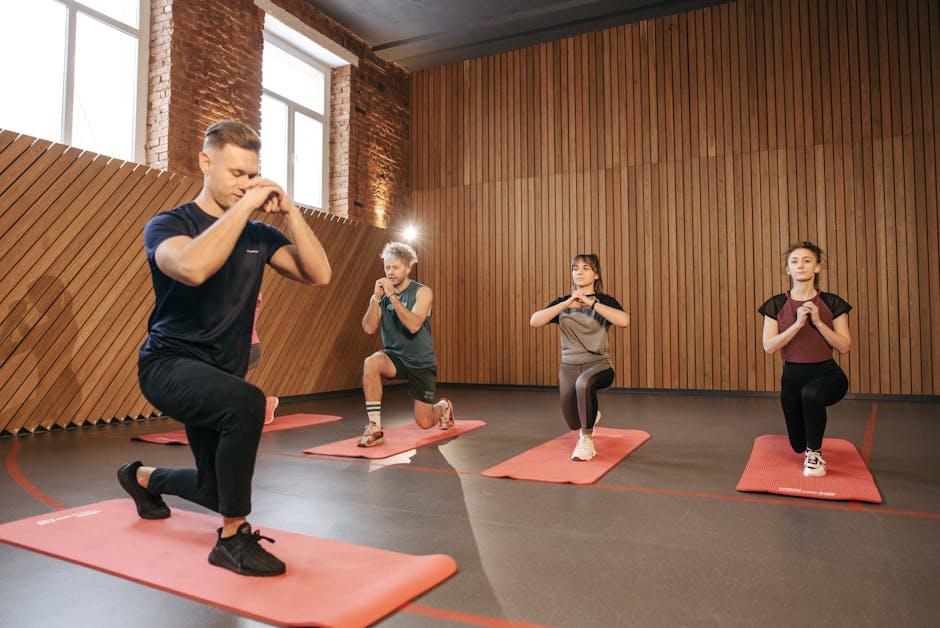
Think about the last time you laced up your trainers, full of enthusiasm for a run, only to feel that familiar twinge in your knee. Maybe it’s a dull ache that builds with each stride, or a sharp pain that stops you mid-route. Knee strengthening exercises aren’t just helpful for runners—they’re essential for staying on the road, pavement, or trail without becoming sidelined.
Most runners treat their knees like they’re bulletproof until something goes wrong. You push through discomfort, ignore the warning signs, and then wonder why you’re hobbling around after a 5K. Sound familiar? The reality is that runner’s knee, IT band syndrome, and patellofemoral pain affect roughly 42% of recreational runners every year, according to research published in the British Journal of Sports Medicine. But here’s what many people miss: these injuries are largely preventable with targeted knee strengthening exercises that take less time than your average Netflix episode.
Common Myths About Knee Strengthening Exercises for Runners
Related reading: Shoulder Prehab Exercises That Stop Lifting Injuries Before They Start.
Myth: Running is enough to strengthen your knees
Reality: Running actually places significant stress on your knee joints—up to eight times your body weight with each stride. While running builds cardiovascular endurance and leg strength, it doesn’t adequately target the specific muscles that stabilize your knees. Your quadriceps, hamstrings, glutes, and hip muscles need dedicated knee strengthening exercises to handle the repetitive impact of running. Without this targeted work, you’re asking your knees to do a job they’re not properly equipped for.
Myth: You should avoid exercise if your knees hurt
Reality: Complete rest often makes knee problems worse. According to NHS physiotherapy guidelines, appropriate knee strengthening exercises actually reduce pain and improve joint function. The key word is “appropriate”—you need movements that strengthen without aggravating existing issues. Low-impact knee strengthening exercises can rebuild the supporting structures around your joint, reducing pressure and discomfort over time.
Myth: Knee pain is just part of being a runner
Reality: Pain is your body’s alarm system telling you something needs attention. Persistent knee pain during or after running indicates weakness, imbalance, or poor biomechanics—all fixable problems. Research from the University of Salford shows that runners who incorporate regular knee strengthening exercises experience 50% fewer overuse injuries than those who only run.
Why Your Knees Need Specific Strengthening Work
You might also enjoy: Best Kettlebell Exercises for Full Body Strength.
Your knee joint is remarkably complex. It connects your femur (thigh bone) to your tibia (shin bone), cushioned by cartilage and held together by ligaments. But the knee itself is relatively passive—it relies entirely on the muscles around it for stability and control.
When you run, your knee bends and straightens thousands of times. Each foot strike sends force rippling through your lower body. If the muscles supporting your knee are weak or imbalanced, that force isn’t absorbed properly. Your knee joint takes the brunt of the impact, leading to inflammation, cartilage wear, and eventually injury.
The quadriceps muscles at the front of your thigh, particularly the vastus medialis oblique (VMO), play a crucial role in keeping your kneecap tracking properly. Weak quads allow your patella to drift sideways during movement, causing friction and pain. Your hamstrings, glutes, and hip abductors provide additional stability, controlling how your leg moves through space.
Knee strengthening exercises target these supporting muscles, creating a robust framework that protects your joint. Think of it like reinforcing a building’s foundation—the structure itself remains the same, but it can handle much more stress when properly supported.
Essential Knee Strengthening Exercises Every Runner Should Master
These movements form the foundation of knee injury prevention. Start with bodyweight versions, then progress by adding resistance as you build strength.
Single-leg quarter squats
Stand on one leg with your other foot hovering just off the ground. Slowly bend your standing knee about 30-45 degrees, keeping your kneecap aligned with your second toe. Hold for two seconds at the bottom, then push back up. This exercise is gold for runners because it mimics the single-leg loading that happens with every stride.
What makes single-leg work so valuable? Running is essentially a series of single-leg hops. Training both legs independently reveals strength imbalances that bilateral exercises mask. You might discover your left leg is significantly weaker than your right—something that would never show up during regular squats.
Perform 3 sets of 10-12 repetitions on each leg. If balance is tricky initially, lightly touch a wall or chair for support. Focus on controlled movement rather than speed. These knee strengthening exercises should feel challenging but not painful.
Step-downs with control
Stand on a step or sturdy box about 20cm high. Slowly lower your opposite leg toward the floor, keeping your standing knee aligned over your toes. Tap your heel lightly on the ground, then push back up using only your standing leg. This eccentric-focused movement builds tremendous knee stability.
The key is the “down” portion—that’s where most runners struggle. If your knee wobbles inward or your hip drops, you’ve identified a weakness that’s likely affecting your running form. Take four full seconds to lower down, pause, then two seconds to rise back up.
Start with 2 sets of 8 repetitions per leg. As you progress, increase the step height or hold something like a light dumbbell (2-4kg) to add resistance. According to research from Loughborough University, step-down exercises specifically target the VMO muscle that’s critical for proper kneecap tracking.
Clamshells for hip stability
Lie on your side with your knees bent at 90 degrees, feet together. Keeping your feet touching, lift your top knee as high as possible without rotating your pelvis. You should feel this in your outer hip and glute.
Why do hip exercises matter for knee health? Your hip muscles, particularly the gluteus medius, control how your femur rotates. Weak hips allow your thigh to collapse inward during running, pulling your knee out of alignment. This creates the perfect storm for IT band issues and patellofemoral pain.
Perform 3 sets of 15-20 repetitions per side. Once this becomes easy, loop a resistance band just above your knees to increase the challenge. These knee strengthening exercises work best when performed daily or at least five times per week.
Wall sits with VMO focus
Press your back against a wall and slide down until your thighs are parallel to the floor (or as close as comfortable). Position your feet hip-width apart. The crucial detail: squeeze a rolled towel or small ball between your knees throughout the hold.
The inward squeeze activates your VMO—that teardrop-shaped muscle above your inner knee that often gets overshadowed by the larger outer quad muscles. Hold for 30-60 seconds, rest, then repeat 3 times. Your quads will burn, but that’s exactly what you want.
Wall sits are brilliant because they build isometric strength without joint movement, making them appropriate even during minor knee flare-ups. Just avoid dropping below 90 degrees if you have existing knee pain.
Hamstring curls on stability ball
Lie on your back with your heels on a stability ball (or a sturdy cushion if you don’t have one). Lift your hips off the ground, forming a straight line from shoulders to feet. Bend your knees to roll the ball toward your bum, then extend back out.
Strong hamstrings are crucial for knee health because they counterbalance the quadriceps, preventing forward knee shear. Many runners have a quad-dominant strength pattern that puts excessive stress on knee ligaments. This exercise rebalances that relationship.
Complete 3 sets of 10-12 repetitions. For progression, try single-leg versions once you’ve mastered the bilateral movement. These knee strengthening exercises complement the quad-focused movements perfectly.
Monster walks with resistance band
Loop a resistance band around your ankles or just above your knees. Stand with feet shoulder-width apart, knees slightly bent. Take slow, controlled steps forward and sideways, maintaining tension in the band throughout. You’ll feel this in your glutes and outer hips immediately.
Monster walks address hip abductor weakness that allows your knees to cave inward during running—a movement pattern called dynamic knee valgus that’s linked to increased injury risk. Walking forward targets the glutes, while sideways steps hit the hip abductors more directly.
Perform 2 sets of 10 steps in each direction (forward, backward, left, right). Choose a band resistance that’s challenging but allows you to maintain proper form throughout. This is one of the most efficient knee strengthening exercises because it works multiple muscle groups simultaneously.
Your Four-Week Progressive Strengthening Plan
Consistency matters more than intensity. This schedule gradually builds strength without overwhelming your muscles or joints.
- Week 1: Perform knee strengthening exercises three times this week. Choose four exercises from the list above and complete 2 sets of 8-10 repetitions each. Focus entirely on learning proper form rather than pushing for maximum reps. Use a mirror or record yourself on your phone to check alignment.
- Week 2: Increase to four sessions. Add a fifth exercise to your routine and bump up to 3 sets of 10 repetitions. Notice which movements feel easiest—those are probably your strengths. Pay extra attention to the exercises that feel awkward or unstable.
- Week 3: Maintain four sessions but add resistance where appropriate. Use light dumbbells for step-downs, a resistance band for clamshells and monster walks. Increase to 3 sets of 12 repetitions for bodyweight movements. You should feel genuine muscle fatigue by the end of each set.
- Week 4: Continue four sessions with increased resistance or add single-leg progressions. Include all six exercises in a circuit format: complete one set of each exercise back-to-back, rest for 90 seconds, then repeat for 3 total rounds. This approach improves both strength and muscular endurance.
After four weeks, assess how your knees feel during and after runs. Most runners notice reduced pain, improved stability, and better running economy. At this point, maintain your knee strengthening exercises twice weekly as ongoing prevention.
When to Schedule Knee Strengthening Exercises Around Your Runs
Timing matters. Your muscles need to be fresh enough to perform exercises with good form, but you also don’t want to fatigue them right before a run.
The ideal approach: perform knee strengthening exercises on easy run days or rest days, never before hard workouts or long runs. Your muscles need 24-48 hours to recover and adapt after strengthening work. If you do them right before a speed session, you’re compromising both the quality of your run and the effectiveness of your strength work.
Many runners find that completing these exercises after an easy run works brilliantly. Your muscles are already warm, reducing injury risk during strength work. Plus, you’ve knocked out two training sessions in one block of time. Just ensure your run was genuinely easy—conversational pace, not pushing hard.
Another effective strategy is dedicating 15-20 minutes each morning to knee strengthening exercises before breakfast. This approach ensures they actually happen rather than getting pushed aside by afternoon fatigue or evening commitments.
Mistakes That Sabotage Your Knee Strengthening Progress
Mistake 1: Skipping exercises that feel awkward
Why it’s a problem: The movements that feel most difficult usually target your weakest areas—exactly what needs the most attention. Avoiding them perpetuates the imbalances that lead to injury.
What to do instead: Embrace the exercises that challenge you most. Modify them as needed (reduce range of motion, add support, decrease resistance), but don’t eliminate them. That awkwardness indicates you’re addressing a genuine weakness.
Mistake 2: Rushing through repetitions
Why it’s a problem: Speed reduces muscle activation and allows momentum to do the work instead of your muscles. These knee strengthening exercises need controlled movement to build genuine strength and neuromuscular control.
What to do instead: Count slowly during each repetition. Take 3-4 seconds for the working phase, pause for 1-2 seconds, then return to start in 2-3 seconds. Quality always trumps quantity.
Mistake 3: Only doing exercises when your knees hurt
Why it’s a problem: Reactive strengthening is far less effective than preventive work. By the time pain appears, you’ve already developed weakness or imbalance. Starting knee strengthening exercises only during injury often isn’t enough to prevent recurrence.
What to do instead: Make these movements a permanent part of your training routine, just like your weekly long run. Maintenance strengthening work (2 sessions per week) prevents issues from developing in the first place.
Mistake 4: Ignoring pain during exercises
Why it’s a problem: Muscle fatigue and burning are normal. Sharp pain, clicking, or swelling are not. Pushing through genuine pain can worsen injuries rather than heal them.
What to do instead: Learn to distinguish between productive discomfort and problematic pain. If an exercise causes sharp, localized knee pain that persists after you stop, skip that movement and consult a physiotherapist. The NHS website offers helpful guidance on when to seek professional assessment for knee pain.
Complementary Strategies That Enhance Knee Strengthening Exercises
Strengthening work forms your foundation, but these additional elements accelerate progress and maximize injury prevention.
Foam rolling your IT band and quads
Muscle tightness alters joint mechanics and reduces strengthening effectiveness. Spending five minutes with a foam roller before knee strengthening exercises improves muscle tissue quality and range of motion. Focus on your quads, outer thighs, and calves—all areas that typically feel tender when runners first start rolling.
Roll slowly, pausing on particularly tight spots for 20-30 seconds. You don’t need an expensive foam roller; a basic model from any sports shop works perfectly. The slight discomfort you feel is normal, though it shouldn’t be excruciating.
Addressing running form issues
Even the best knee strengthening exercises can’t fully compensate for problematic running mechanics. Overstriding (landing with your foot far ahead of your body), excessive heel striking, and low cadence all increase knee stress.
Work on increasing your cadence to around 170-180 steps per minute. This naturally shortens your stride and reduces impact forces. Focus on landing with your foot beneath your hip rather than out in front. Small form adjustments, combined with stronger muscles, dramatically reduce injury risk.
Proper recovery and nutrition
Your muscles don’t get stronger during exercise—they adapt and grow during recovery. Adequate sleep (7-9 hours), sufficient protein intake (1.2-1.6g per kilogram of body weight for active runners), and rest days allow the adaptations from knee strengthening exercises to occur.
Don’t underestimate nutrition’s role in injury prevention. Research from the University of Birmingham shows that runners with low vitamin D levels experience more stress fractures and overuse injuries. A balanced diet with adequate calcium and vitamin D supports both bone and muscle health.
Progressing Beyond Basic Knee Strengthening Exercises
Once you’ve mastered the foundational movements and built a solid base of strength, challenge yourself with advanced variations that further bulletproof your knees.
Single-leg Romanian deadlifts develop posterior chain strength and balance simultaneously. Stand on one leg, hinge at your hip to lower your torso while your free leg extends behind you. This movement pattern directly translates to running mechanics while building hamstring and glute strength.
Bulgarian split squats provide intense single-leg loading that’s particularly valuable for runners. Place your rear foot on a bench, then lower into a lunge position. This exercise creates significant quad and glute activation while improving hip mobility.
Box jumps and lateral bounds introduce plyometric elements that bridge the gap between strength and running-specific power. These explosive movements train your muscles to absorb and produce force quickly—exactly what happens during running. Start with small heights and progress gradually to avoid overwhelming your joints.
Add advanced exercises only after consistently performing the basic knee strengthening exercises for at least 6-8 weeks. Your foundational strength needs to be solid before introducing explosive movements.
Quick Reference: Your Knee Health Checklist
- Schedule knee strengthening exercises 3-4 times weekly during the building phase, then 2 times weekly for maintenance
- Prioritize movements that feel most challenging—those target your weakest areas
- Perform exercises after easy runs or on rest days, never before hard workouts
- Focus on controlled, slow repetitions rather than rushing through high reps
- Include single-leg exercises that mimic running’s unilateral demands
- Address hip and glute weakness alongside direct knee work for comprehensive injury prevention
- Monitor your running pain levels and adjust training if sharp discomfort appears
- Give yourself 4-6 weeks to notice meaningful strength improvements and pain reduction
Your Knee Strengthening Questions Answered
How long before I notice improvement in my knee pain?
Most runners experience noticeable reduction in knee discomfort within 3-4 weeks of consistent knee strengthening exercises. Some report improvements within 10-14 days, particularly if their issues stem from clear muscle weakness rather than structural damage. The key is consistency—performing exercises sporadically won’t deliver results. Strength adaptations take time, but they’re cumulative. Each session builds on the last, gradually reinforcing the structures that protect your knees.
Can I do these exercises if I’m currently injured?
That depends entirely on the injury type and severity. For minor knee soreness or early-stage runner’s knee, modified versions of these knee strengthening exercises often help. Avoid exercises that cause sharp pain, but gentle strengthening work can accelerate recovery for many overuse injuries. However, if you have a diagnosed ligament tear, meniscus damage, or significant swelling, consult a physiotherapist before starting any exercise program. The NHS provides excellent resources for finding qualified sports physios in your area.
Do I need any special equipment for knee strengthening exercises?
You can start with bodyweight exercises and see excellent results. As you progress, a resistance band (costing £8-15 at most sports shops) adds valuable variety and intensity. A stability ball helps with hamstring curls but isn’t essential—you can use a cushion or even a yoga mat instead. Light dumbbells become useful after several weeks, but household items like water bottles work in a pinch. The exercises themselves matter far more than fancy equipment.
Should I stop running while building knee strength?
Not necessarily. Most runners can continue running while incorporating knee strengthening exercises, though you might need to temporarily reduce your mileage or intensity. If your knee pain is mild (doesn’t worsen during runs or linger afterward), maintain your running schedule while adding strength work. If pain is moderate to severe, consider reducing running volume by 30-50% for 2-3 weeks while you build foundational strength. Complete rest is rarely necessary and can actually delay recovery by allowing muscles to weaken further.
How do I know if I’m doing the exercises correctly?
Proper form feels stable and controlled, with fatigue concentrated in the target muscles rather than joint pain. Record yourself performing knee strengthening exercises and compare to demonstration videos from reputable sources like the NHS or sports physiotherapy websites. Watch for common compensations: knees caving inward, hips dropping to one side, or torso leaning excessively. Many runners benefit from one or two sessions with a physiotherapist who can assess form and provide personalized corrections. The investment pays dividends in injury prevention and training effectiveness.
Building Knees That Can Handle Any Distance
Knee strengthening exercises aren’t glamorous. They don’t provide the runner’s high or the satisfaction of ticking off miles. But they’re the difference between running consistently for years and cycling through periods of injury, frustration, and forced rest.
The runners who stay healthy long-term understand something crucial: prevention always beats rehabilitation. Twenty minutes of targeted knee strengthening exercises three times weekly is far preferable to weeks or months of physio appointments, missed races, and watching your fitness evaporate.
Your knees are asking you to take care of them. They absorb thousands of impacts every time you run, working tirelessly to keep you moving forward. Give them the support they need through consistent strengthening work, and they’ll carry you through countless training cycles, races, and adventures.
Start today with just one exercise. Pick the movement that feels most challenging. Do two sets. That’s enough to begin building the resilient, injury-resistant knees that every runner deserves. Tomorrow, add another exercise. Next week, commit to a full session. Progress builds quietly, one repetition at a time, until the day you realize your knees simply don’t hurt anymore.


