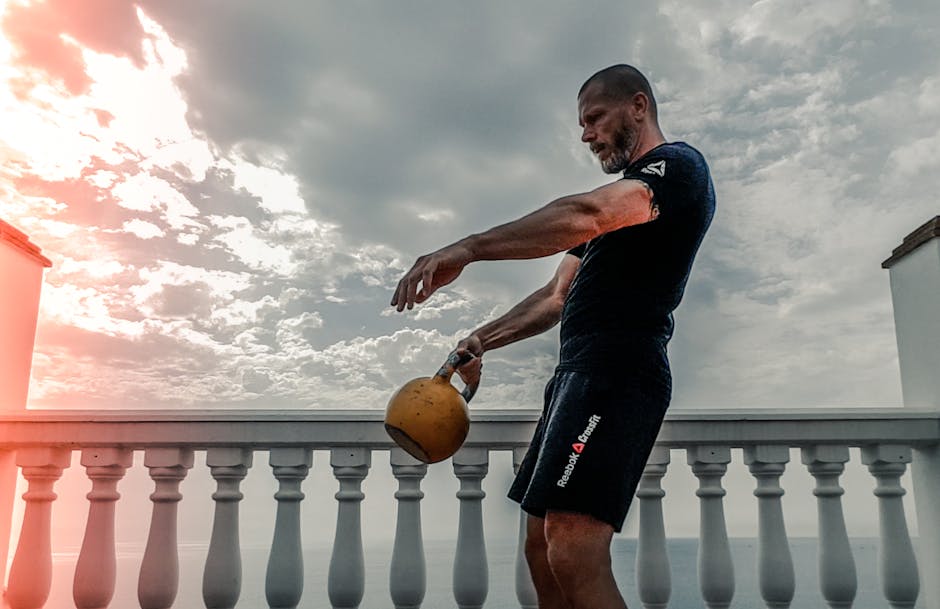
Most people waste months doing isolated exercises that barely scratch the surface of what their bodies can do. Meanwhile, a single piece of equipment sits in gym corners everywhere, capable of building strength, power, and endurance simultaneously. Those best kettlebell exercises for full body strength transform how you move, look, and feel in ways traditional workouts can’t match.
Related reading: Safe Strength Training During Pregnancy: Your Trimester-by-Trimester Guide.
Picture this: You’re scrolling through fitness content, seeing endless complicated routines requiring thousands of pounds in equipment. Meanwhile, your neighbour down the road has transformed their physique using one kettlebell in their living room. They’re stronger, more mobile, and spending half the time you waste commuting to the gym. The difference isn’t genetics or some secret supplement. It’s understanding which movements actually build functional, real-world strength.
Common Myths About Kettlebell Training
Related reading: Kettlebell Training for Beginners: Build Full Body Strength Fast.
Myth: Kettlebells Are Just for Cardio
Reality: While kettlebell swings get your heart racing, properly executed kettlebell exercises build serious strength. Research from the Journal of Strength and Conditioning Research shows that ballistic kettlebell training increases maximum and explosive strength significantly. The unique offset centre of gravity forces stabilizer muscles to work harder than traditional dumbbells, creating strength that transfers directly to everyday activities.
Myth: You Need Multiple Kettlebells to Get Results
Reality: A single kettlebell of appropriate weight delivers everything needed for months of progression. By adjusting tempo, volume, and exercise variation, one bell becomes an entire strength programme. Most people benefit more from mastering fundamental patterns with one weight than collecting equipment they barely use.
Myth: Kettlebells Are Only for Advanced Athletes
Reality: Beginners actually benefit most from kettlebell training because the movements teach proper hip hinge mechanics, core bracing, and full-body coordination from day one. Starting with foundational kettlebell exercises for full body strength creates movement patterns that prevent injury and accelerate progress across all fitness areas.
Why Kettlebell Training Builds Superior Strength
You might also enjoy: Cable Machine Exercises: Your Blueprint for Total-Body Strength.
Traditional strength training typically isolates muscle groups. Chest day, leg day, back day. Your body doesn’t work this way in real life. When you carry shopping bags, play with kids, or move furniture, every muscle fires together in coordinated patterns.
Kettlebell exercises force integrated movement. The offset weight creates instability that demands constant core engagement and stabilization. According to research published by the National Institutes of Health on kettlebell training effects, participants showed significant improvements in core strength, dynamic balance, and overall functional capacity compared to traditional resistance training.
What’s more, the best kettlebell exercises for full body strength build power through acceleration and deceleration. Swinging a kettlebell teaches your nervous system to generate force explosively, then control that force safely. This translates directly to athletic performance, injury prevention, and everyday movement quality.
The ballistic nature of kettlebell work also triggers greater muscle fibre recruitment. Your body learns to create tension throughout entire kinetic chains rather than isolating individual muscles. This produces strength that actually functions outside the gym.
The Six Essential Kettlebell Exercises for Complete Strength
These movements form the foundation of any effective kettlebell programme. Master these, and you’ve built a body capable of handling whatever life throws at you.
1. The Kettlebell Swing: Posterior Chain Power
Nothing builds explosive hip power like proper swings. This movement targets your glutes, hamstrings, lower back, and core while teaching the fundamental hip hinge pattern underlying nearly every athletic movement.
Stand with feet shoulder-width apart, kettlebell on the ground slightly in front of you. Hinge at the hips, grip the bell with both hands, and hike it back between your legs. Drive through your heels, snap your hips forward explosively, and let momentum carry the bell to chest height. Arms stay straight throughout. Your hips do the work, not your shoulders.
Common error: Using arms to lift the bell rather than hip drive. The swing is a lower body exercise disguised as an upper body movement. Focus on the powerful hip snap, keeping your core braced solid.
Start with 3 sets of 15 repetitions, resting 60 seconds between sets. As you progress, increase volume rather than going heavier immediately. Quality movement patterns matter more than impressive weight.
2. The Goblet Squat: Lower Body Foundation
Holding a kettlebell at chest level transforms the squat into a full-body strength builder. The front-loaded position keeps your torso upright, teaching proper squat mechanics while smashing your quads, glutes, and core.
Hold the kettlebell by the horns at chest height, elbows pointing down. Stand with feet slightly wider than hip-width, toes pointed slightly out. Drop your hips back and down, keeping your chest proud and elbows inside your knees. Descend until your hip crease drops below knee level. Drive through your whole foot to stand.
The beauty of goblet squats lies in how they correct movement dysfunction. The front load naturally shifts your weight distribution, making it nearly impossible to lean forward excessively or collapse your knees inward. According to movement specialists, this makes goblet squats one of the best teaching tools for proper squat patterns.
Perform 4 sets of 8-12 repetitions. When you can complete 12 reps with perfect form, progress to a heavier bell or add a pause at the bottom position.
3. The Turkish Get-Up: Total Body Integration
This complex movement looks peculiar but builds strength, stability, and body awareness like nothing else. Turkish get-ups force every muscle to work together as you transition from lying down to standing while holding a kettlebell overhead.
Lie on your back with the kettlebell beside your right shoulder. Roll onto your side, grasp the bell with both hands, and press it to arm’s length above your chest. Keep your eyes on the bell throughout. Bend your right knee, plant your right foot, and prop yourself onto your left elbow. Lift your hips, sweep your left leg under, and assume a kneeling position. Stand up from the kneel. Reverse the entire sequence with control.
Truth is, most people rush this movement. Slow down. Each get-up should take 30-45 seconds. Quality beats speed every time. This exercise reveals and corrects mobility restrictions while building ridiculous shoulder stability.
Start with 3 repetitions per side using a light weight. Focus purely on smooth transitions and maintaining vertical arm position throughout. As coordination improves, gradually increase weight while maintaining flawless technique.
4. The Kettlebell Press: Upper Body Strength
Standing overhead presses with a kettlebell develop shoulder strength, stability, and core control simultaneously. Unlike barbell pressing, the single-arm nature creates an anti-rotation challenge that lights up your entire core.
Clean the kettlebell to the rack position at your shoulder, elbow tucked tight to your ribs. Stand with feet hip-width apart, core braced hard. Press the bell straight overhead, finishing with your bicep beside your ear and shoulder packed into the socket. Lower with control back to the rack position.
Something worth noting: The offset weight of kettlebells forces deeper core engagement than dumbbells. Your obliques work overtime preventing rotation, building genuine functional core strength rather than just aesthetic development.
Complete 4 sets of 6-8 repetitions per arm. Rest 90 seconds between sets. When pressing feels easy at this rep range, increase weight by one bell size.
5. The Kettlebell Row: Back and Grip Strength
Single-arm rows with kettlebells build pulling strength while challenging core stability through anti-rotation demands. The thick handle also develops crushing grip strength that transfers to every other lift.
Assume a split stance with your left foot forward, hinging at the hips until your torso is nearly parallel to the ground. Place your left hand on your left thigh for support. Hold the kettlebell in your right hand, arm extended. Pull the bell to your hip, driving your elbow back and squeezing your shoulder blade toward your spine. Lower with control.
Focus on pulling with your back muscles rather than just bending your elbow. Imagine crushing a walnut in your armpit at the top of each rep. This cue activates the lats properly, building width and thickness through your entire back.
Perform 4 sets of 10-12 repetitions per arm. Keep your hips square throughout each set. Any rotation indicates too much weight or insufficient core engagement.
6. The Kettlebell Deadlift: Hip Hinge Mastery
Before progressing to heavy barbell deadlifts, master the kettlebell version. This teaches perfect hip hinge mechanics while building hamstring, glute, and lower back strength without the intimidation factor of heavy barbells.
Stand with feet hip-width apart, kettlebell on the ground between your feet. Push your hips back while maintaining a neutral spine, reaching down to grip the bell. Your shins should stay vertical, weight in your heels. Drive through your heels, squeeze your glutes, and stand tall. Lower the bell by pushing your hips back first, not by bending your knees.
The hip hinge represents one of the most important movement patterns you’ll ever learn. According to the NHS guidance on preventing back pain, proper lifting mechanics significantly reduce injury risk during daily activities. Kettlebell deadlifts drill this pattern until it becomes automatic.
Start with 4 sets of 10 repetitions. Focus on feeling the stretch in your hamstrings as you lower the bell and powerful glute contraction at the top. When form remains perfect throughout all sets, progress to a heavier kettlebell.
Building Your 12-Week Kettlebell Strength Programme
Knowing the best kettlebell exercises for full body strength means nothing without a structured plan. This progressive programme builds from foundation to serious strength over three months.
Weeks 1-4: Movement Pattern Mastery
Select a kettlebell weight that feels moderately challenging. For most beginners, this means 8-12kg for women and 12-16kg for men. Better to start conservative and progress steadily than ego lift and develop poor patterns.
- Monday: Begin with 5 minutes of joint mobility focusing on hips, shoulders, and thoracic spine. Perform goblet squats for 3 sets of 10 reps, kettlebell deadlifts for 3 sets of 10 reps, and finish with swings for 3 sets of 15 reps. Rest 60 seconds between exercises.
- Wednesday: Start with Turkish get-ups, performing 3 reps per side with a light bell. Move to kettlebell presses for 3 sets of 8 reps per arm, then rows for 3 sets of 10 reps per arm. Complete the session with 2 sets of 20 swings.
- Friday: Combine everything into a circuit. Complete one set of each exercise back-to-back: 10 goblet squats, 10 deadlifts, 15 swings, 8 presses per arm, 10 rows per arm. Rest 2 minutes, repeat for 3 total rounds.
Weeks 5-8: Volume Progression
Maintain the same weight but increase training volume. Your body adapts to work capacity before absolute strength increases.
- Monday: Increase goblet squats to 4 sets of 12 reps, deadlifts to 4 sets of 12 reps, swings to 4 sets of 20 reps. Add a fourth workout day this phase.
- Wednesday: Progress Turkish get-ups to 4 reps per side. Complete presses for 4 sets of 10 reps per arm, rows for 4 sets of 12 reps per arm. Finish with 3 sets of 20 swings.
- Friday: Circuit work increases to 4 rounds with slightly reduced rest (90 seconds between rounds). Maintain rep counts from weeks 1-4.
- Sunday: Add a fourth session focusing purely on swings and Turkish get-ups. Perform 10 sets of 15 swings with 45 seconds rest, then 3 Turkish get-ups per side.
Weeks 9-12: Intensity Progression
Time to increase weight. Select the next kettlebell size up from your starting bell. Expect rep counts to decrease initially. This is normal and expected.
- Monday: With heavier bell, complete goblet squats for 4 sets of 8 reps, deadlifts for 4 sets of 8 reps, swings for 5 sets of 15 reps. Quality remains paramount.
- Wednesday: Turkish get-ups stay at 4 reps per side with the heavier weight. Presses decrease to 4 sets of 6 reps per arm, rows to 4 sets of 10 reps per arm. Add 4 sets of 15 swings.
- Friday: Reduce circuit rounds to 3 but increase intensity. Add a 3-second pause at the bottom of goblet squats and top of deadlifts. Explosive swings with complete hip extension.
- Sunday: Swing-focused session with heavier bell. Complete 12 sets of 12 swings with 30 seconds rest. Follow with 2 Turkish get-ups per side, focusing on control and stability under increased load.
Mistakes That Sabotage Your Kettlebell Training
Mistake 1: Choosing the Wrong Starting Weight
Why it’s a problem: Ego drives most people to select kettlebells too heavy for their current strength and coordination levels. This leads to compensatory movement patterns that engrain dysfunction rather than building proper mechanics. Poor patterns become harder to correct the longer you reinforce them.
What to do instead: Start lighter than feels necessary. Master movement quality before chasing numbers. If you can complete 15 perfect swings, 10 pristine goblet squats, and 1 Turkish get-up per side with flawless form, you’ve chosen correctly. Strength builds quickly once patterns are solid.
Mistake 2: Skipping the Hip Hinge
Why it’s a problem: Many people perform kettlebell swings using a squat pattern rather than a true hip hinge. This shifts emphasis away from the powerful posterior chain and places excessive stress on the quadriceps and lower back. Your swings become an ineffective, potentially dangerous movement.
What to do instead: Practice deadlifts and Romanian deadlifts until the hip hinge feels natural. Your knees should bend slightly during swings, but the primary movement occurs at your hip joint. Film yourself from the side to verify proper mechanics. Shoulders should stay over or slightly behind the kettlebell at the bottom of each swing.
Mistake 3: Training Too Frequently Without Recovery
Why it’s a problem: Kettlebell training taxes your central nervous system harder than traditional bodybuilding-style workouts. The ballistic nature and full-body integration require more recovery time than isolated movements. Training daily with moderate to heavy kettlebells leads to burnout, decreased performance, and injury risk.
What to do instead: Limit intense kettlebell sessions to 3-4 times weekly with at least one full rest day between sessions. Active recovery works brilliantly on off days. Walk, stretch, practice mobility work, or engage in light activities. Your strength gains happen during recovery, not during training.
Mistake 4: Neglecting Unilateral Work
Why it’s a problem: Focusing exclusively on two-handed swings and goblet squats allows your dominant side to compensate for your weaker side. Strength imbalances develop, leading to asymmetrical movement patterns that eventually cause injury. One side gets stronger while the other lags behind.
What to do instead: Include single-arm and single-leg variations regularly. Single-arm swings, presses, and rows expose and correct imbalances. Turkish get-ups naturally force equal work per side. Address weakness immediately rather than hoping it resolves itself.
Mistake 5: Forgetting Breathing Mechanics
Why it’s a problem: Improper breathing during kettlebell exercises compromises core stability and reduces power output significantly. Holding your breath throughout entire sets increases blood pressure dangerously and limits oxygen delivery to working muscles. Conversely, breathing too freely fails to create the intra-abdominal pressure needed for spinal stability under load.
What to do instead: Learn the power breathing pattern. Inhale through your nose during the eccentric phase, creating tension throughout your torso. Exhale forcefully through your teeth during the concentric phase while maintaining core rigidity. For swings specifically, sharp exhales at hip extension help generate explosive power while protecting your spine.
Essential Equipment and Space Requirements
Starting with kettlebell training requires minimal investment compared to traditional gym memberships or home gym buildouts. A single quality kettlebell provides everything needed for the best kettlebell exercises for full body strength.
Look for cast iron kettlebells with smooth handles and flat bottoms for stability during ground-based exercises. Competition-style bells work brilliantly as they maintain consistent dimensions across weight ranges, making grip positioning identical regardless of load. Avoid vinyl-coated bells as the coating deteriorates quickly and affects grip security.
Space requirements are equally minimal. A 6×6 foot area with adequate ceiling height for overhead pressing works perfectly. Ensure your ceiling allows full arm extension plus the height of your kettlebell when pressed overhead. Most UK homes provide sufficient space in living rooms, spare bedrooms, or garages.
Flooring protection matters more than people realize. Something like rubber gym mats prevents damage during accidental drops while reducing noise transmission to neighbours below. Alternatively, thick yoga mats or interlocking foam tiles provide adequate protection for controlled training sessions.
Many people find that having a couple of weight options accelerates progress as different exercises require different loads. Your pressing weight typically sits 4-8kg lighter than your swinging weight. Having both available eliminates the compromise of choosing one bell that’s too heavy for presses or too light for swings.
Tracking Progress Beyond the Scale
Strength development shows itself in ways beyond aesthetic changes or scale weight. Recognizing these markers keeps motivation high during phases when visible changes plateau.
Movement quality improves dramatically. Squats that felt awkward initially become smooth and controlled. Your hip hinge pattern feels natural rather than forced. These technical improvements indicate neural adaptations that precede strength gains.
Recovery speed increases noticeably. Sessions that left you sore for three days now produce mild soreness lasting 24 hours. Your body adapts to handle training stress more efficiently, allowing increased training frequency and volume over time.
Everyday activities require less effort. Carrying shopping bags, lifting luggage, playing with children all become easier without conscious thought. This represents the ultimate goal of functional strength training. The British Medical Journal research on strength training benefits shows significant improvements in daily functioning across all age groups who engage in regular resistance training.
Performance metrics provide objective feedback. Track the maximum number of unbroken swings you can complete, the heaviest bell used for 5 Turkish get-ups per side, or the total volume completed during circuit workouts. Seeing these numbers climb confirms progress even when the mirror seems unchanged.
Energy levels throughout your day serve as another indicator. Quality strength training boosts mitochondrial density and metabolic efficiency. People consistently report better focus, sustained energy, and improved sleep quality after establishing regular kettlebell practice.
Your Kettlebell Training Quick Reference
- Master the six fundamental patterns before adding complexity or chasing heavy weights
- Train 3-4 times weekly with full rest days between sessions for optimal recovery
- Select starting weights that allow perfect technique for target rep ranges without grinding
- Progress volume before intensity, adding reps and sets before increasing kettlebell weight
- Film your swings from the side to verify proper hip hinge mechanics and horizontal bell path
- Breathe forcefully during every repetition, matching breathing patterns to movement phases
- Track performance metrics beyond scale weight to recognize strength gains
- Address single-arm variations equally to prevent and correct strength imbalances
Your Kettlebell Questions Answered
How heavy should my first kettlebell be?
Most women benefit starting with 8-12kg kettlebells, while men typically begin with 12-16kg bells. These weights allow mastery of movement patterns without compensatory mechanics. If you can complete 1 Turkish get-up per side with perfect form, 15 consecutive swings with explosive hip drive, and 10 goblet squats to full depth, you’ve chosen correctly. Starting lighter feels counterintuitive but accelerates long-term progress significantly. Strength develops rapidly once proper patterns are established, making weight progression consistent and safe.
Can kettlebell training replace traditional gym workouts completely?
Absolutely. The best kettlebell exercises for full body strength develop all major movement patterns and energy systems. Research shows kettlebell training produces comparable strength gains to traditional resistance training while simultaneously improving cardiovascular fitness and power development. Olympic athletes, military personnel, and strength coaches worldwide use kettlebells as primary training tools. For general fitness, fat loss, and functional strength, a well-designed kettlebell programme provides everything needed. Specialized goals like powerlifting or bodybuilding may benefit from additional modalities, but most people achieve excellent results with kettlebells alone.
How quickly will I see strength improvements?
Neural adaptations occur within 2-3 weeks, manifesting as better coordination and increased weight used for existing rep ranges. Visible muscle development typically appears around weeks 6-8 with consistent training. Significant strength gains become obvious by week 12, with most people progressing to the next kettlebell size by this point. The timeline varies based on training history, recovery quality, and nutritional support. Previous strength training experience accelerates progress, while complete beginners need more time developing foundational movement patterns. Consistency matters more than intensity during initial months.
Will kettlebell swings hurt my lower back?
Properly executed swings strengthen your lower back rather than injuring it. Back pain from swings indicates technical errors, typically squatting rather than hinging or hyperextending at the top of each swing. Your spine should maintain neutral position throughout the entire movement, with all motion occurring at your hip joint. Engaging your core forcefully before initiating each swing protects your spine under load. If experiencing back discomfort, reduce weight dramatically and film your technique from the side. Compare your movement to expert demonstrations, focusing specifically on hip hinge depth and spinal positioning.
Do I need different kettlebells for different exercises?
Eventually, yes. Pressing movements typically require 30-50% less weight than swinging or squatting movements. Most people start with a single bell for 4-8 weeks while learning patterns, then add a second lighter bell for pressing work. Having two weights eliminates frustrating compromises where one bell feels too heavy for presses but too light for swings. A sensible approach involves beginning with one bell matched to your swing capacity, then adding a lighter bell when pressing volume increases during weeks 5-8 of training. This staged investment keeps initial costs reasonable while supporting long-term progression.
Take Your First Swing Today
The best kettlebell exercises for full body strength aren’t secret movements known only to elite athletes. They’re fundamental human patterns performed with a simple tool that’s been building powerful bodies for centuries. Swings teach explosive hip drive, squats develop lower body strength, and Turkish get-ups force total body integration. Together, these movements create strength that actually functions in daily life.
Will your first session feel awkward? Probably. Turkish get-ups look ridiculous until suddenly they don’t. Your hip hinge might feel unnatural for a fortnight before clicking into place. Strength develops through consistent practice of imperfect repetitions that gradually become less imperfect.
Twelve weeks from now, you’ll either wish you’d started today or you’ll be grateful you did. Select your starting weight, clear some floor space, and complete 10 swings right now. Just 10. Perfect form, explosive hips, controlled descent. That’s how transformation begins.
Not with perfect conditions or ideal circumstances. With one swing, followed by another, repeated consistently until strength becomes inevitable.


