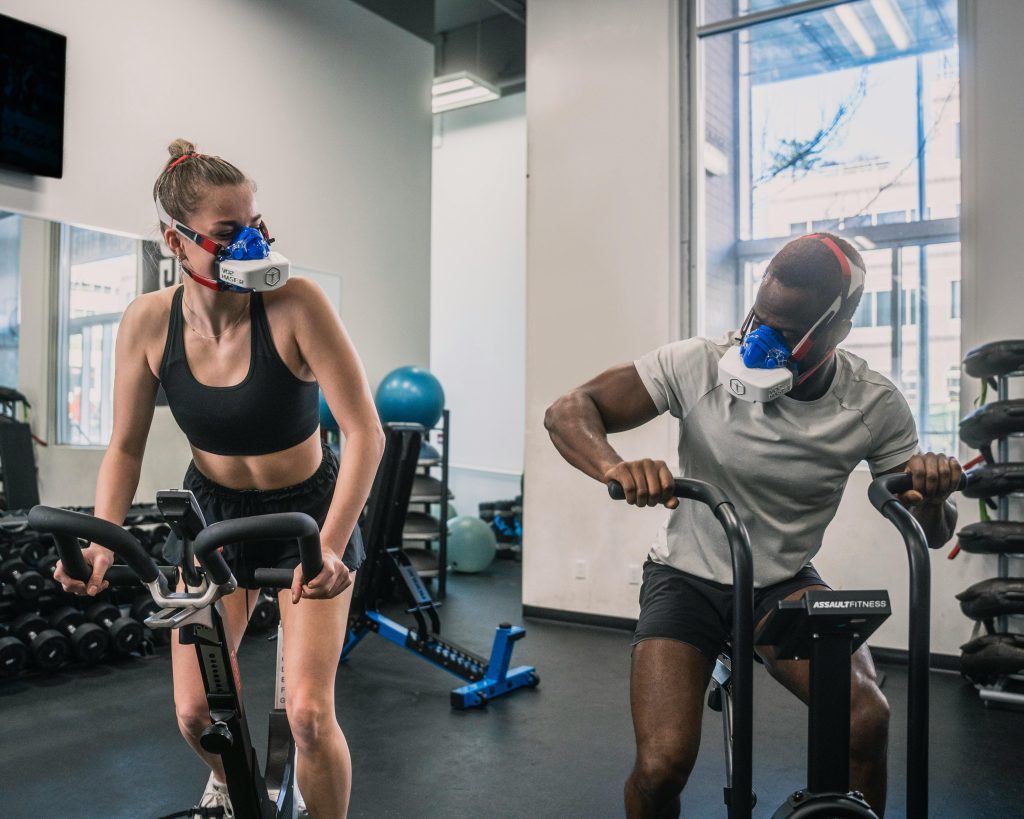
Your smartwatch just pinged you with another VO2 max reading. 42. Is that good? Should you care? And honestly, does tracking VO2 max actually matter for your fitness goals, or is it just another number competing for your attention?
Picture this: You’re scrolling through your fitness tracker app, staring at metrics you don’t fully understand. Heart rate variability, recovery scores, training load, and there it is – VO2 max. The number sits there like homework you keep avoiding. You know it’s supposed to mean something important about your cardio fitness, but between work, family, and actually finding time to exercise, who has the mental energy to decode what a “44” versus a “48” really means for your Tuesday evening run?
Common Myths About VO2 Max
Related reading: HIIT Training: The Complete Guide to High-Intensity Interval Training
Myth: VO2 Max Only Matters for Elite Athletes
Reality: Your VO2 max is actually one of the strongest predictors of longevity and overall health. Research published by the European Heart Journal found that low cardiorespiratory fitness carries a higher mortality risk than traditional factors like smoking or diabetes. This isn’t about winning marathons – it’s about climbing stairs without gasping and playing with your kids without needing a sit-down afterwards.
Myth: You Need Laboratory Testing to Know Your VO2 Max
Reality: Whilst lab testing on a treadmill with a mask measuring oxygen consumption gives you the gold standard number, modern fitness trackers provide surprisingly accurate estimates. They’re not perfect, but they’re consistent enough to show trends. The VO2 max reading on your Garmin or Apple Watch might be 2-5 points off from a lab test, but if it climbs from 38 to 42 over three months, your cardiovascular fitness has genuinely improved.
Myth: Tracking VO2 Max Will Improve Your Fitness
Reality: Here’s the uncomfortable truth – simply monitoring your VO2 max won’t make you fitter any more than checking your bank balance makes you wealthier. What matters is whether tracking this metric motivates you to actually do the cardio work that improves it. For some people, seeing that number climb is incredibly motivating. For others, it’s just another source of data anxiety.
What VO2 Max Actually Tells You (In Plain English)
You might also enjoy: Best Omega-3 Food Sources for Brain Health That Actually Work.
VO2 max measures the maximum amount of oxygen your body can use during intense exercise. Think of it as your cardiovascular engine size. A higher VO2 max means your heart, lungs, and muscles work more efficiently together.
The measurement shows up in millilitres of oxygen per kilogram of body weight per minute (ml/kg/min). For reference, the average sedentary person might clock in around 30-35. Someone who runs regularly could sit at 45-50. Elite endurance athletes push 70-80 or higher.
What really matters for most people isn’t the absolute number – it’s the trajectory. Your VO2 max naturally declines with age, typically about 10% per decade after 30. Maintaining or improving yours through regular cardio exercise essentially means you’re fighting that decline. You’re keeping your biological engine running younger than your chronological age suggests.
According to NHS guidelines on physical activity, adults should aim for 150 minutes of moderate-intensity cardio weekly. That sustained effort is what actually shifts your VO2 max upward. The tracking part? That’s just measurement.
Who Actually Benefits From Tracking VO2 Max
Not everyone needs to obsess over cardiovascular fitness metrics. Whether tracking your VO2 max adds value depends entirely on your personality and goals.
Data-Driven Types Who Love Numbers
If you’re someone who finds motivation in quantifiable progress, VO2 max tracking can be brilliant. Seeing that number climb from 38 to 41 over eight weeks provides concrete evidence your training is working, even when the mirror or scales aren’t showing dramatic changes. It’s particularly useful when you’re training for endurance events – half marathons, cycling sportives, triathlons – because it gives you an objective measure of aerobic capacity.
People Recovering From Sedentary Periods
Coming back from injury, illness, or just a long stretch of inactivity? Tracking VO2 max offers valuable feedback that you’re genuinely rebuilding fitness. Your body might feel sluggish, but if your VO2 max is trending upward week by week, you’ve got evidence that consistency is paying off. That can be enormously encouraging when motivation wavers.
Anyone Prioritising Longevity
Here’s what’s interesting: your VO2 max correlates strongly with lifespan and healthspan. Research consistently shows that maintaining good cardiovascular fitness into middle age and beyond reduces risk of chronic disease and premature death. If long-term health is your primary driver, monitoring VO2 max makes sense because it’s one of the few metrics that directly reflects how well your cardiovascular system functions.
Who Doesn’t Need to Track It
Strength-focused athletes who rarely do sustained cardio. People who find metrics stressful rather than motivating. Anyone who’s already doing consistent cardio work and feeling good about it. If you’re running three times weekly, feeling stronger, sleeping better, and not particularly curious about the numbers, you’re getting the benefits regardless of whether you track them.
The Truth About Cardio (And Why We Avoid It)
Let’s acknowledge the elephant on the treadmill: loads of people neglect cardio entirely because it’s uncomfortable, time-consuming, and doesn’t deliver the immediate visual results that strength training does.
Cardiovascular exercise makes you breathless. It makes your heart pound. It’s sweaty and unglamorous. Unlike lifting weights where you can see muscle definition develop or the weights on the bar increase, cardio improvements feel more subtle. You might notice you can run longer before fatigue hits, or climb that hill without stopping, but it’s not as immediately gratifying as adding 10kg to your squat.
This is where tracking VO2 max can actually bridge the motivation gap. When you can’t see or feel the progress clearly, having data that confirms you’re getting fitter provides that psychological boost to keep showing up.
The reality is that cardiovascular fitness matters enormously for daily life quality. It determines whether you can sprint for a bus, carry shopping bags upstairs, or keep up on a countryside hike without being the person who holds everyone up. Research from the British Heart Foundation shows that regular cardiovascular exercise reduces risk of heart disease, stroke, and type 2 diabetes whilst improving mental health and sleep quality.
But we still avoid it. Why? Because modern life doesn’t require cardiovascular fitness the way it once did. We drive instead of walk. We take lifts instead of stairs. Our jobs are sedentary. Unless you deliberately create opportunities for sustained aerobic effort, your VO2 max will decline year by year.
How to Actually Improve Your VO2 Max (Not Just Track It)
Monitoring your VO2 max means nothing without the training that actually improves it. Here’s what works.
High-Intensity Interval Training Delivers the Biggest Bang
HIIT sessions are the most time-efficient way to boost VO2 max. Short bursts of intense effort followed by recovery periods push your cardiovascular system to adapt. Try this: 30 seconds of hard running or cycling, followed by 90 seconds of easy recovery. Repeat for 20 minutes total. Do this twice weekly and you’ll see measurable VO2 max improvements within 6-8 weeks.
The intensity needs to genuinely challenge you. You’re aiming for breathless, can’t-hold-a-conversation effort during those 30-second intervals. If you can chat comfortably, you’re not pushing hard enough to stimulate meaningful adaptation.
Steady-State Cardio Builds Your Base
Don’t skip the longer, moderate-intensity sessions. A 45-minute run at a comfortable pace where you could maintain a conversation (but would rather not) develops your aerobic base. This type of training improves your body’s ability to use oxygen efficiently over sustained periods. Aim for 2-3 sessions weekly at this moderate intensity.
Boring? Sometimes. Effective? Absolutely. This is the foundational work that supports everything else.
Progressive Overload Applies to Cardio Too
Just like strength training, your cardiovascular system needs increasing stimulus to continue adapting. Each week, add small challenges: an extra minute of running, slightly faster intervals, or an additional HIIT session. Your VO2 max won’t improve if you do identical workouts month after month.
Track your sessions in a simple journal or app to ensure you’re genuinely progressing. Note duration, intensity, and how you felt. When reviewing monthly, you should see gradual increases in volume or intensity.
Recovery Actually Matters
Smashing yourself with intense cardio daily doesn’t accelerate VO2 max improvements – it leads to overtraining, fatigue, and injury. Your cardiovascular system adapts during recovery periods, not during the workouts themselves. Build in proper rest days. Sleep well. Fuel adequately. Something like a basic fitness tracker can help monitor recovery metrics if you find that data useful, but listening to your body works too.
Your 8-Week VO2 Max Improvement Plan
Ready to actually do something about your cardiovascular fitness? Here’s a realistic roadmap that fits around normal life.
- Week 1-2: Establish baseline consistency. Complete three 20-30 minute moderate-intensity cardio sessions (running, cycling, rowing, swimming). Pace should feel challenging but sustainable. Record how you feel after each session.
- Week 3-4: Introduce one HIIT session weekly. Keep two moderate sessions. For HIIT: warm up 5 minutes, then 8 rounds of 30 seconds hard effort plus 90 seconds easy recovery, cool down 5 minutes. Total time: 25 minutes.
- Week 5-6: Increase moderate sessions to 35-40 minutes each. Add a second HIIT session if recovery feels good. Monitor your resting heart rate – it should start dropping as fitness improves.
- Week 7-8: Push one moderate session to 45-50 minutes. Maintain two HIIT sessions. Increase HIIT rounds to 10 if feeling strong. Check your VO2 max reading and compare to baseline.
This progression balances stimulus with recovery. Some weeks you’ll feel amazing. Others you’ll struggle. Both are normal. What matters is showing up consistently across the eight weeks.
Mistakes That Sabotage Your Cardiovascular Fitness
Mistake 1: Only Doing Easy Cardio
Why it’s a problem: Comfortable, steady-state cardio builds endurance but doesn’t push your VO2 max ceiling higher. Your body adapts to the specific demands you place on it. If you only ever jog at an easy pace, you’ll get better at easy jogging – but your maximum aerobic capacity won’t shift much.
What to do instead: Include at least one session weekly where you genuinely push into uncomfortable intensity zones. This could be interval training, tempo runs, or hill sprints. The discomfort is the stimulus for adaptation.
Mistake 2: Obsessing Over the Number Instead of the Training
Why it’s a problem: Checking your VO2 max reading daily and stressing about minor fluctuations creates anxiety without improving fitness. These metrics bounce around based on stress, sleep, hydration, and algorithm quirks. A reading that drops from 44 to 42 one day doesn’t mean you’ve lost fitness – it might just mean you slept poorly.
What to do instead: Check your VO2 max monthly, not daily. Focus your attention on completing quality training sessions, not micromanaging metrics. Trust that consistent work produces results even when the numbers temporarily plateau.
Mistake 3: Neglecting Strength Training
Why it’s a problem: Whilst cardio directly improves VO2 max, strength training supports injury prevention and muscular endurance that allows you to train harder and more consistently. Plus, maintaining muscle mass as you age keeps your metabolic rate higher, making cardiovascular exercise more effective.
What to do instead: Include 2-3 strength sessions weekly alongside your cardio work. Full-body compound movements work brilliantly. You don’t need anything fancy – bodyweight exercises, resistance bands, or basic dumbbells all do the job.
Mistake 4: Comparing Your VO2 Max to Others
Why it’s a problem: Someone else’s VO2 max of 55 versus your 40 tells you nothing useful. Genetics, age, training history, and body composition all influence the number. Comparison breeds discouragement without providing actionable information.
What to do instead: Compete against your own baseline. If your VO2 max moves from 38 to 42 over six months, that’s fantastic progress regardless of what your running mate’s tracker says.
Your VO2 Max Quick Reference
- Track monthly, not daily – short-term fluctuations don’t reflect real fitness changes
- Include at least one weekly HIIT session for maximum VO2 max improvements
- Balance intense intervals with longer moderate-intensity cardio sessions
- Expect measurable changes only after 6-8 weeks of consistent training
- Prioritise training quality over obsessing about metric accuracy
- Remember that your trajectory matters more than your absolute number
- Use VO2 max as motivation if data drives you, ignore it if metrics cause stress
- Combine cardio work with strength training for comprehensive fitness
Your VO2 Max Questions Answered
How accurate are smartwatch VO2 max estimates compared to lab testing?
Modern fitness trackers typically fall within 5-10% of laboratory measurements for most users. Whilst they’re not perfectly accurate, they’re consistent enough to reliably track trends over time. A lab test might show your true VO2 max is 46 whilst your Garmin estimates 42, but if your watch reading climbs to 45 over three months, you’ve genuinely improved your cardiovascular fitness. What matters for practical purposes is tracking relative progress, not achieving absolute precision.
Can I improve my VO2 max if I’m over 50?
Absolutely. Whilst VO2 max naturally declines with age, consistent cardiovascular training can slow or even reverse that decline. Studies show that previously sedentary adults in their 50s and 60s can increase VO2 max by 15-25% with regular aerobic exercise over 6-12 months. You might not reach the numbers you could have achieved at 25, but you can definitely improve from your current baseline and maintain functional fitness well into older age.
How long does it take to see VO2 max improvements?
Expect to see measurable changes after 6-8 weeks of consistent training that includes both high-intensity intervals and moderate-intensity steady cardio. Beginners or those returning after long breaks often see faster initial improvements – sometimes 10-15% gains in the first three months. More experienced athletes see slower, incremental progress because they’re working from a higher baseline.
What’s a good VO2 max for my age and gender?
Average ranges vary significantly by age. For men aged 20-29, average sits around 40-45 ml/kg/min. For women the same age, it’s typically 35-40. These numbers drop roughly 10% per decade. “Good” fitness places you in the top 40% for your age group, whilst “excellent” puts you in the top 20%. That said, your personal trend matters more than population comparisons – improving from “poor” to “average” delivers massive health benefits.
Do I need to do running to improve VO2 max, or will other cardio work?
Any activity that elevates your heart rate for sustained periods improves VO2 max. Running, cycling, rowing, swimming, cross-country skiing, and even vigorous hiking all work. Choose activities you’ll actually do consistently rather than forcing yourself into running if you hate it. Variety across different cardio modes can actually benefit overall fitness by reducing repetitive strain whilst maintaining cardiovascular stimulus.
The Bottom Line on VO2 Max Tracking
Does tracking VO2 max matter? That depends entirely on whether the data motivates you or just creates another thing to worry about. The metric itself measures something genuinely important – your cardiovascular fitness and, by extension, your long-term health prospects. But monitoring the number doesn’t improve your fitness any more than checking your weight makes you lighter.
What actually matters is doing the uncomfortable, sweaty, breathless cardio work that your body would rather avoid. High-intensity intervals that make your heart pound. Longer steady runs that test your endurance. Progressive overload that challenges your cardiovascular system to adapt.
For some people, watching that VO2 max number climb from 38 to 45 provides powerful motivation to keep showing up. The data validates the effort when physical changes feel subtle. For others, metrics create anxiety and distraction from simply enjoying movement. Both approaches are valid.
If you’re going to track VO2 max, use it wisely. Check monthly, not daily. Focus on long-term trajectory, not short-term fluctuations. Let improvements motivate you, and don’t let plateaus discourage you. Remember that consistency beats perfection every single time.
And if you decide tracking isn’t for you? Brilliant. Just get out there and do the cardio work anyway. Your heart, lungs, and future self will thank you regardless of what number appears on your wrist.
Start smaller than feels necessary. One HIIT session this week. That’s it. Build from there.


