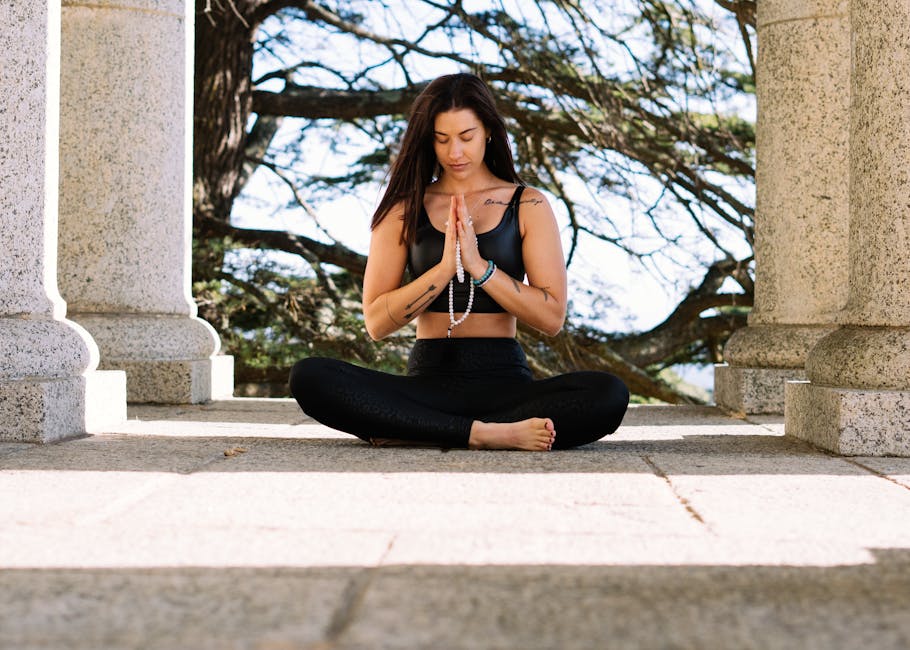
Starting a body scan meditation practice often feels more complicated than it needs to be. You’ve probably heard it’s meant to relax you, ground you, maybe even help with sleep or anxiety. But where exactly do you start, and how do you know if you’re doing it right?
Truth is, body scan meditation is one of the most accessible mindfulness techniques you can learn. No equipment needed. No fancy cushions. Just you, a few quiet minutes, and a willingness to pay attention to what your body’s been trying to tell you all along.
Picture yourself at the end of a long Tuesday. You’ve been hunched over a laptop for hours, shoulders creeping toward your ears, jaw clenched without realising it. Your mind’s still racing through tomorrow’s to-do list even though you’re supposedly relaxing on the sofa. Sound familiar? Most people in the UK spend so much time in their heads that they’ve completely lost connection with their physical selves. That disconnect shows up as tension headaches, poor sleep, chronic stress, and that vague feeling of being constantly on edge. Body scan meditation helps you rebuild that connection, one body part at a time.
Common Myths About Body Scan Meditation
Related reading: Master Breathwork: Transform Your Mental and Physical Health Through Conscious Breathing
Before we get into the practical steps, let’s clear up some misconceptions that might be holding you back.
Myth: You Need to Clear Your Mind Completely
Reality: Body scan meditation isn’t about achieving a blank slate or stopping your thoughts. Your mind will wander—that’s absolutely normal and expected. The practice is about noticing when it wanders and gently bringing your attention back to the physical sensations in your body. Think of it as training your attention muscle, not erasing your thoughts.
Myth: It Takes Ages to Work
Reality: Research from the University of Oxford shows that even brief mindfulness practices can reduce stress markers within a single session. You don’t need 45-minute sessions to benefit from body scan meditation. Starting with just five minutes can make a noticeable difference in how grounded and present you feel.
Myth: You Have to Be Lying Down in Perfect Silence
Reality: While many people do body scan meditation lying down, you can adapt it to sitting in a chair, on public transport, or even during a work break. Perfect conditions are lovely but optional. What matters is your willingness to pay attention, not your environment.
Why Body Scan Meditation Actually Matters for Your Wellbeing
You might also enjoy: Walking Meditation for Mindfulness: The Science-Backed Practice That Transforms Your Mental Wellbeing
Here’s what’s interesting: most of us spend our days completely disconnected from our physical experience. We push through fatigue, ignore hunger signals, and override discomfort until it becomes chronic pain. Body scan meditation trains you to notice what’s happening in your body before small issues become bigger problems.
According to NHS guidelines on mindfulness, regular body awareness practices can help manage chronic pain, reduce anxiety symptoms, and improve sleep quality. The mechanism is straightforward: when you learn to observe physical sensations without immediately reacting to them, you develop a healthier relationship with discomfort. That tight feeling in your chest during stress? Instead of spiralling into panic, you learn to notice it, breathe through it, and let it pass.
Beyond the clinical benefits, body scan meditation helps you make better decisions throughout your day. Recognising early signs of fatigue means you take a proper break instead of powering through until you’re utterly exhausted. Noticing tension in your shoulders prompts you to adjust your posture before developing a headache. Small awareness, significant impact.
Your Step-by-Step Body Scan Meditation Guide
Right, let’s get practical. This body scan meditation guide breaks down exactly what to do, from preparation through to finishing your practice.
Setting Up Your Space
Find somewhere you won’t be interrupted for the next 10-15 minutes. That might be your bedroom, a quiet corner of your living room, or even a parked car during your lunch break. Set your phone to Do Not Disturb mode. If you’re worried about falling asleep (which happens, especially when you’re tired), you might want to sit upright rather than lie flat.
Temperature matters more than you’d think. Grab a blanket if your space tends to be cool. As your body relaxes during the body scan meditation practice, your temperature can drop slightly, and feeling cold is distracting. Wear comfortable clothes without restrictive waistbands or tight collars.
Many people find a guided audio helpful when starting their body scan meditation journey. Look for recordings specifically designed for beginners, typically ranging from 10 to 20 minutes. The guided body scan meditations on YouTube offer plenty of options with various voice styles and lengths.
Getting Into Position
Lie on your back with your arms resting alongside your body, palms facing up. Let your feet fall open naturally. If lying flat causes lower back discomfort, place a cushion or rolled towel under your knees. Alternatively, sit in a supportive chair with your feet flat on the floor, hands resting on your thighs.
Take a moment to settle. Close your eyes if that feels comfortable, or maintain a soft, downward gaze. Notice the contact points between your body and the surface supporting you.
Beginning the Body Scan Meditation
Start with three slow, deep breaths. Breathe in through your nose for a count of four, hold briefly, then exhale through your mouth for a count of six. This signals to your nervous system that it’s safe to relax.
Now bring your attention to your left foot. You’re not trying to change anything or make anything happen. Just notice. Can you feel the temperature of your foot? Any tingling? Pressure where it contacts the floor? Tension? Relaxation? Neutrality? Whatever you find is perfectly fine.
Spend about 30 seconds with your left foot, then move your attention to your left ankle. Notice sensations there. Then your left calf, left knee, left thigh. Work your way up the left leg systematically.
Progressing Through Your Body
After completing your left leg, move to your right foot and repeat the process up the right leg. The body scan meditation technique involves moving attention methodically through each region, typically following this sequence:
- Both feet and legs (starting left, then right)
- Pelvis, hips, and lower back
- Abdomen and lower torso
- Chest and upper back
- Both hands and arms (starting left, then right)
- Shoulders, neck, and throat
- Face, including jaw, cheeks, eyes, and forehead
- Top and back of head
As you scan each area, you might notice various sensations: warmth, coolness, tingling, pulsing, tightness, softness, or even nothing at all. Some areas might feel pleasant, others uncomfortable, and some completely neutral. The key is observing without judgment. You’re not trying to relax tense areas or change what you find. Simply notice.
When Your Mind Wanders (Which It Will)
Your mind will drift. Guaranteed. You’ll start thinking about dinner, tomorrow’s meeting, or that conversation from last week. This isn’t failure—it’s completely normal. The moment you notice you’ve wandered is actually the important bit. That’s the moment of awareness that you’re training.
When you notice your attention has drifted, acknowledge it kindly (“my mind wandered, that’s okay”), then gently guide your attention back to whichever body part you were focusing on. Do this without frustration or self-criticism. You might need to redirect your attention dozens of times during a single body scan meditation session, especially when starting out. That’s the practice.
Completing Your Practice
After scanning your entire body, take a few moments to notice your body as a whole. Expand your awareness to include all the sensations present throughout your entire physical form simultaneously. Observe your breathing without trying to control it. Notice how your body feels now compared to when you started.
Before opening your eyes and moving, take three more deep breaths. Wiggle your fingers and toes gently. Roll your head slowly from side to side. When you’re ready, open your eyes and give yourself a moment before jumping up and returning to your day.
Building Your Body Scan Meditation Routine
Starting any new practice requires realistic planning. Here’s a progressive approach that actually sticks.
Week One: Establishing the Habit
Commit to just five minutes daily. Pick the same time each day—this consistency helps cement the habit. Many people find that doing their body scan meditation practice just before sleep works brilliantly, but morning or midday suits others better. Set a gentle timer so you’re not worrying about how long you’ve been practising.
During this first week, focus on left leg only—foot, ankle, calf, knee, and thigh. Seriously. That’s plenty. You’re building familiarity with the process, not trying to complete the entire body sequence perfectly.
Week Two: Expanding the Scan
Increase to 10 minutes. Add your right leg to the sequence. By now, the basic rhythm should feel more natural: attention on body part, notice sensations, mind wanders, bring attention back, move to next area.
Track your practice in a simple journal or phone note. Just a checkmark for each day you practise, plus a word or two about what you noticed. This isn’t about judgment or perfection—it’s about maintaining awareness of your commitment.
Week Three: Full Body Integration
Extend to 15 minutes. Include your torso and arms in the body scan meditation sequence. You’ll likely notice that some days the practice feels calm and grounding, while other days feel frustratingly distracted. Both experiences are valuable. The restless days teach you patience and persistence; the calm days show you what’s possible.
Week Four and Beyond: Making It Yours
Experiment with 15-20 minute sessions covering your entire body. Try different times of day to discover what works best for your schedule and energy levels. Some people eventually prefer silent practice without guided audio; others always appreciate guidance. Neither approach is superior—it’s about what serves you.
Consider incorporating your body scan meditation practice into existing routines. After your evening shower, before getting out of bed in the morning, or during your lunch break at work. Attaching the new habit to established routines increases the likelihood it’ll stick.
What to Do When Body Scan Meditation Feels Difficult
Let’s address the challenges that make people want to quit.
Challenge: You Fall Asleep Every Time
Why it happens: If you’re chronically sleep-deprived, lying still and relaxing triggers your body’s desperate need for rest. Your nervous system seizes the opportunity.
What to do instead: Practise sitting upright in a chair rather than lying down. Keep your eyes partially open with a soft, downward gaze. Schedule your body scan meditation practice earlier in the day rather than right before bed. And honestly? If you fall asleep during a bedtime practice, that’s not a failure—better sleep is a legitimate benefit.
Challenge: Physical Discomfort Becomes Overwhelming
Why it happens: Lying still can aggravate existing aches or create new pressure points. Your body isn’t used to sustained stillness without distraction.
What to do instead: Permission to adjust your position when genuinely needed. Body scan meditation isn’t about enduring pain. If your lower back aches, place support under your knees. If your neck feels strained, use a thin cushion. Something like a yoga mat provides cushioning if you’re practising on a hard floor, though a carpet works perfectly well too. The goal is awareness, not stoic suffering.
Challenge: Your Mind Won’t Stop Racing
Why it happens: You’ve spent years training your mind to be constantly busy. It won’t quiet down instantly because you’ve decided to meditate.
What to do instead: Stop trying to stop thinking. That’s not the goal of body scan meditation for beginners or experienced practitioners. Instead, shift your relationship with the thoughts. Imagine them as cars passing by on a distant road—you notice them, but you don’t need to jump in and go for a ride. Each time you notice thinking has pulled you away, gently guide attention back to body sensations. That gentle redirection is the practice.
Challenge: You Feel Nothing in Certain Body Areas
Why it happens: Some body parts, especially those you habitually disconnect from or ignore, might feel numb or absent when you first start paying attention.
What to do instead: Absence of sensation is still information. Notice the neutrality or numbness without trying to force a feeling to appear. Over time, as you continue practising body scan meditation, sensation awareness typically increases in previously numb areas. This is actually your nervous system rebuilding its awareness map.
Mistakes to Avoid (And How to Fix Them)
Mistake 1: Trying to Relax Instead of Simply Noticing
Why it’s a problem: When you try to force relaxation, you create a subtle tension between what is and what you think should be. This defeats the entire purpose of body scan meditation, which is accepting your current experience exactly as it is.
What to do instead: Replace the goal of relaxation with the goal of curiosity. Approach each body area with genuine interest: “I wonder what I’ll notice here?” Paradoxically, this attitude of acceptance often leads to natural relaxation without forcing it.
Mistake 2: Judging Your Experience as Good or Bad
Why it’s a problem: Labelling experiences creates a mental storyline that pulls you out of present-moment awareness. “I’m terrible at this” or “This isn’t working” are thoughts that distract from the actual practice of body scan meditation.
What to do instead: Notice when judgment arises, then gently let it go. Replace evaluative thinking with descriptive observation: instead of “My shoulder tension is bad,” try “I notice tightness in my right shoulder.” Same information, less drama.
Mistake 3: Rushing Through to Get It Done
Why it’s a problem: Speeding through the body parts turns body scan meditation into another task on your to-do list rather than a practice of present-moment awareness. You miss the subtle sensations and fail to develop genuine body awareness.
What to do instead: Slow down deliberately. Spend at least 20-30 seconds with each body region, even when it feels boring or pointless. The boring bits are often where the most valuable learning happens. Quality of attention matters far more than completing the entire body sequence.
Mistake 4: Practising Only When You Feel Stressed
Why it’s a problem: Using body scan meditation exclusively as a stress-relief intervention means you’re always learning the technique when your nervous system is most activated and least receptive. It’s like trying to learn to swim during a storm.
What to do instead: Build your body scan meditation practice during calm, neutral moments. This develops the skill when your nervous system can actually absorb the learning. Then, when genuinely stressful situations arise, you have an established practice to draw upon rather than attempting something unfamiliar when you’re already overwhelmed.
Mistake 5: Expecting Linear Progress
Why it’s a problem: Some days your mind will be quieter, other days it’ll be chaos. Some sessions feel profound, others feel pointless. Expecting consistent improvement sets you up for disappointment when you hit the inevitable plateau or difficult stretch.
What to do instead: Measure success by whether you showed up and practised, not by how it felt. According to Mental Health Foundation research on mindfulness, the benefits accumulate through consistency, not through having perfect sessions. Every practice counts, even the frustrating ones.
Your Body Scan Meditation Cheat Sheet
Save this quick reference for easy access whenever you need a reminder.
- Find 10-15 minutes when you won’t be interrupted, set your phone to silent mode
- Lie down or sit comfortably with proper back support and loose clothing
- Begin with three slow, deep breaths to signal relaxation to your nervous system
- Move attention systematically from feet upward through each body region
- Notice sensations without trying to change or judge them in any way
- Expect your mind to wander repeatedly and redirect attention gently each time
- Spend at least 20-30 seconds with each body area before moving forward
- Finish by sensing your whole body simultaneously before slowly opening your eyes
Adapting Body Scan Meditation for Different Situations
The beauty of this practice is its flexibility. Once you understand the basic body scan meditation technique, you can modify it for various circumstances.
Quick Version for Busy Days
Can’t find 15 minutes? Do a condensed three-minute version. Divide your body into just five zones: both legs, pelvis and torso, both arms, neck and shoulders, head and face. Spend about 30 seconds with each zone. It’s not as thorough as the full practice, but it maintains your consistency and provides genuine benefit during hectic periods.
Sleep-Focused Adaptation
When using body scan meditation to help with sleep, slow everything down even further. Spend up to a minute with each body region. Use the practice specifically to release held tension before sleep. Many people never reach the end of the sequence because they fall asleep midway through, which is absolutely fine when sleep is your intention.
Pain Management Approach
If you’re managing chronic pain, body scan meditation requires a modified approach. Instead of avoiding painful areas, bring gentle, curious attention to them without trying to change the sensation. Notice the exact qualities: sharp or dull, constant or pulsing, spreading or contained. This counterintuitive approach can reduce the suffering that comes from resisting pain, even when the physical sensation itself remains. Always work with healthcare providers for pain management; body scan meditation supplements but doesn’t replace medical treatment.
Workplace Adaptation
Sitting at your desk, you can do a seated body scan meditation focusing specifically on areas that accumulate tension during work: feet and legs (often forgotten when sitting), lower back, shoulders, neck, jaw, and eyes. Even five minutes during lunch can reset your physical state for the afternoon. Close your office door, use headphones with a guided recording, or simply set a discreet timer.
Understanding What You Might Experience
Body scan meditation brings various sensations and experiences that can seem strange when you’re new to the practice.
Physical Sensations
You might experience tingling, warmth, coolness, heaviness, lightness, or even temporary intensification of discomfort as you bring awareness to previously ignored areas. Some people report feeling like their limbs are huge or tiny, or experiencing pleasant wave-like sensations moving through their body. All of these are normal responses as your nervous system recalibrates its awareness.
Emotional Releases
Don’t be surprised if emotions surface during body scan meditation. The body stores emotional tension, and bringing awareness to certain areas can trigger unexpected sadness, anger, or even joy. If this happens, let the emotion move through you without suppressing it or creating a story around it. Breathe, notice, and allow.
Insights and Patterns
Regular practice reveals patterns you hadn’t consciously recognised. You might notice that your left shoulder always carries more tension than your right, or that your jaw clenches whenever you think about work, or that your breathing becomes shallow when scanning your chest. These insights are valuable information about how stress manifests in your specific body.
Frequently Asked Questions
How long before I notice benefits from body scan meditation?
Many people report feeling more grounded and present immediately after their first session. However, cumulative benefits like improved sleep, reduced chronic tension, and better stress management typically emerge after 2-4 weeks of consistent practice. Research from Oxford University on mindfulness interventions suggests that eight weeks of regular practice produces measurable changes in stress response. Be patient with the process.
Is body scan meditation safe if I have trauma history?
Body-focused practices can sometimes trigger difficult memories or sensations for trauma survivors. If you have a trauma history, consider working with a trauma-informed therapist before starting body scan meditation practice. Start with very brief sessions (2-3 minutes), keep your eyes open, and give yourself permission to stop immediately if anything feels overwhelming. You can also modify the practice to skip areas that feel unsafe, focusing only on neutral or comfortable body regions initially.
Can I practise body scan meditation if I’m pregnant?
Absolutely. Body scan meditation is generally safe and beneficial during pregnancy, helping you stay connected to the physical changes happening and manage pregnancy-related stress. Adapt your position as needed—lying on your left side with a cushion between your knees often feels most comfortable in later pregnancy. Some women find that body scan meditation during pregnancy helps them develop valuable awareness skills for labour and birth.
What if I feel more anxious during the practice rather than less?
Increased anxiety during body scan meditation sometimes happens, particularly when you’re new to sitting still with your thoughts and sensations. First, check that you’re not trying to force relaxation or judge your experience. If anxiety persists, try shorter sessions with eyes open, or practise in a seated position that feels more alert than lying down. For some people, movement-based practices like walking meditation suit them better initially, gradually building tolerance for stillness.
Do I need to practise body scan meditation at the same time every day?
Consistency helps build the habit, but rigid timing isn’t essential. Practising at roughly the same time daily does signal to your mind and body that this is your dedicated practice period, which can make settling into the practice easier. That said, flexible timing that adapts to your actual life is better than abandoning the practice because you missed your “official” time slot. Morning people might prefer practising upon waking; evening people might choose pre-sleep.
Should I use guided recordings or practise in silence?
Most beginners find guided body scan meditation recordings helpful because they provide structure, pacing, and gentle reminders when attention wanders. As you become more experienced, you might naturally transition to silent self-guided practice. Some people always prefer guidance; others prefer silence. Experiment to discover what supports your practice best. You might even vary between guided and silent depending on your energy level or circumstances that day.
Save This: Body Scan Meditation Essentials
Start with just five minutes in a comfortable position where you won’t be disturbed. Move your attention systematically through your body from feet to head, spending 20-30 seconds per region. Notice whatever sensations arise without trying to change them or judge your experience. Expect your mind to wander constantly and bring attention back gently whenever you notice. Practise at the same approximate time daily to build consistency, even if sessions feel frustrating. Track your practice with simple checkmarks to maintain accountability and motivation. Adjust your position whenever genuinely uncomfortable rather than forcing yourself to endure pain. Measure success by showing up consistently, not by how relaxed or focused you feel.
Taking Your First Steps
You’ve got everything you need to begin your body scan meditation practice today. No special equipment, no perfect conditions, no previous experience required. Just the willingness to spend a few minutes paying attention to the body that carries you through every day.
Choose your time. Five minutes is enough to start. Tomorrow morning before getting out of bed, or tonight before sleep. Set a gentle timer, close your eyes, and bring your attention to your left foot. That’s it. That’s the entire first step.
Will your mind wander? Absolutely. Will some sessions feel pointless? Probably. Will you notice benefits if you stick with it? The research says yes, and so do thousands of people across the UK who’ve made body scan meditation a regular part of their self-care routine.
Start smaller than feels necessary. Consistency builds competence. You’re exactly where you need to be.


