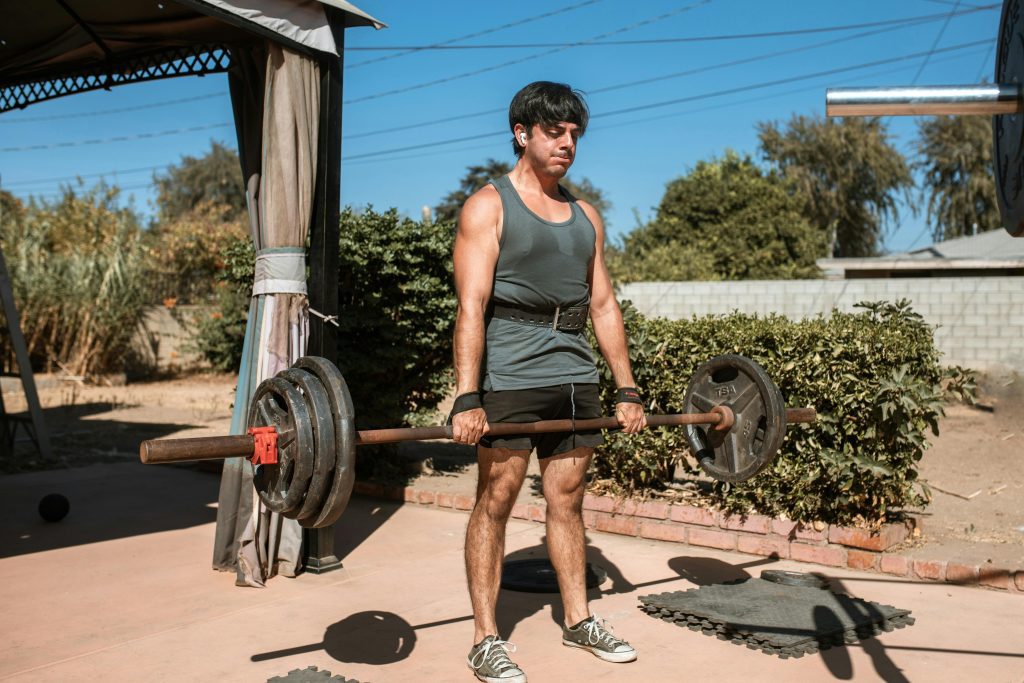
You’re standing in the gym, staring at the barbell, and wondering if you’ve been doing this all wrong. You’ve seen people pulling weight from a narrow stance, others with their legs spread wide, and someone just grabbed what looks like a hexagonal cage to lift from. The conventional vs sumo vs trap bar deadlift debate isn’t just gym talk. It matters because choosing the right variation can mean the difference between building serious strength and nursing a dodgy lower back.
Related reading: Deload Weeks: When Recovery Becomes Your Secret Weapon.
Picture this: You’ve committed to getting stronger, but every time you deadlift, something feels off. Your form breaks down, your back aches for days, or you just can’t seem to move the weight you think you should. Meanwhile, the person next to you seems to be making progress effortlessly. What’s their secret? They might simply be doing a deadlift variation that suits their body better.
Related reading: Trap Bar Deadlift vs Barbell Deadlift: Which Builds More Strength?
Why the Conventional vs Sumo vs Trap Bar Deadlift Question Actually Matters
Most people assume a deadlift is a deadlift. Pull heavy things off the ground, get strong, job done. But your body structure, injury history, and training goals all influence which variation serves you best. Someone with long femurs and a short torso might struggle with conventional deadlifts their entire life, never realising that switching to sumo could unlock years of wasted potential.
The reality is that these three variations aren’t just different exercises. They target muscles differently, demand distinct mobility requirements, and suit different body types. Understanding the conventional vs sumo vs trap bar deadlift differences helps you train smarter, not just harder.
According to research from the National Institutes of Health on deadlift biomechanics, the muscle activation patterns and joint loading vary significantly between deadlift styles. That’s not just academic nonsense. It has real implications for your training.
Let’s Bust Some Deadlift Myths
Myth: Conventional deadlifts are the only “real” deadlift
Reality: This thinking gets people injured and frustrated. Conventional deadlifts are one tool, not the holy grail. If your anatomy makes conventional deadlifts feel awkward or painful despite proper form, you’re not weak or doing it wrong. You might just need a different variation. Sumo and trap bar deadlifts build serious strength and muscle. End of story.
Myth: Sumo deadlifts are “cheating” because the range of motion is shorter
Reality: Sumo deadlifts might have a slightly shorter vertical bar path, but they demand more hip mobility and place different demands on your adductors and glutes. Powerlifters compete with sumo deadlifts under the same rules as conventional. If it were easier, everyone would do it. They don’t, because it suits some body types better than others.
Myth: Trap bar deadlifts are for beginners only
Reality: Professional athletes use trap bar deadlifts to build explosive power and reduce spinal loading. The trap bar variation allows you to lift heavier loads with less technical demand, making it brilliant for building raw strength and leg development. That’s not beginner stuff. That’s intelligent training.
Conventional Deadlift: The Classic Hip Hinge
The conventional deadlift is what most people picture when they think about deadlifting. You stand with feet hip-width apart, grip the barbell outside your legs, and pull the weight up whilst keeping it close to your body. Simple in concept, demanding in execution.
What makes conventional deadlifts unique
Conventional deadlifts place significant demand on your posterior chain. Your hamstrings, glutes, and lower back work overtime to extend your hips and spine simultaneously. The movement requires you to maintain a relatively upright torso angle whilst hinging at the hips, which sounds straightforward until you try moving serious weight.
Your grip gets tested hard with conventional deadlifts because your hands hold the entire load without assistance. Many people find their grip gives out before their legs and back, which is why lifting straps and chalk become essential tools as weights increase.
The conventional deadlift demands good hip mobility and hamstring flexibility. If you struggle to reach the bar without rounding your lower back, you’ll need to address mobility limitations before loading up heavy weight. Forcing poor positions leads to injury, not strength gains.
Who benefits most from conventional deadlifts
People with longer arms relative to their torso height have a mechanical advantage with conventional deadlifts. Shorter femurs also help because you don’t need to drop your hips as low to reach the bar, keeping your torso more vertical and reducing lower back strain.
Powerlifters who find conventional feels natural often stick with it for competition. If you can maintain a neutral spine throughout the lift without excessive forward lean, conventional deadlifts build incredible full-body strength.
Anyone training for general fitness benefits from conventional deadlifts too. The movement teaches proper hip hinging, which translates to everyday activities like lifting furniture or picking up children safely.
Sumo Deadlift: Wide Stance, Different Game
You may also enjoy: Compound Movements: The Complete Guide to Multi-Joint Exercise Mastery
Sumo deadlifts flip the script on conventional technique. Your stance widens significantly, feet pointed outward at 45-degree angles, and your hands grip the bar inside your legs. The position looks dramatically different and feels completely foreign if you’ve only done conventional.
How sumo changes the muscle emphasis
Comparing the conventional vs sumo vs trap bar deadlift, sumo places the most demand on your adductors and glutes. Your inner thighs work hard to maintain the wide stance whilst your glutes drive hip extension from a more upright position. Lower back involvement decreases compared to conventional, which benefits people with back sensitivity.
Your quads engage more at the start of a sumo deadlift because your hips sit lower and your torso stays more vertical. The movement resembles a squat-pull hybrid, making it feel distinctly different from the hip-dominant conventional style.
Research from biomechanics studies on deadlift variations shows that sumo deadlifts reduce spinal loading whilst maintaining similar overall muscle activation. For people with lower back issues, that difference matters enormously.
Who thrives with sumo deadlifts
Lifters with longer femurs and shorter torsos often find sumo feels more natural. The wider stance and upright torso position accommodates longer legs without forcing excessive forward lean that would strain the lower back.
People with excellent hip mobility and flexibility benefit from sumo because the position demands you sit between your legs whilst maintaining an upright spine. Limited hip mobility makes sumo uncomfortable and potentially risky.
If you’ve experienced lower back pain with conventional deadlifts despite proper form, experimenting with sumo makes sense. The reduced spinal loading allows you to train the deadlift pattern without aggravating sensitive backs.
Trap Bar Deadlift: The Game-Changing Middle Ground
Trap bar deadlifts (also called hex bar deadlifts) change everything about the movement by altering your relationship to the weight. Instead of the barbell sitting in front of your body, you stand inside a hexagonal frame with handles at your sides. This neutral grip and balanced load distribution creates an entirely different exercise.
Why trap bar deadlifts feel so different
When evaluating the conventional vs sumo vs trap bar deadlift, the trap bar version allows your centre of gravity to remain more neutral. The weight sits around you rather than in front, reducing the forward moment arm that stresses your lower back in barbell variations.
The raised handles on most trap bars (using the high handles) reduce the range of motion slightly, making the movement more accessible for people with limited mobility. You can still use the low handles for a full range deadlift if your flexibility allows.
Trap bars eliminate the shin-scraping problem that plagues conventional deadlifts. The bar path stays vertical without needing to travel around your knees, creating a cleaner movement pattern that many people find more intuitive.
The surprising versatility of trap bars
Athletes use trap bar deadlifts to develop explosive power because the more vertical torso position and balanced load allow for faster bar speed. The movement translates brilliantly to jumping and sprinting mechanics.
People recovering from back injuries often transition to trap bar deadlifts first. The reduced spinal loading lets you maintain strength training whilst respecting injury limitations. Something like a standard trap bar has become common equipment in physiotherapy settings for exactly this reason.
Trap bar deadlifts let you move serious weight. Many lifters can pull 10-20% more with a trap bar compared to conventional deadlifts because of the mechanical advantages. If your goal is pure strength development, that matters.
Breaking Down the Conventional vs Sumo vs Trap Bar Deadlift Differences
Now that you understand each variation individually, comparing them directly helps you make an informed choice for your training.
Muscle activation patterns
Conventional deadlifts emphasise hamstrings, lower back (erector spinae), and glutes relatively equally. The posterior chain dominates the movement with significant grip and upper back involvement.
Sumo deadlifts shift emphasis toward glutes, adductors, and quads whilst reducing lower back loading. Your grip still gets challenged, but the upright torso position changes how your back muscles engage.
Trap bar deadlifts distribute the load more evenly across your entire lower body. Quads, glutes, and hamstrings all contribute significantly, with reduced isolation of any single muscle group. Think of it as more of a full-body strength builder rather than a posterior chain specialist.
Technical complexity and learning curve
Conventional deadlifts demand precise technique to execute safely. Bar path, hip hinge timing, and spinal positioning all require practice and coaching to master. Expect several weeks of light weight practice before loading up heavy.
Sumo deadlifts add another layer of complexity with the wide stance and hip positioning requirements. Getting your hips opened properly whilst maintaining a neutral spine takes time to learn. Many people struggle with sumo initially because it feels so foreign.
Trap bar deadlifts win for ease of learning. The neutral grip and balanced load make the movement more intuitive for beginners. Most people can learn proper trap bar technique in one or two sessions, compared to weeks for conventional or sumo variations.
Injury risk and joint stress
Understanding the conventional vs sumo vs trap bar deadlift differences includes honest assessment of injury potential. Conventional deadlifts place the highest stress on your lower back, making form breakdown more consequential. People with existing back issues should approach conventional cautiously.
Sumo deadlifts reduce spinal loading but increase demands on hip mobility. If you lack the flexibility to achieve proper sumo positioning, forcing the stance can strain your hips and adductors. The movement is gentler on your back but demands more from your hips.
Trap bar deadlifts distribute stress more evenly across joints, generally making them the lowest-risk option. The NHS guidelines on strength training emphasise using equipment and techniques that match your current fitness level, which often makes trap bars ideal for people new to deadlifting.
Your 4-Week Deadlift Selection Plan
Rather than randomly switching between variations, use this structured approach to identify which deadlift style suits you best.
Week 1: Baseline assessment
Try all three variations with light weight (just the bar or minimal load). Focus entirely on how each movement feels, not how much you can lift. Video yourself from the side to assess spine position and bar path.
Notice which variation allows you to maintain a neutral spine most easily. Pay attention to where you feel muscular tension. Does one variation create discomfort in your lower back, hips, or elsewhere?
Assess your mobility honestly. Can you reach the bar in conventional stance without rounding your back? Can you achieve a wide sumo stance whilst keeping your knees tracking over your toes? These observations guide your selection.
Week 2: Build the pattern
Choose the variation that felt most comfortable and natural during week one. Perform 3 sessions of 4 sets x 8 reps with light to moderate weight, focusing on perfecting your technique.
Record your sessions and review your form. The goal is building a consistent movement pattern, not chasing heavy weight. If you notice form breakdown, reduce the load immediately.
Incorporate mobility work specific to your chosen variation. Conventional deadlifters benefit from hamstring stretches and hip hinges. Sumo pullers need hip opening exercises and adductor flexibility. Trap bar users should still work on basic movement patterns.
Week 3: Progressive loading
Increase weight by 5-10kg per session whilst maintaining perfect form. Perform 4 sets x 6 reps, resting 2-3 minutes between sets. The weight should feel challenging on the last 2 reps but not cause form breakdown.
Here’s what’s interesting: this is when differences between the conventional vs sumo vs trap bar deadlift really become apparent. You’ll discover which variation allows you to move weight confidently whilst maintaining good positions.
Keep notes on how you feel 24-48 hours after each session. Excessive soreness in your lower back (rather than your legs and glutes) suggests your form needs adjustment or the variation doesn’t suit your body structure.
Week 4: Validation and commitment
Test your working weight with your chosen variation. Perform 3 sets x 5 reps at a challenging but manageable load. You should complete all reps with solid technique.
Assess your progress honestly. Did you build confidence in the movement? Do you feel stronger without pain or excessive fatigue? Can you see yourself progressing with this variation long-term?
Commit to your chosen variation for at least 8-12 weeks of consistent training before reconsidering. Constantly switching between deadlift styles prevents you from building proficiency in any single pattern.
Common Deadlift Selection Mistakes and How to Dodge Them
Mistake 1: Choosing based on what looks impressive
Why it’s a problem: Conventional deadlifts from the floor look hardcore and attract gym respect, but impressive appearances don’t matter if the movement aggravates your body or limits your progress. Ego-driven selection leads to injury and frustration.
What to do instead: Choose based on what feels mechanically sound for your body structure and allows consistent progression without pain. Training smart beats looking tough every single time.
Mistake 2: Switching variations too frequently
Why it’s a problem: Deadlift proficiency requires months of consistent practice. Switching between conventional, sumo, and trap bar every few weeks prevents you from developing the motor patterns and strength specific to any single variation.
What to do instead: Commit to one primary variation for at least 3-6 months. Build real proficiency before experimenting with alternatives. You can incorporate other variations as secondary exercises if desired.
Mistake 3: Ignoring mobility limitations
Why it’s a problem: Forcing conventional deadlifts with tight hamstrings or attempting sumo with limited hip mobility creates compensations that lead to injury. Your body will find the path of least resistance, which often means rounding your spine or shifting weight improperly.
What to do instead: Address mobility issues through dedicated flexibility work or choose a variation that accommodates your current range of motion. Trap bar deadlifts often work brilliantly for people with mobility restrictions whilst they improve flexibility alongside their strength training.
Mistake 4: Neglecting accessory work
Why it’s a problem: Regardless of which variation you choose in the conventional vs sumo vs trap bar deadlift debate, your deadlift strength depends on supporting muscles beyond the prime movers. Weak glutes, poor core stability, or underdeveloped upper back muscles all limit your deadlift potential.
What to do instead: Include Romanian deadlifts, hip thrusts, rows, and core stability exercises alongside your main deadlift variation. Build a complete posterior chain rather than just hammering the deadlift itself.
Programming Your Chosen Deadlift Variation
Selecting the right variation solves only half the puzzle. Programming it effectively determines whether you actually get stronger.
Training frequency that builds strength
Most people deadlift once or twice weekly with good results. Deadlifts are systemically demanding, meaning they tax your entire body and nervous system significantly. More isn’t better if it prevents recovery.
Beginners thrive with once-weekly deadlifting, allowing 5-7 days between sessions for complete recovery. Intermediate lifters can experiment with twice-weekly training by varying intensity and volume between sessions.
One heavy session (3-5 reps per set) and one moderate session (6-8 reps) weekly works brilliantly for progression. The heavy day builds strength whilst the moderate day reinforces technique and adds training volume.
Rep ranges that match your goals
Strength development happens best in the 3-6 rep range with heavy loads (80-90% of your maximum). Sets of 3-5 reps allow you to maintain perfect form under challenging weight.
Muscle building benefits from moderate reps in the 6-10 range with 70-80% of your max. The increased time under tension stimulates hypertrophy whilst still building respectable strength.
Beginners should focus on 5-8 reps per set regardless of goals. Learning proper technique under manageable loads matters more than chasing heavy singles or grinding out high-rep sets that deteriorate into poor form.
Progression strategies that work
Add 2.5-5kg to your working weight weekly for as long as possible. This linear progression works brilliantly for beginners and early intermediate lifters. When you can no longer add weight weekly, shift to monthly progression cycles.
Incorporate deload weeks every 4-6 weeks by reducing weight by 30-40% whilst maintaining your rep scheme. Deloads allow recovery and prevent accumulated fatigue from stalling your progress.
Track your training in a simple journal or phone app. Knowing what weight you lifted last session prevents guessing and ensures progressive overload happens consistently. Training without records is training blind.
Combining Deadlift Variations Intelligently
Nothing prevents you from using multiple variations in your training if programmed thoughtfully. Understanding the conventional vs sumo vs trap bar deadlift differences helps you combine them effectively rather than randomly rotating exercises.
Choose one variation as your primary deadlift and progress it consistently. Add a secondary variation for supplementary volume at lighter loads. For example, train conventional deadlifts heavy on Monday, then include trap bar deadlifts for moderate reps on Thursday.
Use different variations to address weaknesses in your primary deadlift. If conventional deadlifts reveal quad weakness off the floor, adding trap bar or sumo deadlifts as accessories builds that specific strength quality.
Powerlifters often compete with one variation but train both conventional and sumo to determine which feels strongest during different training phases. Your optimal deadlift style might shift as your body adapts and mobility improves.
Save This: Your Deadlift Variation Quick Reference
- Choose conventional if you have good hip mobility, longer arms, and shorter femurs
- Select sumo when you have longer femurs, tight hamstrings, or back sensitivity
- Pick trap bar for beginner-friendly progression or rehabilitation from back issues
- Test all three variations with light weight before committing to one primary style
- Allow 3-6 months of consistent training with your chosen variation before switching
- Include mobility work specific to your variation’s demands
- Progress weight gradually (2.5-5kg weekly) rather than making big jumps
- Video your deadlifts regularly to catch form breakdown before it becomes habit
Your Deadlift Questions Answered
Can I build the same strength with trap bar deadlifts as conventional?
Absolutely. Trap bar deadlifts allow most people to move heavier loads than conventional variations, building serious lower body and posterior chain strength. The movement pattern differs slightly, but strength gains transfer between variations effectively. Elite athletes use trap bar deadlifts specifically for strength and power development, proving their effectiveness beyond doubt.
How long does it take to know if I’ve chosen the right deadlift variation?
Give yourself 4-6 weeks of consistent training before making judgments. Initial awkwardness with any new movement is normal and doesn’t indicate the variation is wrong for you. If after six weeks you still experience pain, form breakdown, or lack of progress despite proper programming, reassess your choice. The right variation should feel progressively more natural as you practice it.
Is it cheating to switch from conventional to sumo or trap bar because conventional feels hard?
Not remotely. Training intelligently means matching exercises to your body structure and goals. If conventional deadlifts cause consistent form breakdown or pain despite proper technique, switching variations demonstrates wisdom, not weakness. Your training should challenge you without destroying you. Choose the variation that allows sustainable long-term progress.
Can I do different deadlift variations on different training days?
Yes, but choose one as your primary variation that you progress systematically. Using conventional deadlifts as your main strength exercise and trap bar deadlifts as a lighter accessory movement works brilliantly. Avoid treating all variations as equally important, which prevents focused progression on any single pattern.
Which deadlift variation is best for building bigger legs?
Trap bar and sumo deadlifts typically build more quad development than conventional deadlifts because both variations involve more knee extension and a more upright torso position. That said, all deadlift variations build overall leg strength. If leg hypertrophy is your primary goal, combine your chosen deadlift variation with squats, lunges, and leg presses for complete development.
Making Your Decision and Moving Forward
The conventional vs sumo vs trap bar deadlift debate has no universal answer because your body structure, training history, and goals are unique. What works for your training partner might feel terrible for you, and that’s completely fine.
Test all three variations systematically. Pay attention to what your body tells you during and after training sessions. Choose the variation that allows you to maintain excellent form whilst feeling muscular tension in the right places without pain or excessive compensation.
Commit to your chosen variation for at least 12 weeks of progressive training. Build real proficiency before second-guessing your decision. Consistency matters far more than finding the theoretically perfect variation.
Remember that changing your deadlift style isn’t failure. As your body adapts, mobility improves, and goals evolve, your optimal deadlift variation might shift. Stay flexible in your approach whilst remaining consistent with your current choice.
Start with the variation that feels most natural today. Add 2.5kg to the bar each week. Track your progress. That’s the actual work that builds the strength you’re after. The right deadlift variation is simply the one you’ll actually do consistently with proper form.


