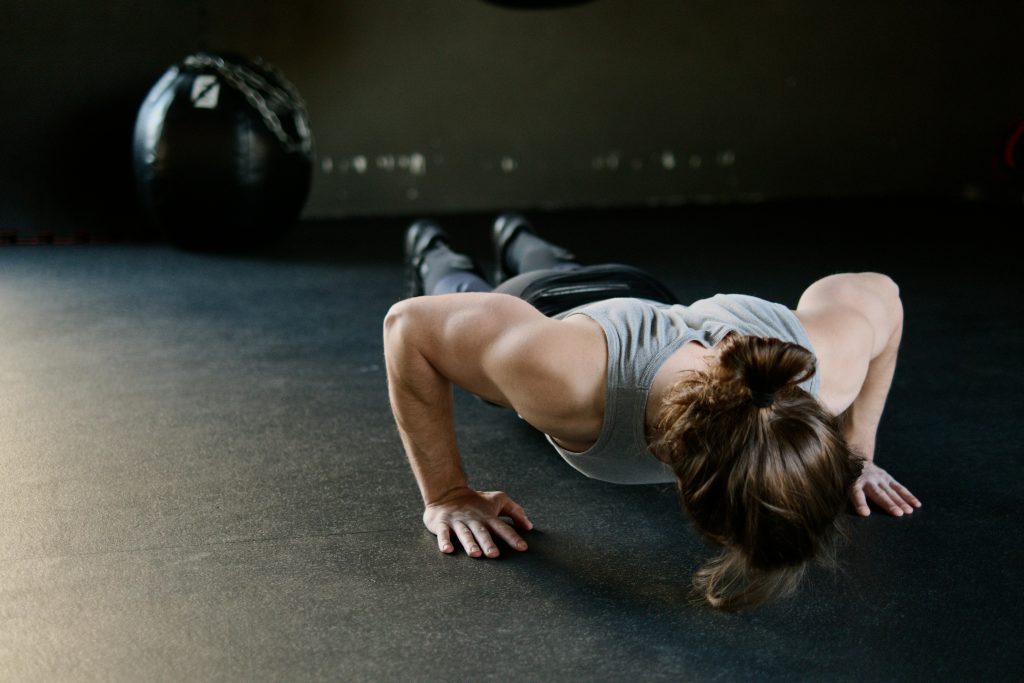
Picture this: you’ve been smashing out press-ups every morning for three weeks straight. Feeling brilliant. Then suddenly, you’re breezing through 20 reps without breaking a sweat, and you wonder if you’re actually getting stronger or just going through the motions. Here’s the thing – if you’re not applying progressive overload with bodyweight exercises, you’re probably spinning your wheels.
Most people think progressive overload means constantly adding weight to a barbell. But thousands of UK residents are building genuine strength at home using nothing but their own body and a bit of creativity. The secret? Understanding that progressive overload simply means making your muscles work harder over time, and there are loads of ways to do that without touching a dumbbell.
Truth is, bodyweight training can be just as effective as gym-based programmes when you know how to apply the right progression strategies. Your muscles don’t actually know whether you’re lifting iron or manipulating angles and tempo. They only respond to stress, adaptation, and recovery. Let’s explore exactly how to create that stress using just your body, your living room floor, and a systematic approach.
Common Myths About Progressive Overload with Bodyweight Exercises
Related reading: Progressive Overload for Women: How to Get Stronger Without Burning Out.
Before diving into practical strategies, let’s clear up some stubborn misconceptions that might be holding you back.
Myth: You need gym equipment to build real strength
Reality: Elite gymnasts possess some of the most impressive strength-to-weight ratios of any athletes, built almost entirely through bodyweight movements. Research from the NHS physical activity guidelines confirms that progressive bodyweight training produces measurable strength gains comparable to weight training for most fitness goals. Your muscles respond to mechanical tension regardless of the source.
Myth: Once you can do 20+ reps, you’ve maxed out bodyweight training
Reality: When standard variations become easy, that’s precisely when progressive overload with bodyweight exercises gets interesting. You can manipulate tempo, range of motion, stability, leverage, and countless other variables. A one-arm press-up is exponentially harder than a standard one, yet both use the same equipment (none). The progression ladder extends far beyond what most people imagine.
Myth: Progressive overload means training harder every single session
Reality: Sustainable progression involves strategic increases over weeks and months, not daily heroics. Some sessions maintain current levels whilst your body adapts. According to sports science research, attempting to increase difficulty every workout leads to burnout, poor form, and injury. Smart progressive overload with bodyweight exercises follows a planned wave pattern, not a straight upward line.
Seven Practical Methods to Apply Progressive Overload at Home
You might also enjoy: Progressive Overload: The Complete Science-Backed Guide to Building Strength
Right, let’s get tactical. These are the specific levers you can pull to ensure your bodyweight training continues challenging your muscles week after week.
1. Increase repetitions within your working range
The most straightforward approach to progressive overload with bodyweight exercises involves adding reps. But there’s a sweet spot. Once you exceed 20-25 reps on most movements, you’re training muscular endurance more than strength or hypertrophy.
Set yourself a rep range – say 8-15 reps per set. When you reach the top of that range with good form, progress to a harder variation. For example, work your press-ups from 8 reps to 15 reps over several weeks. Once you hit 15 clean reps consistently, shift to a decline press-up or diamond press-up variation starting back at 8 reps.
Track this obsessively in a notebook or phone app. Write down every session. That data becomes your roadmap showing exactly when to progress.
2. Slow down your tempo dramatically
Something worth noting: changing movement speed transforms familiar exercises into brutal challenges. A standard squat takes about 2-3 seconds total. A tempo squat with a 5-second lowering phase, 2-second pause at the bottom, and 2-second rising phase lasts 9 seconds. That’s triple the time under tension, forcing your muscles to work considerably harder.
Try this protocol for progressive overload with bodyweight exercises: pick a 4-digit tempo notation (eccentric-pause-concentric-pause). Start with 3-1-1-0 for most movements, then progress to 4-1-2-0, then 5-2-2-1. Keep the same rep count whilst increasing tempo, and you’ll discover muscles you forgot existed.
Tempo training also improves control and mind-muscle connection. You can’t cheat or use momentum when each rep takes 8+ seconds. Your form becomes cleaner almost automatically.
3. Decrease rest periods systematically
Manipulating rest intervals between sets provides another avenue for progressive overload at home. Less recovery time means your muscles must work whilst more fatigued, increasing metabolic stress and cardiovascular demands.
Begin with 90-second rests between sets. Over 4-6 weeks, trim this to 75 seconds, then 60, then 45. Your muscles adapt to incomplete recovery, building work capacity and mental toughness simultaneously.
For conditioning-focused progressive overload with bodyweight exercises, structured circuits work brilliantly. Perform 5-6 exercises back-to-back with minimal rest between movements, then rest 2-3 minutes between rounds. Gradually reduce that inter-round rest from 3 minutes to 2.5 to 2 to 90 seconds. Your heart and lungs will develop alongside your muscles.
4. Progress through movement variations and leverage changes
This is where bodyweight training truly shines. Every exercise exists on a progression spectrum from beginner to borderline superhuman.
Press-ups progress from wall press-ups → incline press-ups → standard press-ups → decline press-ups → diamond press-ups → archer press-ups → one-arm press-ups. Each variation shifts leverage, requiring greater force production from the same muscle groups.
Squats follow a similar path: chair-assisted squats → box squats → full squats → jump squats → Bulgarian split squats → pistol squats. You’re applying progressive overload with bodyweight exercises simply by making the movement mechanically harder.
The beauty here? You can regress instantly if a new variation proves too challenging. Drop back one step, build strength and confidence, then return to the harder movement. Nothing’s wasted.
5. Add pauses and isometric holds
Pausing at the most difficult point of a movement creates intense tension without requiring fancy equipment. Progressive overload at home becomes accessible through strategic stillness.
Try holding the bottom position of a squat for 3 seconds before rising. Once that feels manageable, increase to 5 seconds. Then 7. Then 10. Alternatively, add multiple mini-pauses throughout the range of motion.
Isometric work also identifies weak points brilliantly. Can you hold a perfect plank for 60 seconds but struggle with a 5-second pause at the bottom of a press-up? That reveals where your strength development needs attention. Address weak points with targeted isometric progressive overload with bodyweight exercises, and your overall performance improves across the board.
6. Reduce your base of support for stability challenges
Stability demands create progressive overload without changing the fundamental movement. Your muscles work harder maintaining control when balance becomes precarious.
Standard press-ups on the floor: stable. Press-ups with feet on a cushion: moderate instability. Press-ups with one leg raised: significant instability. Press-ups with hands on a basketball: borderline madness (and extremely effective).
Similarly, squats on firm ground versus squats on a folded towel or pillow recruit additional stabilising muscles throughout your legs and core. Your nervous system must fire more muscle fibres to maintain position, creating overload through coordination demands rather than pure force.
Something like a stability cushion or wobble board can add variety here, though folded towels, cushions, or even standing on one leg achieve similar effects at zero cost.
7. Increase training volume progressively
Volume equals sets multiplied by reps. Gradually increasing total volume over weeks creates sustainable progressive overload with bodyweight exercises without requiring harder variations or heavier loads.
Week one: 3 sets of 10 squats = 30 total reps. Week two: 3 sets of 11 = 33 reps. Week three: 3 sets of 12 = 36 reps. Week four: 4 sets of 10 = 40 reps. Same exercise, same difficulty, but 33% more total work by week four.
Track volume weekly in a simple spreadsheet. Aim for 5-10% increases per week for major movement patterns. This compounds beautifully over months, building work capacity that transfers to every other progression method.
Your 8-Week Progressive Overload Blueprint
Enough theory. Here’s a concrete roadmap for applying progressive overload with bodyweight exercises over the next two months. This plan assumes you can currently perform basic movements with reasonable form.
Weeks 1-2: Establish your baseline
Focus on mastering fundamental movement patterns with perfect technique. Record your maximum reps for key exercises: press-ups, squats, lunges, planks, and rows (using a sturdy table edge).
Perform 3 sets of 60-70% of your maximum reps, three times weekly. Rest 90 seconds between sets. Use a 2-1-1-0 tempo (2 seconds lowering, 1 second pause, 1 second raising, no pause at top).
This establishes your foundation whilst building the habit of consistent training. Track everything religiously.
Weeks 3-4: Increase volume
Same exercises, same tempo, but progress to 4 sets instead of 3. Add one additional rep to each set if possible. Maintain 90-second rests.
This 33% volume increase creates progressive overload at home through pure workload. Your muscles adapt by growing slightly stronger and more fatigue-resistant.
Weeks 5-6: Manipulate tempo and rest
Drop back to 3 sets temporarily, but shift to a 3-1-2-0 tempo. The slower eccentric phase dramatically increases time under tension. Reduce rest periods to 75 seconds.
Same movements, different stimulus. This phase feels harder despite fewer sets because you’re applying progressive overload with bodyweight exercises through multiple variables simultaneously.
Weeks 7-8: Introduce harder variations
Progress each primary movement to the next difficulty level. Standard press-ups become decline press-ups. Regular squats become Bulgarian split squats. Planks transition to side planks or plank shoulder taps.
Return to 3 sets and your original 2-1-1-0 tempo, but with these harder variations. Rest 90 seconds between sets. You’ve completed a full progression cycle, and you’re now performing exercises that would have been impossible eight weeks earlier.
Repeat this cycle with the next tier of difficulty. Progressive overload at home becomes a perpetual spiral upward, each wave building on the previous one.
Common Progressive Overload Mistakes (And How to Dodge Them)
Mistake 1: Progressing too quickly before mastering current difficulty
Why it’s a problem: Jumping to harder variations prematurely leads to compromised form, reduced muscle activation, and increased injury risk. That one-arm press-up attempt that looks more like a flailing fish than controlled strength work? Classic case of progressing before you’re ready.
What to do instead: Master your current level completely before advancing. Can you perform at least 12 perfect reps with zero form breakdown? Can you maintain that quality when fatigued in the final set? If not, stay put. Progressive overload with bodyweight exercises rewards patience more than ambition.
Mistake 2: Changing too many variables simultaneously
Why it’s a problem: Adding reps whilst slowing tempo whilst reducing rest whilst switching to a harder variation creates chaos. You can’t identify what’s working, recovery becomes inadequate, and you’ll likely regress or burn out within weeks.
What to do instead: Manipulate one variable at a time. Spend 2-4 weeks increasing reps, then maintain that whilst adjusting tempo for the next 2-4 weeks. This systematic approach to progressive overload at home produces steady, trackable improvements.
Mistake 3: Neglecting deload weeks
Why it’s a problem: Continuous progression without strategic recovery accumulates fatigue faster than fitness. Your central nervous system, connective tissues, and muscles all need periodic breaks from progressive stress. According to research published in Sports Medicine, planned deload weeks actually enhance long-term progress by allowing supercompensation.
What to do instead: Every fourth or fifth week, reduce volume by 40-50% whilst maintaining your current exercise variations. Think of it as two steps forward, one step back, then three steps forward. This wave periodisation optimises progressive overload with bodyweight exercises over months and years, not just weeks.
Mistake 4: Ignoring the importance of nutrition and sleep
Why it’s a problem: You can design the perfect progressive overload programme, but if you’re sleeping five hours nightly and eating like a university student during finals week, your body simply cannot adapt. Training provides the stimulus, but recovery and nutrition create the adaptation.
What to do instead: Prioritise 7-9 hours of quality sleep. Consume adequate protein (roughly 1.6-2.2g per kilogram of body weight daily, per British Dietetic Association guidelines). Maintain a slight calorie surplus if building strength is your primary goal. Progressive overload at home only works when you’re supporting the process with proper recovery.
Mistake 5: Not tracking your workouts consistently
Why it’s a problem: Relying on memory leads to aimless training. Did you do 12 or 14 reps last Tuesday? Was your rest period 60 or 90 seconds? Without data, you’re guessing rather than progressing systematically.
What to do instead: Use a simple notebook, spreadsheet, or phone app to record every session. Note exercises, sets, reps, tempo, rest periods, and how it felt. This log becomes invaluable for identifying patterns, planning progressions, and maintaining motivation when you look back and see how far you’ve come.
Quick Reference Checklist for Progressive Overload Success
- Choose one progression variable to manipulate per training block (2-4 weeks)
- Record every workout in detail with specific numbers for reps, sets, and tempo
- Master current exercise variations completely before advancing to harder versions
- Include a deload week every fourth or fifth week to facilitate recovery and adaptation
- Prioritise quality over quantity in every single repetition you perform
- Aim for 5-10% volume increases per week as a sustainable progression rate
- Schedule at least 48 hours recovery between training the same muscle groups intensely
- Celebrate small victories and trust the cumulative process over months
Frequently Asked Questions
How long does it take to see results from progressive overload with bodyweight exercises?
Most people notice improved performance within 2-3 weeks – exercises that felt challenging become manageable, and you’ll be able to add reps or progress variations. Visible physical changes typically appear after 6-8 weeks of consistent training. Strength gains occur faster than muscle growth because early improvements come from neurological adaptations. Be patient, track your numbers obsessively, and the results will accumulate steadily.
Can you build significant muscle using only bodyweight training at home?
Absolutely. Muscle growth requires three things: mechanical tension, metabolic stress, and progressive overload. Bodyweight exercises provide all three when programmed intelligently. You won’t likely achieve bodybuilder-level mass without external resistance, but substantial, functional muscle development is entirely achievable. Focus on time under tension, advanced variations, and consistent progressive overload with bodyweight exercises. Gymnasts prove what’s possible with this approach.
What if I can already do loads of press-ups and squats?
Shift immediately to harder variations rather than endlessly adding reps. Standard press-ups become archer press-ups or pseudo-planche press-ups. Regular squats progress to pistol squats or shrimp squats. Progressive overload at home through variation changes will humble even the fittest individuals. There’s always a harder version waiting to challenge you.
How do I know when to progress to the next difficulty level?
Apply the “rule of 15”: when you can perform 15 clean, controlled reps with perfect form in your working sets, and maintain that quality across multiple sets whilst recovering normally between sessions, you’re ready to progress. Some movements might progress faster than others. That’s completely normal and expected.
Do I need any equipment to apply progressive overload with bodyweight exercises effectively?
Not necessarily, though a few simple items expand your options considerably. Your bodyweight and creativity suffice for fundamental progressive overload at home. That said, something like a sturdy chair or table for elevated positions and rows, or even a backpack filled with books for added resistance, can provide useful variation as you advance. But start with absolutely nothing and progress from there.
Making Progressive Overload Part of Your Life
Here’s the reality: progressive overload with bodyweight exercises isn’t complicated, but it does require consistency and honest tracking. Most people fail not because the method doesn’t work, but because they train randomly without a systematic plan.
Your body adapts to stress placed upon it. Give it progressive, measurable stress through the seven methods outlined above, support that with proper recovery and nutrition, and strength improvements become inevitable rather than hopeful.
Start ridiculously small. Three exercises, three times weekly. Perfect those. Track everything. Add one small progression every 2-3 weeks. In six months, you’ll be performing movements that currently seem impossible. In a year, your entire relationship with physical capability will have transformed.
The best home workout isn’t the most creative or Instagram-worthy one. It’s the one you actually do consistently, with progressive overload applied systematically, week after week. You’ve got everything you need right now. Your body, your floor, and this blueprint.
What you do tomorrow matters more than what you did yesterday. Make it count.


