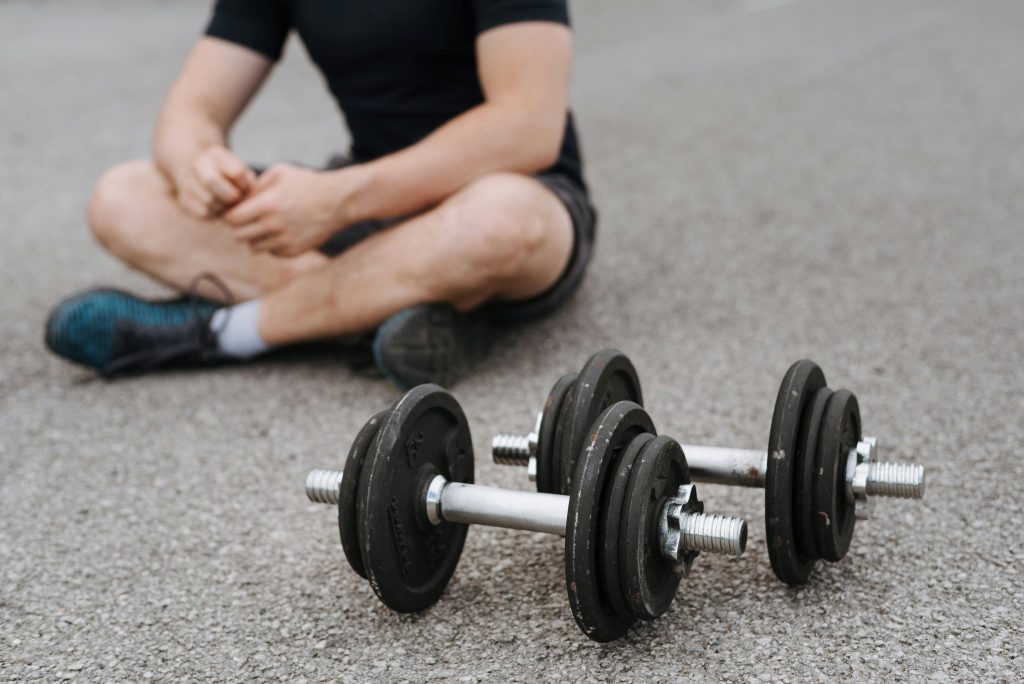
Most people think building leg muscle at home requires complicated equipment or a gym membership. Wrong. A pair of dumbbells and 30 minutes of your time can transform your lower body strength. What’s more, training at home means no waiting for squat racks and no awkward gym encounters.
Related reading: Can You Actually Learn a New Language in 3 Months Using Apps?.
Picture this: It’s Monday evening, and you’ve been meaning to strengthen those legs for months. The gym feels too far away, too expensive, too crowded. But those dumbbells tucked under your bed? They’re gathering dust while your leg muscles stay the same size they were last year. Let’s change that.
Common Myths About Building Leg Muscle at Home
Related reading: Build Leg Muscle at Home With Just Dumbbells.
Before diving into the practical stuff, let’s clear up some persistent misconceptions that might be holding you back.
Myth: You need heavy barbells to build impressive leg muscle
Reality: Dumbbells provide everything needed for substantial leg growth. Research from the NHS shows that progressive resistance training builds muscle regardless of equipment type. The key is progressive overload, which dumbbells deliver brilliantly through increased weight, reps, or tempo variations.
Myth: Home workouts can’t match gym results
Reality: Muscles don’t know whether you’re in a fancy gym or your living room. They respond to tension, time under load, and recovery. Studies from Loughborough University demonstrate that muscle protein synthesis rates remain identical whether training occurs at home or in commercial facilities. Your commitment matters more than your postcode.
Myth: Legs need different equipment than upper body
Reality: The same dumbbells that build your shoulders and chest work perfectly for leg development. While conventional wisdom suggests legs require heavier loads, proper technique and exercise selection with moderate weights produce excellent results. Bulgarian split squats with 12kg dumbbells will humble even experienced lifters.
Why Dumbbells Are Perfect for Building Leg Muscle at Home
You might also enjoy: Progressive Overload at Home Without Weights or Equipment.
Dumbbells offer unique advantages for leg training that often surpass barbell work. Each leg must stabilise independently, preventing the stronger side from compensating. This builds balanced strength and exposes weaknesses you might have missed.
The range of motion with dumbbells typically exceeds what’s possible with a barbell. Goblet squats allow deeper knee flexion than back squats for many people, particularly those with longer femurs. Deeper squats mean greater muscle activation across the quadriceps and glutes.
Safety becomes simpler when building leg muscle at home with dumbbells. No spotter needed. If you fail a rep during a Bulgarian split squat, you simply drop the weights beside you. Compare that to being trapped under a heavy barbell with no safety bars.
Here’s what’s interesting: dumbbell training naturally improves coordination and core stability. Balancing two separate weights requires more muscular coordination than a single barbell. This translates to better functional strength for everyday activities like carrying shopping bags or navigating stairs.
The 6 Essential Dumbbell Exercises for Maximum Leg Growth
These movements target every major muscle group in your legs. Master these six exercises, and you’ll build comprehensive lower body strength.
Goblet Squats: The Foundation Movement
Hold one dumbbell vertically against your chest, gripping the top plate with both hands. Stand with feet slightly wider than shoulder-width, toes pointing slightly outward. Descend by pushing your hips back and bending your knees, keeping your chest upright. Lower until your hip crease drops below knee level. Drive through your whole foot to stand.
This exercise builds leg muscle at home by targeting quadriceps, glutes, and adductors simultaneously. The front-loaded position keeps your torso naturally upright, reducing lower back stress while allowing deeper squats than most people achieve with barbells.
Aim for 3 sets of 10-12 reps. When that feels manageable, grab a heavier dumbbell rather than adding endless reps.
Bulgarian Split Squats: The Quad Builder
Position your rear foot on a chair or sofa roughly knee-height behind you. Hold a dumbbell in each hand at your sides. Step forward with your front foot until you’re in a split stance. Lower your body by bending both knees until your rear knee nearly touches the floor. Push through your front foot to return.
Bulgarian split squats build leg muscle at home with incredible efficiency. Each leg works independently, eliminating strength imbalances. The elevated rear foot increases range of motion, creating more muscle tension than regular lunges.
Perform 3 sets of 8-10 reps per leg. Balance challenges you initially, but improves rapidly within two weeks.
Romanian Deadlifts: The Hamstring Developer
Stand holding dumbbells at thigh level, palms facing your body. Position feet hip-width apart with a slight knee bend. Push your hips backward while lowering the dumbbells down your thighs, keeping them close to your body. Lower until you feel a strong stretch in your hamstrings, typically around mid-shin height. Drive your hips forward to return to standing.
Romanian deadlifts target the posterior chain—hamstrings, glutes, and lower back. Most leg training focuses heavily on quads, making this balance essential for complete development and injury prevention.
Complete 3 sets of 10-12 reps. Focus on the stretch sensation rather than how low you can reach. Flexibility varies, and forcing excessive range risks lower back issues.
Reverse Lunges: The Stability Challenge
Hold dumbbells at your sides. Step one foot backward, landing on the ball of your foot. Lower your body until both knees bend to approximately 90 degrees. Push through your front foot to return to standing, bringing your rear foot forward to the starting position.
Reverse lunges build leg muscle at home while being gentler on knees than forward lunges. Stepping backward reduces forward knee translation, making this variation suitable for people with anterior knee sensitivity.
Execute 3 sets of 10 reps per leg. Alternate legs each rep rather than completing one side entirely before switching.
Calf Raises: The Lower Leg Essential
Hold dumbbells at your sides. Stand with the balls of your feet on a raised surface like a thick book or doorstep, heels hanging off the edge. Rise onto your toes as high as possible, squeezing your calves at the top. Lower your heels below the level of your toes for a full stretch before repeating.
Calves respond best to both heavy weights and higher reps. They’re stubborn muscles that need consistent attention. The elevated position allows greater range of motion than floor-based calf raises.
Try 3 sets of 15-20 reps. Calves recover quickly, so you can train them three times weekly without issues.
Sumo Squats: The Inner Thigh Focus
Hold one dumbbell vertically with both hands at arm’s length. Position your feet significantly wider than shoulder-width, toes pointing outward at roughly 45 degrees. Lower your body by bending your knees in the direction of your toes. Descend until your thighs reach parallel or slightly below. Drive through your heels to stand.
Sumo squats emphasise the adductors (inner thighs) and glutes more than conventional squats. This stance variation ensures complete leg development and adds variety to prevent training monotony.
Complete 3 sets of 12-15 reps. The wider stance feels awkward initially but becomes comfortable quickly.
Your 4-Week Progressive Plan to Build Leg Muscle at Home
Consistency trumps perfection. This structured plan removes guesswork while allowing flexibility for your schedule.
Week 1-2: Learning and Adapting
Focus on mastering movement patterns rather than pushing heavy weights. Building leg muscle at home requires solid technique first.
- Monday: Perform goblet squats (3 sets x 10 reps), Romanian deadlifts (3 sets x 10 reps), and calf raises (3 sets x 15 reps). Rest 90 seconds between sets. Total workout time: 25 minutes.
- Thursday: Execute Bulgarian split squats (3 sets x 8 reps each leg), reverse lunges (3 sets x 10 reps each leg), and sumo squats (3 sets x 12 reps). Rest 90 seconds between sets. Duration: 30 minutes.
- Track your weights: Write down which dumbbell weight you used for each exercise. This creates your baseline for progressive overload.
- Expect soreness: Delayed onset muscle soreness peaks around 48 hours post-workout. This diminishes significantly by week three as your body adapts.
Week 3-4: Increasing Intensity
Now that movement patterns feel natural, add challenge through increased weight or reps.
- Monday: Increase goblet squat and Romanian deadlift weights by 2-4kg if week two felt comfortable. Add one extra set to each exercise (4 sets instead of 3). Maintain calf raises at 3 sets but increase to 20 reps.
- Thursday: Add 1-2kg to Bulgarian split squats and reverse lunges. Include a fourth set of sumo squats. Rest periods can reduce to 60-75 seconds as conditioning improves.
- Saturday (optional): Add a lighter third session focusing on higher reps with moderate weights. Choose three exercises and perform 4 sets of 15 reps each. This adds training volume without excessive fatigue.
- Measure progress: Take simple measurements around your thighs and note any strength improvements. Building leg muscle at home produces visible changes within four weeks when combined with adequate protein intake.
What Equipment You Actually Need
Minimal investment yields maximum results when building leg muscle at home with dumbbells.
A set of adjustable dumbbells provides the most versatility. Look for options ranging from 5kg to 25kg per dumbbell, which covers beginners through intermediate lifters. Fixed-weight dumbbells work perfectly fine but require more storage space as you need multiple pairs.
Something like a sturdy chair or ottoman serves as your Bulgarian split squat platform. Kitchen chairs work initially, though you might prefer something slightly lower as you become more mobile. A sofa typically sits at the right height for most people.
An exercise mat cushions your knees during certain movements and defines your workout space psychologically. Any yoga mat from the high street does the job. Nothing fancy required.
That’s genuinely everything needed to build impressive leg muscle at home. No cable machines, no leg press, no squat rack. Just dumbbells and determination.
Nutrition Strategies That Support Leg Muscle Growth
Training provides the stimulus. Nutrition provides the building blocks. Both are non-negotiable for building leg muscle at home.
Protein intake determines whether your training builds muscle or simply maintains what you have. The British Dietetic Association recommends 1.4-2.0 grams of protein per kilogram of body weight daily for people training for muscle growth. For someone weighing 75kg, that’s 105-150 grams daily.
Distribute protein across four meals rather than loading it all into dinner. Muscle protein synthesis responds better to regular protein doses throughout the day. Aim for 25-40 grams per meal.
Carbohydrates fuel your training sessions and support recovery. Legs contain your body’s largest muscle groups, meaning leg training depletes glycogen stores significantly. Include complex carbohydrates like oats, rice, potatoes, and whole grain bread around your training sessions.
Hydration impacts performance more than most people realise. Even mild dehydration reduces strength output by 5-10%. Keep a water bottle visible throughout your day. Aim for 2-3 litres daily, more on training days.
Truth is, supplements aren’t necessary for building leg muscle at home, but creatine monohydrate offers legitimate benefits. It’s the most researched sports supplement, with hundreds of studies confirming its safety and effectiveness. Five grams daily increases strength and muscle gain modestly but consistently.
Mistakes That Sabotage Your Leg Muscle Progress
Knowing what not to do saves months of frustration.
Mistake 1: Training legs only once weekly
Why it’s a problem: Muscle protein synthesis remains elevated for approximately 48 hours after training. Training legs only once weekly means they’re in a growth state for just two days out of seven. That’s wasteful.
What to do instead: Train legs twice weekly with at least 48 hours between sessions. Monday and Thursday works perfectly. This doubles your growth stimulus while allowing adequate recovery.
Mistake 2: Using weights that are too light for too long
Why it’s a problem: Progressive overload drives muscle growth. Using the same 8kg dumbbells for months creates no adaptation stimulus. Your body maintains muscle efficiently but builds new muscle reluctantly.
What to do instead: When you can complete all prescribed reps with good form and could manage two more reps, increase the weight. For dumbbells, that typically means jumping 2kg at a time. Building leg muscle at home requires progressive challenge.
Mistake 3: Skipping the eccentric portion
Why it’s a problem: Dropping quickly through the lowering phase of each rep eliminates half the muscle-building stimulus. The eccentric (lowering) portion produces significant muscle damage, which triggers growth during recovery.
What to do instead: Lower the weight over 2-3 seconds on every single rep. Control the descent. This immediately makes every exercise harder and more effective without changing the weight.
Mistake 4: Neglecting recovery between sessions
Why it’s a problem: Muscles grow during recovery, not during training. Training breaks muscle tissue down. Rest, sleep, and nutrition build it back stronger. Training legs daily prevents this recovery process.
What to do instead: Allow 48-72 hours between intense leg sessions. Sleep 7-9 hours nightly. Prioritise protein intake in the 24 hours following training. Walk or do light activity on rest days to promote blood flow without creating additional fatigue.
Mistake 5: Ignoring single-leg exercises
Why it’s a problem: Bilateral exercises like goblet squats allow your dominant leg to compensate for your weaker side. This perpetuates imbalances and limits overall progress. Most people have a strength difference of 10-15% between legs.
What to do instead: Include at least one single-leg exercise in every session. Bulgarian split squats and reverse lunges expose and correct imbalances. Always start with your weaker leg and match reps with your stronger side, never exceeding what your weaker leg achieved.
Save This: Your Leg Training Essentials Checklist
Pin this to your phone or print it. These principles matter more than any fancy programme.
- Train legs twice weekly with 48-72 hours recovery between sessions
- Include both bilateral exercises (goblet squats, sumo squats) and unilateral movements (Bulgarian splits, reverse lunges)
- Progress by adding weight, reps, or sets every 2-3 weeks
- Control the lowering phase of each rep, taking 2-3 seconds
- Consume 1.4-2.0g protein per kilogram bodyweight daily, spread across multiple meals
- Sleep 7-9 hours nightly to support muscle recovery and growth
- Track your weights and reps in a simple notebook or phone app
- Warm up with 5 minutes of light movement and bodyweight squats before lifting
How to Track Progress Beyond the Scales
Building leg muscle at home produces multiple progress indicators. Bodyweight fluctuates daily due to hydration, food timing, and other variables, making it unreliable for tracking short-term progress.
Strength increases provide the most reliable marker. Can you goblet squat 16kg for 12 reps when you could only manage 12kg last month? That’s definitive progress. Keep a simple training log noting exercises, weights, and reps completed.
Measurements tell a clearer story than scales. Measure around the fullest part of your thigh once monthly. Building muscle typically adds 1-2cm monthly for beginners following a solid programme with adequate nutrition.
How your clothes fit changes noticeably. Trousers become tighter around the thighs and glutes while potentially loosening at the waist if you’re simultaneously losing fat. This visual feedback matters more than arbitrary scale numbers.
Take progress photos every four weeks. Stand in the same location, wearing the same clothes, at the same time of day. Front, side, and back views. Your brain adapts to gradual changes in the mirror, but photos reveal true progress objectively.
Energy levels and recovery speed improve as your conditioning develops. Early sessions might leave you hobbling for three days. After two months of consistent training, soreness becomes mild and brief. This adaptation indicates your body has become more efficient at recovery.
Addressing Knee and Joint Concerns
Many people worry about knee safety when building leg muscle at home, particularly if they’ve experienced previous discomfort.
Proper depth matters more than most people realise. Partial squats actually increase knee stress by concentrating forces in a limited range. NHS guidelines on strength training emphasise full range of motion for joint health. Deep squats, when performed correctly, distribute forces more evenly across the knee joint.
Knee tracking determines safety. Your knees should move in the same direction as your toes throughout each rep. Knees collapsing inward creates harmful torque. Film yourself from the front occasionally to check this. Most people discover their form needs adjustment.
Tempo modifications help if you’re returning from injury or dealing with sensitivity. Slowing each rep to 4 seconds down, 1 second pause, 2 seconds up reduces momentum and increases control. This often eliminates knee discomfort while building strength that protects joints long-term.
Starting lighter than ego suggests prevents problems. Using dumbbells that allow perfect form for all prescribed reps builds strength safely. Jumping to heavier weights before you’re ready compromises technique and invites injury.
Common Questions About Building Leg Muscle at Home
How heavy should my dumbbells be for leg training?
Start with weights that challenge you in the 8-12 rep range while maintaining perfect form. For most people beginning leg training at home, this means 8-12kg dumbbells for exercises like goblet squats, and slightly lighter (6-10kg) for Bulgarian split squats initially. Single-leg exercises feel significantly harder than bilateral movements. Progress to heavier weights as your strength improves, typically adding 2kg every 2-3 weeks.
Can I build significant leg muscle at home without a gym membership?
Absolutely. Muscle growth responds to progressive tension, adequate protein, and recovery regardless of location. Research comparing home training to gym training shows equivalent muscle growth when volume and intensity match. The main advantage gyms offer is equipment variety, but dumbbells provide everything necessary for substantial leg development. Many people build impressive legs training exclusively at home.
How long before I see visible results building leg muscle at home?
Beginners typically notice visible changes within 4-6 weeks of consistent training and proper nutrition. Strength improvements appear first, often within 2-3 weeks. Visible muscle size increases follow as neurological adaptations give way to actual muscle growth. Taking monthly progress photos reveals changes your daily mirror checks might miss. Patience matters because muscle builds gradually but compounds impressively over months.
Should I train legs on consecutive days?
No. Intense leg training requires 48-72 hours recovery between sessions for optimal growth. Muscle protein synthesis remains elevated for approximately 48 hours post-training, so training again before this window closes interrupts the growth process. Schedule leg sessions on non-consecutive days like Monday and Thursday, or Tuesday and Saturday. Light activity like walking on rest days aids recovery without compromising growth.
What should I eat before and after leg training?
Eat a meal containing protein and carbohydrates 2-3 hours before training. Something like chicken with rice, or eggs on toast provides sustained energy. If training first thing in the morning, a banana and protein shake 30 minutes beforehand works well. After training, consume 25-40g protein within two hours. Pair this with carbohydrates to replenish glycogen. A chicken sandwich, Greek yoghurt with fruit, or a proper meal all support recovery effectively.
Adjusting the Programme as You Progress
Building leg muscle at home demands evolving your approach as you advance. What works brilliantly for three months eventually requires modification to maintain progress.
After 8-12 weeks, your body adapts to the specific exercises and rep ranges you’ve been using. Several progression strategies keep gains coming. Adding a third weekly session increases training volume. Implementing drop sets on your final set of each exercise extends time under tension. Incorporating pause reps where you hold the bottom position for 3 seconds increases difficulty without heavier weights.
Exercise variations prevent adaptation and maintain motivation. Substitute front-foot-elevated split squats for standard Bulgarian splits. Try deficit Romanian deadlifts by standing on a step. Replace reverse lunges with walking lunges. These variations target muscles from slightly different angles, promoting continued growth.
Periodisation structures your training into focused blocks. Spend 4-6 weeks emphasising strength with lower reps (6-8) and heavier weights. Follow this with a 4-6 week hypertrophy block using moderate weights for 10-15 reps. This variation prevents plateaus and addresses multiple adaptation mechanisms.
The reality is that progress becomes slower and requires more strategic planning as you advance. Beginners gain rapidly because their bodies respond dramatically to any training stimulus. After a year of consistent training, progress slows but continues if you keep challenging yourself intelligently.
Making Leg Training Sustainable Long-Term
Motivation fades. Systems persist. Building leg muscle at home succeeds when you create an environment that makes consistency easier than inconsistency.
Keep your dumbbells visible rather than hidden away. Equipment you can see gets used more frequently than equipment requiring excavation from under your bed. A corner of your bedroom or living room becomes your training zone.
Schedule specific training times rather than hoping to fit workouts in whenever. Monday and Thursday at 7pm becomes non-negotiable, like any important appointment. Calendar reminders eliminate decision fatigue.
Join online communities focused on home training for accountability and support. Sharing progress photos and celebrating small wins with people pursuing similar goals maintains motivation during inevitable plateaus. Several UK-based fitness communities on social platforms provide encouragement without requiring gym attendance.
Accept that some sessions feel harder than others. Sleep quality, work stress, and nutrition all influence performance. A mediocre workout completed beats a perfect workout imagined. Consistency over months matters infinitely more than perfection in individual sessions.
Building leg muscle at home fits into real life better than gym-dependent programmes. No commute. No membership fees. No waiting for equipment. No judgement. Just you, your dumbbells, and steady progress toward stronger legs.
Start with the basics. Master the six essential exercises. Follow the four-week plan. Progress gradually. Stay consistent. Your legs will respond exactly as they’re designed to, growing stronger and more muscular week by week. That’s not motivational nonsense. That’s biology.


