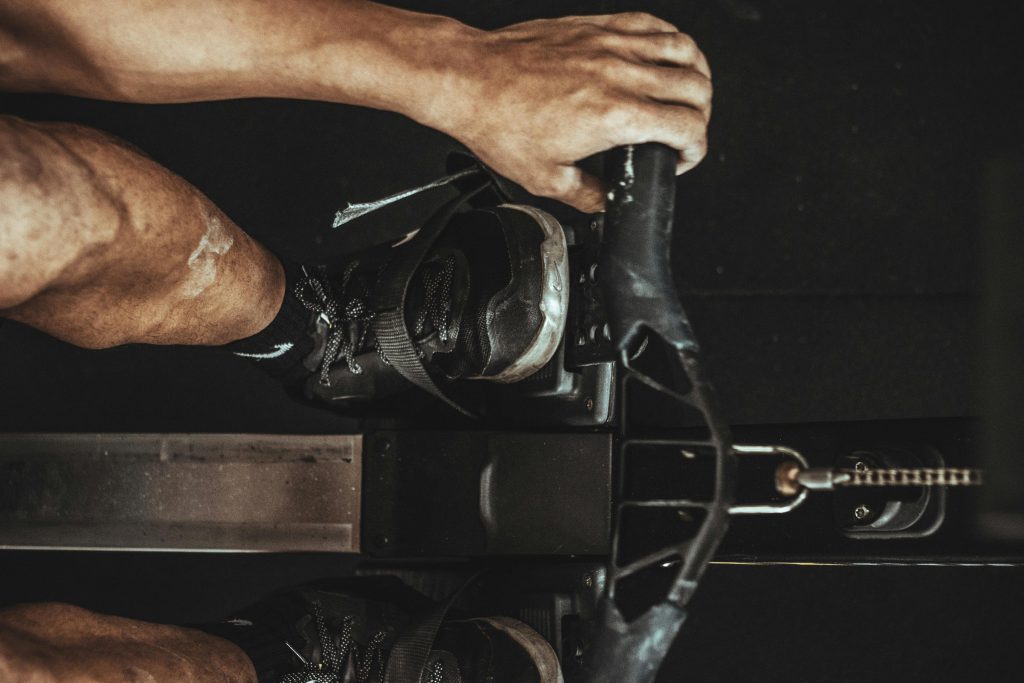
Picture this: You walk into a gym or fitness room, and that rowing machine in the corner catches your eye. Maybe you’ve walked past it dozens of times, intimidated by the sliding seat and pulling motion. Most people gravitate towards treadmills or bikes because they seem simpler. But here’s what you’re missing: beginner rowing machine workouts deliver something those other machines can’t match—a full-body cardio and strength session in one go.
Related reading: Low Impact Cardio Workouts for Bad Knees at Home: Your Pain-Free Movement Guide.
You’re not alone if you’ve ignored the rower. Many people assume it’s just for experienced athletes or CrossFit enthusiasts. The reality is quite different. Rowing machines are actually brilliant for beginners because they’re low-impact, highly effective, and surprisingly easy to learn once you understand the basics. Your knees, hips, and joints get a gentle workout while your muscles do the heavy lifting.
Common Myths About Rowing Machine Workouts
Related reading: Rowing Machine Workouts: Your Fast Track to Fat Loss and Peak Fitness.
Myth: Rowing is all about arm strength
Reality: Your legs do roughly 60% of the work in a proper rowing stroke. Arms contribute about 20%, with your core handling the remaining 20%. When you watch someone row and think it’s an upper-body exercise, you’re seeing the most visible part of the movement. The power actually comes from your leg drive, pushing through your feet while your core stabilizes the motion. Your arms finish the stroke, but they’re not the primary movers.
Myth: You need to be fit before starting rowing workouts
Reality: Beginner rowing machine workouts are designed for people at any fitness level. You control the intensity entirely through your pace and resistance settings. Start with five-minute sessions at a comfortable pace, and you’ll build stamina faster than you expect. Unlike running, where your body weight creates impact stress, rowing lets you work as hard or as gently as your current fitness allows.
Myth: Rowing machines are boring compared to other cardio
Reality: The variety of rowing workouts keeps things interesting. You can sprint for 30 seconds, cruise for steady-state cardio, or mix intervals that challenge both your cardiovascular system and muscular endurance. Plus, watching your distance, stroke rate, and time creates a gamification effect that many people find motivating. Each session becomes a chance to beat yesterday’s numbers.
Understanding the Rowing Stroke Before Your First Workout
You might also enjoy: Resistance Band Workouts That Transform Your Home Training.
Before jumping into beginner rowing machine workouts, you need to grasp the fundamental movement pattern. The rowing stroke breaks into four distinct positions that flow together smoothly.
The Catch Position
This is your starting point. Your knees are bent, shins vertical, and you’re leaning slightly forward from the hips. Arms extend straight in front, holding the handle with a relaxed grip. Many beginners scrunch up too much here, bringing their chest too close to their knees. Instead, maintain some space—imagine you’re coiled like a spring, ready to explode backwards.
The Drive Phase
Push through your feet first. This is crucial. Your legs extend powerfully while your core stays tight and your arms remain straight. Only when your legs are nearly extended do you lean back slightly (about 11 o’clock if 12 o’clock is upright). Finally, pull the handle to your lower ribs. The sequence matters: legs, then body, then arms. Think “legs-body-arms” as your mantra.
The Finish Position
Legs are extended, you’re leaning back slightly, and the handle touches your torso just below your chest. Shoulders are down and relaxed, not hunched up by your ears. This position should feel powerful and controlled, not tense. Your elbows naturally point backwards and down.
The Recovery Phase
This is where you return to the catch position. The sequence reverses: arms extend first, then your torso hinges forward from the hips, and finally your knees bend as the seat slides forward. The key is moving slowly and deliberately during recovery, using this time to breathe and prepare for the next powerful drive. A common ratio is spending twice as long on recovery as you do on the drive.
According to NHS guidance on starting new exercise routines, proper form prevents injury and maximizes benefits—this applies especially to rowing, where technique matters more than raw effort.
Your First Two Weeks: Building Confidence and Technique
Starting with beginner rowing machine workouts means prioritizing technique over intensity. Rushing into aggressive sessions before your body understands the movement pattern leads to poor habits and potential strain.
Week One: Focus on Form (5-10 Minutes Per Session)
Aim for three sessions during your first week. Each session should feel manageable, not exhausting. Set the resistance (called damper setting on many machines) between 3-5. Higher isn’t better for beginners—it just makes the movement harder without necessarily improving your workout quality.
Row at a comfortable pace where you can maintain proper form for the entire session. Count your strokes and aim for 20-24 strokes per minute. This feels slower than you might expect, but it allows you to focus on each phase of the movement. Notice where you feel the work—it should be primarily in your legs and core, with your back muscles engaged but not straining.
Week Two: Adding Duration and Consistency (10-15 Minutes Per Session)
Increase to four sessions this week. Your body is adapting to the rowing motion, and movements that felt awkward last week now flow more naturally. Maintain that 20-24 strokes per minute pace, but extend your sessions to 10-15 minutes.
Pay attention to your breathing. Exhale during the powerful drive phase, inhale during the recovery. This rhythmic breathing pattern prevents you from holding your breath, which many beginners do unconsciously when concentrating on form.
Something worth noting: Your hands might develop slight calluses or redness. This is normal. If you’re gripping the handle too tightly, consciously relax your grip. Think about hooking your fingers around the handle rather than squeezing it like you’re trying to choke it out.
Three Foundation Workouts for Building Cardio Fitness
Once you’ve completed those first two weeks, you’re ready for structured beginner rowing machine workouts that progressively challenge your cardiovascular system.
The Steady State Builder (Weeks 3-4)
This workout develops your aerobic base—the foundation for all other fitness improvements. Row at a consistent, moderate pace for 15-20 minutes. You should be able to hold a conversation (albeit slightly breathless) throughout. Keep your stroke rate between 20-24 strokes per minute.
The goal isn’t to go hard. The goal is to maintain consistent effort without spiking your heart rate or breaking down your form. Check in with your technique every few minutes. Are your shoulders still relaxed? Is your core still engaged? Are you still driving with your legs first?
Progress this workout by adding two minutes each week. By week six, you should comfortably handle 20-25 minutes of steady rowing.
The Pyramid Interval (Weeks 5-6)
Interval training boosts your cardiovascular capacity faster than steady-state work alone. This pyramid structure keeps things interesting while systematically challenging your body.
- Warm up with 3 minutes of easy rowing
- Row hard for 1 minute, then rest (very light rowing) for 1 minute
- Row hard for 2 minutes, rest for 1 minute
- Row hard for 3 minutes, rest for 2 minutes
- Row hard for 2 minutes, rest for 1 minute
- Row hard for 1 minute, rest for 1 minute
- Cool down with 3 minutes of easy rowing
“Hard” means pushing your stroke rate up to 26-28 strokes per minute while maintaining good form. You should feel genuinely challenged but not gasping or compromising technique. If form breaks down, you’re going too hard.
The Distance Challenge (Weeks 7-8)
Now you’re ready to test your progress. Set a distance goal—start with 2000 meters—and row it at a steady, sustainable pace. Don’t sprint. This isn’t about speed; it’s about learning to pace yourself over a set distance.
Track your time and split (the time it takes to row 500 meters). Each week, try to improve your split by just 1-2 seconds. Small improvements compound dramatically over time. Most beginners can complete 2000 meters in 9-11 minutes when maintaining proper technique and consistent effort.
Research from British Heart Foundation research on cardiovascular exercise shows that consistent moderate-intensity workouts significantly improve heart health—rowing machine workouts deliver exactly this type of beneficial training stimulus.
Four Strength-Building Rowing Workouts for Beginners
The beauty of beginner rowing machine workouts is their dual nature. While building cardiovascular endurance, you’re simultaneously strengthening major muscle groups. These workouts emphasize the resistance and power aspects of rowing.
The Power Stroke Workout
Increase your damper setting to 6-7 (higher resistance). Row for 10 strokes, focusing on explosive leg drive and controlled recovery. Rest for 30 seconds. Repeat this cycle 10-12 times.
Each stroke should feel powerful and deliberate. You’re not racing through strokes—you’re generating maximum force with each drive. Your stroke rate drops naturally to around 18-20 strokes per minute because you’re emphasizing power over speed. This workout targets your quads, glutes, hamstrings, and back muscles intensely.
The Pause Drill for Core Strength
At moderate resistance (damper 4-5), row normally but add a 3-second pause at the finish position before beginning your recovery. This pause forces your core to work overtime maintaining that leaned-back position while holding tension.
Complete 5 minutes of this drill, rest for 2 minutes, then repeat twice more. Your core and lower back will feel fatigued—that’s the point. This builds the stabilization strength necessary for maintaining form during longer workouts.
The Leg-Drive Emphasis Workout
Set your resistance to 5-6. Row normally for 30 seconds, then do 10 strokes using only your legs—arms stay extended, body stays stable, legs do all the work. Alternate between 30 seconds of normal rowing and 10 leg-only strokes for 15 minutes total.
The leg-only portions feel awkward at first because you can’t complete a full stroke. That’s fine. You’re isolating and strengthening your leg drive, which many beginners underutilize. Over time, your normal rowing will improve because you’ve trained your legs to initiate the movement powerfully.
The Tabata-Style Strength Blast
This advanced beginner workout delivers serious strength and cardio benefits in just 16 minutes. Warm up for 5 minutes, then complete 8 rounds of: 20 seconds of maximum-effort rowing followed by 10 seconds of complete rest. Cool down for 3 minutes.
During those 20-second bursts, give genuine max effort—stroke rate will naturally climb to 30-35 strokes per minute. Your legs, lungs, and back will all scream. The 10-second rest periods feel desperately short. That’s the challenge. Start with just 4 rounds if 8 seems overwhelming, then progress over several weeks.
Mistakes to Avoid (And How to Fix Them)
Mistake 1: Rowing with your arms and back while neglecting leg power
Why it’s a problem: This approach exhausts your smaller upper-body muscles quickly while leaving your powerful leg muscles underutilized. You’ll tire faster, generate less power, and potentially strain your lower back by asking it to do work your legs should handle.
What to do instead: Practice the leg-drive emphasis workout described above. Consciously think “legs first” at the start of every drive phase. Film yourself rowing for 30 seconds and watch it back—you should see your legs fully extend before your torso rocks back and arms pull. If everything happens simultaneously, you’re not sequencing properly.
Mistake 2: Setting the damper resistance too high
Why it’s a problem: Many beginners crank the damper to 10, assuming higher resistance equals better workout. Actually, damper settings between 3-6 work best for most people, including experienced rowers. Excessively high resistance slows your stroke rate, encourages poor form, and increases injury risk without proportionally increasing workout quality.
What to do instead: Start at 4-5 for most beginner rowing machine workouts. Adjust based on feel—you should be able to maintain 20-24 strokes per minute for steady work and accelerate to 26-30 for intervals without your form collapsing. The fan inside the rowing machine creates resistance naturally; you don’t need the damper maxed out.
Mistake 3: Hunching your shoulders and rounding your back
Why it’s a problem: This posture puts tremendous stress on your spine and reduces power transfer from your legs to the handle. You’ll develop upper back and neck pain, and your workouts won’t deliver the strength benefits they should. Over time, this can lead to chronic discomfort that makes you abandon rowing altogether.
What to do instead: Before each session, take 30 seconds to establish good posture. Sit tall on the seat, pull your shoulder blades down and back slightly, and engage your core as if someone might poke you in the stomach. Maintain this throughout your rowing. Place a small mirror beside the machine initially so you can check your posture every few minutes until good form becomes automatic.
Mistake 4: Holding your breath during the drive phase
Why it’s a problem: Breath-holding spikes your blood pressure unnecessarily and reduces oxygen delivery to working muscles. You’ll fatigue faster and feel lightheaded or dizzy, especially during higher-intensity intervals. It’s a counterproductive habit that many beginners develop when concentrating intensely on form.
What to do instead: Establish a breathing rhythm from your very first session. Exhale forcefully during the drive (when pushing with your legs and pulling with your arms). Inhale during the recovery phase as you return to the catch position. Count your breaths for the first few minutes of each workout until this pattern becomes automatic.
Mistake 5: Rushing the recovery phase
Why it’s a problem: Many beginners treat recovery like they’re racing back to start the next stroke. This creates jerky, rushed movements that waste energy and prevent proper breathing. You end up more exhausted than necessary while doing less effective work. The recovery phase isn’t wasted time—it’s when you set up the next powerful stroke.
What to do instead: Slow down your slide forward deliberately. A good rule of thumb: spend twice as long on recovery as you do on the drive. If your drive takes one second, your recovery should take two. This creates a smooth, controlled rhythm that looks and feels effortless. Watch videos of Olympic rowers—notice how slowly and gracefully they return to the catch position.
Tracking Progress: What Metrics Actually Matter
When doing beginner rowing machine workouts, tracking the right metrics keeps you motivated and ensures you’re improving. Most rowing machines display several numbers simultaneously, but not all deserve equal attention.
Split Time (Time per 500 Meters)
This is your most important metric. It tells you your current pace—how long it would take to row 500 meters if you maintained this exact effort. For beginners, a 2:30-2:45 split during steady workouts is typical. As you improve over weeks and months, you’ll see this drop to 2:15, then 2:00, and eventually faster.
Stroke Rate
This shows how many complete strokes you’re completing per minute. For steady cardio work, aim for 20-24. For intervals and high-intensity efforts, 26-30. If your stroke rate climbs above 32-34, you’re likely rushing and sacrificing power for speed. Sustainable rowing isn’t about flailing rapidly—it’s about powerful, controlled strokes.
Distance and Time
Track these to monitor workout duration and volume. Simple but effective. Watching your total distance increase week by week provides tangible evidence of improving fitness. Set weekly goals: this week row 3000 meters across all sessions, next week aim for 3500.
Heart Rate (If Available)
If your machine or fitness tracker monitors heart rate, use it to gauge intensity. During steady cardio work, aim for 60-75% of your maximum heart rate (roughly 220 minus your age). During intervals, you’ll spike to 80-90%. These zones ensure you’re working hard enough to improve without overtaxing your system.
What about calories? The machine will display this, but take it with a grain of salt. Calorie calculations on cardio machines are notoriously inaccurate. Focus on performance metrics instead—your split time and distance covered tell a more reliable story about your fitness improvements.
Combining Rowing with Other Training for Balanced Fitness
While rowing machine workouts deliver comprehensive benefits, combining them with complementary training creates even better results. You don’t need fancy equipment or complicated programs.
Bodyweight Strength Circuits
After a 15-minute rowing session, complete 3 rounds of: 10 press-ups, 15 bodyweight squats, and 20 mountain climbers. This combination addresses any remaining strength gaps and adds variety. The rowing provides cardiovascular stimulus and posterior chain work (back, glutes, hamstrings), while these exercises emphasize pushing movements and anterior chain muscles.
Mobility and Flexibility Work
Rowing emphasizes certain movement patterns repeatedly. Balance this with 10-15 minutes of mobility work 2-3 times per week. Focus on hip flexor stretches, thoracic spine rotations, and shoulder mobility exercises. A simple foam roller can work wonders for your upper back and legs after rowing sessions.
Something like a basic yoga mat creates a comfortable surface for floor-based stretching and core work. Look for one with decent cushioning (at least 6mm thick) that won’t slide around during use. Pairing rowing with 15 minutes of stretching prevents the tight hips and shoulders that desk workers often develop.
Active Recovery Days
Schedule 1-2 active recovery days between your more intense beginner rowing machine workouts. These days might include a gentle 20-minute walk, easy swimming, or very light rowing at low resistance. Active recovery promotes blood flow to muscles without creating additional training stress, helping your body adapt and strengthen.
What to Expect: Progress Timeline for Beginner Rowers
Understanding realistic progression helps maintain motivation when improvements feel slow. Every body responds differently, but these general timelines apply to most beginners doing rowing machine workouts 3-4 times weekly.
Weeks 1-2: Technique and Adaptation
Movements feel awkward and deliberate. You’re thinking about every phase of the stroke. Muscle soreness appears in unexpected places—your shins, upper back, and core particularly. This is your body adapting to novel movement patterns. Cardiovascular improvements are minimal, but your coordination improves dramatically.
Weeks 3-4: Flow Emerges
The stroke sequence starts feeling natural. You can maintain conversations (or listen to podcasts) while rowing without losing form. Muscle soreness decreases. You notice your breathing patterns synchronizing with strokes automatically. Small cardiovascular improvements begin—climbing stairs or walking briskly feels slightly easier.
Weeks 5-8: Measurable Gains
Your split times improve noticeably—perhaps 10-15 seconds faster than week one for the same perceived effort. Stroke rate consistency improves. You can handle longer sessions (25-30 minutes) without exhaustion. Clothes might fit differently as your back, shoulders, and legs develop visible muscle tone. Friends might comment that you look fitter.
Weeks 9-12: Established Routine
Rowing feels like a natural part of your weekly routine. You’ve developed preferences for certain workout styles. Your cardiovascular base is substantially stronger—you can hold conversations during moderate rowing without gasping. Form is solid and automatic. You’re ready to explore more advanced variations or increase workout frequency.
Research published in the British Journal of Sports Medicine confirms that rowing provides exceptional cardiovascular and muscular benefits when performed consistently over 8-12 weeks—exactly what structured beginner rowing machine workouts deliver.
Your Quick Reference: Rowing Essentials Checklist
- Set damper resistance between 3-6 for most workouts, not maximum
- Drive with legs first, then lean back, finally pull with arms
- Maintain a 1:2 ratio of drive time to recovery time
- Keep stroke rate between 20-24 for steady cardio, 26-30 for intervals
- Exhale during the powerful drive phase, inhale during recovery
- Track your split time (per 500m) as your primary progress metric
- Schedule 3-4 rowing sessions weekly with at least one rest day between intense workouts
- Film yourself occasionally to check form and identify bad habits early
Frequently Asked Questions
How long should beginner rowing machine workouts last?
Start with 5-10 minutes for your first week, focusing entirely on proper technique rather than duration. Gradually increase to 15-20 minutes over the next 3-4 weeks. By week eight, you should comfortably handle 25-30 minute sessions. Quality always trumps quantity—a 15-minute session with excellent form delivers better results than 30 rushed, sloppy minutes. Listen to your body and build duration conservatively to avoid overuse injuries.
Will rowing build visible muscle or just cardiovascular fitness?
Rowing builds both. You’ll develop noticeable muscle tone in your back, shoulders, legs, and core, especially during your first 3-4 months when your body responds dramatically to the new stimulus. However, rowing won’t create bodybuilder-level muscle mass. Instead, expect lean, functional strength with definition in your upper back, arms, and legs. If significant muscle building is your primary goal, complement your rowing machine workouts with dedicated resistance training using weights.
Is rowing suitable if you have knee problems or joint pain?
Rowing is generally excellent for people with knee issues because it’s low-impact—there’s no pounding or jarring like running creates. The smooth, controlled motion rarely aggravates joints. That said, consult your GP or physiotherapist if you have specific concerns. They might recommend modifications like limiting knee flexion at the catch position or keeping resistance lower. Many people with knee pain find rowing more comfortable than cycling or running because the gliding motion doesn’t create pressure points.
How many calories do beginner rowing machine workouts burn?
A moderate 30-minute rowing session typically burns 200-300 calories for most beginners, though this varies significantly based on your weight, intensity, and fitness level. More important than raw calorie burn is the metabolic effect—rowing builds muscle while training your cardiovascular system, creating a sustained increase in your metabolism. Don’t obsess over machine calorie displays; they’re estimates at best. Focus on consistent effort and proper form, and the body composition changes will follow naturally.
Can rowing replace running for cardio fitness?
Absolutely. Rowing provides equivalent or superior cardiovascular benefits compared to running while dramatically reducing impact stress on joints. Many former runners transition to rowing when knee, hip, or ankle problems make running uncomfortable. The primary difference is muscle engagement—running emphasizes legs, while rowing works your entire body including back, core, and arms. If you’re deciding between the two, rowing offers more comprehensive fitness development, though some people simply enjoy running more.
Getting Started Today
You now understand how beginner rowing machine workouts deliver simultaneous cardio and strength benefits that few other exercises match. The technique might feel awkward initially, but that awkwardness disappears within weeks when you prioritize proper form over aggressive intensity.
Start with those foundational sessions from weeks one and two. Five to ten minutes of focused, technically sound rowing three times this week. That’s your entire assignment. No heroics, no pushing through pain, no trying to impress anyone. Build the movement pattern into your muscle memory first.
Next week, add a few minutes to each session. The week after, introduce your first interval workout. Progression happens through consistency and patience, not dramatic efforts that leave you too sore or discouraged to continue. Every session teaches your body something new about power, timing, and endurance.
Will every workout feel amazing? No. Some days the rhythm won’t click, or you’ll feel sluggish and uncoordinated. Row anyway. Those imperfect sessions contribute to your progress just as much as the ones where everything flows effortlessly. This isn’t a quick fix. It’s a gradual build that compounds week after week into fitness that transforms how you move through daily life.


