Picture this: You’ve finally joined the gym after months of thinking about it. You walk in with your new trainers, water bottle at the ready, and then it hits you – rows upon rows of intimidating machines that look like medieval torture devices. Everyone else seems to know exactly what they’re doing while you’re wondering which end of the leg press you’re supposed to sit on.
Related reading: Should I Eat Protein Before or After Workout for Muscle Growth.
Sound familiar? Most women over 40 walk into a gym and feel completely overwhelmed by the equipment. The weights area feels like someone else’s territory. The machines have more settings than your car. And the last thing you want is to look foolish or, worse, hurt yourself. But here’s what’s interesting: those same machines that seem so intimidating are actually the safest, most straightforward way to build strength once you know the basics.
Why Gym Machine Workouts Make Sense After 40
Related reading: Beginner Rowing Machine Workouts That Build Both Cardio and Strength.
Let’s talk about what’s happening in your body right now. After 40, particularly during perimenopause and menopause, oestrogen levels drop. This hormonal shift affects bone density, muscle mass, metabolism, and joint health. Strength training becomes essential, not optional. Research from the NHS shows that women start losing up to 3-5% of their muscle mass per decade after age 30, and this accelerates after 40.
Gym machines offer specific advantages for women starting their fitness journey at this stage. They provide built-in support and controlled movement patterns, which means lower risk of injury. Your joints might feel different than they did ten years ago – perhaps your knees click, your shoulders feel tight, or your lower back protests after sitting all day. Machines guide your body through proper form without requiring the balance and stabilisation that free weights demand.
Plus, machines are adjustable. Every gym machine workout can be tailored to your current strength level. No need to pretend you’re stronger than you are or worry about dropping weights. According to a study published in the Journal of Strength and Conditioning Research, machine-based training produces similar muscle and strength gains to free weights, particularly for beginners.
Common Myths About Gym Machine Workouts
You might also enjoy: Progressive Overload for Women: How to Get Stronger Without Burning Out.
Myth: Machines are only for elderly people or those recovering from injuries
Reality: Professional athletes and experienced lifters use machines regularly as part of their training. Machines allow you to target specific muscles without fatigue affecting your form. They’re a legitimate training tool for anyone at any fitness level. The idea that “serious” exercisers only use free weights is outdated nonsense that keeps too many women from starting strength training.
Myth: You’ll bulk up like a bodybuilder using gym machines
Reality: This myth needs to disappear immediately. Women naturally have lower testosterone levels than men, making it physiologically difficult to build large, bulky muscles without years of dedicated training and specific nutrition. What actually happens? Your body becomes firmer, your metabolism increases, your bones get stronger, and your clothes fit better. Research from Loughborough University confirms that resistance training helps women over 40 maintain lean muscle mass and improve body composition without creating bulk.
Myth: Cardio is more important than strength training for weight loss
Reality: While cardiovascular exercise burns calories during the activity, strength training builds muscle that burns calories around the clock. Muscle tissue is metabolically active, meaning it requires energy just to exist. A gym machine workout routine that focuses on building strength can actually boost your resting metabolic rate more effectively than cardio alone. The ideal approach combines both, but if you’ve been neglecting strength training, it’s time to prioritise it.
Your Essential Gym Machine Workout Routine
This beginner gym machine workout routine focuses on six fundamental machines that work your entire body. Aim to complete this routine twice weekly, with at least one rest day between sessions. Each workout should take 35-45 minutes once you’re familiar with the equipment.
1. Leg Press Machine
The leg press builds strength in your quadriceps, hamstrings, and glutes without putting pressure on your lower back. This machine is brilliant for women over 40 because it supports your spine while working the large muscle groups in your lower body.
How to use it: Sit with your back flat against the padded support. Position your feet hip-width apart on the platform, roughly in the centre. Push through your heels to extend your legs, stopping just before your knees lock out completely. Lower the weight with control until your knees form roughly a 90-degree angle.
Starting point: 2 sets of 10-12 repetitions. Focus on smooth, controlled movement rather than heavy weight. Your legs should feel challenged by the last few reps but not shaking uncontrollably.
2. Chest Press Machine
This machine strengthens your chest, shoulders, and triceps. Beyond aesthetics, upper body strength helps with daily activities like lifting shopping bags, pushing heavy doors, or picking up grandchildren.
How to use it: Adjust the seat so the handles align with the middle of your chest. Plant your feet firmly on the floor, press your back against the pad, and grip the handles. Push the handles forward until your arms are nearly straight (slight bend in the elbows), then bring them back with control.
Starting point: 2 sets of 10-12 repetitions. Keep your movements steady. If your shoulders start creeping up toward your ears, the weight is too heavy.
3. Lat Pulldown Machine
Your back muscles often get neglected, yet they’re crucial for posture, especially if you spend hours at a desk. The lat pulldown targets your latissimus dorsi (the large muscles along your sides), helping to counteract the rounded shoulders that come from keyboard work and phone scrolling.
How to use it: Sit facing the machine and secure your thighs under the padded support. Grip the bar wider than shoulder-width with palms facing forward. Pull the bar down toward your upper chest, leading with your elbows. Squeeze your shoulder blades together at the bottom of the movement, then release the bar back up with control.
Starting point: 2 sets of 10-12 repetitions. According to physiotherapy guidelines from the Chartered Society of Physiotherapy, strengthening back muscles can significantly reduce chronic shoulder and neck pain in women over 40.
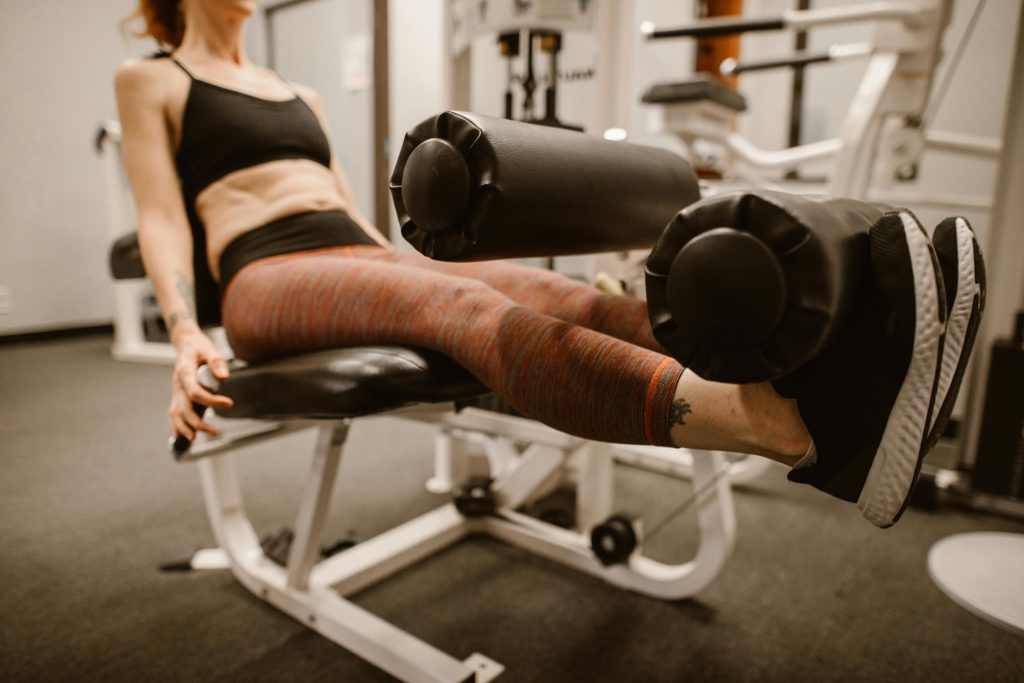
4. Leg Curl Machine
This machine isolates your hamstrings, the muscles at the back of your thighs. Strong hamstrings protect your knees and support proper walking mechanics. Many women have underdeveloped hamstrings relative to their quadriceps, which can lead to knee issues.
How to use it: Lie face down or sit (depending on the machine type) and position the padded roller just above your ankles. Curl your legs toward your bottom, hold briefly, then lower with control. Your hips should stay pressed against the pad throughout the movement.
Starting point: 2 sets of 10-12 repetitions. This might feel awkward initially, but hamstring strength becomes increasingly important as you age.
5. Shoulder Press Machine
Overhead pressing builds shoulder strength and stability. Strong shoulders make reaching high shelves easier, improve your posture, and help prevent the rounded upper back that becomes more common after 40.
How to use it: Sit with your back supported and grip the handles at roughly ear height. Press the handles overhead until your arms are nearly straight, then lower them back to the starting position with control. Keep your core engaged and avoid arching your lower back excessively.
Starting point: 2 sets of 8-10 repetitions. Shoulder pressing often feels harder than other movements, so lighter weight is perfectly appropriate here.
6. Seated Row Machine
The seated row complements the lat pulldown by working your middle back muscles from a different angle. This exercise is particularly valuable for improving posture and shoulder health.
How to use it: Sit with your chest against the pad and grip the handles. Pull the handles toward your torso, focusing on squeezing your shoulder blades together. Return to the starting position with control, allowing your arms to fully extend.
Starting point: 2 sets of 10-12 repetitions. Imagine pinching a pencil between your shoulder blades at the end of each rep. That’s the feeling you’re after.
Your First 6 Weeks: A Progressive Plan
Starting a gym machine workout routine requires patience and gradual progression. Here’s how to structure your first six weeks to build confidence and strength without overwhelming your body.
Weeks 1-2: Learning Phase
Your primary goal is mastering the movements, not lifting heavy weights. Choose a weight that feels almost easy. You should be able to complete all repetitions with perfect form and still have energy left in the tank. Many gyms offer a free induction session where staff show you how to use the machines properly – book this if available.
Complete each exercise for 2 sets of 10-12 repetitions. Rest 60-90 seconds between sets. The entire workout might take 45-50 minutes initially because you’re figuring out seat adjustments and weight selections. That’s completely normal.
Train twice this week with at least two days between sessions. Your muscles need recovery time to adapt and strengthen. Tuesday and Friday works well for most schedules, or Wednesday and Saturday if weekends suit you better.
Weeks 3-4: Building Consistency
Increase to 3 sets of 10-12 repetitions for each exercise. Add a small amount of weight if the previous resistance feels too easy. How do you know if it’s too easy? If you finish your sets thinking “I could definitely do five more reps,” increase the weight by one increment.
Your rest periods can drop slightly to 60 seconds between sets as your conditioning improves. Continue training twice weekly. Resist the temptation to add more sessions – recovery remains crucial, and doing too much too soon leads to burnout or injury.
Weeks 5-6: Progressive Overload
Maintain 3 sets but aim for the higher end of your rep range (12 repetitions) for each set. When you can comfortably complete 3 sets of 12 reps with good form, increase the weight by one increment at your next session.
Something worth noting: progression isn’t always linear. Some weeks you’ll feel stronger. Other weeks, particularly around your menstrual cycle if you’re still menstruating, you might need to reduce the weight slightly. Listen to your body rather than your ego.
Training twice weekly remains the target. If you’re feeling genuinely great and want additional activity, add a 30-minute walk or gentle yoga session on your non-gym days rather than adding another gym machine workout session.
Making Your Gym Machine Workout More Effective
Warm Up Properly
Never walk straight from the changing room to the leg press. Spend 5-7 minutes warming up with light cardio – the treadmill, stationary bike, or cross-trainer all work brilliantly. Follow this with dynamic stretches: arm circles, leg swings, and torso rotations. Warm muscles respond better and resist injury more effectively.
Focus on Control, Not Speed
Each repetition should take 2-3 seconds to push or pull, then 2-3 seconds to return to the starting position. This controlled tempo ensures your muscles do the work rather than momentum. Rapid, bouncy movements might feel impressive, but they’re less effective and more likely to cause strains.
Breathe Consistently
Exhale during the hard part of each exercise (pushing or pulling), inhale during the easier part (returning to start). Holding your breath increases blood pressure unnecessarily and reduces performance. Proper breathing might feel awkward initially, but it becomes automatic within a few sessions.
Track Your Progress
Keep a simple notebook or use your phone to record which weight you used for each exercise and how many reps you completed. This tracking serves two purposes: it shows your progress over weeks and months (which is genuinely motivating), and it removes guesswork at each session. Something like a basic fitness journal works perfectly for this purpose.
Prioritise Recovery Between Sessions
Your muscles don’t grow stronger during workouts – they grow stronger during recovery. Ensure you’re eating enough protein (aim for 1.2-1.6 grams per kilogram of body weight daily according to British Nutrition Foundation guidelines), staying hydrated, and getting adequate sleep. These factors matter as much as the gym machine workout itself.
Common Mistakes That Sabotage Your Progress
Mistake 1: Using Too Much Weight Too Soon
Why it’s a problem: Ego lifting leads to poor form, which reduces effectiveness and increases injury risk. Women over 40 need to be especially cautious because connective tissues (tendons and ligaments) don’t adapt as quickly as muscles. You might feel strong enough to lift heavier, but your joints need more time to adjust.
What to do instead: Start with embarrassingly light weights. Master the movement pattern first. Add weight gradually – one increment every week or two is perfectly acceptable progression. Slow and steady wins this race.
Mistake 2: Skipping Machines You Find Difficult
Why it’s a problem: The exercises you avoid are often the ones you need most. Hate the leg press? Your legs probably need strengthening. Struggle with the lat pulldown? Your back muscles are likely underdeveloped. Avoiding weaknesses creates imbalances that can lead to injury.
What to do instead: Spend extra time on the movements you find hardest. Use lighter weights on difficult exercises if needed. Your weak points will improve faster than you expect with consistent attention.
Mistake 3: Training the Same Way Every Session
Why it’s a problem: Your body adapts remarkably quickly. If you perform the exact same gym machine workout at the same weights week after week, you’ll plateau. No adaptation means no progress.
What to do instead: Change one variable every few weeks. Increase weight, add repetitions, add an extra set, reduce rest periods, or try a different machine that targets the same muscle group. Progressive overload is essential for continued improvement.
Mistake 4: Comparing Yourself to Others
Why it’s a problem: The 25-year-old on the machine next to you is at a completely different life stage with different hormones, recovery capacity, and training history. Comparison steals your joy and motivation. Your only meaningful comparison is with your past self.
What to do instead: Celebrate your own progress. Can you lift more than last month? Have fewer aches and pains? Feel stronger climbing stairs? Those victories matter far more than anyone else’s performance.
Equipment That Can Help (But Isn’t Essential)
A gym machine workout routine requires nothing more than gym access and comfortable clothing. That said, a few simple items can improve your experience. A basic gym towel is essential for hygiene – wipe down machines before and after use. Proper trainers with good support matter more than you might think, especially for leg exercises where foot positioning affects the entire movement chain.
Many women find something like weightlifting gloves helpful if the machine handles feel uncomfortable or slippery. Look for options with wrist support and padded palms. They’re entirely optional but can make gripping easier, particularly for pulling exercises like lat pulldowns and seated rows.
Consider keeping a simple water bottle at hand. Hydration affects performance more than most people realise. Aim to sip water between sets rather than gulping large amounts, which can feel uncomfortable during exercise.
Managing Perimenopause and Menopause Symptoms
Hormonal changes affect how your body responds to exercise. Hot flushes might strike mid-workout. Energy levels can fluctuate dramatically. Joint stiffness often feels worse, particularly in the morning. These challenges don’t mean you should avoid strength training – quite the opposite. Research from the British Menopause Society shows that regular resistance training helps manage many perimenopause and menopause symptoms.
Adjust your gym machine workout to accommodate how you feel. Having a brutal hot flush? Take an extra break, splash cold water on your face, and continue when you’re ready. Joints feeling particularly stiff? Extend your warm-up by a few minutes. Exhausted from poor sleep? Reduce the weight slightly but maintain the movement patterns. Consistency matters more than perfection.
According to NHS guidelines, strength training can help maintain bone density during and after menopause, reducing osteoporosis risk. This benefit alone makes gym machine workouts valuable, regardless of how strong or fit you feel on any given day.
When to Progress to Free Weights
Some women love machines and stick with them indefinitely. Others eventually feel ready to experiment with dumbbells, barbells, and kettlebells. Neither approach is superior – both build strength effectively. If you do want to progress to free weights, wait until you’ve established 3-4 months of consistent gym machine workout sessions.
Free weights require more core stability, balance, and body awareness. The strength foundation you’ve built on machines transfers beautifully. When you’re ready, consider hiring a personal trainer for 2-3 sessions to learn proper free weight technique. This investment prevents developing bad habits that are difficult to correct later.
Your Gym Machine Workout Quick Reference
- Train twice weekly with at least one rest day between sessions
- Warm up for 5-7 minutes before touching any machines
- Begin with 2 sets of 10-12 reps for weeks 1-2, progress to 3 sets by week 3
- Choose weights that feel challenging but allow perfect form throughout all reps
- Rest 60-90 seconds between sets initially, reducing to 60 seconds as fitness improves
- Focus on controlled movement – 2-3 seconds in each direction
- Track every workout in a notebook or phone app
- Increase weight when you can comfortably complete 3 sets of 12 reps with good form
- Listen to your body and adjust for how you feel that day
- Wipe down machines before and after use
Frequently Asked Questions
How long before I see results from my gym machine workout routine?
Most women notice strength improvements within 2-3 weeks – lifting bags feels easier, climbing stairs becomes less taxing. Visible physical changes typically appear around 6-8 weeks with consistent training twice weekly. Changes in body composition (more muscle, less fat) become more apparent after 12 weeks. Remember that internal changes happen before external ones. Your bones are getting denser, your metabolism is improving, and your muscles are adapting even when you can’t see dramatic differences in the mirror yet.
What if the gym is really busy and machines aren’t available?
Peak gym times (before work, lunch hours, early evening) can be frustrating. Visit during off-peak hours if possible – mid-morning or early afternoon tends to be quieter. If your preferred machine is occupied, substitute with a similar exercise: swap leg press for leg curls temporarily, or do chest press instead of waiting for the shoulder press. Flexibility beats frustration. Alternatively, have a backup plan that uses bodyweight exercises until machines become available.
Do I need protein shakes or supplements for this gym machine workout?
Not necessarily. Whole food sources of protein – chicken, fish, eggs, Greek yoghurt, beans, lentils – are perfectly sufficient for most women starting strength training. That said, if you struggle to eat enough protein throughout the day, protein powder can be a convenient option. Aim for 20-30 grams of protein within a couple hours after your workout to support muscle recovery. A simple protein shake can help meet this target if your schedule makes proper meals difficult immediately after training.
Can I do cardio and gym machine workouts on the same day?
Absolutely. Many women prefer doing 20-30 minutes of moderate cardio after their gym machine workout routine to improve cardiovascular fitness and burn additional calories. Keep cardio sessions moderate in intensity if they follow strength training – your muscles need energy for recovery. Alternatively, separate them entirely: strength training on Mondays and Thursdays, cardio on Wednesdays and Saturdays. Both approaches work well. Choose based on your schedule and preferences.
What should I do if something hurts during an exercise?
Distinguish between discomfort and pain. Muscles burning or feeling fatigued during the last few reps is normal discomfort. Sharp pain, joint pain, or pain that doesn’t go away after stopping the exercise requires immediate attention. Stop the exercise, reduce the weight significantly, and try again with perfect form. If pain persists, skip that machine for the day and consult a physiotherapist or GP before attempting it again. Never push through actual pain – this leads to serious injuries that can sideline you for months.
Moving Forward With Confidence
Starting a gym machine workout routine after 40 isn’t about recapturing your 20-year-old body. That’s not the goal, and frankly, it shouldn’t be. This is about building a stronger, more capable version of who you are right now. Stronger bones. Better balance. More energy. Improved confidence. The ability to live independently and actively for decades to come.
Strength training gives you power in the most literal sense – power to carry shopping without struggle, power to play with grandchildren without exhaustion, power to recover quickly from minor injuries, power to maintain independence as you age. Research consistently shows that women who maintain muscle mass through their 40s, 50s, and beyond enjoy significantly better quality of life than those who don’t.
Will every workout feel amazing? Definitely not. Some days you’ll feel strong and capable. Other days, getting through the routine will feel like dragging yourself through mud. Both types of days count equally toward your progress. Consistency beats intensity every single time.
You’ve got everything you need now: a complete gym machine workout routine, a progressive plan for your first six weeks, troubleshooting for common problems, and realistic expectations about what to expect. The only thing left is to book that first session. Choose a quiet time, pack your gym bag tonight, and walk through those gym doors tomorrow. Start lighter than feels necessary. Focus on learning the movements. Trust that strength builds gradually, not instantly. Six months from now, you’ll be grateful you started today.


