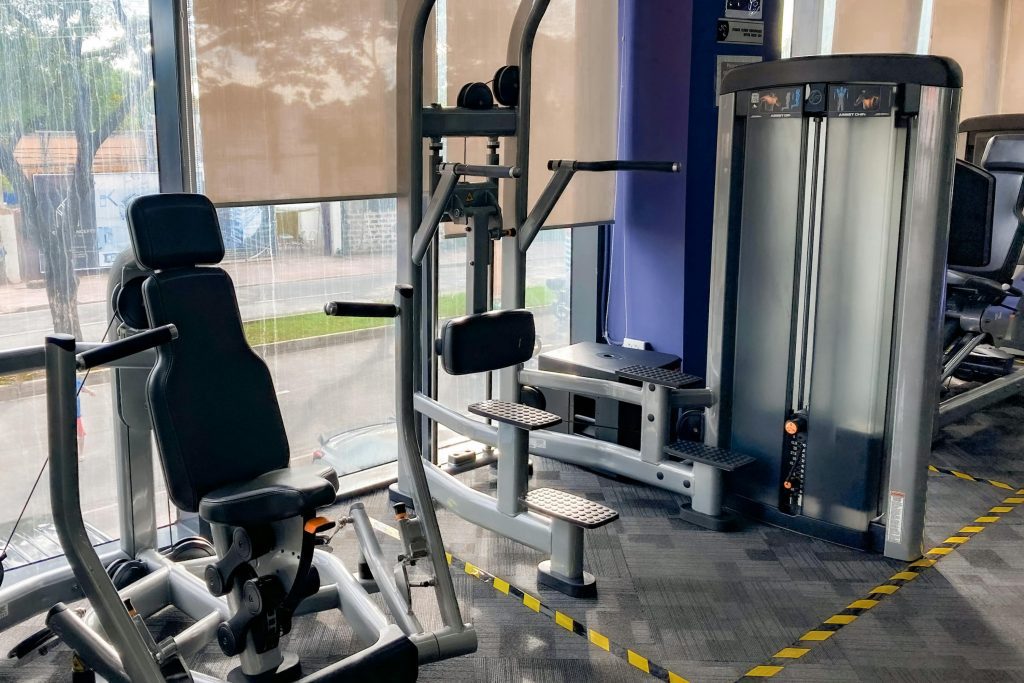
Most people walk into a gym for the first time, stare at the rows of intimidating metal contraptions, and immediately regret every life choice that led them there. You’re absolutely not alone if you’ve stood in front of a chest press machine, pretending to adjust your shoelaces whilst secretly trying to figure out where your hands are supposed to go. Learning to use gym machines shouldn’t feel like solving a Rubik’s cube whilst everyone judges you, but that’s exactly how it feels for thousands of first-timers every single day.
Related reading: Feeling Like a Total Loser? Here’s Why That’s Actually a Sign You’re Doing Better Than You Think.
Picture this: You’ve finally committed to joining a gym. The membership is paid, your new trainers are spotless, and your workout playlist is ready. Then you walk through those doors and realise you haven’t got a clue how to use gym machines without looking completely lost. The regulars seem to glide from one machine to another with effortless confidence, whilst you’re standing there wondering if that’s a leg press or some sort of medieval torture device. Your phone suddenly becomes fascinating as you scroll aimlessly, buying time to figure out your next move.
Common Myths About Using Gym Machines
Related reading: Gym Machines Beginners Should Use First (Without Looking Lost).
Myth: Everyone’s watching and judging you
Reality: Most gym-goers are entirely focused on their own workout, not yours. Research from the Journal of Sport and Exercise Psychology shows that people dramatically overestimate how much attention others pay to them in fitness settings. Everyone’s too busy counting their own reps, checking their form, or planning their next set to scrutinise your technique. The regular at the squat rack? They’re thinking about whether they’ve got milk at home, not about you figuring out the leg extension machine.
Myth: You need to know everything before starting
Reality: Every single person who confidently uses gym machines today was once exactly where you are now. Nobody was born knowing how to adjust the seat height on a lat pulldown machine. The difference between them and you is simply time and practice. Expecting yourself to be an expert on day one is like expecting to speak fluent French after downloading Duolingo.
Myth: Asking for help makes you look weak
Reality: Gym staff and personal trainers genuinely want to help you. It’s literally their job, and most are thrilled when someone asks questions rather than using equipment incorrectly and risking injury. According to NHS guidelines on physical activity, proper form matters far more than pretending to know what you’re doing. Asking questions shows intelligence, not weakness.
Your First Week: A Practical Roadmap to Use Gym Machines Confidently
You might also enjoy: Your First Month: A Beginner Gym Machine Workout Routine for Women That Actually Works.
The key is having a plan before you walk through those doors. Wandering aimlessly between machines is what creates that overwhelming feeling. Here’s what actually works.
Day 1: The Reconnaissance Mission
Your first visit isn’t about doing an intense workout. It’s about familiarisation. Seriously. Give yourself permission to simply explore without pressure. Most gyms offer an induction session when you join—absolutely take them up on this. If they don’t offer one automatically, request it. During this session, ask the instructor to show you five basic machines that work different body parts.
Focus on learning these fundamentals to use gym machines effectively:
- Chest press machine (works your chest and arms)
- Lat pulldown machine (targets your back)
- Leg press machine (strengthens your lower body)
- Seated row machine (another back exercise with different emphasis)
- Leg extension machine (isolates your quadriceps)
These five machines provide a full-body workout and they’re generally the most straightforward to master. The instructions are usually printed on a diagram stuck to the machine itself, though those illustrations sometimes look like they were drawn by someone who’s never actually seen a human body.
Day 2-3: The Practice Runs
Return during off-peak hours if possible—typically mid-morning or early afternoon on weekdays. Fewer people means less perceived pressure, though remember that perceived pressure is mostly in your head anyway. Visit the same five machines you learned during your induction.
Before you sit down at each machine, take 30 seconds to:
- Locate the seat adjustment lever (usually under the seat or on the side)
- Find the weight pin and understand how to move it
- Read the instruction diagram, even if it looks ridiculous
- Adjust the seat so your joints align with the machine’s pivot points
Start with embarrassingly light weight. Seriously, go lighter than you think necessary. You’re learning movement patterns, not trying to impress anyone. If the machine has weight measured in kilograms, try starting with 5-10kg for upper body movements and 20-30kg for leg exercises. These numbers mean nothing without context—everyone’s starting point differs based on their current fitness level and body composition.
Day 4-7: Building Your Routine
By now, those five machines should feel somewhat familiar. You’re ready to create a simple circuit. Perform one set of 10-12 repetitions on each machine, moving through all five, then rest for 2-3 minutes and repeat the entire circuit once more. That’s it. Two rounds through five machines equals a proper workout for your first week.
Something worth noting: You don’t need fancy equipment or accessories to use gym machines effectively. Your regular workout clothes work perfectly fine, though having a small towel to wipe down equipment after use is courteous and hygienic. A basic water bottle keeps you hydrated between sets.
Reading the Machine: What All Those Adjustments Actually Mean
Every gym machine looks different, but they share common features once you know what to look for. Understanding these elements helps you use gym machines correctly and safely.
The Seat Adjustment
This is crucial and often misunderstood. The seat position determines whether you’re exercising the intended muscles or putting unnecessary stress on your joints. General rule: When seated, the machine’s pivot point (the joint where the moving parts rotate) should align with your natural joint.
For chest press machines, your shoulders should roughly align with the machine’s rotation axis. For leg extension machines, your knee joint should line up with the machine’s pivot. If you’re unsure, sit in the neutral position and move through the exercise motion slowly. If something feels awkward or pinches, adjust the seat.
The Weight Stack
That vertical stack of rectangular weights with a pin is simpler than it looks. Each plate is clearly marked with its weight. Insert the pin into the hole underneath the weight you want to lift. The pin holds that plate and everything above it, whilst everything below stays put. If you can’t insert the pin smoothly, the weight stack is currently resting on that plate—gently lift the top handle to take pressure off the pin.
The Range of Motion Settings
Many machines have adjustable stops that limit how far the weight moves. These exist for people with injuries or mobility restrictions, not to confuse you. For your first several weeks, leave these at their default setting to experience the full range of motion.
The Safety Features
Most modern gym machines can’t trap or hurt you—they’re designed with safety in mind. The weight stack is contained in a frame, moving parts have guards, and you can simply let go if something feels wrong. The weight will clank down (loudly, but safely), and whilst that noise might feel embarrassing, it happens constantly in every gym.
The Unspoken Etiquette of Using Gym Machines
Beyond the physical aspects, there’s an informal code that helps everyone share the space comfortably. Following these unwritten rules actually helps you use gym machines more confidently because you’ll know you’re doing things properly.
Wipe down equipment after use. Your sweat on that seat is nobody else’s problem. Most gyms provide spray bottles and paper towels throughout the facility. A quick spray and wipe takes five seconds and shows basic consideration.
Don’t hog equipment between sets. If you’re resting between sets and someone’s clearly waiting, offer to let them work in (alternate sets with you). Most people are happy to help adjust seat positions between users. If you’re genuinely using it, just say “I’ve got two more sets” so they know when it’ll be free.
Return weight pins to the top position. Leaving the pin at a heavy weight makes the next person think the machine’s broken when they can’t move it. Pin at the top means “ready for the next person.”
Put your phone away. Sitting on a machine scrolling Instagram whilst others wait isn’t just rude—it’s the fastest way to actually attract the attention you’re trying to avoid. Use your phone to track workouts or rest timers, then put it away.
Here’s the thing: Following basic gym etiquette isn’t about being perfect. It’s about showing you’re making an effort to be considerate, which is all anyone expects.
Mistakes to Avoid When You First Use Gym Machines
Mistake 1: Using momentum instead of muscle
Why it’s a problem: When you jerk or swing the weight rather than controlling it smoothly, you’re not actually working the target muscle effectively. Worse, you’re increasing injury risk, particularly to your lower back and joints. The weight feels heavier when you control it properly because you’re doing the work, not relying on physics.
What to do instead: Take 2 seconds to push or pull the weight, pause briefly at the peak contraction, then take 2-3 seconds to return to the starting position. This controlled tempo ensures your muscles are actually doing the work. If you can’t maintain this tempo, the weight is too heavy—drop down and leave your ego at the door.
Mistake 2: Holding your breath during repetitions
Why it’s a problem: Breath-holding spikes your blood pressure and can make you dizzy or lightheaded. Some people have actually passed out from this, which is properly dangerous when you’re using heavy equipment. Your muscles also need oxygen to function efficiently, so holding your breath actively reduces your performance.
What to do instead: Breathe out during the exertion phase (when you’re pushing or pulling against resistance) and breathe in during the easier return phase. For example, on a chest press, exhale as you push the handles forward, inhale as you bring them back towards your chest. This pattern becomes automatic after a few sessions.
Mistake 3: Skipping the adjustment phase
Why it’s a problem: Using a machine that’s adjusted for someone else’s body puts stress on wrong joints and reduces exercise effectiveness. That person might be six inches taller than you, making the setup completely inappropriate for your proportions. You’re not getting a proper workout, and you’re risking repetitive strain injuries.
What to do instead: Spend 20-30 seconds adjusting every machine every time you use it. Even if you’re the only person using that machine all week, someone might have moved something. Double-check seat height, back pad position, and any range-of-motion settings before you start your set.
Mistake 4: Starting too heavy to prove something to nobody
Why it’s a problem: Ego lifting is the leading cause of gym injuries amongst beginners. When the weight is too heavy, your form breaks down, you compensate with wrong muscles, and you create bad movement patterns that are difficult to unlearn later. Plus, muscle strains and joint pain aren’t inspiring—they’re demotivating obstacles.
What to do instead: Choose a weight where the last two repetitions of your set feel challenging but manageable. Specifically, the 10th rep should feel difficult, and the 12th rep should have you thinking “one more would be questionable.” If you finish your set thinking “I could have done 20 of those,” increase the weight slightly next time. Progress gradually over weeks, not within single workouts.
Advanced Confidence: Expanding Beyond Your Comfort Zone
After two weeks of consistent practice with those initial five machines, you’re ready to explore further. The beauty of learning to use gym machines systematically is that principles transfer. Once you’ve mastered seat adjustments and weight selection on a leg press, you can apply that knowledge to other leg machines.
Research from Leeds Beckett University found that confidence in gym environments increases significantly after just three successful visits. By visit seven or eight, most people report feeling legitimately comfortable. You’re not imagining the improvement—it’s measurable psychological adaptation.
Branch out by adding one new machine every week. Perhaps try the shoulder press machine or the hamstring curl. Use the same methodical approach: read the diagram, start light, focus on form, and don’t rush. Before long, you’ll realise you’ve quietly become one of those people who moves confidently around the gym floor.
If you’re working towards specific strength goals and want more resistance options at home, something like adjustable dumbbells or resistance bands can complement your gym routine. These give you flexibility to practise movement patterns in private before attempting them on machines, though they’re entirely optional for making progress.
When and How to Ask for Help
Despite your best efforts, you’ll occasionally encounter a machine that genuinely confuses you. Perhaps it’s a cable crossover with 47 different attachment options, or a lever machine that seems to require three hands to operate. That’s completely normal.
Gym staff are there specifically to help you use gym machines properly. According to ukactive, the UK’s fitness industry association, helping members with equipment questions is a primary responsibility of floor staff. Approach anyone wearing a staff shirt (they’re usually in branded polo shirts or T-shirts) and say: “Could you show me how to adjust this machine properly? I want to make sure I’m setting it up safely.”
This phrasing works brilliantly because:
- You’re acknowledging you want to learn (shows humility)
- You’re emphasising safety (shows intelligence)
- You’re being specific about what you need (makes their job easier)
- You’re not apologising for not knowing (because there’s nothing to apologise for)
Most instructors will not only show you how to use the specific machine you asked about, but they’ll also offer additional tips about form and breathing. Take advantage of their expertise—you’ve paid for access to it through your membership.
If your gym offers a complimentary session with a personal trainer (many do for new members), absolutely take it. Even one 30-minute session where a professional walks you through 8-10 machines will accelerate your learning curve dramatically. Come prepared with questions written on your phone, including specific machines you’ve tried and felt unsure about.
Your Quick Reference Checklist for Using Gym Machines Successfully
- Arrive during quieter hours for your first few visits to reduce perceived pressure
- Request a proper gym induction if you haven’t had one yet
- Master five basic machines before expanding to others
- Always adjust equipment to your body before starting, even if it looks correct
- Begin with lighter weights than you think necessary to learn proper form first
- Breathe consistently throughout each repetition—never hold your breath
- Wipe down equipment after use and return settings to neutral position
- Progress gradually by adding small amounts of weight or one additional machine weekly
Frequently Asked Questions
How long does it take to feel comfortable using gym machines?
Most people report feeling significantly more confident after just three visits, with genuine comfort developing by the second or third week of consistent attendance. The key is regular practice rather than sporadic attempts. Visiting twice weekly provides enough repetition to build familiarity without overwhelming yourself. Within a month, you’ll likely find yourself helping other confused newcomers, which is when you realise how far you’ve actually come.
What if I’m using a machine completely wrong and someone corrects me?
Accept the correction graciously with a simple “Thanks for letting me know.” Most people who offer unsolicited advice genuinely want to prevent you getting hurt, though admittedly some are just showing off their knowledge. Either way, take what’s useful, thank them for their input, and move on. If you’re unsure whether their advice is legitimate, ask a staff member afterwards. Building the ability to use gym machines properly involves learning from various sources, including occasional corrections.
Do I need to use all the machines in the gym?
Absolutely not. Many experienced lifters use only 6-8 machines regularly, supplemented with free weights or bodyweight exercises. Focus on machines that target major muscle groups: chest, back, legs, shoulders. Fancy single-muscle isolation machines can come later once you’ve built a foundation. Quality repetitions on fewer machines beats rushed attempts on every piece of equipment in the building.
Is it normal for muscles to shake when using machines?
Completely normal, especially when you’re new to resistance training. Muscle shaking occurs when your nervous system is learning to recruit muscle fibres efficiently. As you gain experience using gym machines over several weeks, this shakiness reduces significantly. It’s actually a sign you’re working at an appropriate intensity. If the shaking is severe or accompanied by sharp pain, reduce the weight slightly.
Should I use machines or free weights as a beginner?
Machines are genuinely better for complete beginners because they control the movement path, reducing injury risk whilst you build basic strength and learn body awareness. Free weights require stabilisation and coordination that develops over time. Start with machines for 4-8 weeks to build a strength foundation, then gradually introduce free weight exercises if you’re interested. There’s no shame in preferring machines long-term—many people achieve excellent results using them exclusively.
Taking the Next Step
Learning to use gym machines without embarrassment isn’t about becoming an expert overnight. It’s about showing up consistently, practising the basics, and gradually expanding your confidence through repetition. Every person currently lifting confidently in your gym started exactly where you are now, staring at unfamiliar equipment and wondering what they’d got themselves into.
The difference between people who succeed and those who quit isn’t talent or natural athleticism. It’s simply willingness to feel temporarily uncomfortable whilst learning something new. That discomfort you feel walking past the cable machines towards the leg press? That’s not a sign you’re in the wrong place. That’s the feeling of growth happening in real time.
Your mission for this week: Visit your gym, use those five basic machines we discussed, and complete two circuits through them. Start lighter than feels necessary. Focus on smooth, controlled movements. Breathe consistently. Wipe down equipment afterwards. That’s it. Everything else is optional.
Progress looks different for everyone. Some weeks you’ll add weight and feel invincible. Other weeks you’ll simply show up and go through the motions, and that counts just as much. Both versions of you are building the consistency that transforms occasional gym visits into genuine lifestyle habits.
You’ve got everything you need to walk through those doors and use gym machines with confidence. Not perfect technique—that comes with time. Just enough confidence to start, which is all anyone needs.


