Walking into a gym for the first time feels like entering a foreign country where everyone speaks a language you don’t understand. Those shiny contraptions with pulleys, cables, and mysterious settings? They’re gym machines beginners either ignore completely or approach with the confidence of someone defusing a bomb. Neither approach helps you build strength or confidence.
Picture this: You’ve finally signed up for that gym membership. Motivation is high. You walk through the doors, scan the room, and suddenly realize you have absolutely no idea which gym machines beginners should actually use. Everyone else seems to know exactly what they’re doing, moving from machine to machine with purpose. Meanwhile, you’re pretending to adjust your water bottle while secretly panicking.
The truth is, most people in that gym felt exactly the same way on their first day. They just got past it by starting with the right equipment and building from there.
Let’s Bust Some Gym Machine Myths
Related reading: Best Beginner Gym Machine Workout Routine for Women Over 40.
Myth: Free weights are always better than machines for beginners
Reality: Free weights are brilliant, but gym machines beginners use offer significant advantages. They guide your movement pattern, reduce injury risk, and let you focus on learning the motion without worrying about balance. According to research published in the Journal of Strength and Conditioning, machines help beginners develop proper form faster than jumping straight into free weights. Once you’ve built foundational strength and confidence, free weights become the natural next step.
Myth: You need to know all the machines before you start
Reality: Most gyms have 20-30 different machines. You’ll probably only regularly use 6-8 of them. Starting with a handful of essential gym machines beginners can master quickly gives you a solid full-body workout without overwhelming yourself. Quality beats quantity every single time.
Myth: Using machines means you’re not serious about fitness
Reality: Professional athletes and bodybuilders use machines regularly. They’re tools, not shortcuts. The gym machines beginners start with can deliver serious results when used correctly and consistently. Your ego doesn’t build muscle. Progressive overload and proper form do.
The 6 Essential Gym Machines Beginners Should Master First
You might also enjoy: Best Core Exercises for Complete Beginners: No Equipment Needed.
These six machines give you a complete workout, target all major muscle groups, and minimize the chance of doing something spectacularly wrong. Better yet, you’ll see them in virtually every gym in the UK.
1. Leg Press Machine
This beast looks intimidating but it’s actually one of the most beginner-friendly gym machines available. You sit back, place your feet on a platform, and push. Simple physics, powerful results.
What it does: Builds strength in your quads, hamstrings, and glutes. Essentially gives you the benefits of squats without the balance requirements or technique complexity.
How to use it properly: Sit with your back flat against the pad. Place feet hip-width apart on the platform. Release the safety handles, lower the weight until your knees form roughly a 90-degree angle, then push back up. Keep your lower back pressed against the pad throughout.
Starting point: Begin with just the platform weight (usually 20-30kg) to learn the movement. Add small weight plates only after you’ve mastered the form.
2. Chest Press Machine
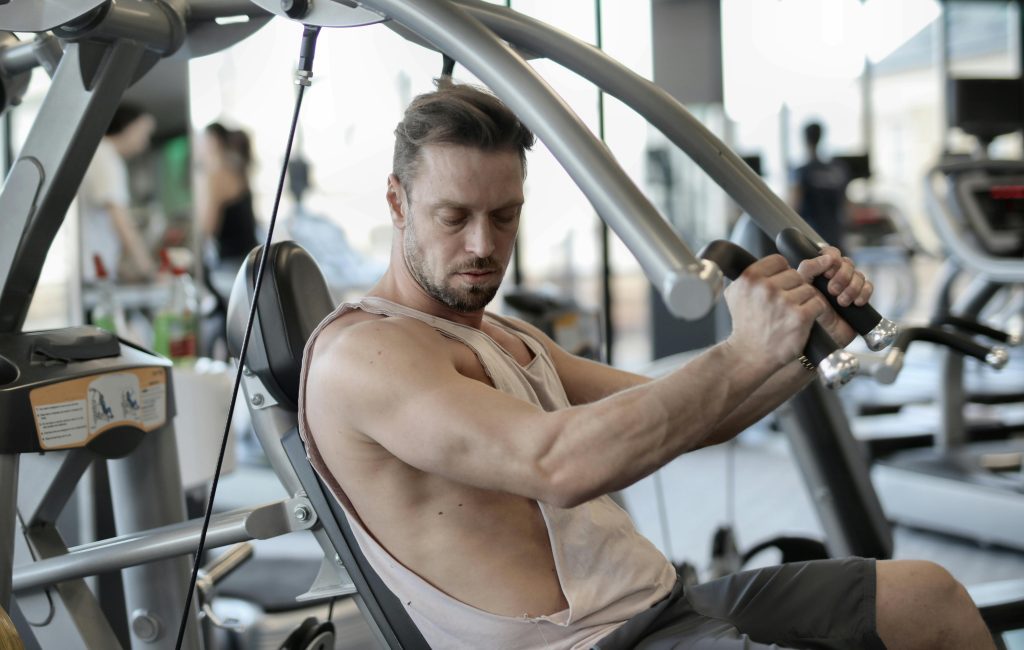
The chest press is one of those gym machines beginners can use immediately to build upper body strength without needing a spotter. You’re seated and supported, which means you can focus entirely on pushing.
What it does: Strengthens your chest, shoulders, and triceps. Builds the foundation for push-ups, which many people struggle with initially.
How to use it properly: Adjust the seat so the handles align with the middle of your chest. Grip the handles, press forward until your arms are extended (don’t lock elbows), then return slowly. Your shoulder blades should stay pressed against the back pad.
Starting point: Most machines let you start at 5-10kg. That might feel light, but perfect form matters more than impressive numbers in week one.
3. Lat Pulldown Machine
Pull-ups are brutal for beginners. The lat pulldown gives you similar benefits while your feet stay planted firmly on the ground. It’s consistently ranked as one of the most effective gym machines beginners should prioritize.
What it does: Develops back strength, improves posture, and works your biceps. According to NHS physical activity guidelines, strengthening activities like this should be done twice weekly.
How to use it properly: Sit down, secure your thighs under the pads, grip the bar slightly wider than shoulder-width. Pull the bar down toward your upper chest, pause briefly, then return slowly. Don’t lean back excessively or use momentum.
Starting point: Try 15-20kg initially. You want to complete 8-10 controlled repetitions. If you’re swinging or jerking, reduce the weight.
4. Seated Row Machine
Back training often gets neglected by beginners, partly because many gym machines seem complicated. The seated row changes that. Straightforward setup, effective results.
What it does: Strengthens your mid-back, rear shoulders, and improves posture. Particularly valuable if you spend hours at a desk.
How to use it properly: Sit with feet on the platform, slight knee bend. Grab the handles, pull toward your torso while squeezing your shoulder blades together. Your torso should stay upright, not rocking back and forth.
Starting point: Begin light at 10-15kg. This movement feels awkward initially. Prioritize feeling your back muscles engage rather than just moving weight.
5. Leg Curl Machine
While the leg press hits your hamstrings, the leg curl isolates them properly. Balanced leg development matters for injury prevention and overall strength.
What it does: Targets your hamstrings specifically. Strong hamstrings protect your knees and improve athletic performance.
How to use it properly: Lie face down (or sit, depending on the machine type), position the pad just above your ankles. Curl your legs toward your glutes, pause, then lower slowly. Don’t lift your hips off the bench.
Starting point: Start with 10-15kg. Hamstrings fatigue quickly, so lighter weights with good form trump heavier weights done poorly.
6. Shoulder Press Machine
Strong shoulders improve everything from carrying shopping bags to preventing injury. The shoulder press machine is one of the safer gym machines beginners can use to build overhead strength.
What it does: Develops shoulder strength, improves upper body stability, and helps with everyday activities requiring overhead movement.
How to use it properly: Adjust the seat so handles start at shoulder height. Grip the handles, press upward until arms are extended, lower with control. Keep your back against the pad and core engaged.
Starting point: Begin with 5-10kg per side. Shoulders are complex joints that don’t respond well to ego lifting. Build gradually.
Your First Two Weeks: A Practical Gym Machine Routine
Knowing which gym machines beginners should use matters little without a plan. Here’s your roadmap for the first fortnight.
Week 1: Learning the Movements
Focus entirely on technique. Visit the gym three times with at least one rest day between sessions.
Each session: Try all six machines above. Do 2 sets of 8-10 repetitions on each. Use light weights. Record how each machine feels in your phone notes.
Something like a simple notebook or phone app helps track which weight settings work for you. Most people forget between sessions, then waste time experimenting again.
Time commitment: 30-40 minutes including warm-up. That’s it.
Week 2: Building Confidence
Same machines, increased volume. Three sessions again with rest days.
Each session: Increase to 3 sets of 10-12 repetitions. Add slightly more weight if the last few reps of week one felt too easy. If you’re struggling to complete 10 reps with good form, stay at the same weight.
What to notice: Movements should feel more natural. You’ll spend less time adjusting seats and more time actually working out. That’s progress.
Common Mistakes That Sabotage Gym Machine Workouts
Mistake 1: Skipping the seat adjustments
Why it’s a problem: Every machine has adjustment points for a reason. Using a chest press with the handles too high puts unnecessary stress on your shoulders. Using the leg press with improper back positioning can strain your lower back.
What to do instead: Spend two minutes getting the setup right. Look for instruction diagrams usually posted on the machine. Most show proper positioning and which body parts should align where. Once you’ve adjusted correctly, note the settings for next time.
Mistake 2: Moving too fast through repetitions
Why it’s a problem: Momentum does the work instead of your muscles. You’re essentially wasting your time while increasing injury risk. The eccentric (lowering) portion of movements builds as much strength as the lifting portion.
What to do instead: Count two seconds up, pause one second, count three seconds down. It’ll feel impossibly slow initially. That’s the point. Control builds strength and prevents injury far more effectively than speed.
Mistake 3: Holding your breath
Why it’s a problem: Holding your breath during exertion spikes blood pressure and makes you dizzy. Not ideal when you’re seated at a machine pushing significant weight.
What to do instead: Exhale during the hard part (pushing or pulling), inhale during the easier part (returning to start). Practice this breathing pattern with bodyweight movements before loading machines.
Mistake 4: Ignoring the full range of motion
Why it’s a problem: Half-reps build half the strength. Moving through partial ranges might let you use heavier weights, but you’re cheating yourself out of results.
What to do instead: Reduce the weight and use the full movement range the machine allows. On the chest press, bring the handles back to your chest. On the lat pulldown, extend your arms fully at the top. Your muscles will thank you in six weeks.
Mistake 5: Using the same weight forever
Why it’s a problem: Your body adapts quickly. What felt challenging in week two becomes easy by week six. If you never increase the difficulty, you stop progressing.
What to do instead: When you can complete 12 repetitions with perfect form, add 2-5kg next session. This principle, called progressive overload, drives nearly all strength gains. Track your weights in your phone so you know when to progress.
Questions People Actually Ask About Gym Machines
How long should I use machines before switching to free weights?
There’s no magical timeline, but most beginners benefit from 4-8 weeks on machines before introducing free weights. The goal isn’t to “graduate” from machines entirely but to build foundational strength and understand movement patterns. Many experienced lifters continue using machines alongside free weights because both offer unique benefits. When you can complete your machine routine with good form and reasonable weights, you’re probably ready to experiment with dumbbells and barbells.
Is it normal to feel sore after using gym machines for the first time?
Absolutely normal. Delayed onset muscle soreness (DOMS) typically peaks 24-48 hours after your first few workouts. Your legs might protest stairs. Your chest might make washing your hair an adventure. This soreness isn’t damage, it’s adaptation. It’ll decrease significantly after your third or fourth workout as your body adjusts. Stay active with walking or gentle movement rather than becoming completely sedentary. If pain is sharp or localized to joints rather than muscles, that’s different and worth getting checked.
Should I work out with a personal trainer to learn gym machines?
One or two sessions with a qualified trainer can accelerate your learning dramatically. They’ll show you proper setup, correct your form, and build a program matched to your goals. Most UK gyms include a free induction session with membership. Use it. Even if you can’t afford ongoing training, that initial session provides tremendous value. Alternatively, many gyms offer group introduction classes specifically for beginners learning gym machines.
What if the machine I need is being used?
Skip it and return later, or substitute a similar movement. If someone’s on the chest press, try the shoulder press instead and swap the order. If the leg press is occupied, you can ask how many sets they have remaining and work in between their sets. Most gym-goers happily share equipment. Alternatively, keep a flexible order. Your muscles don’t care whether you do legs before chest or chest before legs. Training consistently matters far more than perfect exercise sequencing.
Can I build muscle using only gym machines as a beginner?
Yes. Muscles respond to progressive resistance regardless of whether it comes from machines, free weights, or your own bodyweight. Research from the American Council on Exercise confirms machines can build strength and muscle mass effectively, particularly for beginners who benefit from the stability and guidance they provide. The key factors are consistent training, proper nutrition, adequate protein intake, and progressive overload. Machines absolutely deliver these if you use them properly.
Your Gym Machine Essentials Checklist
- Focus on these six machines initially: leg press, chest press, lat pulldown, seated row, leg curl, shoulder press
- Adjust every seat and pad before starting each exercise
- Record your starting weights in your phone to track progress
- Perform 2-3 sets of 8-12 repetitions with one minute rest between sets
- Count two seconds up, pause briefly, three seconds down for each rep
- Train three times weekly with rest days between sessions
- Increase weight by 2-5kg when you can complete 12 perfect reps
- Breathe out during exertion, inhale during the easier portion
What Actually Matters for Gym Machine Success
Six months from now, you’ll either wish you’d started today or you’ll be glad you did. The gym machines beginners choose to master first create the foundation for everything else. Build it properly and you’ll develop confidence, strength, and the momentum to tackle more advanced training.
Start with these six machines. Learn them properly over two weeks. Then build from there. That’s the entire strategy. No complicated programming, no intimidating techniques, no expensive equipment beyond your gym membership.
Will you make mistakes? Probably. Will you feel awkward initially? Almost certainly. Does any of that matter if you keep showing up? Not even slightly. The people who succeed with gym machines aren’t the ones who start perfect. They’re the ones who start, period.
You’ve got the roadmap. Next step is yours.


